Number Sequencing Easy Worksheets for 6-Year-Olds
3 filtered results
-
From - To
Introducing our Number Sequencing Easy Worksheets for 6-Year-Olds, designed to enhance early math skills effortlessly. Tailored for young learners, these fun and engaging printables help kids understand numbers and their order while building a strong mathematical foundation. Perfect for classroom or home use, our worksheets feature colorful illustrations and simple activities that captivate children's interest, turning learning into a playful experience. Ideal for beginners, these sheets guide kids through sequencing in manageable steps, helping them gain confidence in their abilities. Give your child the advantage they deserve with these expertly crafted worksheets from Kids Academy!
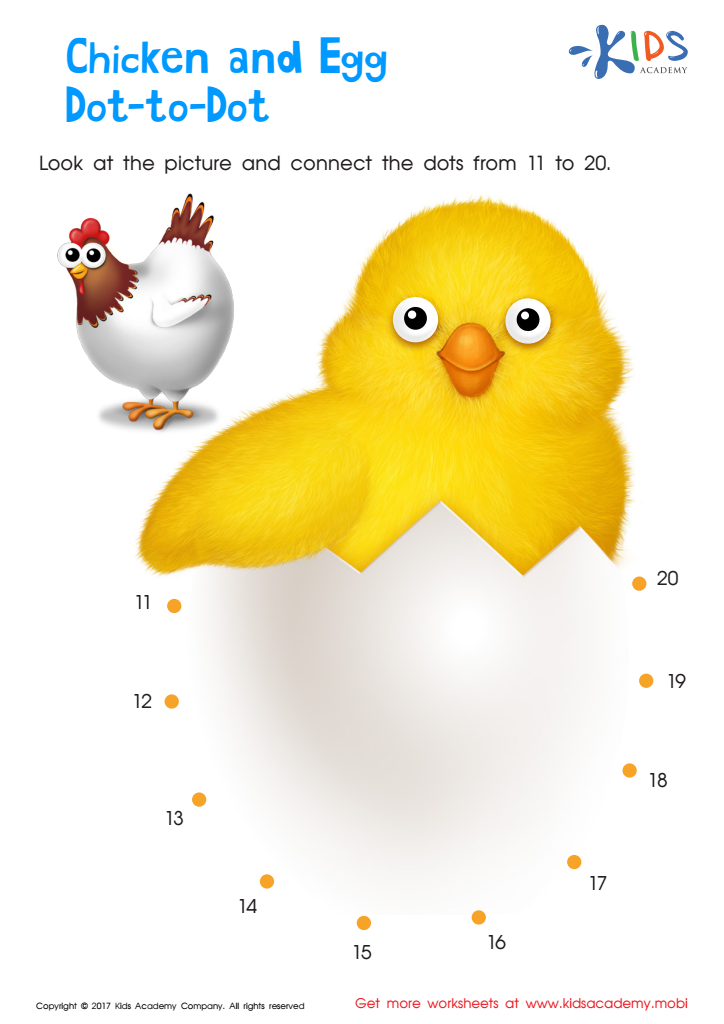
Ordering 11–20: Chicken & Egg Dot–to–dot Worksheet
 Assign to My Students
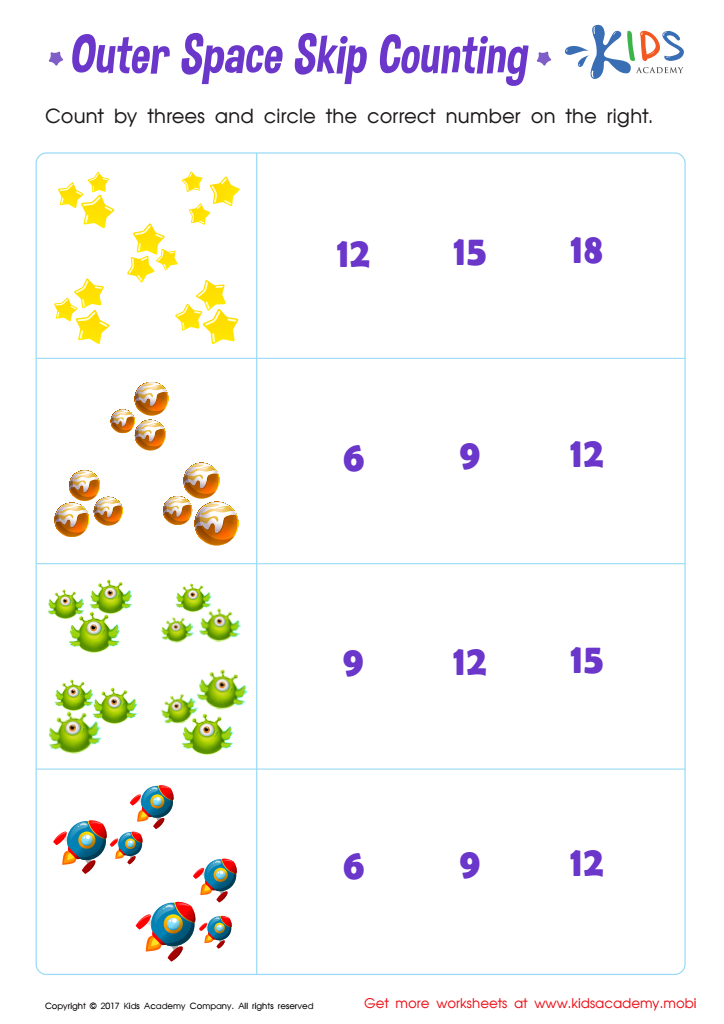
Skip Counting by 3s: Outer Space Skip Counting Printable








Number sequencing is fundamental for the mathematical development of 6-year-olds, establishing a cornerstone for more advanced arithmetic skills. By understanding and identifying sequences, children enhance their ability to recognize patterns, which is essential not only in math but in problem-solving across various subjects.
Number sequencing helps with counting skills and places numbers in context, aiding children to comprehend concepts like "before" and "after" as well as ordinal numbers ("first," "second," etc.). It bolsters their ability to differentiate numbers, understand their order, and predict what comes next. Such predictive capacity is crucial for later mathematical procedures, including addition, subtraction, and eventually multiplication and division.
Additionally, mastering number sequencing contributes to cognitive development by enhancing memory, concentration, and logical thinking. Children learn to observe sequences that can apply to everyday situations, like days of the week, daily routines, and more complex algorithms in later life.
For parents and teachers, supporting skills like number sequencing means facilitating an overall higher confidence in math for children, resulting in a positive attitude toward learning. These foundational skills are the building blocks that enable children to tackle progressively complex problems with ease, setting the stage for future academic success. Therefore, educators and caregivers should prioritize and engage children in activities that cultivate these competencies.








