Filters

6 filtered results

Clear all filters
Favorites
With answer key
Interactive

6 filtered results

Difficulty Level

Grade


Subject

    Discover our collection of "Easy Numbers up to 100 Worksheets" designed specifically for children aged 7 to 9. These engaging worksheets help reinforce foundational math skills through fun and interactive activities. Your young learners can explore concepts like counting, addition, subtraction, and number recognition in a user-friendly format. Each worksheet is tailored to provide clear instructions and vibrant visuals that capture children's attention while making math enjoyable. Perfect for home or classroom use, these resources promote confidence in young math students. Download our easy-to-use worksheets today and support your child's journey to mastering numbers up to 100!

    Check out this FREE Trial Lesson on Numbers up to 100 for age 7-9!

    Use Mental Strategies -Counting

    Favorites
    With answer key
    Interactive
    • 7-9
    • Numbers up to 100
    • Easy
    Counting Backwards: Treasure Hunt Worksheet
    Counting Backwards: Treasure Hunt Worksheet

    Counting Backwards: Treasure Hunt Worksheet

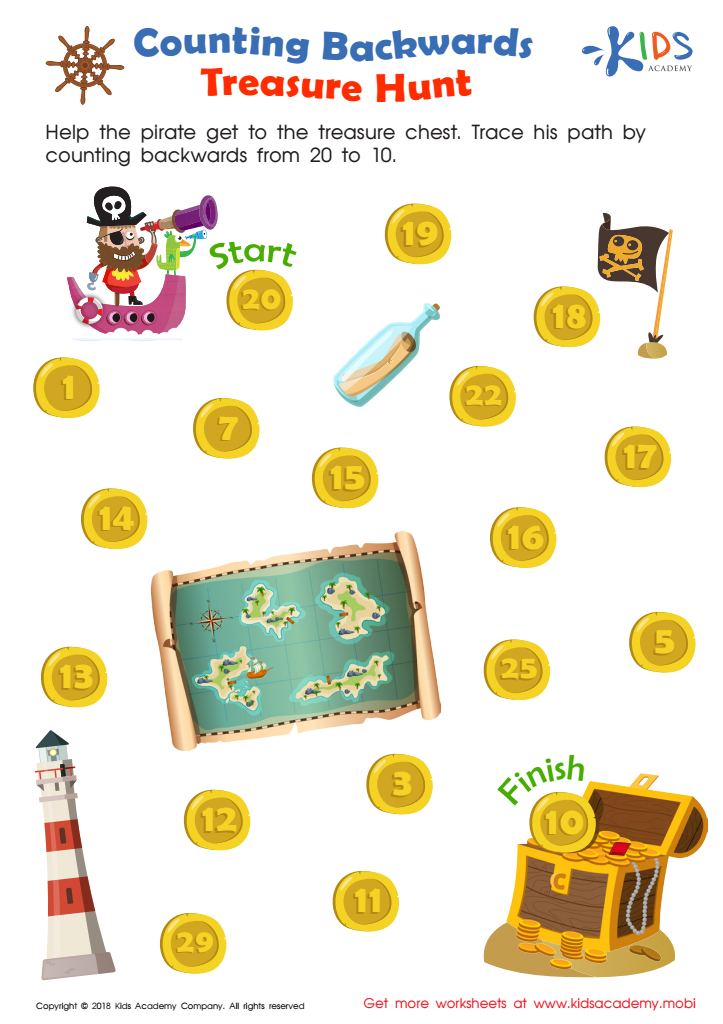
    This fun and inviting PDF worksheet gives young math students the opportunity to visualize counting back. They'll trace their way backward from 20 to 10 and help the pirate find his treasure, while also working on fine motor skills. Building foundational math skills like this is vital, so don't miss out on this colorful and inviting activity.
    Counting Backwards: Treasure Hunt Worksheet
    Worksheet
    Skip Counting by 3 Printable Worksheet
    Skip Counting by 3 Printable Worksheet

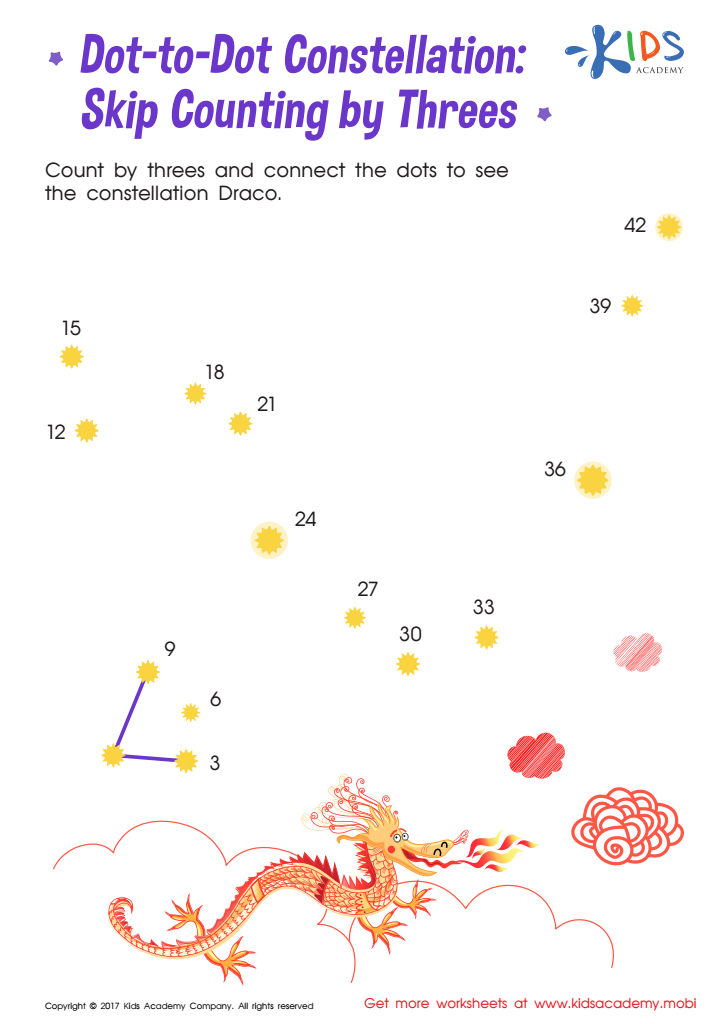
    Skip Counting by 3s: Dot–to–Dot Constellation Printable

    Get counting and get ready to stargaze!
    Skip Counting by 3s: Dot–to–Dot Constellation Printable
    Worksheet
    Counting in the Neighborhood Part1 Worksheet
    Counting in the Neighborhood Part1 Worksheet

    Counting in the Neighborhood Part1 Worksheet

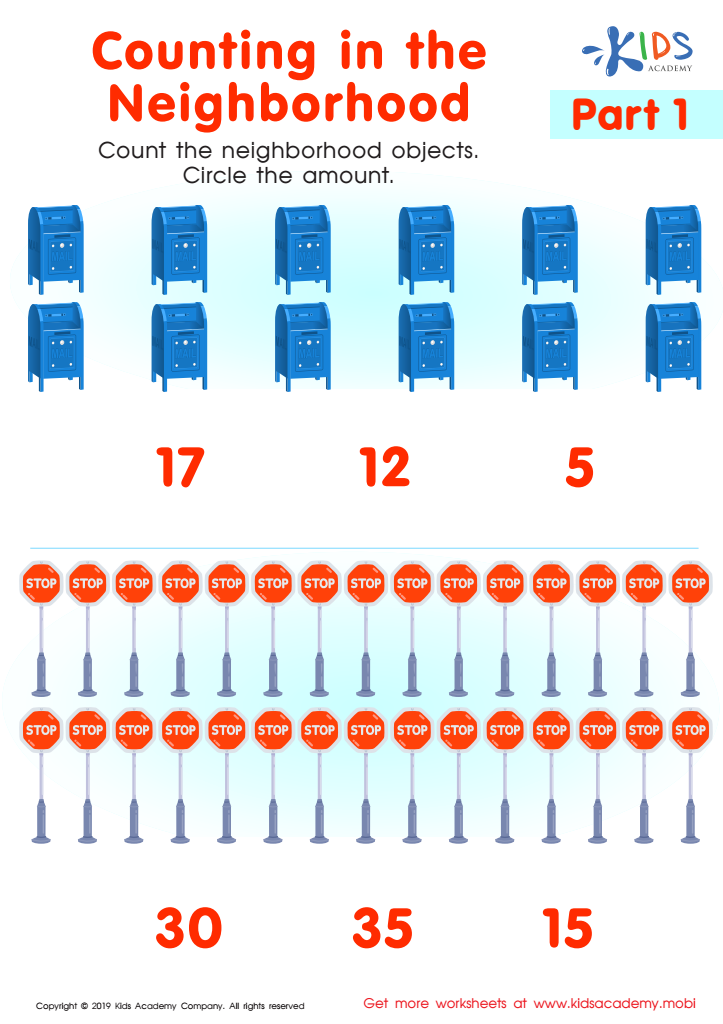
    Counting using one-to-one representation is a great way to develop a child's number sense. Use objects, pictures and images to help counting beyond the fingers. This worksheet uses everyday objects to practice counting. It encourages children to find the correct number and count forward. Give it a try!
    Counting in the Neighborhood Part1 Worksheet
    Worksheet
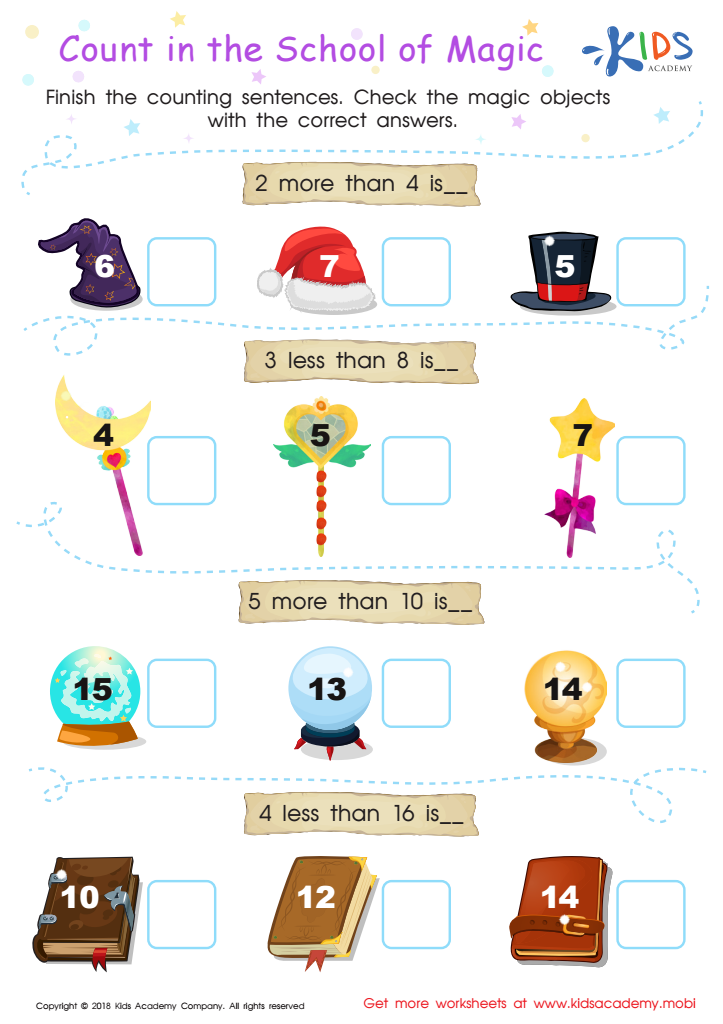
    Count in the School of Magic Worksheet
    Count in the School of Magic Worksheet

    Count in the School of Magic Worksheet

    Your math learners can explore the School of Magic with this worksheet. They'll read equations with addition and subtraction numbers under 20, count back and forth to find the answer, then complete the counting sentences. Fun pictures and easy accuracy make it an enjoyable and successful learning experience.
    Count in the School of Magic Worksheet
    Worksheet
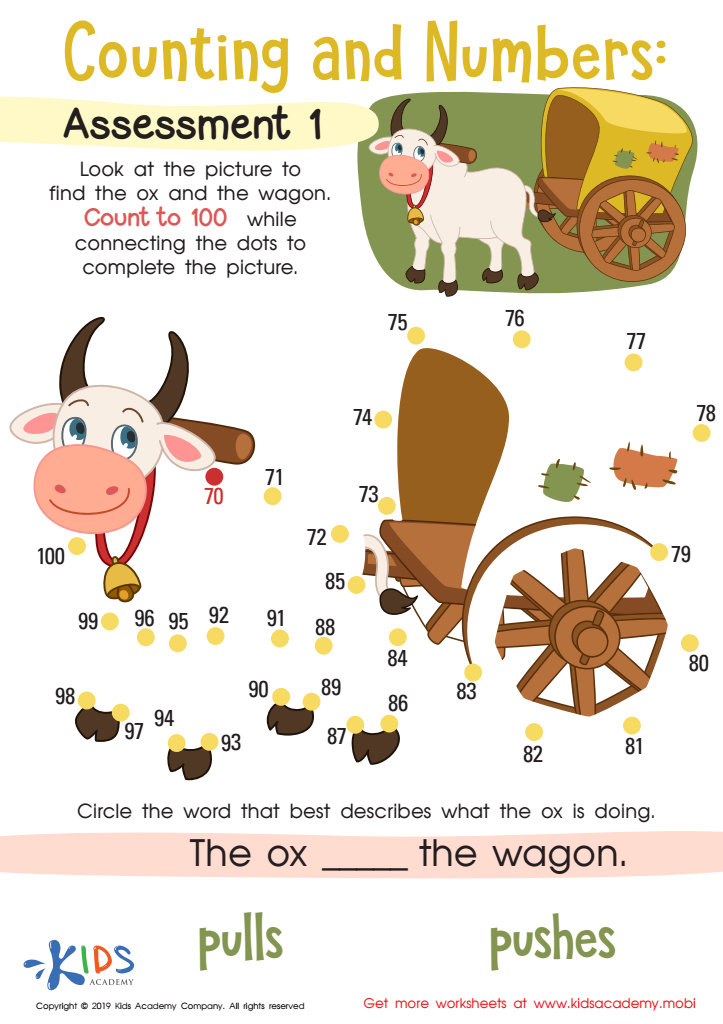
    Counting and Numbers: Assessment 1 Worksheet

    Counting and Numbers: Assessment 1 Worksheet

    Counting and Numbers: Assessment 1 Worksheet

    Let your kids use the picture as a guide and count from 70 to 100 to complete an ox pulling a wagon. As a comprehension check, have them answer the related question using words from the word bank. This dot-to-dot worksheet is a great way to assess their number reasoning and counting forward skills.
    Counting and Numbers: Assessment 1 Worksheet
    Worksheet
    Counting on the City Skyline: Dot-to-Dot Worksheet

    Counting on the City Skyline: Dot-to-Dot Worksheet

    Counting on the City Skyline: Dot-to-Dot Worksheet

    Kids will love connecting the dots to make a superhero skyline! They'll reinforce their number line thinking and number sense while building fine-motor skills. Watch them beam with pride as the cityscape reveals itself, all thanks to some math practice.
    Counting on the City Skyline: Dot-to-Dot Worksheet
    Worksheet


    Understanding Easy Numbers up to 100 is crucial for children ages 7-9, as it serves as a foundational skill that underpins many aspects of their future learning. At this age, children start building on their basic mathematical skills, gaining confidence in their abilities with numbers. Mastering numbers up to 100 fosters important cognitive skills, such as problem-solving and critical thinking, which are essential not just in mathematics but in everyday decision-making.

    For parents and teachers, focusing on this range helps identify learning gaps in a child's understanding of number relationships, place values, and basic arithmetic operations. This early intervention can lead to more successful outcomes in complex math concepts introduced later, reducing anxiety around the subject. Moreover, elementary math often lays the groundwork for literacy skills, such as interpreting word problems, enhancing both math and reading comprehension.

    Additionally, encouraging a positive attitude towards numbers and providing practical examples—like using money or measuring while cooking—engages children in real-world applications. Therefore, prioritizing a solid grasp of Easy Numbers up to 100 equips children with the confidence, curiosity, and skills they need to excel academically, making it vital for parents and educators alike to invest time in this fundamental area.