
Number Sequencing Easy Worksheets
6 filtered results
Difficulty Level
Grade
Age
-
From - To
Subject
Activity
Standards
Discover a fun way to enhance your child's numerical skills with our Number Sequencing Easy Worksheets! Perfect for early learners, these printable sheets help kids practice counting and recognizing number patterns effortlessly. Each engaging activity is designed to build confidence and foundational math abilities while making learning enjoyable. Our worksheets feature vibrant illustrations and simple instructions to keep young minds captivated. Begin your child’s journey towards math mastery by integrating these expertly crafted resources into their daily routine. Whether studying at home or in the classroom, boost their confidence with our easy-to-use Number Sequencing Worksheets today!
Favorites
With answer key
Interactive
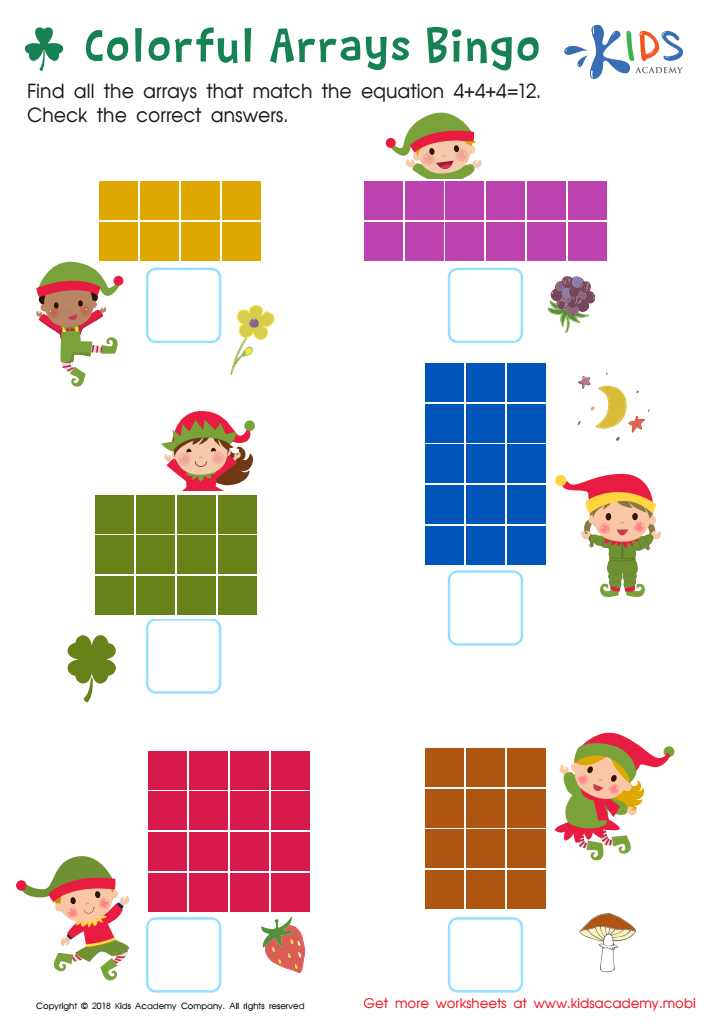
Colorful Arrays Bingo Worksheet
This worksheet stimulates thinking about arrays and how to represent them. Instruct students to count the 6 arrays and find which ones sum up to 12. Ask them to check the answers for accuracy.
 Assign to My Students
Colorful Arrays Bingo Worksheet
Worksheet
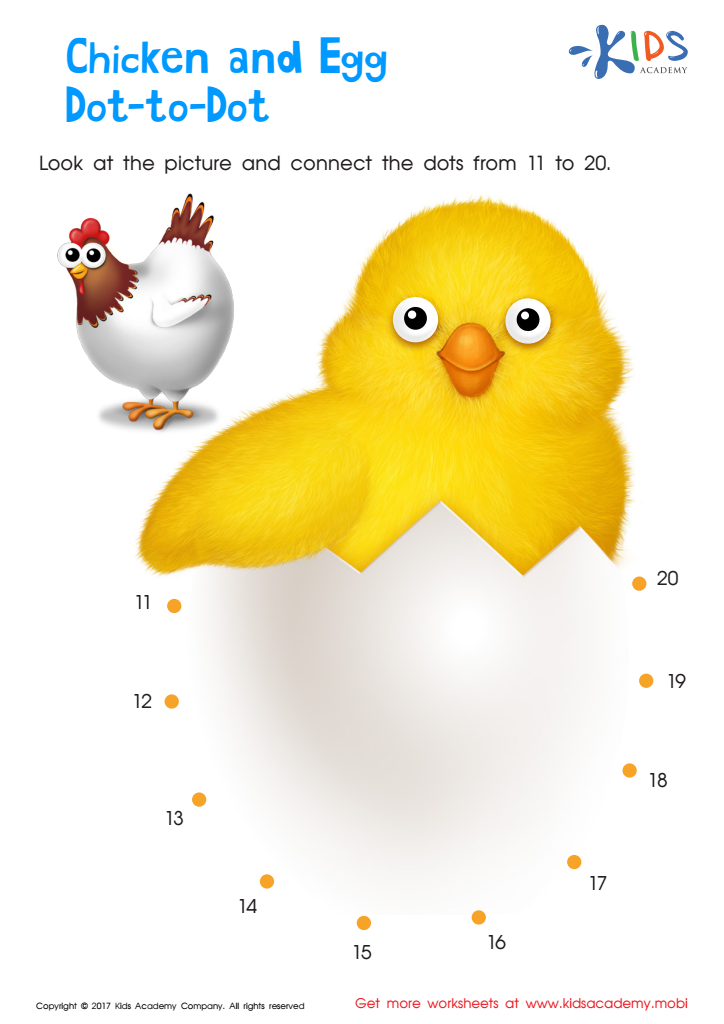
Ordering 11–20: Chicken & Egg Dot–to–dot Worksheet
Help your child hatch the chick and practice their counting skills with this dot to dot worksheet – the chicken came first! Connect the dots 11-20 to have fun and learn at the same time. Experience meaningful practice and gain confidence while drawing great pictures.
Ordering 11–20: Chicken & Egg Dot–to–dot Worksheet
Worksheet
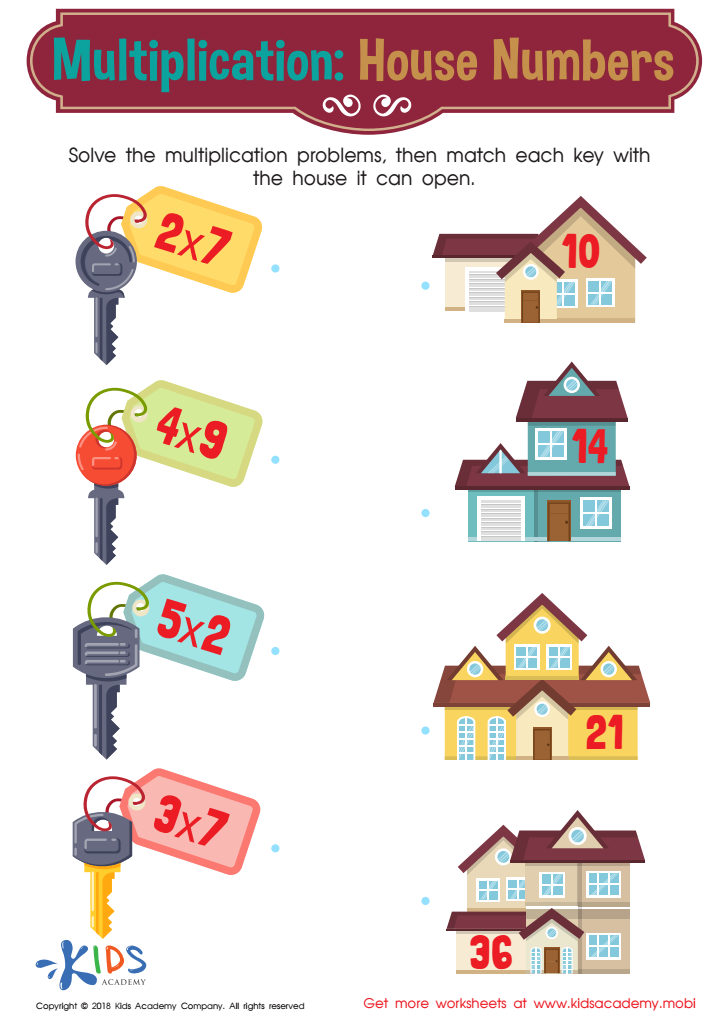
House Numbers Worksheet
This multiplication worksheet is perfect for grade 3 students to sharpen their math skills! Each problem unlocks the door to a house on the page - can they figure out which key fits which door? By solving each problem, they'll boost their multiplication skills and have fun along the way.
House Numbers Worksheet
Worksheet
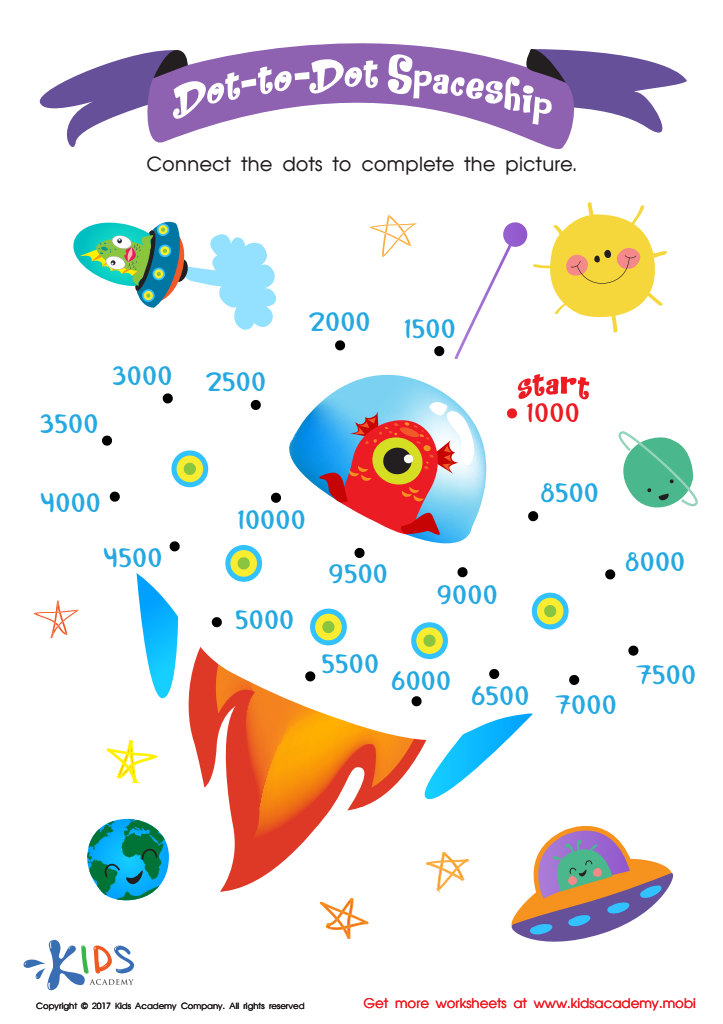
Dot to Dot Worksheet for 3rd Grade
Let your 3rd grader develop better number skills with this dot-to-dot worksheet! They can have fun outlining a spaceship as they skip count by 500 up to 10,000. It's a great way to boost their number sense and make learning more exciting.
Dot to Dot Worksheet for 3rd Grade
Worksheet
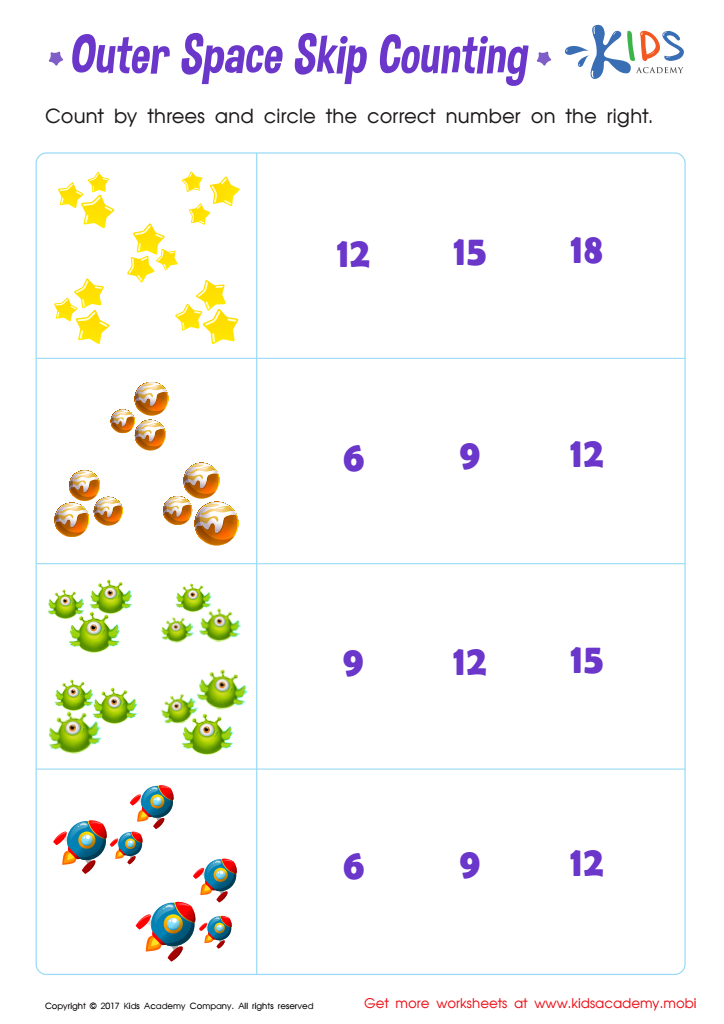
Skip Counting by 3s: Outer Space Skip Counting Printable
Want to set your child up for math success? Get them this printable worksheet that helps them practice counting in groups of 3’s, building a foundation for more advanced math skills. Skipping counting helps kids master logical reasoning and cognitive skills, making a connection between counting objects individually and in groups. The colorful images will keep them engaged and having fun - without realizing how hard they're working!
Skip Counting by 3s: Outer Space Skip Counting Printable
Worksheet
Join Kids Academy for Free
Who is primarily going to use this learning content?








Number sequencing is a foundational math skill that provides the groundwork for more advanced numerical concepts. Parents and teachers should care about number sequencing because it teaches children how to recognize patterns, which are crucial for developing logical thinking and problem-solving abilities.
Early exposure to number sequencing helps in understanding the order of numbers, making it easier for children to grasp arithmetic operations such as addition and subtraction. For example, knowing that 2, 3, and 4 come after 1 is essential for understanding that 3 + 1 leads to 4. This strengthens their ability to perform and understand mathematical functions.
Furthermore, number sequencing is not only essential for math; it also has cross-disciplinary benefits. It's integral in everyday tasks, such as reading a timetable, following recipes, or even organizing items. When children master number sequencing, they enhance their overall cognitive abilities, setting a firm foundation for academic success in multiple subjects.
Lastly, early difficulties in number sequencing often predict later struggles with more complex math skills. Therefore, addressing these skills early, in a straightforward, enjoyable manner, can mitigate future educational challenges. By emphasizing the importance of number sequencing, parents and teachers support the development of a child's numerical fluency, ensuring they are well-prepared for future learning.








