Number Sequencing Extra Challenge Worksheets for Ages 3-7
10 filtered results
-
From - To
Discover our engaging "Number Sequencing Extra Challenge Worksheets" designed for children ages 3-7. These worksheets provide fun and interactive ways for young learners to enhance their number sequencing skills. With vibrant illustrations and varied levels of difficulty, kids will delight in completing activities that promote counting, order recognition, and critical thinking. Ideal for homeschool settings or classroom use, these worksheets support early math development while keeping learning playful. Perfect for transitioning from foundational skills to more advanced concepts, our resources are expertly crafted to foster a love for math. Encourage your child to tackle these exciting challenges today!
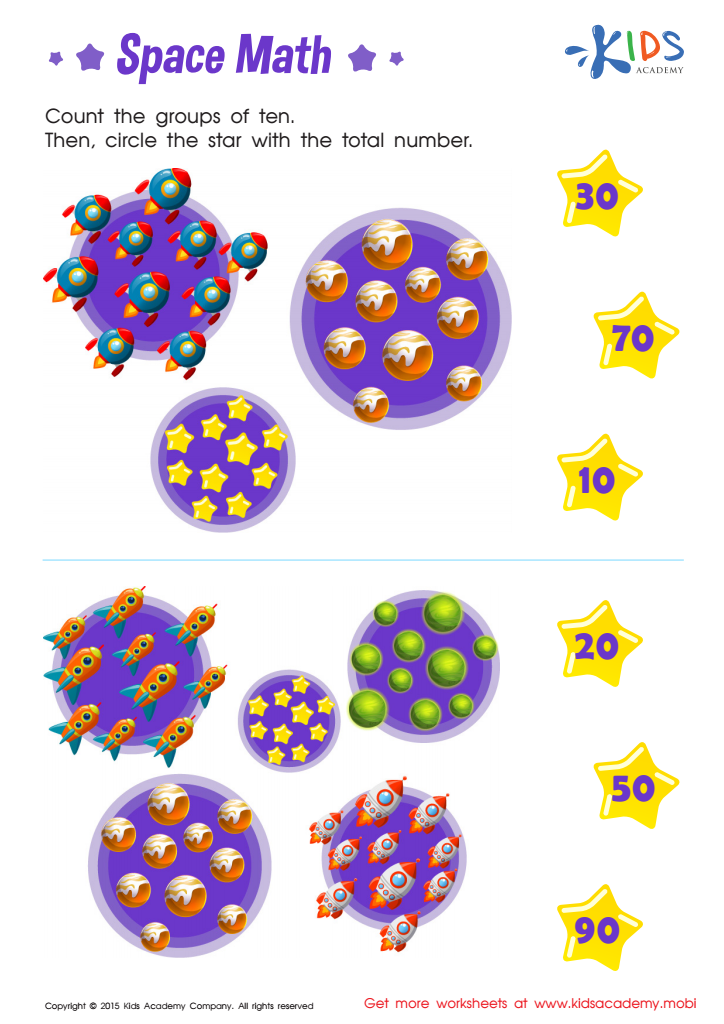
Learn dozens: Space math Worksheet
 Assign to My Students
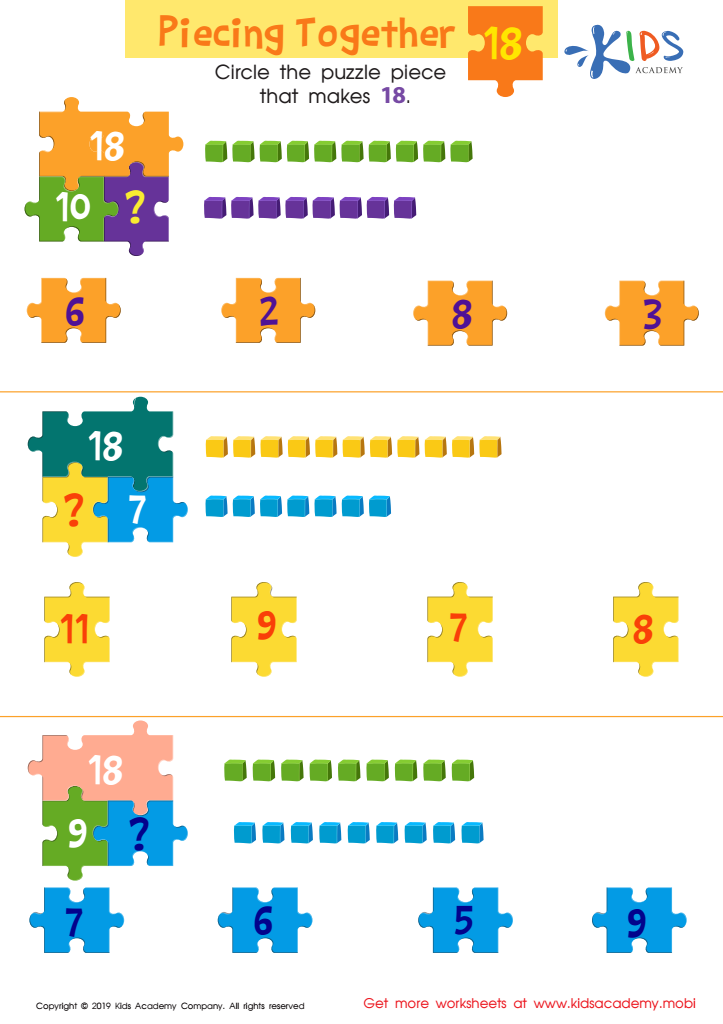
Piecing Together 18 Worksheet
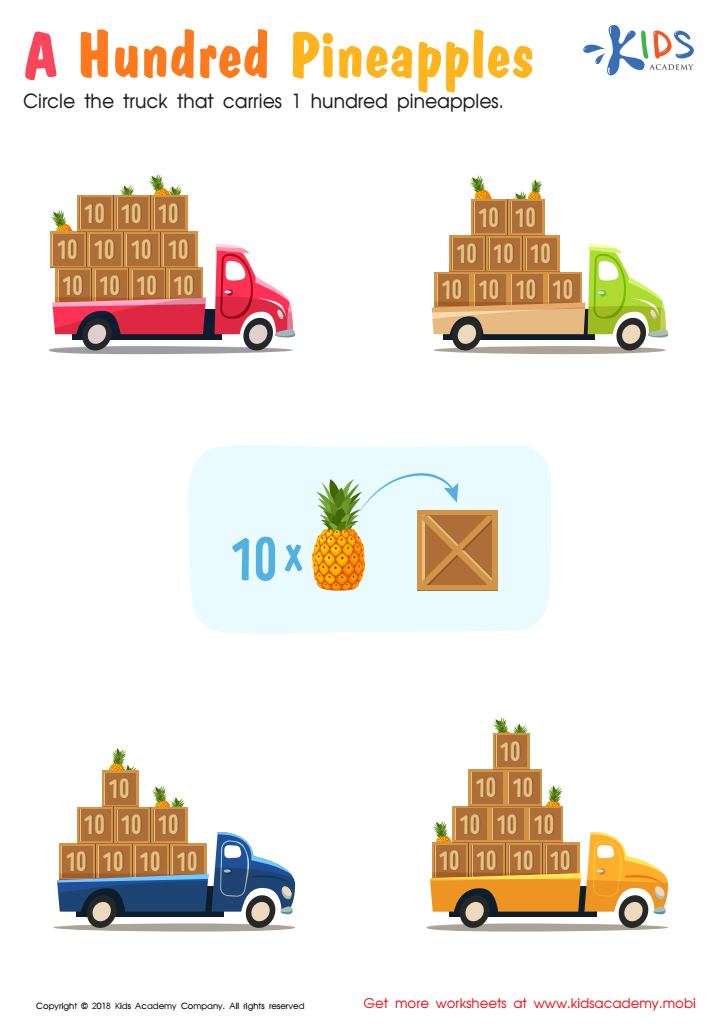
A Hundred Pineapples Worksheet
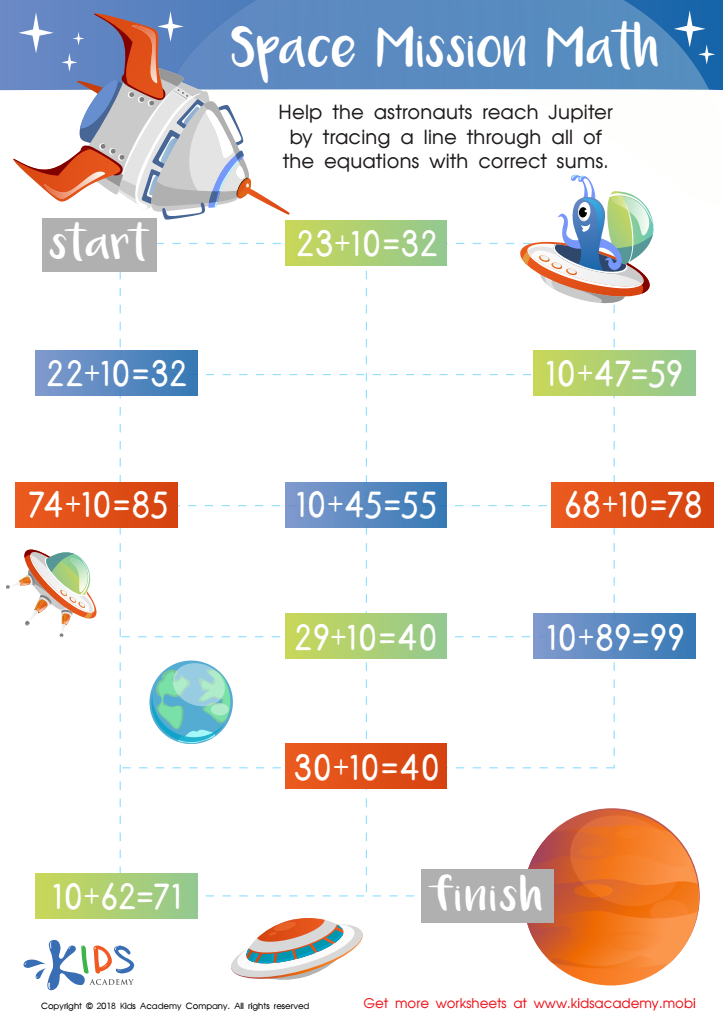
Space Mission Math Worksheet

Pirate Ship Connect Dots Worksheet
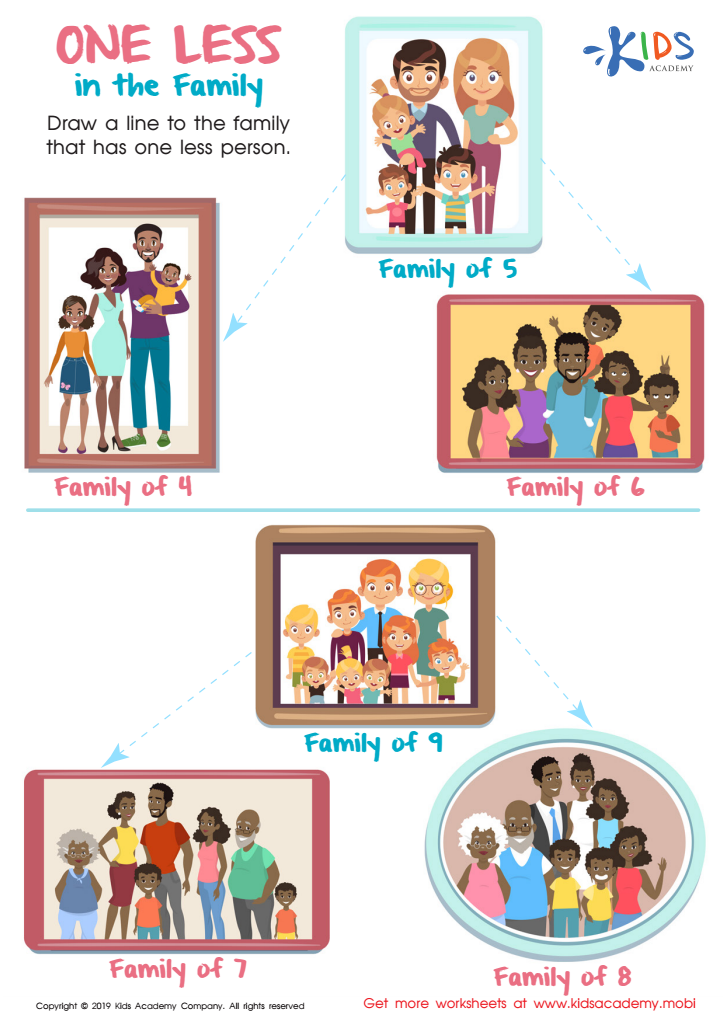
One Less in the Family Worksheet
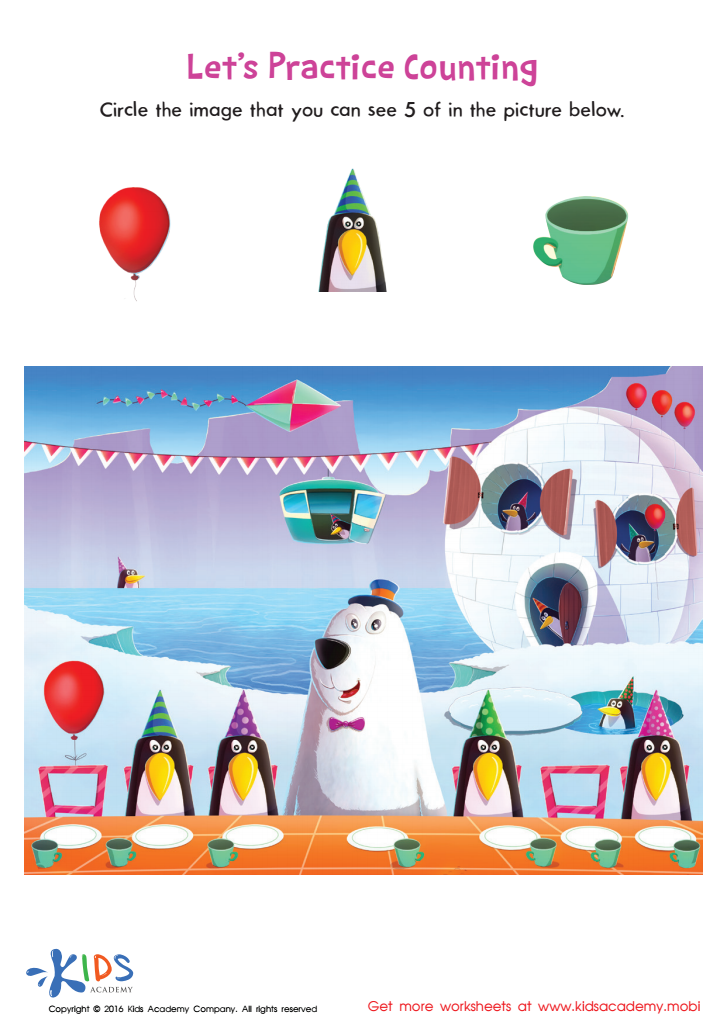
Counting Worksheet: Let's Practice Counting
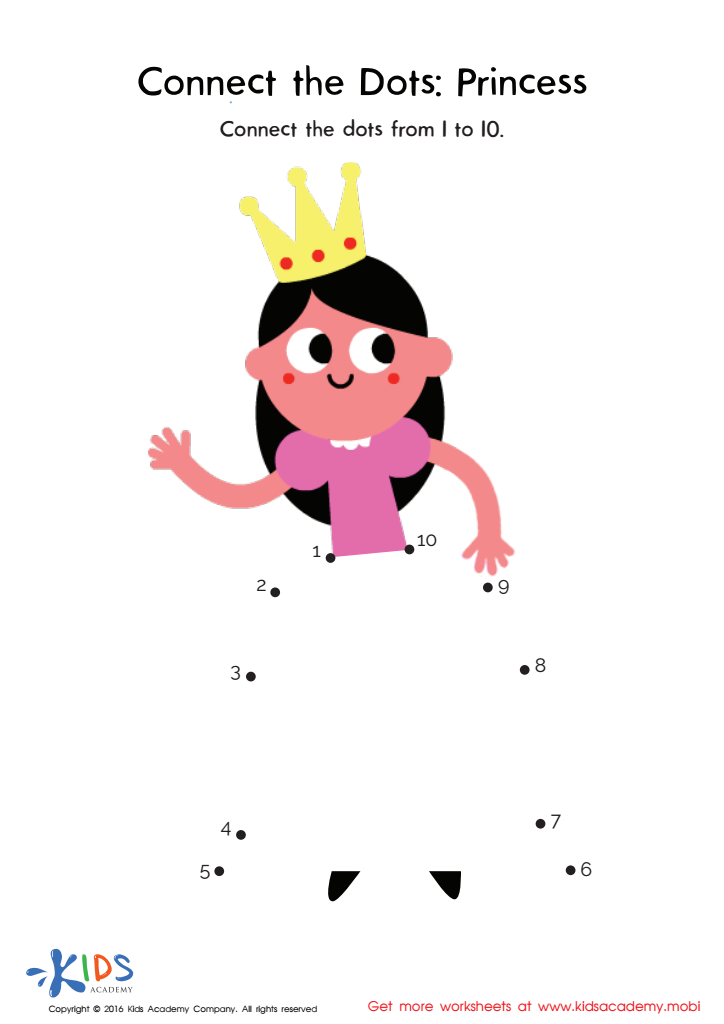
Princess Connect Dots Worksheet








Number sequencing is a foundational skill crucial for children's cognitive development and mathematical understanding. For parents and teachers of children aged 3-7, engaging with number sequencing challenges offers several significant benefits. Firstly, it promotes early numeracy skills, enhancing children’s ability to recognize patterns and order—key concepts in mathematics.
By introducing extra challenges in number sequencing, educators can stimulate young minds and foster problem-solving abilities. It encourages critical thinking as children learn to perceive numerical relationships, which builds a strong mathematical framework for more complex concepts they will encounter later on.
Moreover, mastering number sequencing boosts confidence and conditions children for school readiness. It supports fine motor skills when children engage with physical counting manipulatives, enhancing their learning experience.
Additionally, this practice fosters social skills as children often work on these tasks collaboratively, promoting teamwork and communication. As parents and teachers advocate for proficient number sequencing, they provide children with opportunities to explore and make connections, reinforcing overall learning.
In essence, investing in number sequencing challenges not only enriches educational experiences but also ensures children are well-equipped for future academic success. Hence, it’s a vital focus for parents and teachers alike.








