
Spelling practice Extra Challenge Worksheets for Ages 3-8
20 filtered results
Difficulty Level
Grade
Age
-
From - To
Subject
Activity
Standards
Looking for engaging ways to enhance spelling skills for young learners aged 3-8? Our Spelling Practice Extra Challenge Worksheets are designed to make learning fun and effective! These worksheets provide exciting activities that promote phonemic awareness, spelling proficiency, and vocabulary development. With a variety of themes and formats, children will enjoy brainstorming, filling in the blanks, and connecting words with images. Each worksheet is crafted to challenge and captivate young minds while building essential literacy skills. Tailored for home or classroom use, these worksheets are perfect for encouraging creativity and boosting confidence in young spellers. Download and watch your child's spelling skills flourish!
Favorites
With answer key
Interactive
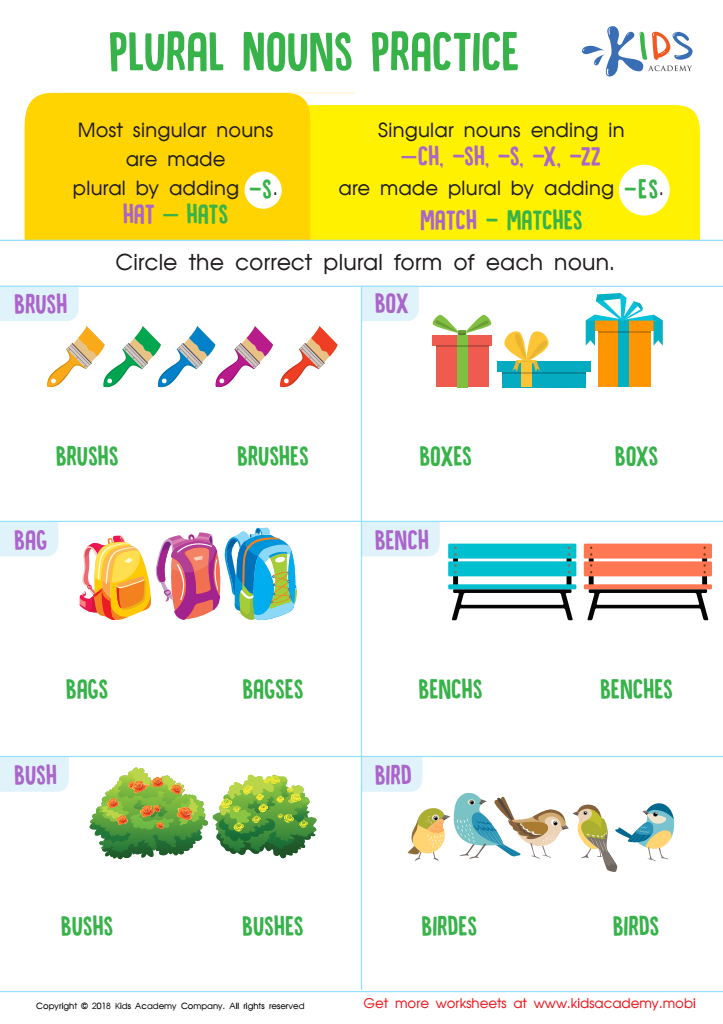
Plural Nouns Practice Worksheet
Explain to your child that most singular nouns become plural by adding "-s". E.g. "cat"->"cats". For words ending in "-ch", "-sh", "-s", "-x", or "-zz", add "-es". E.g. "buzz"->"buzzes". Then, get them to circle the right plural form of each noun on the worksheet.
 Assign to My Students
Plural Nouns Practice Worksheet
Worksheet
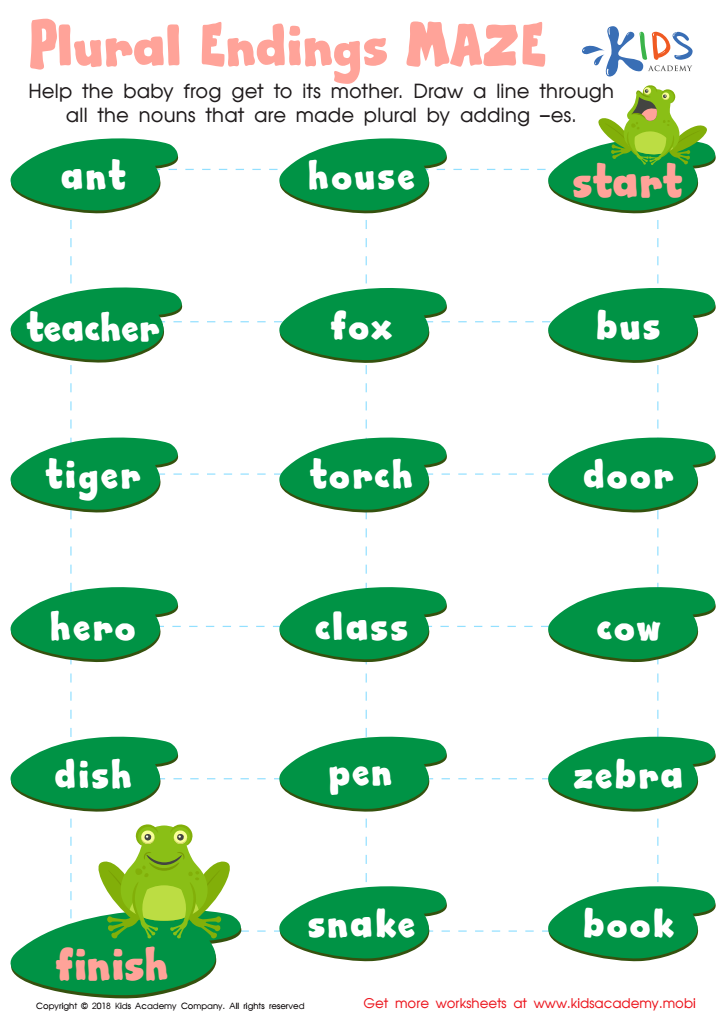
Plural Endings Maze Worksheet
Help your child have fun while learning new things with this worksheet. Does your child know that some nouns require '-es' to make them plural? Use this pdf to teach them the rule and get the little frog to its mother – draw a line through the words with '-es' plural forms.
Plural Endings Maze Worksheet
Worksheet
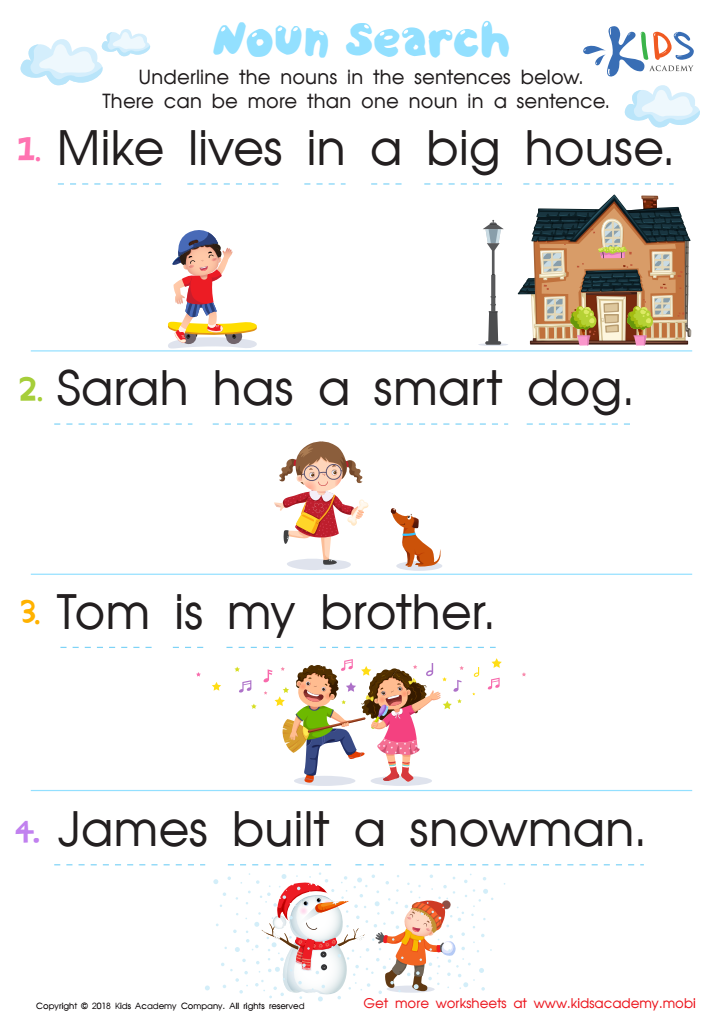
Noun Search Worksheet
To help your children learn the basics of grammar, start with nouns, verbs, adverbs and adjectives. This noun search worksheet will help your child understand the most common part of speech - the noun. Ask them to underline the nouns in each sentence. This is a great way to start learning proper grammar.
Noun Search Worksheet
Worksheet
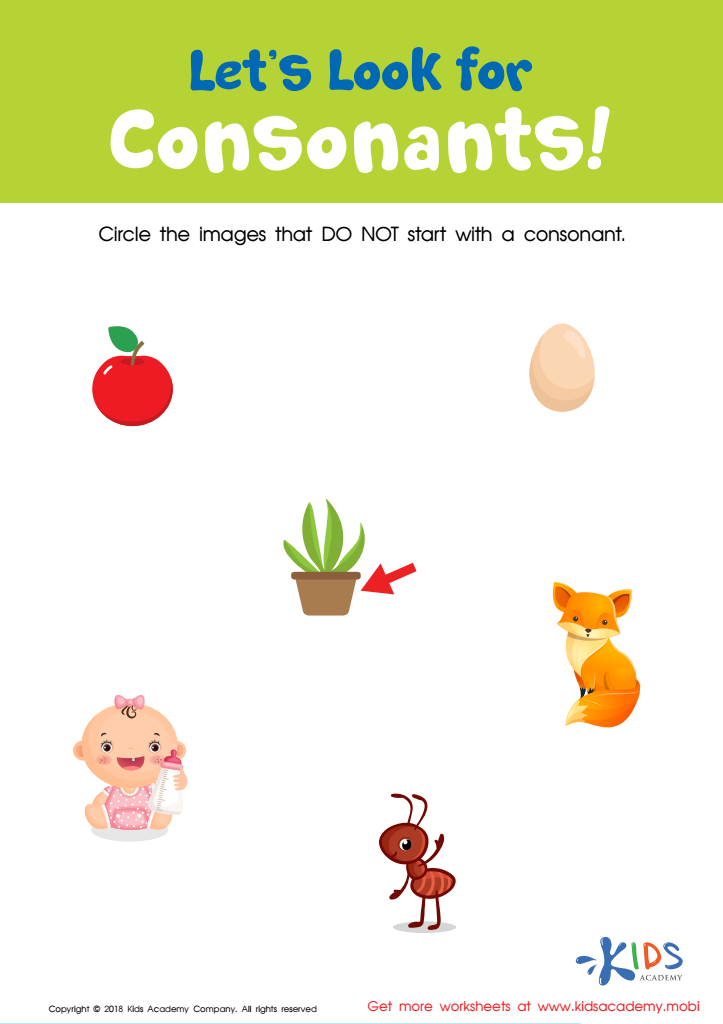
Let's Look for Consonants Worksheet
Help kids learn consonants and words that start with them. Ask them to recite the alphabet, then explain consonants are all letters but the 5 vowels. Use the worksheet to ask them to circle items without a consonant. Emphasize that's 21 consonants.
Let's Look for Consonants Worksheet
Worksheet
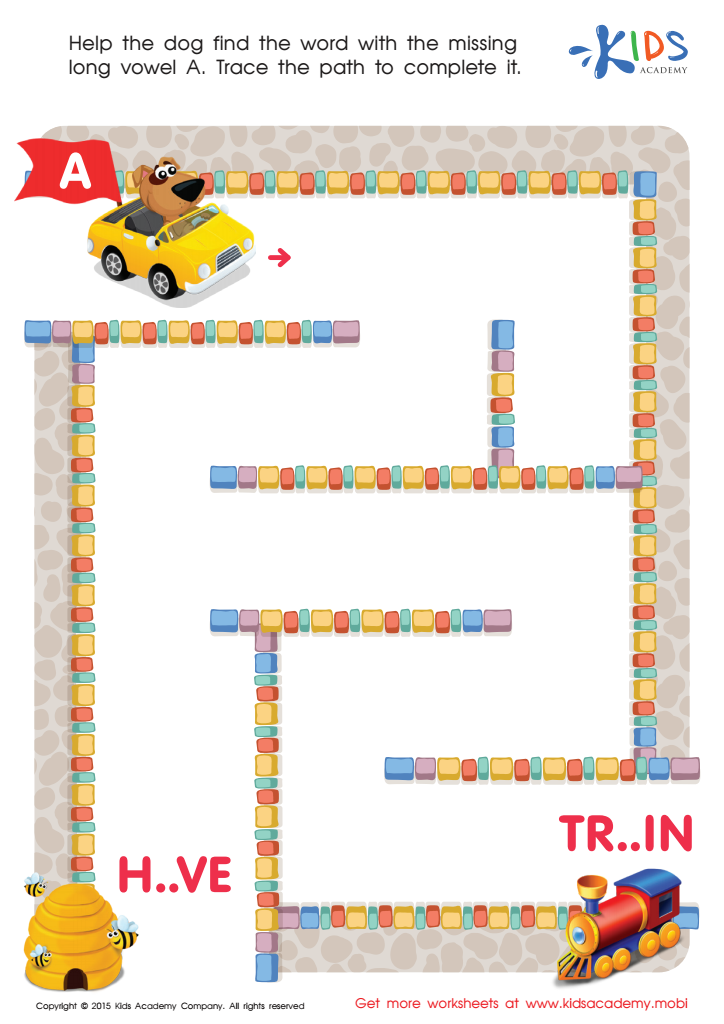
Long Vowel Sound A Worksheet
Teach your young learner about the long vowel A with this colorful free printable phonics worksheet. The long vowel A says its name while the short vowel A does not. Complete the worksheet by tracing the root to the toy train and helping the dog by filling in the missing letter A. Have them practice writing and spelling with phonics while having fun!
Long Vowel Sound A Worksheet
Worksheet
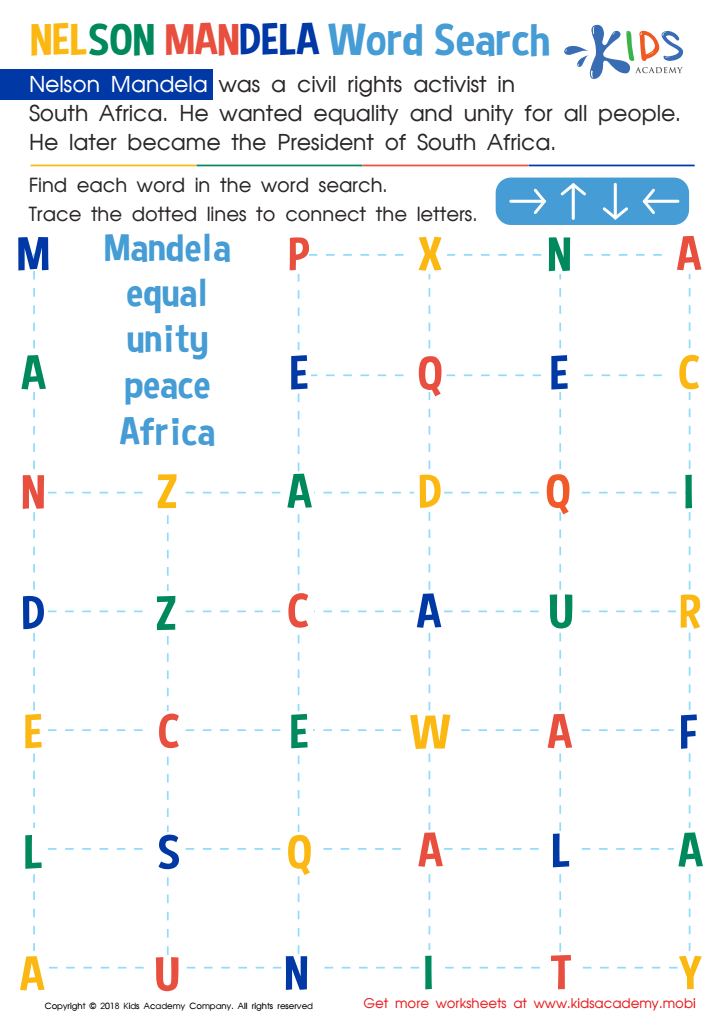
Nelson Mandela Word Search Worksheet
Kids love word searches! This fun, free worksheet teaches about the civil rights activist Nelson Mandela. It includes traceable lines and words related to him, helping improve fine motor skills. A great way to learn about a great man!
Nelson Mandela Word Search Worksheet
Worksheet
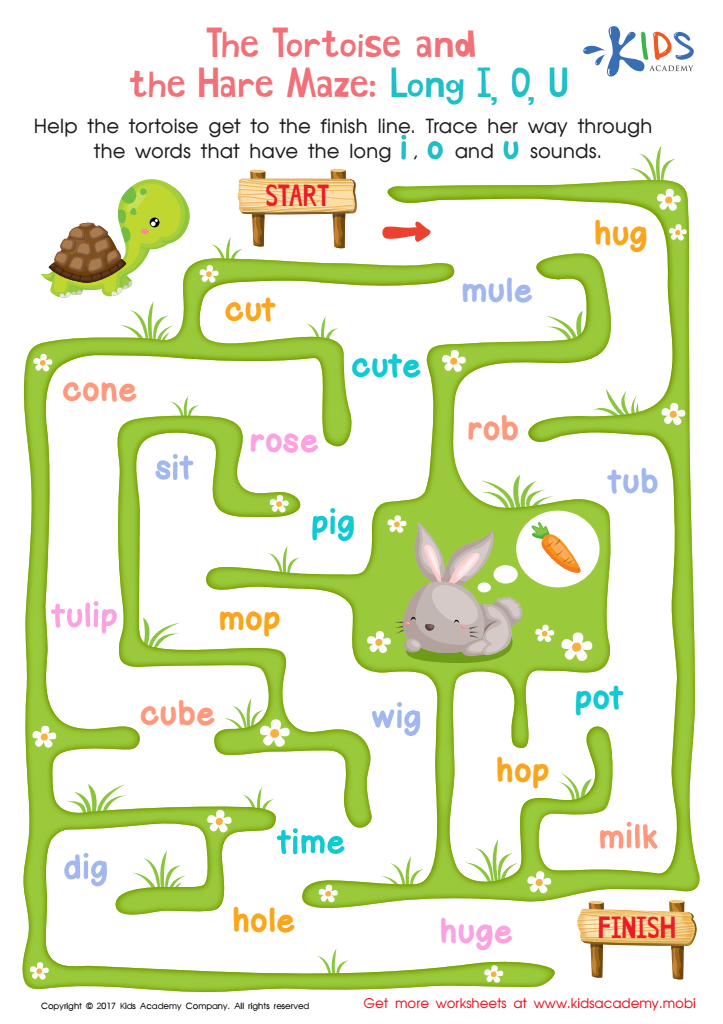
Long I, O, U Words Worksheet
This fun phonics worksheet has your child race the tortoise and hare to the finish line. Find all the long vowel sounds to win! It'll help your child's recognition of long I, O, and U words without him realizing it!
Long I, O, U Words Worksheet
Worksheet
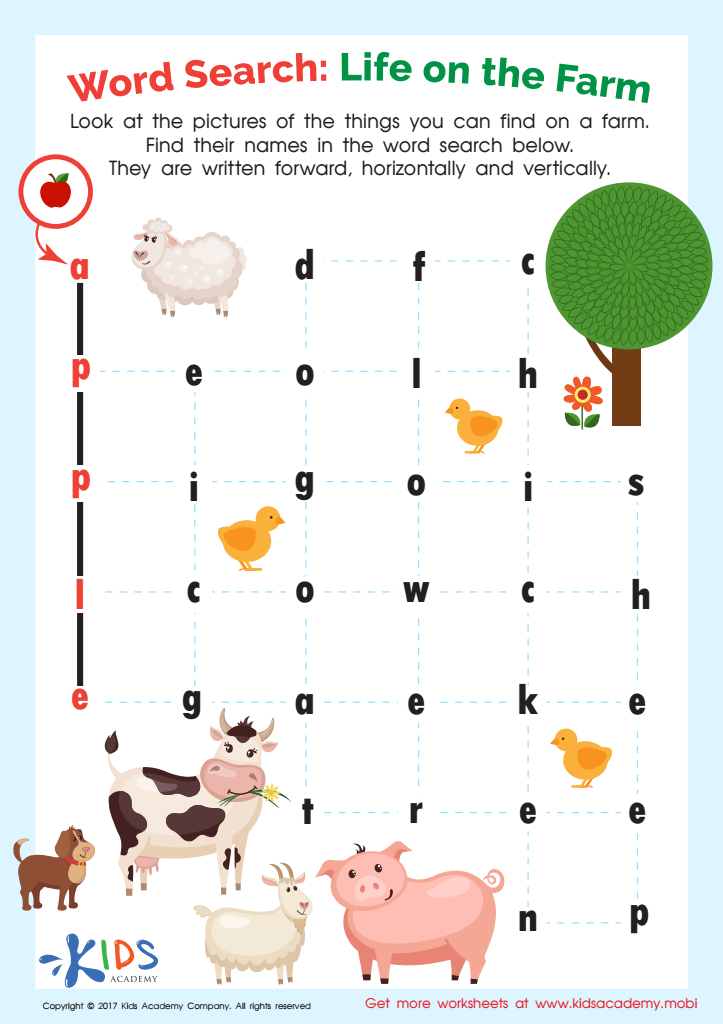
Word Search Puzzles Worksheet
2nd grade word search puzzles are great fun, helping kids flex their knowledge of words and spellings. Kids can use the pictures to find farm-themed words hidden on the page. It's a great way to learn!
Word Search Puzzles Worksheet
Worksheet
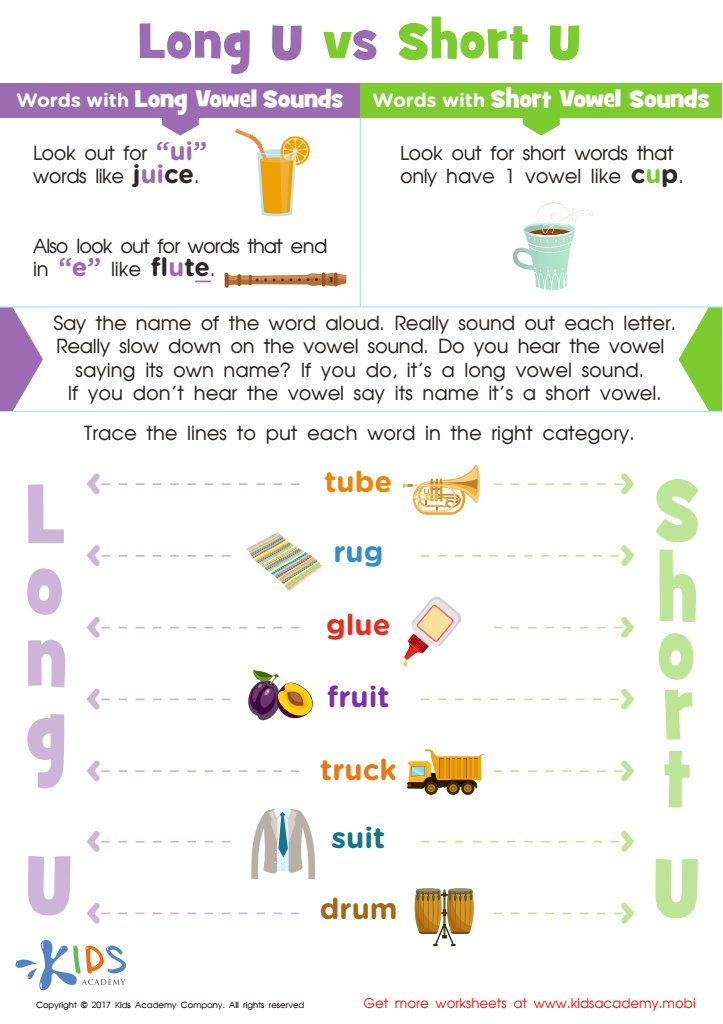
Long and Short Vowel U Spelling Worksheet
Help your child learn long and short vowel sounds with this fun long and short vowel U worksheet! Kids can become proficient spellers by mastering simple spelling tricks and sounding out letters.
Long and Short Vowel U Spelling Worksheet
Worksheet
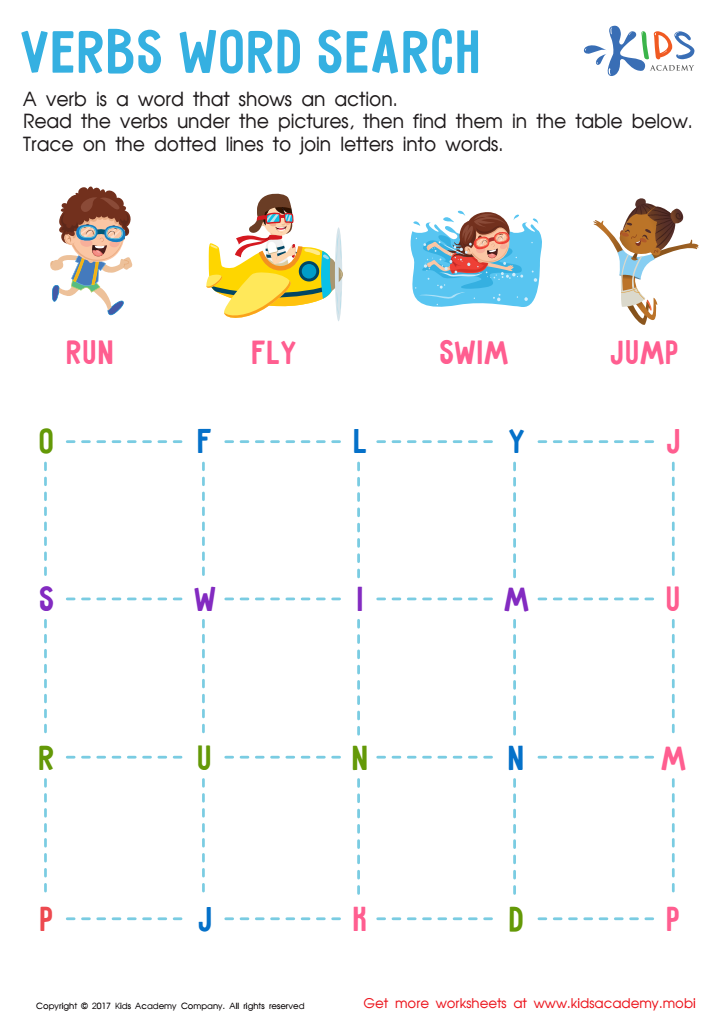
Verbs Word Search Worksheet
Ask your child if they understand the meaning of the word "verb". If not, explain that it's a word that shows an action. Give examples of familiar verbs. Then look at the pictures in the tracing sheet and read the words. Ask your child to follow the dotted lines to find the hidden words. Perfect tool to teach spot and use verbs!
Verbs Word Search Worksheet
Worksheet
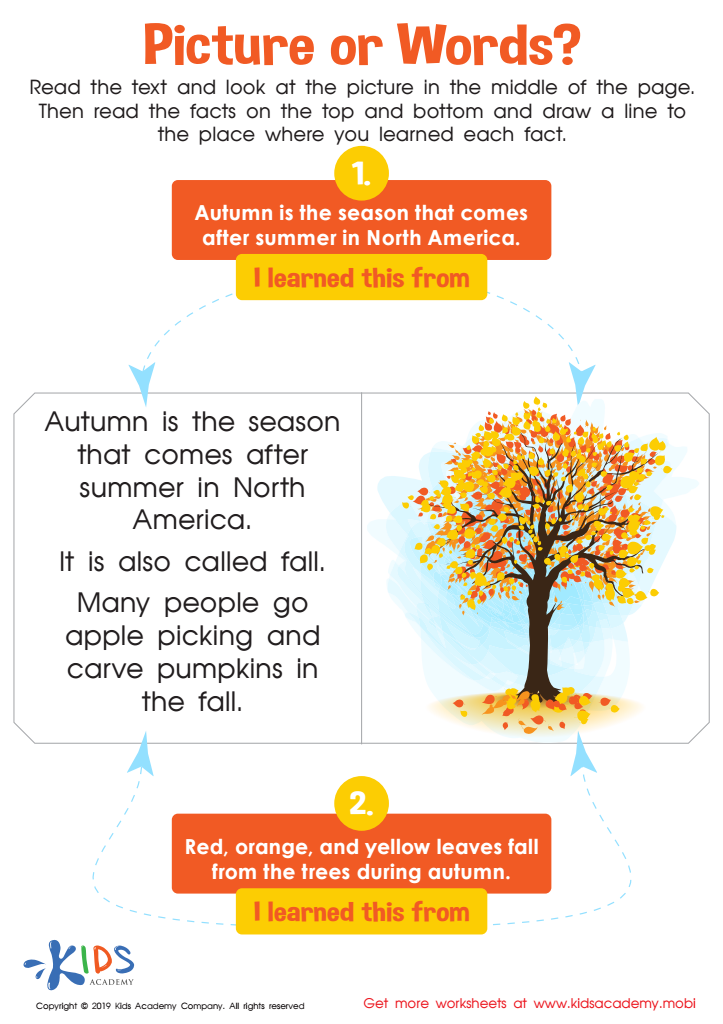
Picture Words Worksheet
Pictures are key for early reading skills. Remind children to use all resources when reading passages to understand meaning. With the free PDF, kids can learn through pictures & words, then answer questions based on what they learned. This hits home that all info in text is valuable, pics included!
Picture Words Worksheet
Worksheet
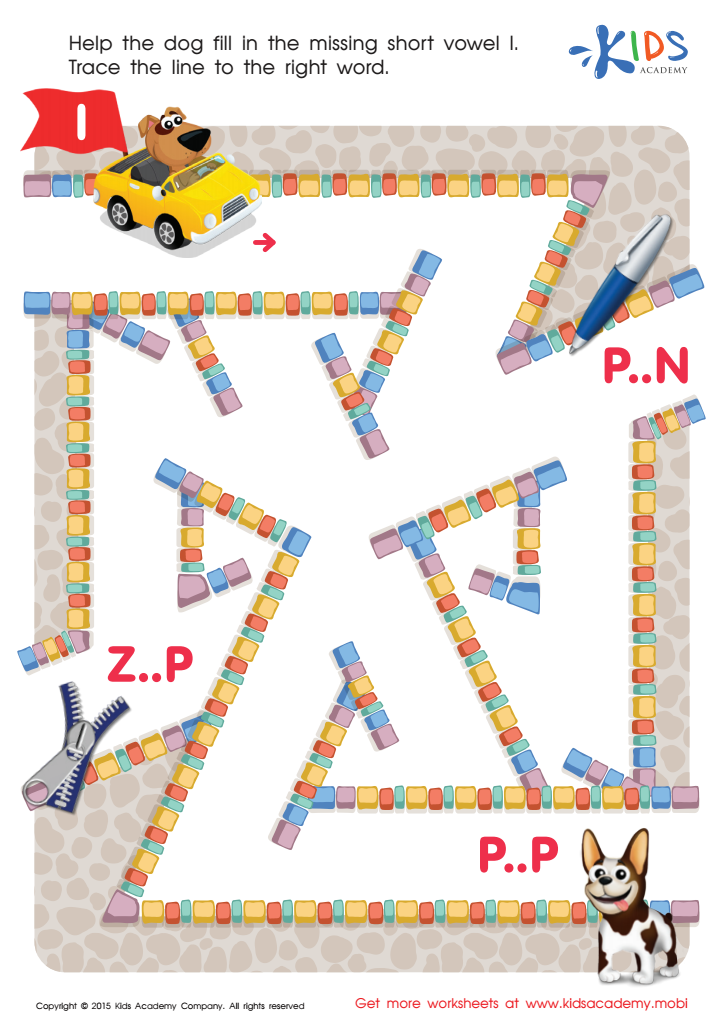
Short Vowel Sound I Worksheet
This free printable phonics worksheet will get your kid prepped for reading! It's a maze to help the dog complete the word “zip” with the missing letter I. Have your kid say the word aloud to learn the I sound. It's a great way to practice reading, writing and spelling skills. Check out here for more phonics worksheets!
Short Vowel Sound I Worksheet
Worksheet
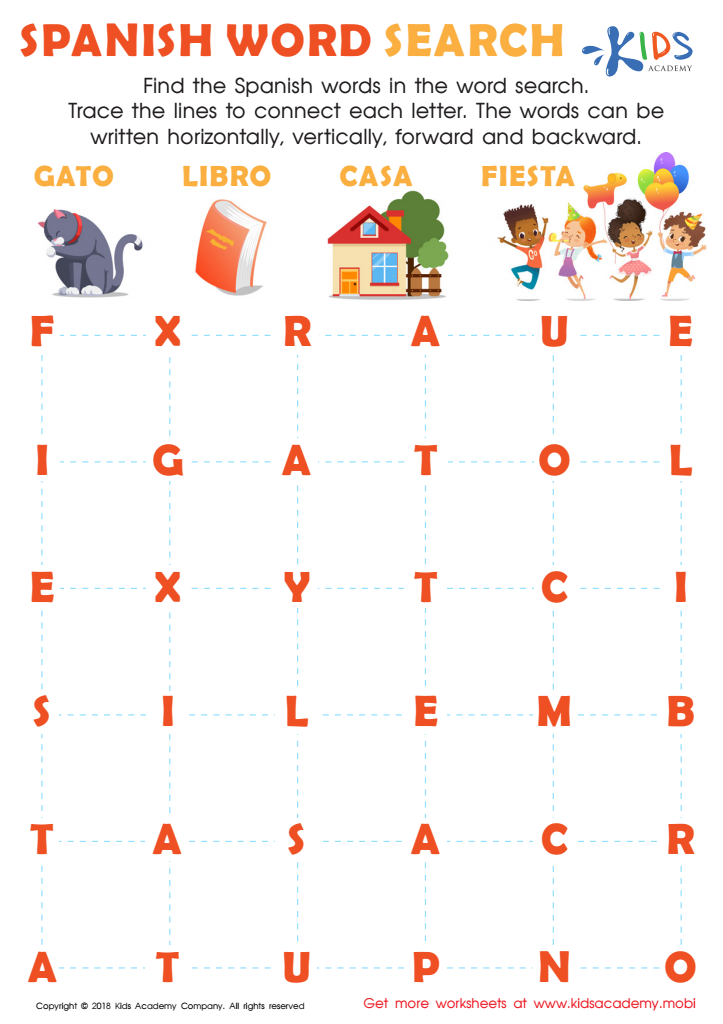
Spanish Word Search Worksheet
This free worksheet encourages students to learn Spanish words while developing visual, fine motor, and hand-eye coordination skills. Through colorful pictures and traceable lines, the task of finding words such as gato, libro, casa, and fiesta is disguised as a fun and engaging way to explore new cultures.
Spanish Word Search Worksheet
Worksheet
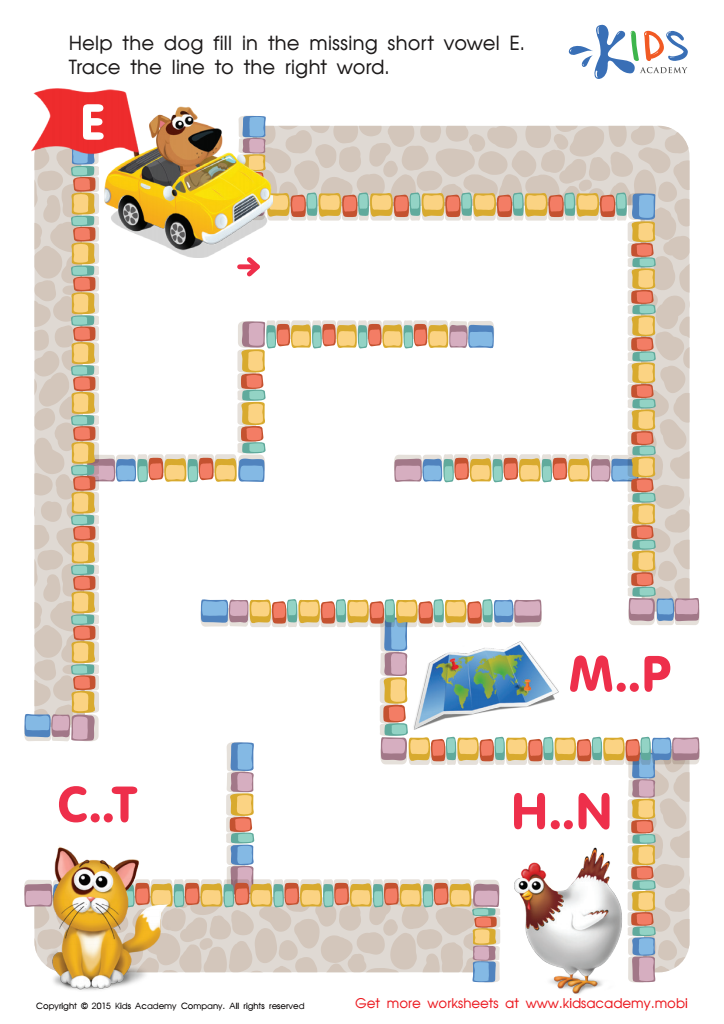
Short Vowel Sound E Worksheet
This free printable phonics worksheet helps kids learn the short vowel sound E. Kids need to help the dog complete the word “hen” by finding their way through a maze. It teaches kids to see the connection between letters and sounds and also strengthens their writing and spelling skills. Fun and educational, this phonics worksheet is great for kids. Want more? Check out here.
Short Vowel Sound E Worksheet
Worksheet
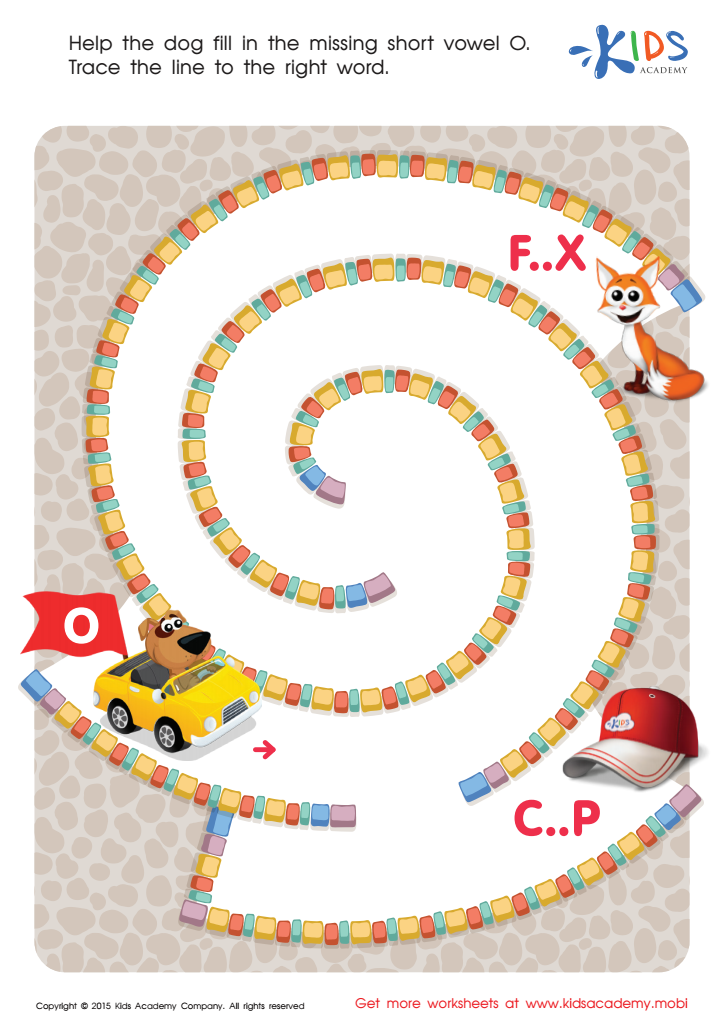
Short Vowel Sound O Worksheet
Help your child learn the short vowel sound O with this fun and free printable phonics worksheet! They'll need to complete the maze to help the dog finish the word "fox" with the missing letter O. Engage their fine motor muscles while they color or trace the maze with crayon or pencil. This educational activity is sure to bring a smile to your little learner's face! For more phonics worksheets, check here.
Short Vowel Sound O Worksheet
Worksheet
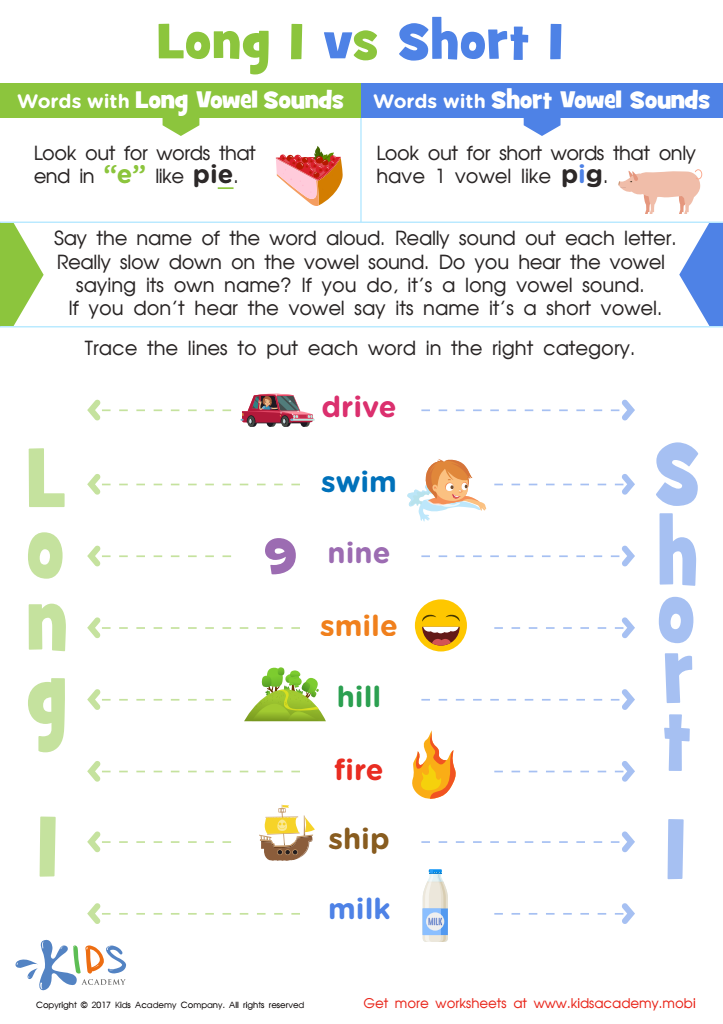
Long and Short Vowel I Spelling Worksheet
When it comes to long "I" sounds, kids should look out for the letter "E" at the end. With examples and sounding out words, kids will improve spelling skills with this long/short "I" worksheet!
Long and Short Vowel I Spelling Worksheet
Worksheet
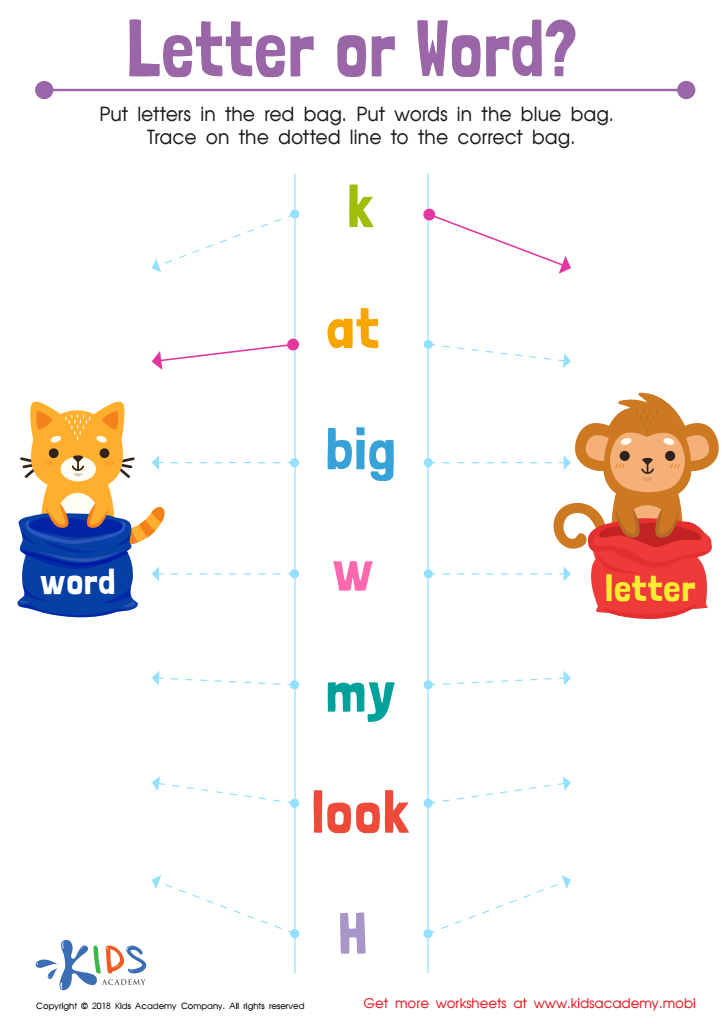
Letter or Word? Worksheet
Help your kids differentiate between words and letters. If they can recite their alphabets and identify common words, this tracing sheet will be a breeze. Have them trace on the dotted lines to place the letters in the red bag with the kitten, and the words in the blue bag with the monkey.
Letter or Word? Worksheet
Worksheet
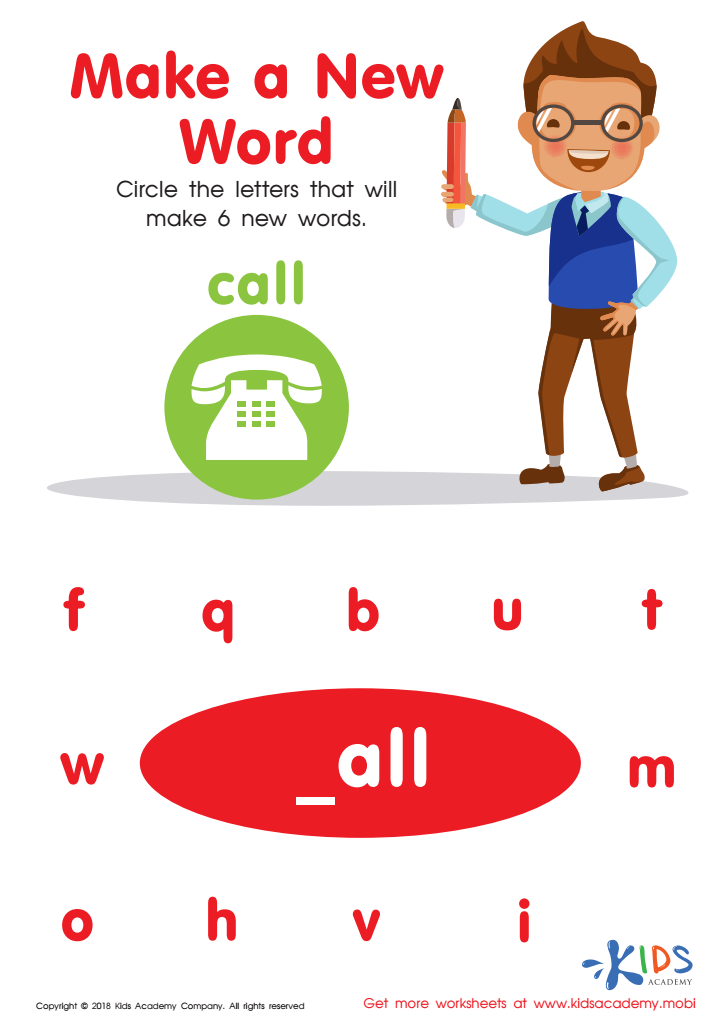
Make a New Word Worksheet
Young readers and writers can enhance their skills with this fun PDF worksheet. They'll trace letters to create new words and feel like super readers and writers after finding six words. They'll also practice building words with the "all" word family.
Make a New Word Worksheet
Worksheet
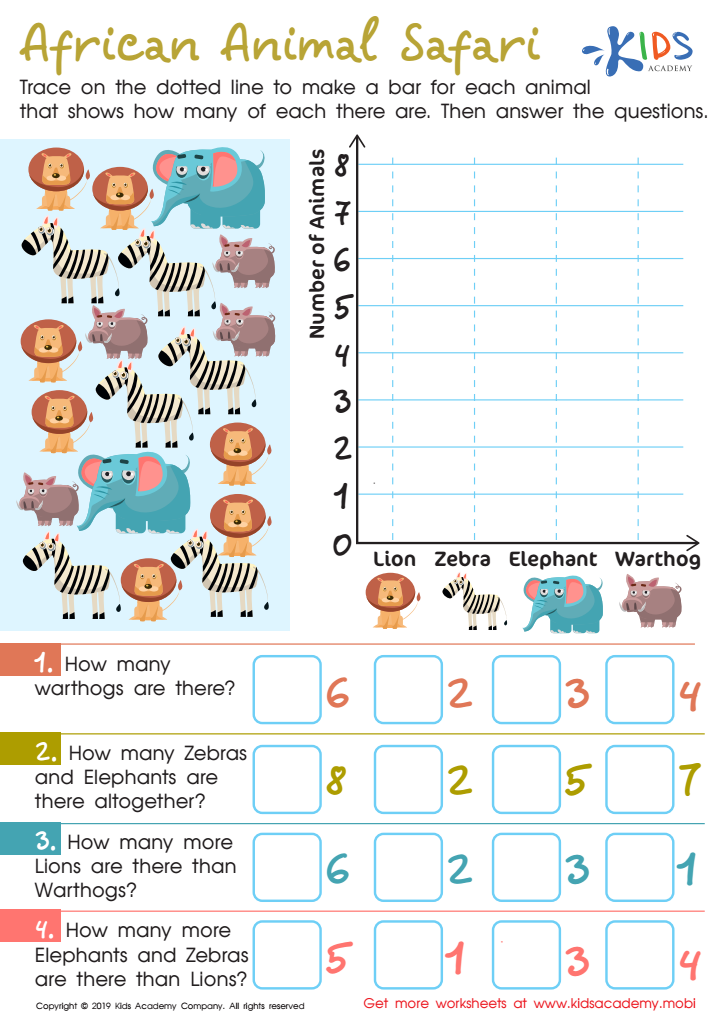
African Animal Safari Worksheet
Help students learn geography and math, with this worksheet. Examine the graph and ask your students questions. Have them answer using the graph and addition/subtraction exercises. This can help them name continents, countries, and animals unique to each.
African Animal Safari Worksheet
Worksheet
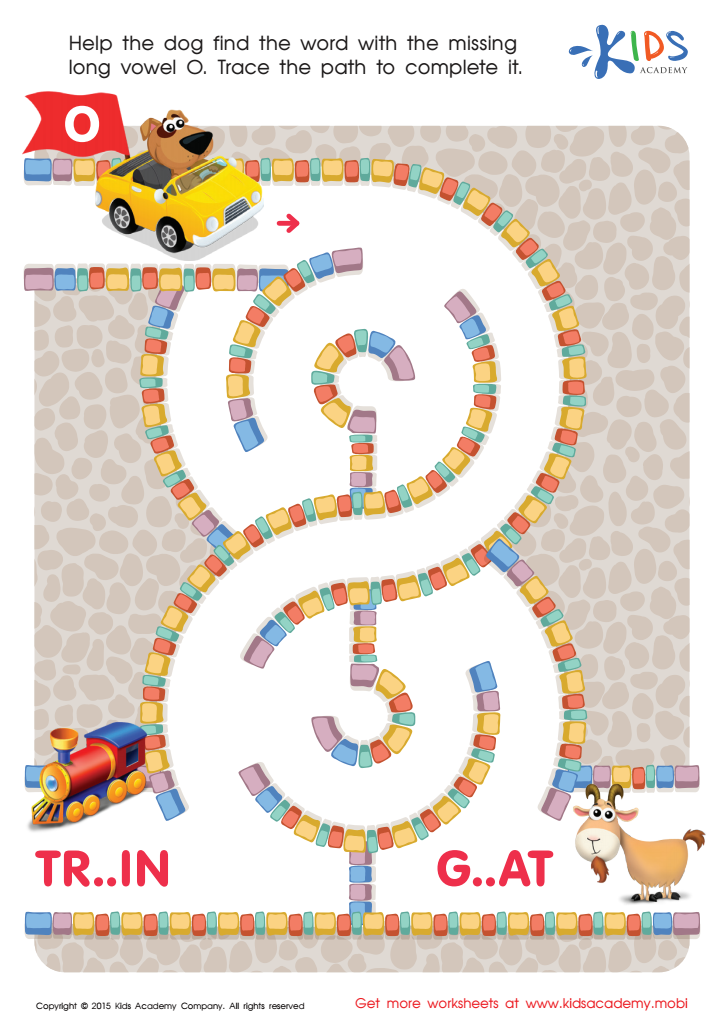
Long Vowel Sound O Worksheet
Help the goat find her missing O! Guide your little learner through this fun maze to help the goat get its vowel sound back. Make phonics learning engaging and enjoyable with this free printable worksheet.
Long Vowel Sound O Worksheet
Worksheet
Join Kids Academy for Free
Who is primarily going to use this learning content?


.jpg)


.jpg)


Spelling practice is crucial for children's literacy development, particularly for ages 3-8, when foundational language skills are being established. Educators and parents should prioritize Spelling practice Extra Challenge activities to enhance children's phonemic awareness and vocabulary, which are integral to reading proficiency. As young children encounter new words, engaging with spelling challenges fosters cognitive development through critical thinking and problem-solving.
Moreover, spelling practice cultivates a sense of achievement in children. Mastery of spelling can boost their confidence and motivation to read and write, fostering a positive attitude toward learning. This age group is particularly impressionable, making it the perfect time to introduce enjoyable and interactive methods that make learning engaging.
Additionally, these practices help bridge the gap between spoken and written language. Children develop better communication skills and are more likely to express their thoughts clearly and coherently. Ultimately, consistent spelling practice lays the groundwork for future learning and academic success, transforming young learners into proficient communicators ready to tackle more complex literacy challenges as they grow. By investing time in spelling enrichment, parents and teachers help instill lifelong language skills that are instrumental not just in academic settings, but throughout life.








