Story sequencing Extra Challenge Worksheets for Ages 3-8
5 filtered results
-
From - To
Elevate your child's storytelling skills with our Story Sequencing Extra Challenge Worksheets designed for ages 3-8! These engaging worksheets encourage young learners to arrange events in the correct order, enhancing their comprehension and critical thinking abilities. The fun, colorful illustrations capture their attention, making learning enjoyable. Each activity promotes creativity as children explore narratives and develop their storytelling techniques. Perfect for use at home or in the classroom, our worksheets provide the ideal supplemental resource for budding readers. Help your child master the art of sequencing with these captivating challenges that nurture their love for stories and learning!
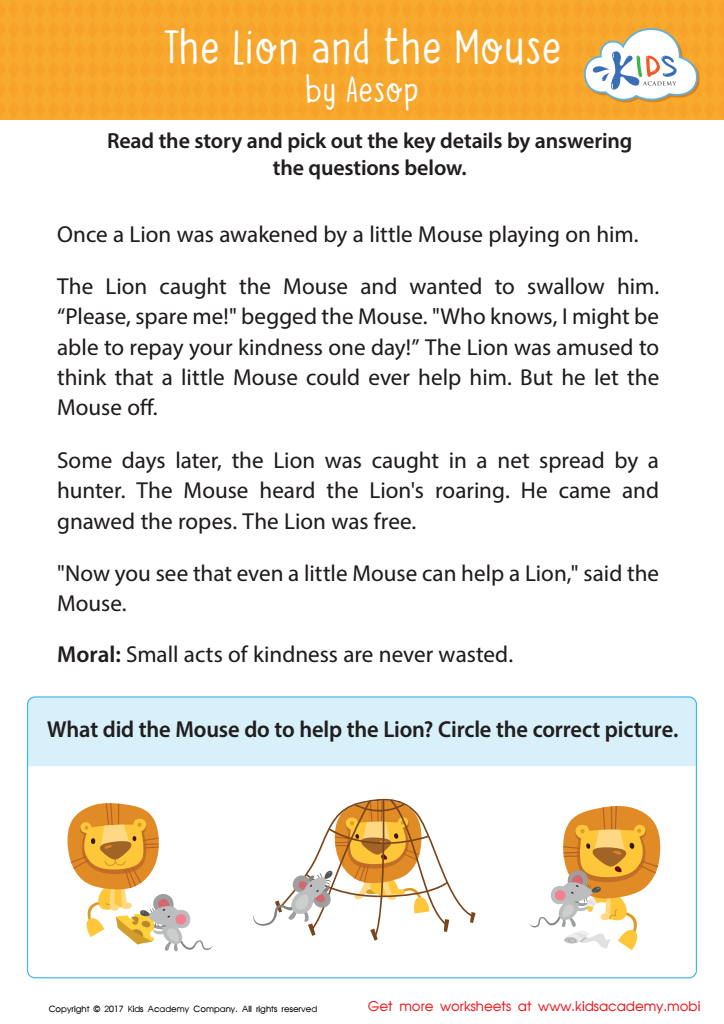
The Lion and The Mouse Sequencing Worksheet
 Assign to My Students
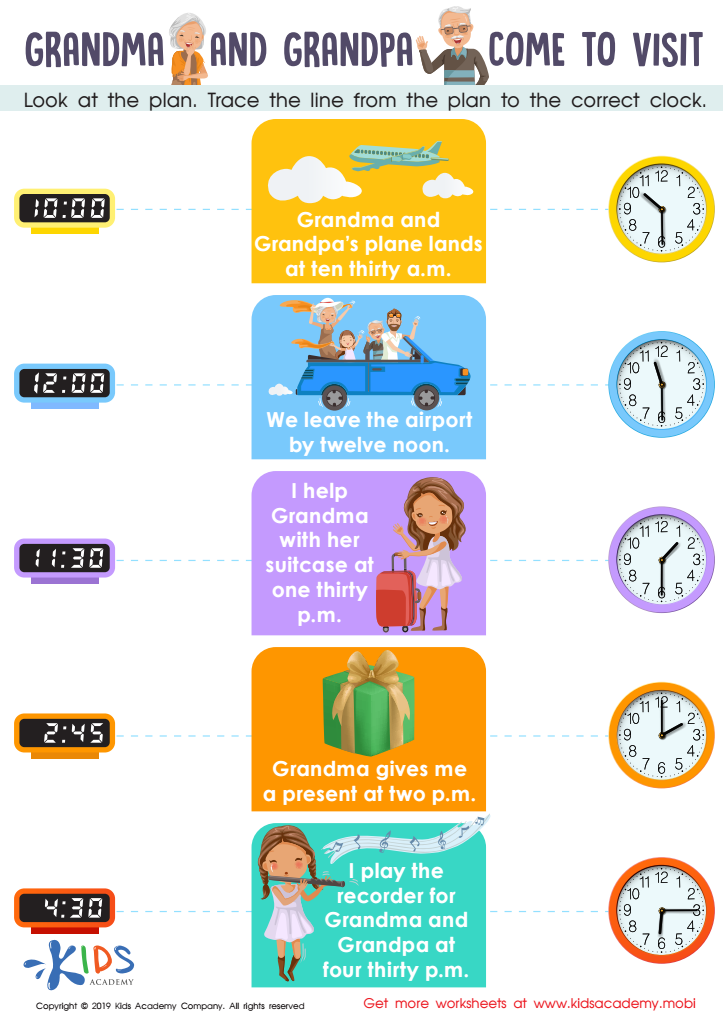
Grandpa and Grandma Come to Visit Worksheet
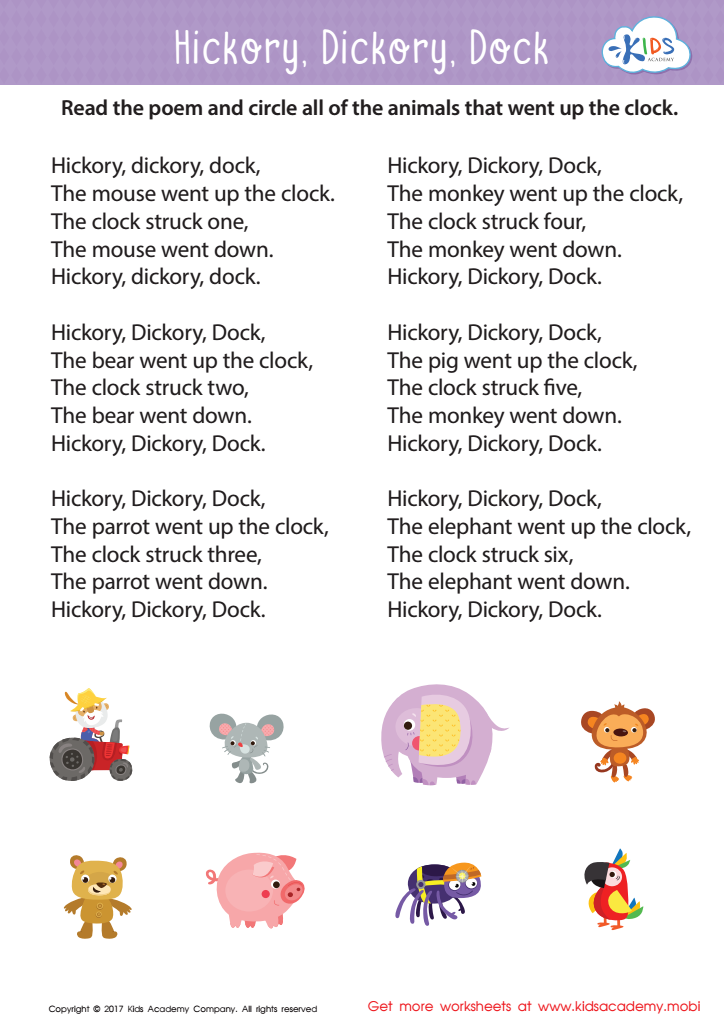
Hickory Dickory Dock Sequencing Worksheet
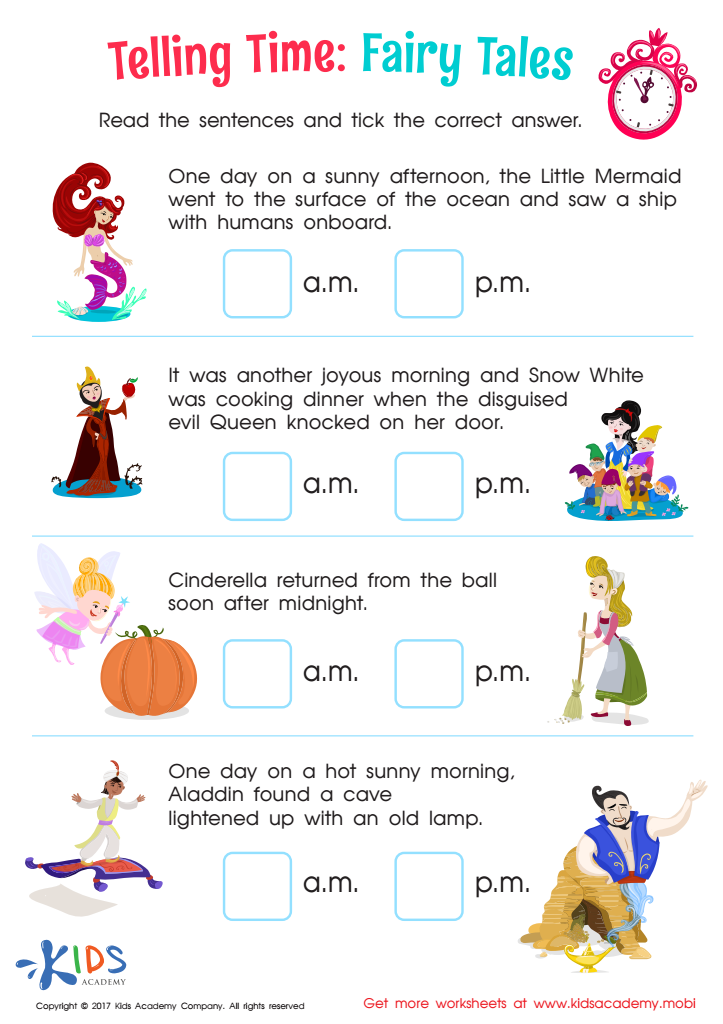
Telling Time: Fairy Tales Worksheet
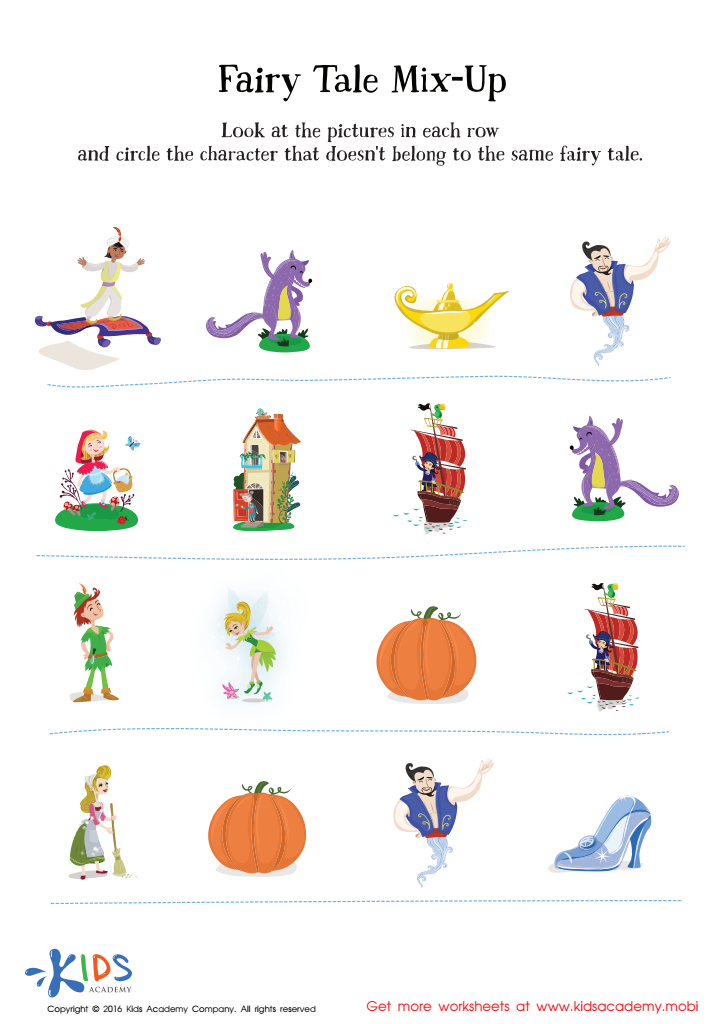
Fairy Tale Worksheet: Story Mix Up






Story sequencing is a crucial skill for children aged 3-8, significantly influencing their cognitive and linguistic development. Parents and teachers should care about this concept as it promotes critical thinking by encouraging children to understand the order of events in a narrative. Mastering sequencing helps improve comprehension, allowing young learners to grasp the beginning, middle, and end of stories, which in turn enhances their ability to retell narratives.
Additionally, story sequencing cultivates creativity and imagination. When children sequence events, they learn to predict outcomes and engage in problem-solving, key components of effective storytelling. This activity also aids in developing language skills and vocabulary, as children articulate their thoughts and describe actions within the sequence.
Furthermore, story sequencing can foster social skills through group activities, promoting collaboration and discussion among peers. Given its multifaceted benefits, integrating story sequencing challenges into learning encourages children to become lifelong readers and storytellers, laying a solid foundation for future literacy. Both parents and teachers play a vital role in nurturing this skill, ensuring that children gain confidence in their communication abilities and cognitive flexibility as they navigate through diverse stories and experiences.








