Problem-Solving Skills Extra Challenge Subtraction Worksheets for Ages 3-8
5 filtered results
-
From - To
Enhance your child's math journey with our "Problem-Solving Skills Extra Challenge Subtraction Worksheets," designed for ages 3-8. These engaging worksheets are tailored to strengthen foundational subtraction skills while fostering critical thinking and problem-solving abilities. Each worksheet presents fun and challenging scenarios that encourage children to apply subtraction concepts in real-life situations. From colorful graphics to interactive problems, these resources make learning enjoyable and meaningful. Perfect for both classroom settings and at-home practice, our worksheets help young learners build confidence and proficiency in math. Empower your child to tackle subtraction challenges with creativity and flair today!
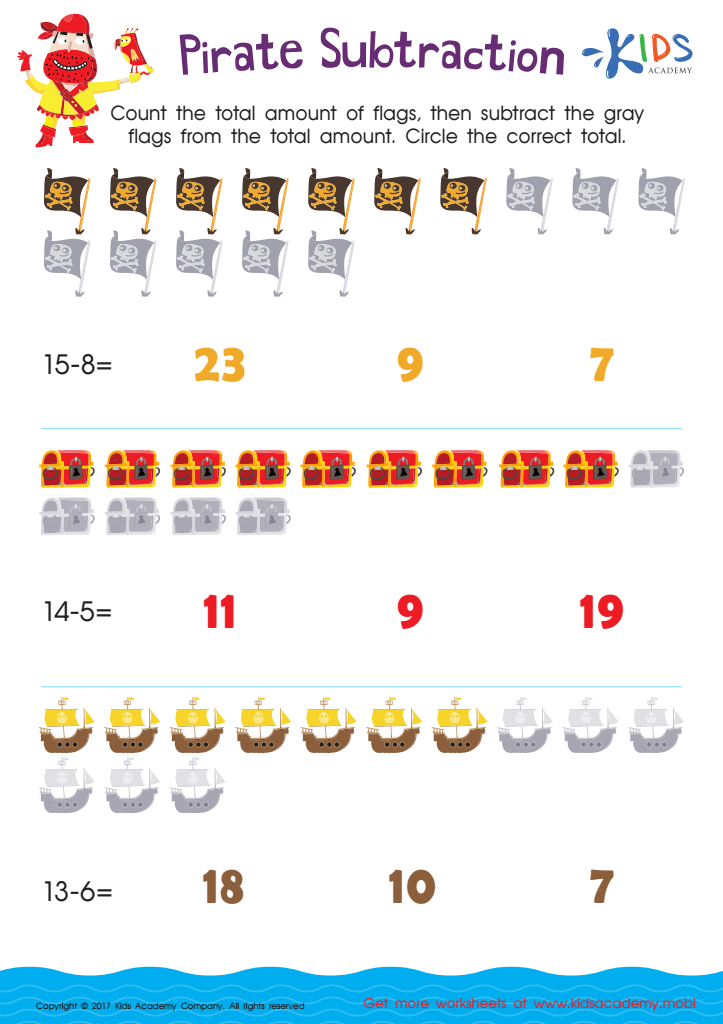
Pirate Subtraction Substraction Worksheet
 Assign to My Students
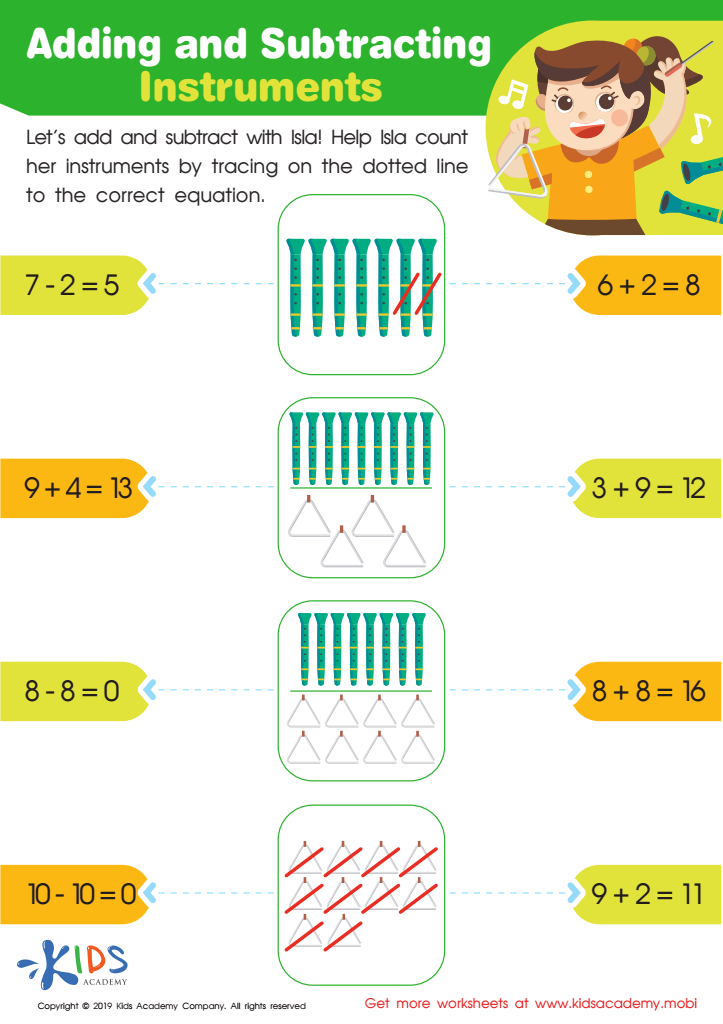
Adding and Subtracting: Instruments Worksheet
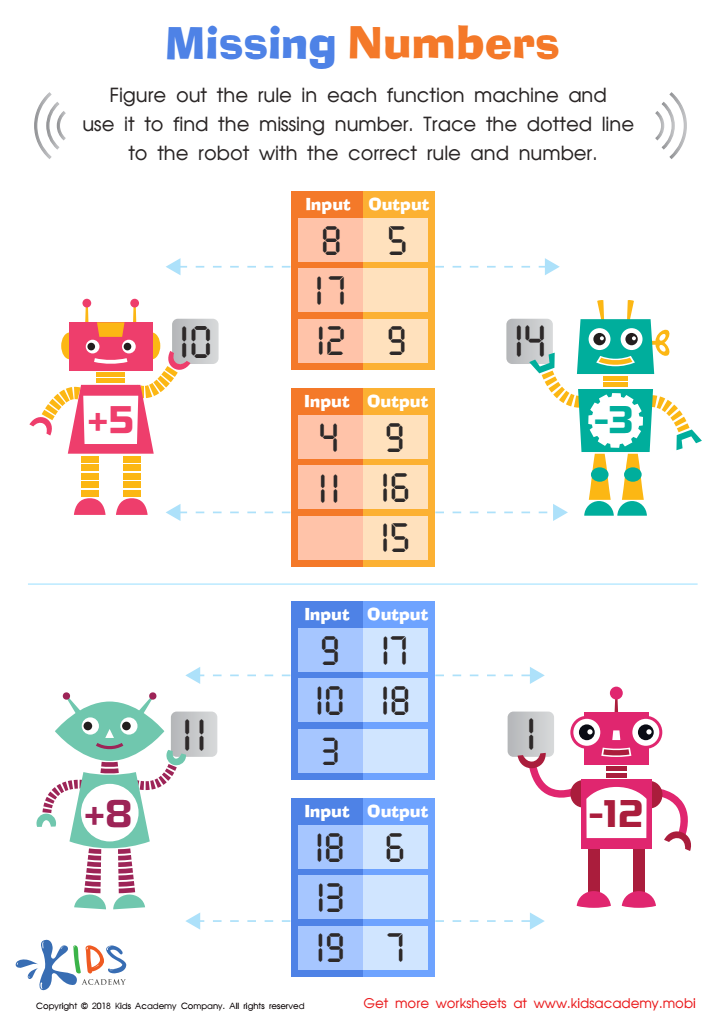
Missing Numbers Worksheet
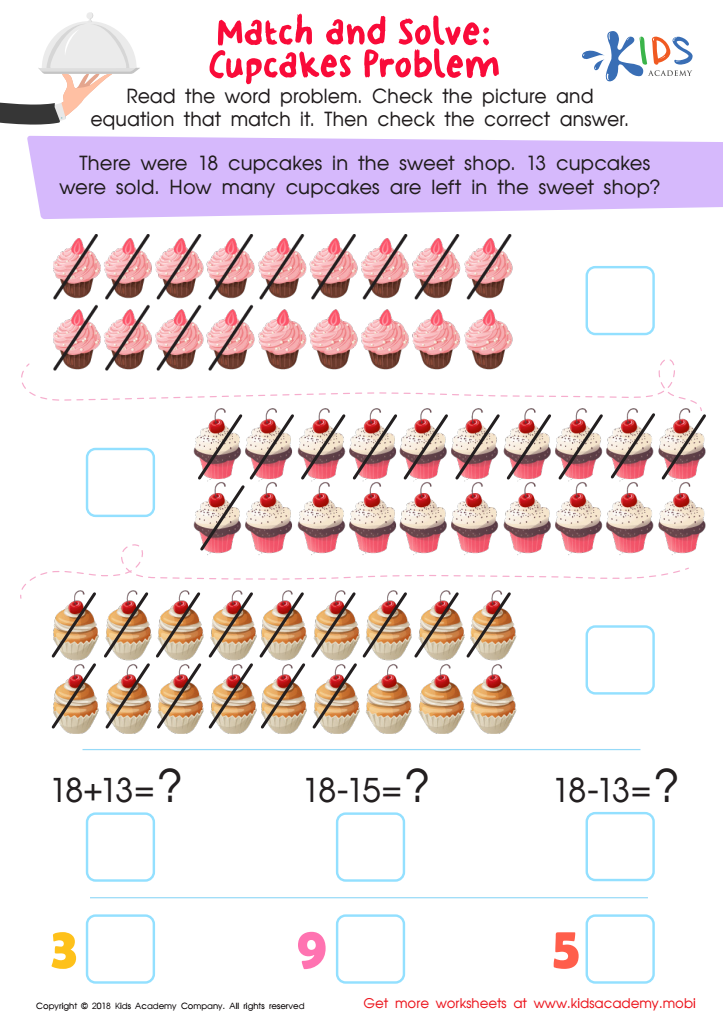
Match and Solve: Cupcakes Problem Worksheet
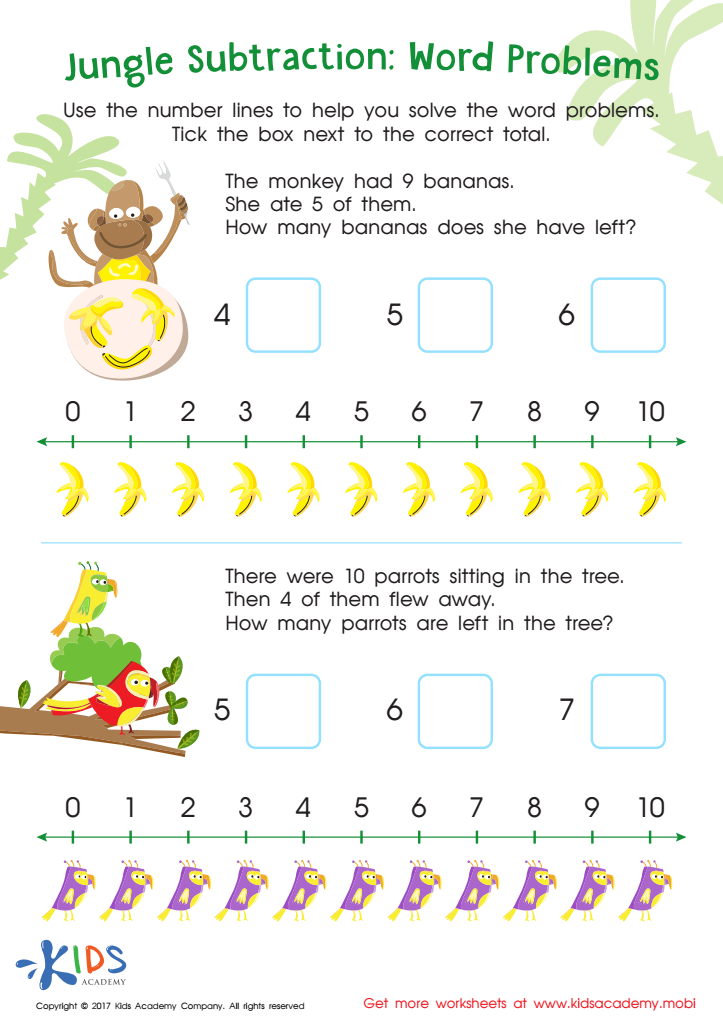
Jungle Subtraction Word Problems Substraction Worksheet








Problem-solving skills are essential foundational skills that significantly contribute to a child's cognitive and emotional development. For ages 3-8, engaging children in activities like Problem-Solving Skills Extra Challenge Subtraction can foster critical thinking, analytical reasoning, and perseverance. These skills are not just vital for math; they serve as building blocks for effective learning in various subjects.
When children tackle subtraction problems, they learn how to identify and approach challenges systematically. This engagement enhances their ability to break down complex tasks into manageable parts, sharpening their overall problem-solving abilities. Furthermore, grasping subtraction concepts introduces children to essential math skills that are crucial for their future academic success.
For teachers and parents, encouraging children in these challenges builds their confidence and nurtures a love for learning. It allows educators and caregivers to observe a child's thought processes, enabling timely support and guidance. Additionally, acquiring such skills promotes collaborative learning, as children often work with peers or adults to solve problems, improving communication and social skills.
Collectively, nurturing problem-solving skills at this age primes children for lifelong learning, equipping them with tools to navigate obstacles effectively throughout their academic journeys and beyond.