Understanding fractions Extra Challenge Worksheets for Ages 3-9
11 filtered results
-
From - To
Introduce your child to the world of fractions with our "Understanding Fractions Extra Challenge Worksheets for Ages 3-9". These engaging and carefully crafted worksheets are specifically designed to cater to young learners, making the abstract concept of fractions tangible and fun. Each worksheet progressively guides children through simple to complex fraction problems, ensuring a strong foundational understanding. Ideal for home or classroom use, these resources help solidify critical math skills while boosting confidence. Transform your child's learning experience and watch them master fractions effortlessly. Start exploring our comprehensive collection today for a brighter mathematical future!
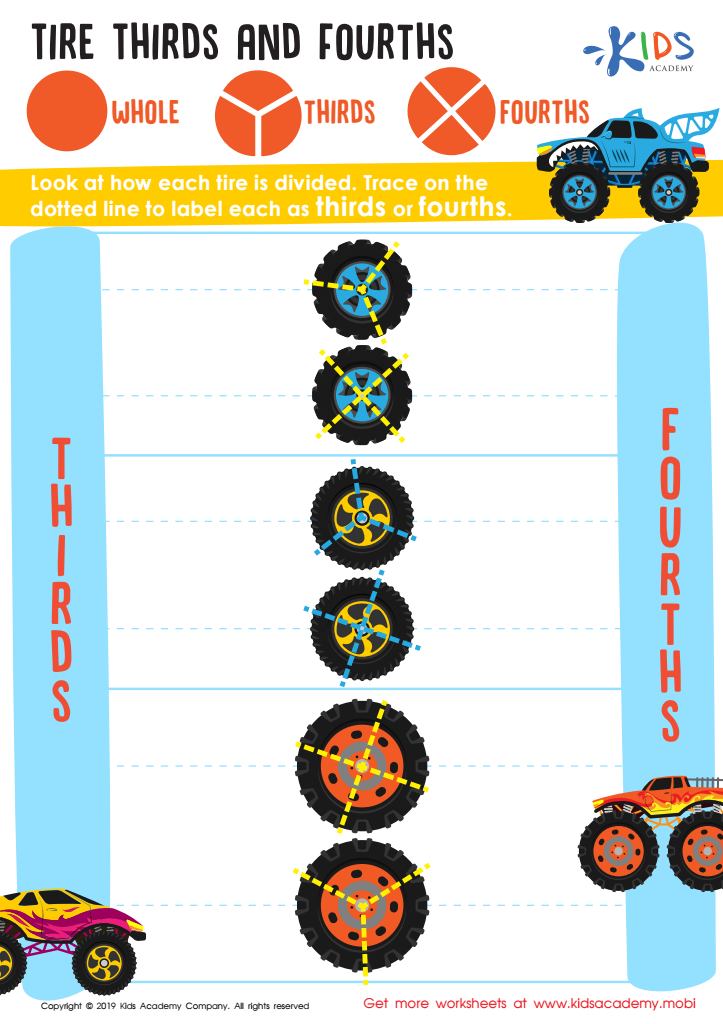
Tire Thirds and Fourths Worksheet
 Assign to My Students
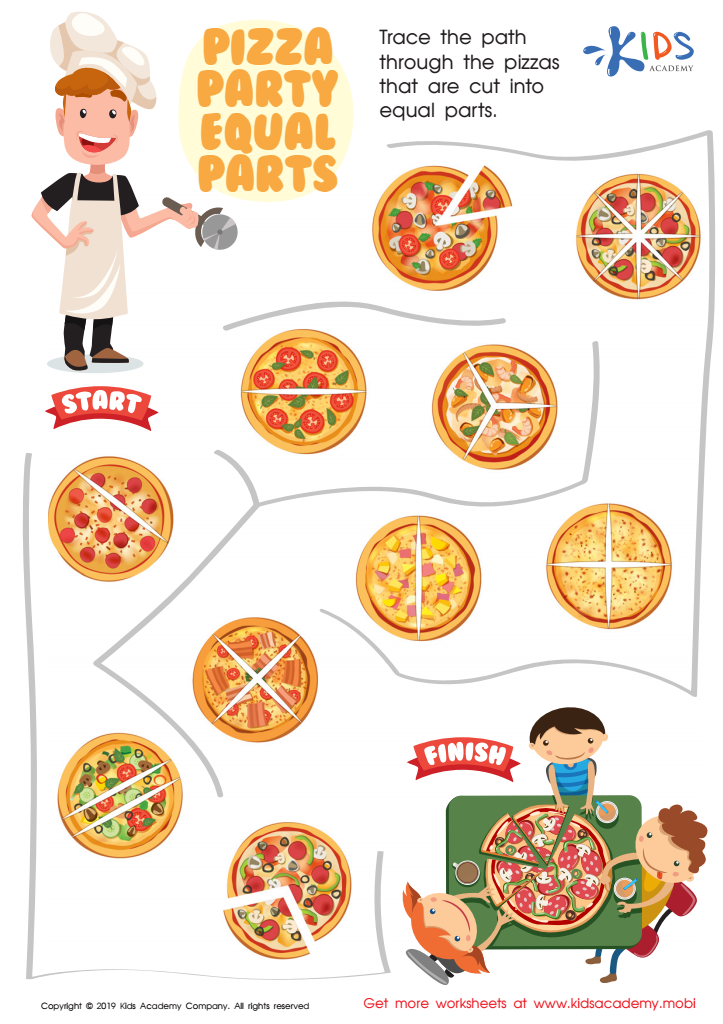
Pizza Party Equal Parts Worksheet
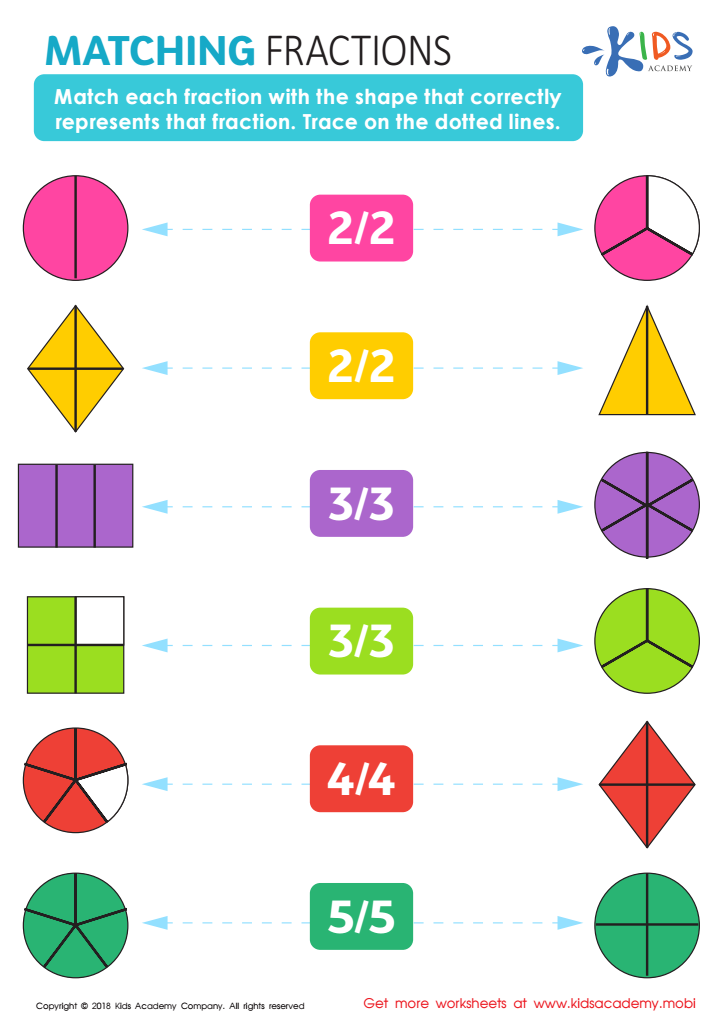
Matching Fractions Worksheet
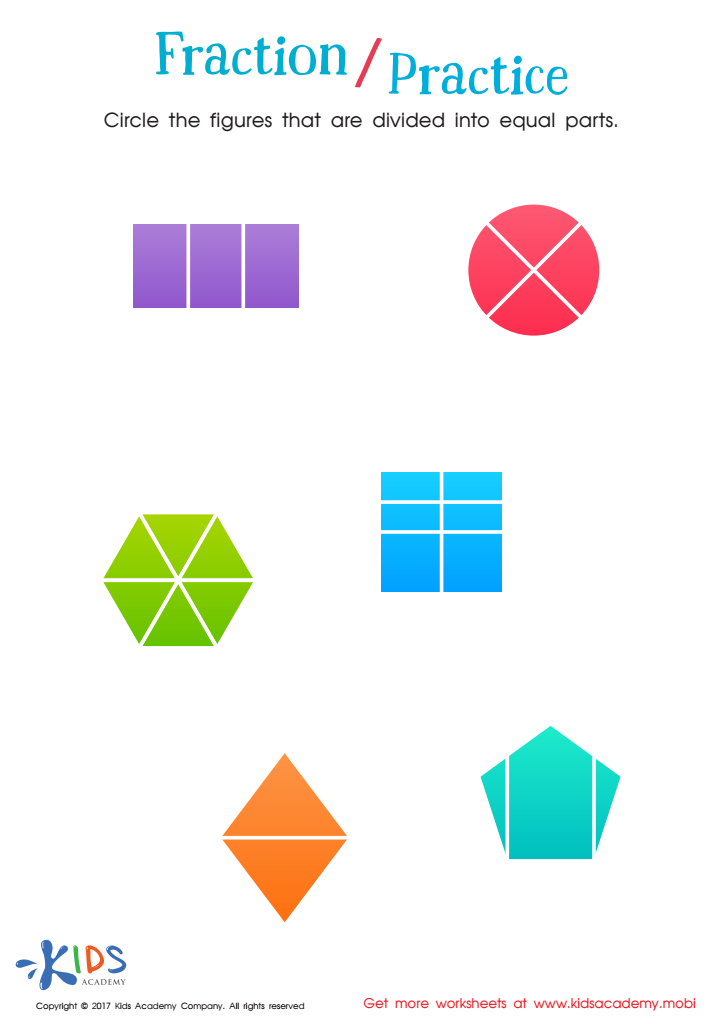
Fractions: Shapes Worksheet
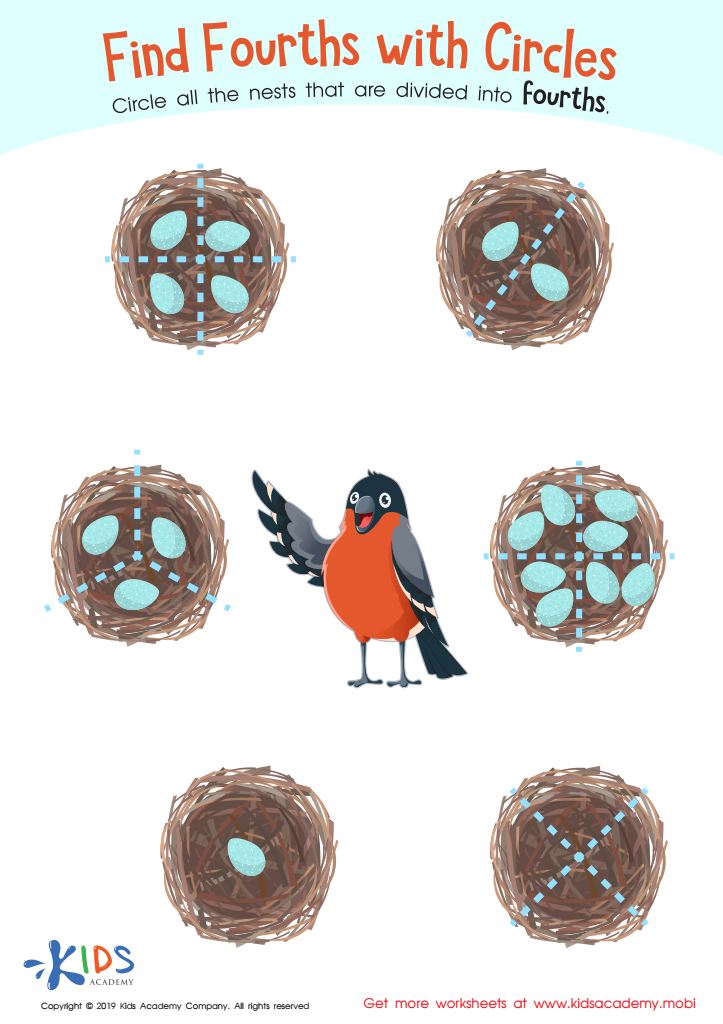
Find Fourths Circles Worksheet
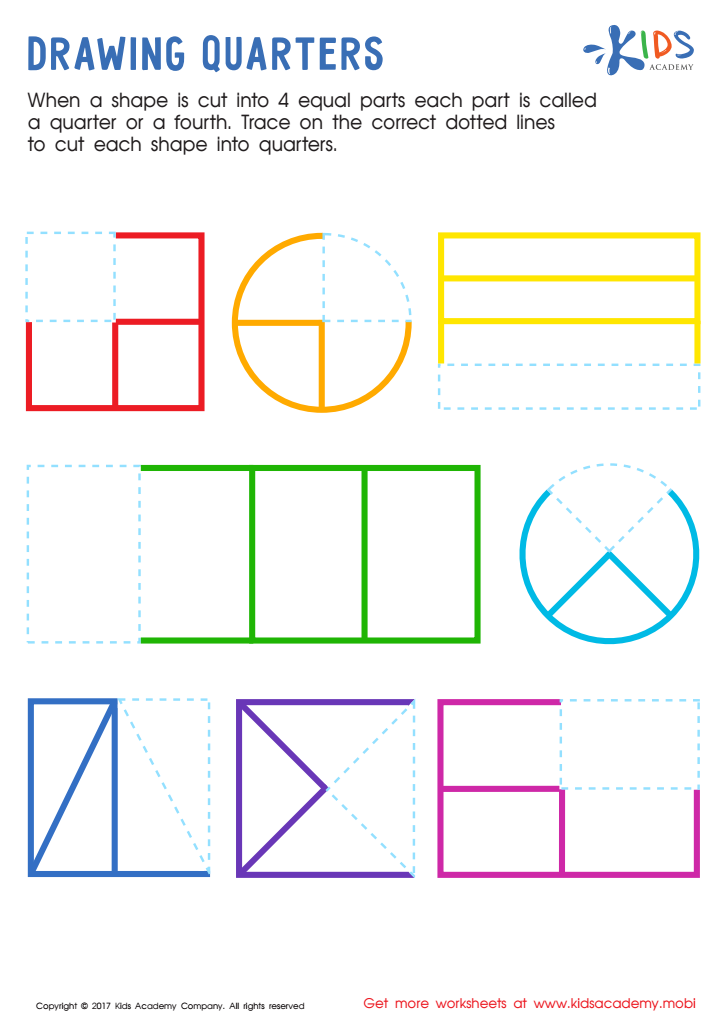
Drawing Quarters Worksheet
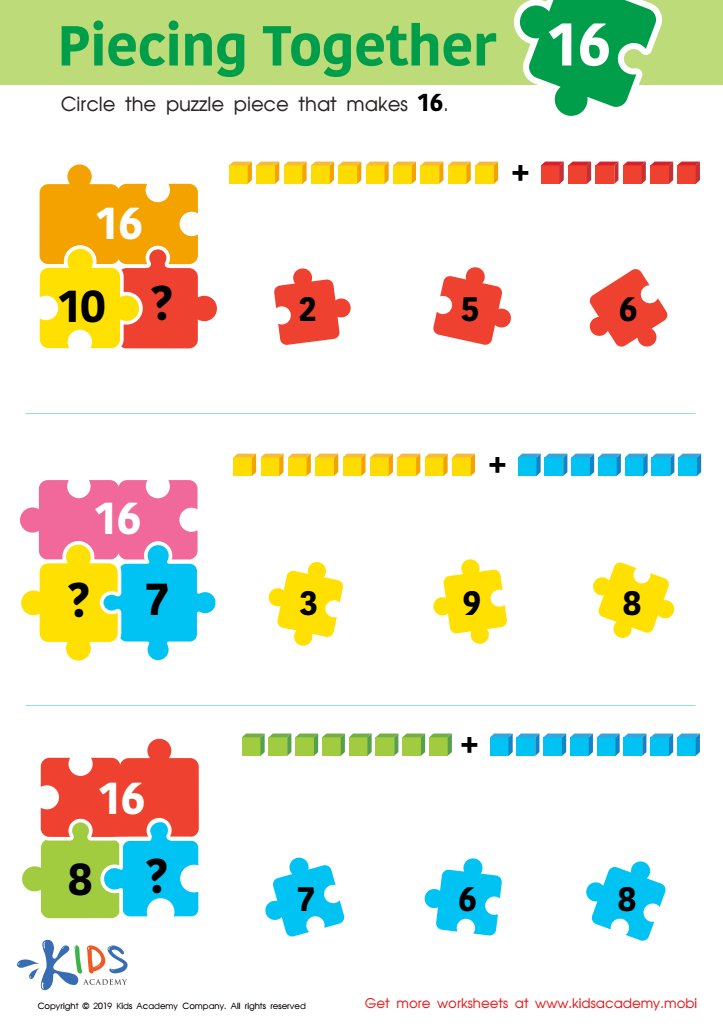
Piecing Together 16 Worksheet
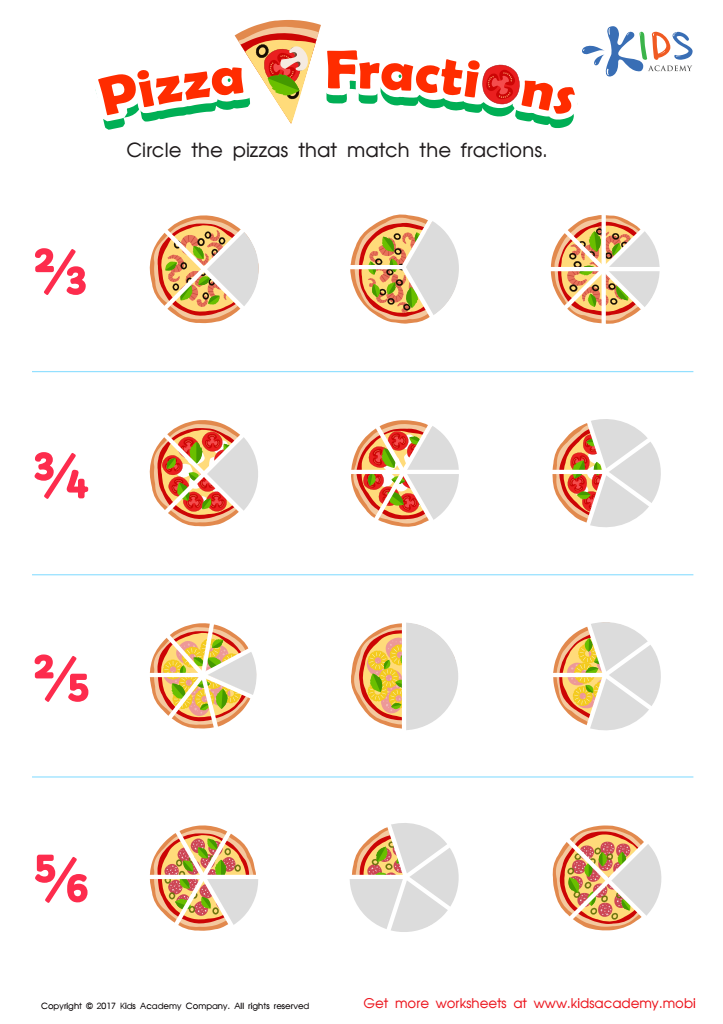
Fractions: Pizza Printable
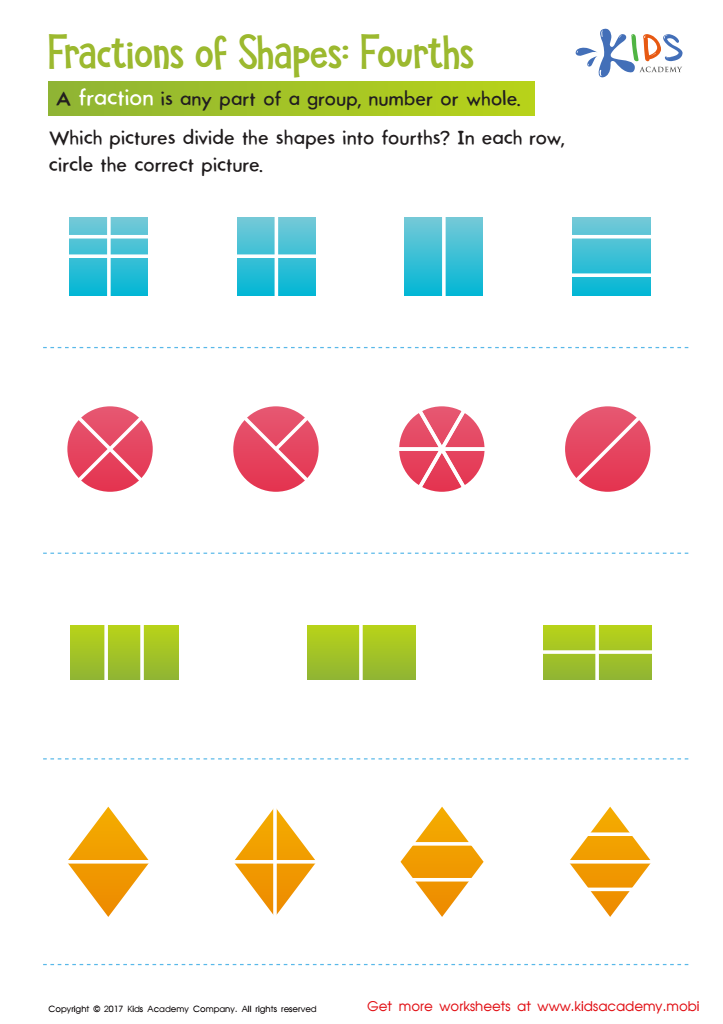
Fractions of Shapes Worksheet
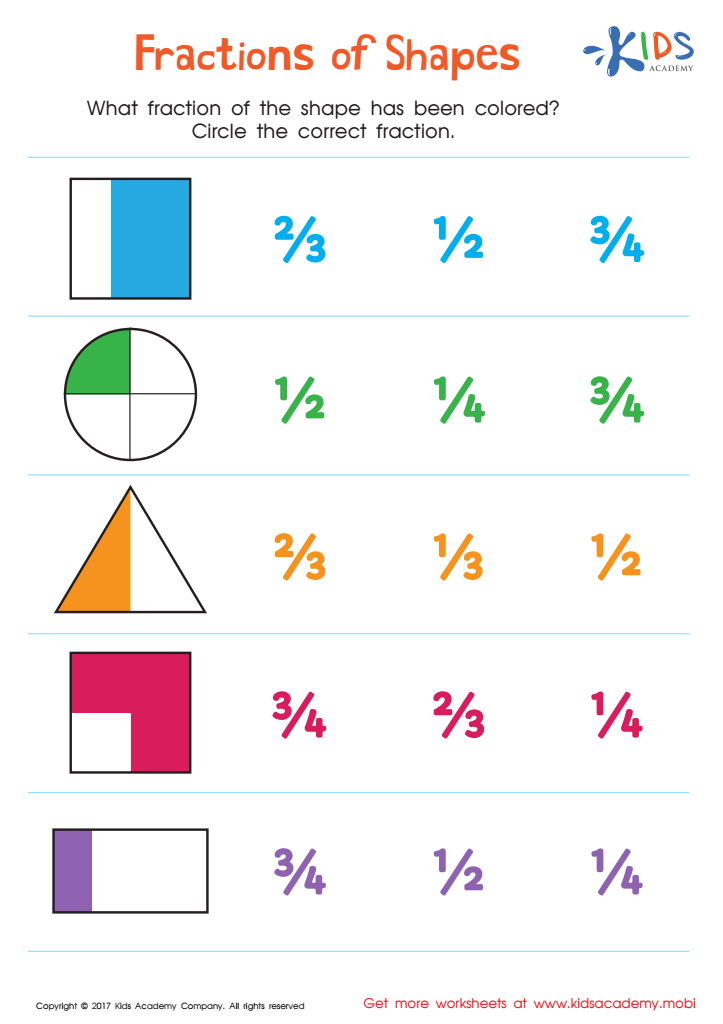
Fractions of Shapes: Math Concept Worksheet
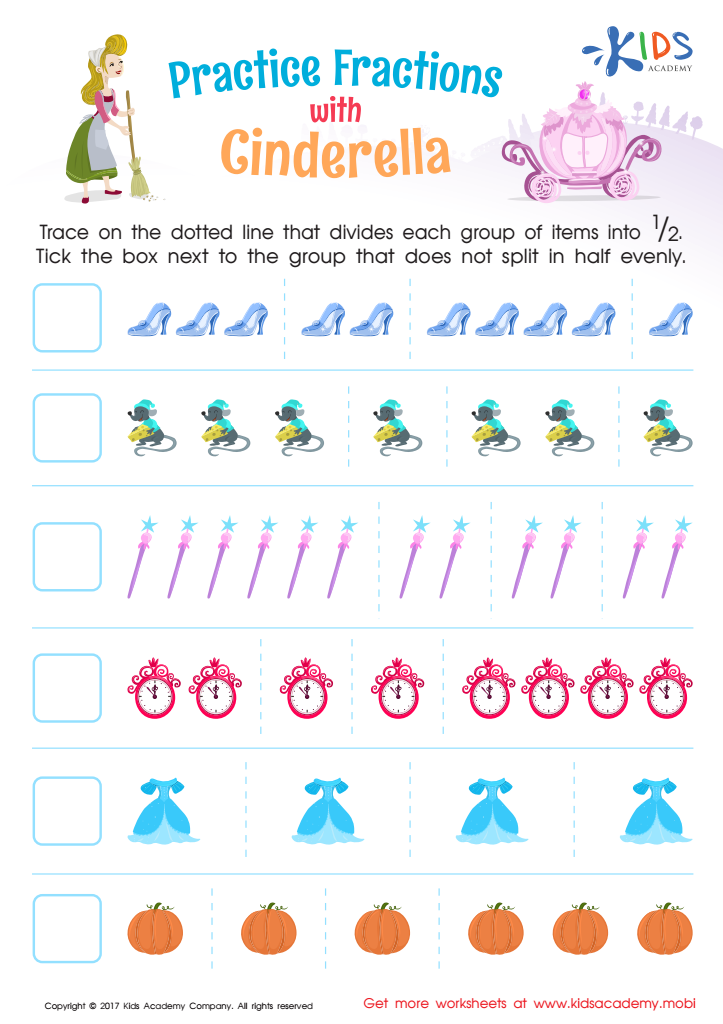
Fractions: Cinderella Printable






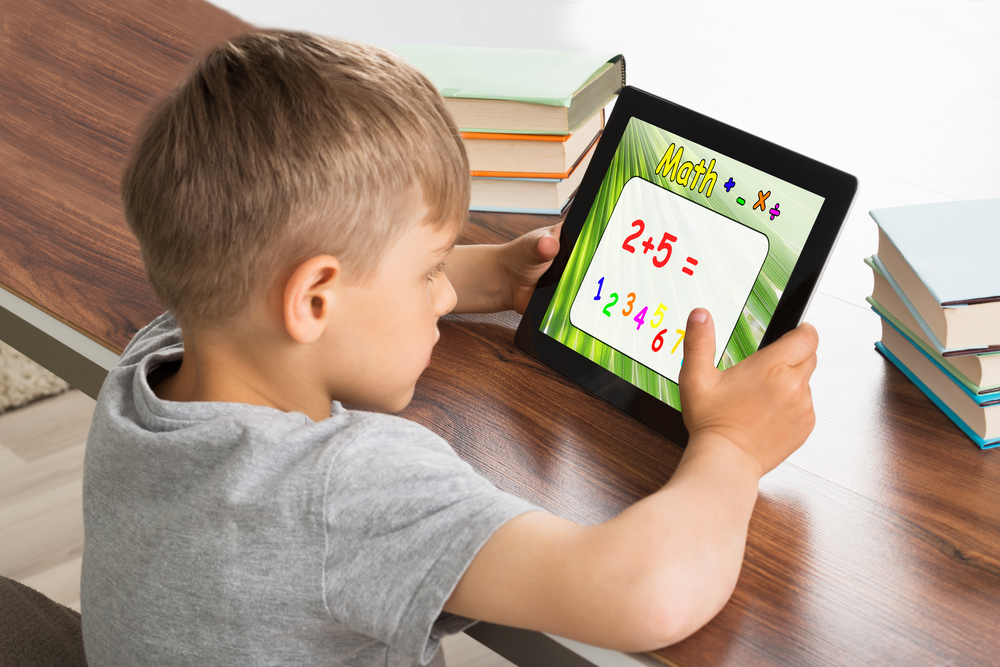
Understanding fractions is fundamental for young children because it supports essential skills in mathematics and beyond. Introducing fractions early, around ages 3-9, builds a solid foundation for future math success. It enhances children’s numerical literacy by helping them grasp the idea that numbers can represent parts of a whole, which is crucial for more advanced concepts taught in later grades.
Fractions also improve problem-solving and critical thinking skills. When children manipulate fractions—whether by dividing a pizza into slices or sharing toys—they engage in hands-on learning that makes abstract concepts concrete. This understanding extends beyond math; it encourages logical reasoning and the ability to see relationships, benefiting subjects like science and everyday decision-making.
Parents and teachers provide an "extra challenge" with fractions to stimulate cognitive development. It keeps children engaged and fosters a growth mindset, where challenges are viewed as opportunities to learn. Activities like playing fraction games, using manipulatives, or baking together (measuring ingredients) offer enjoyable, practical experiences of fractions.
Crucially, early mastery of fractions can prevent the math anxiety that many students face. It fosters a positive mathematical identity, where children feel confident and competent. By prioritizing a robust understanding of fractions, parents and teachers equip children with lifelong skills, setting them up for future academic and personal success.








