
Shape Recognition Extra Challenge Worksheets for Ages 4-8
14 filtered results
Difficulty Level
Grade
Age
-
From - To
Subject
Activity
Standards
Unlock an exciting world of learning with our "Shape Recognition Extra Challenge Worksheets for Ages 4-8". Designed for young minds, these worksheets offer a delightful combination of fun and challenge that enhances critical thinking and fine motor skills. Your child will dive into a variety of engaging activities that push the boundaries of traditional shape recognition. Perfectly tailored for children aged 4-8, these worksheets ensure an enriching experience that fosters a deeper understanding of geometric concepts. Explore now and give your little learner the tools they need to succeed and build a strong foundation in shape recognition!
Favorites
With answer key
Interactive
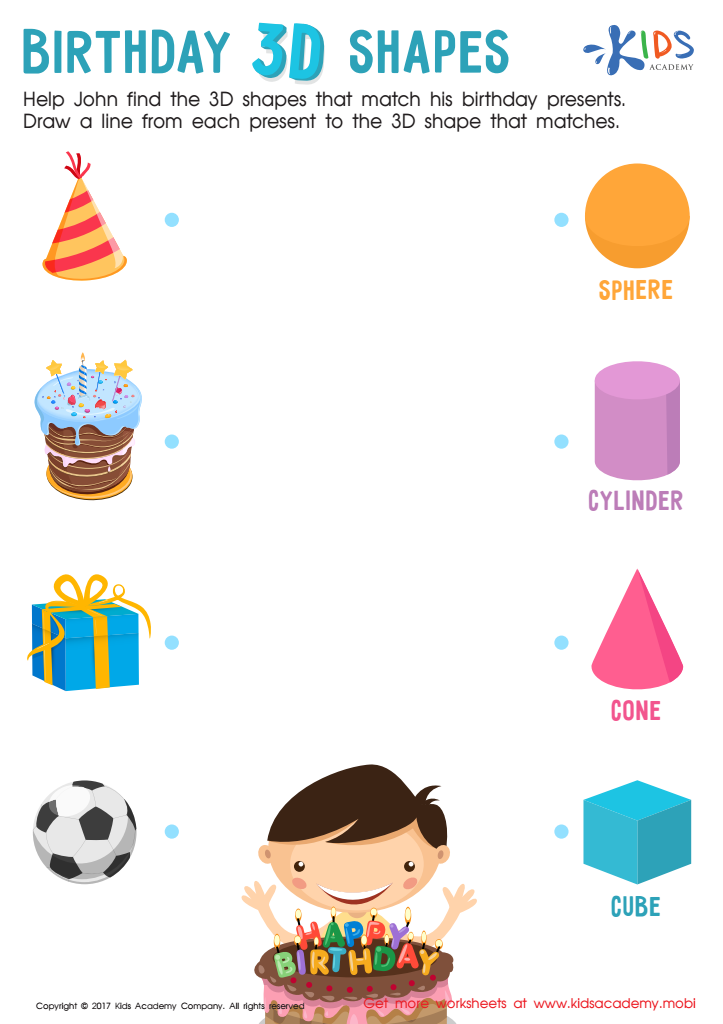
Birthday 3D Shapes Worksheet
It's John's birthday and he needs your help. Ask your kids to draw a line from each present to the matching 3D shape. First, check they understand the difference between 2D and 3D shapes. Then, they can help John figure out which 3D shape matches each present.
 Assign to My Students
Birthday 3D Shapes Worksheet
Worksheet
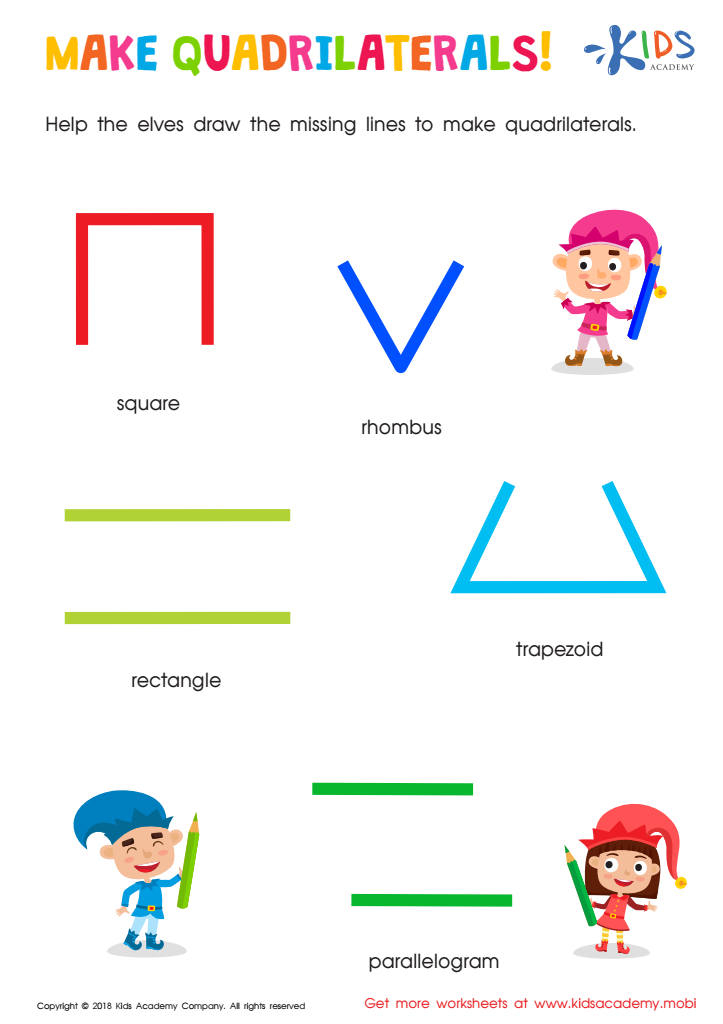
Make Quadrilaterals Worksheet
This fun and colorful worksheet will help your child understand and identify quadrilaterals. It's simple and encourages them to draw lines to create a square, rectangle, rhombus, trapezoid, and parallelogram. Stimulate their minds and watch them learn while they have fun!
Make Quadrilaterals Worksheet
Worksheet
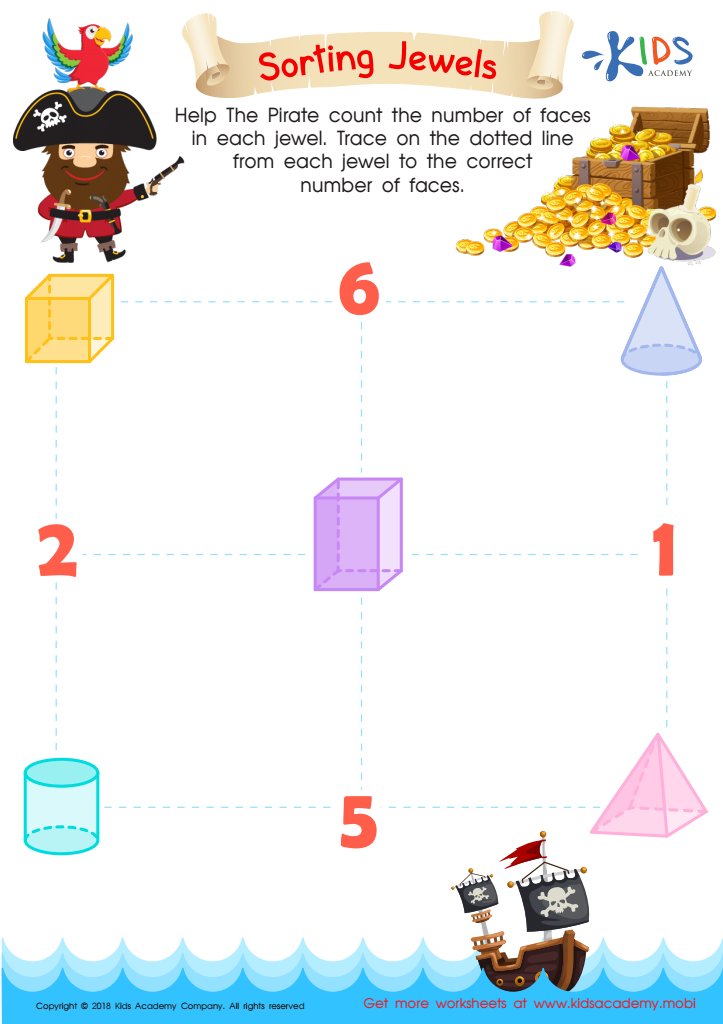
Sorting Jewels Worksheet
Help your kids explore their pirate fantasies with this tracing sheet. Ask them to count the number of faces in each jewel and then trace the dotted line to the correct number. How many faces does a rectangle have? What about a triangle and a cone? This fun worksheet is a great way to teach your kids the basics of identifying the number of faces on shapes.
Sorting Jewels Worksheet
Worksheet
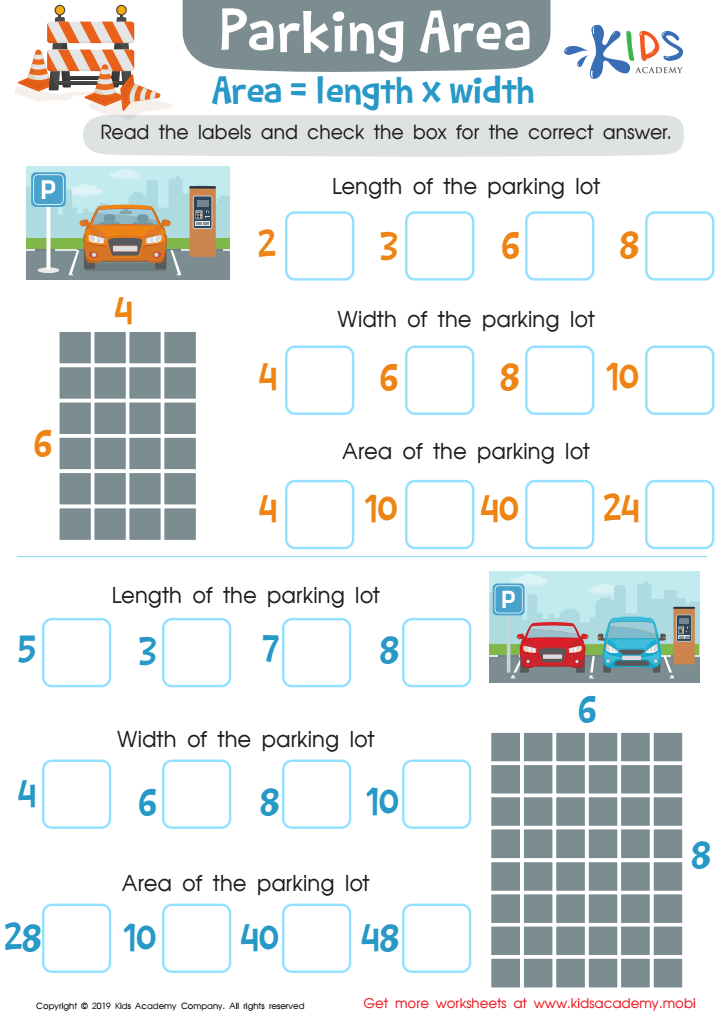
Parking Area Worksheet
Math may not be your child's favorite, but that doesn't mean they can't excel. Math can seem intimidating, but with practice, they can learn it's not so hard. In this worksheet, your kids will calculate the area of a parking lot, by adding length and width. Help them read the labels and select the correct answer.
Parking Area Worksheet
Worksheet
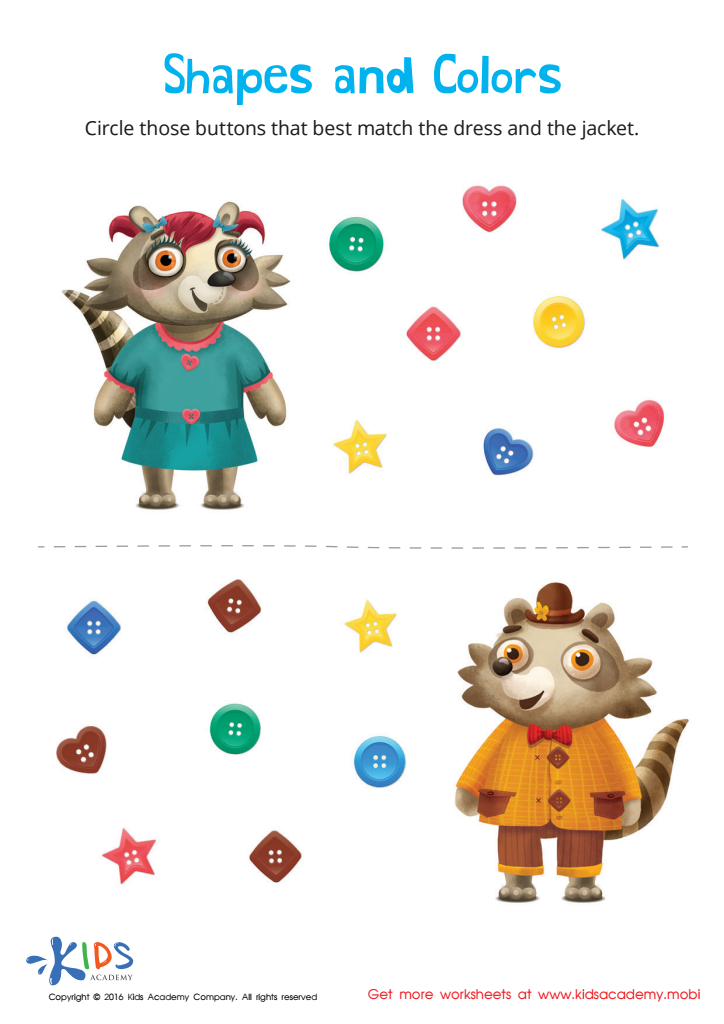
Matching: Shapes and Colors Worksheet
Help Mr. and Mrs. Raccoon find the right buttons to match their shirts! Kids will identify shapes and colors and learn to match them correctly.
Matching: Shapes and Colors Worksheet
Worksheet
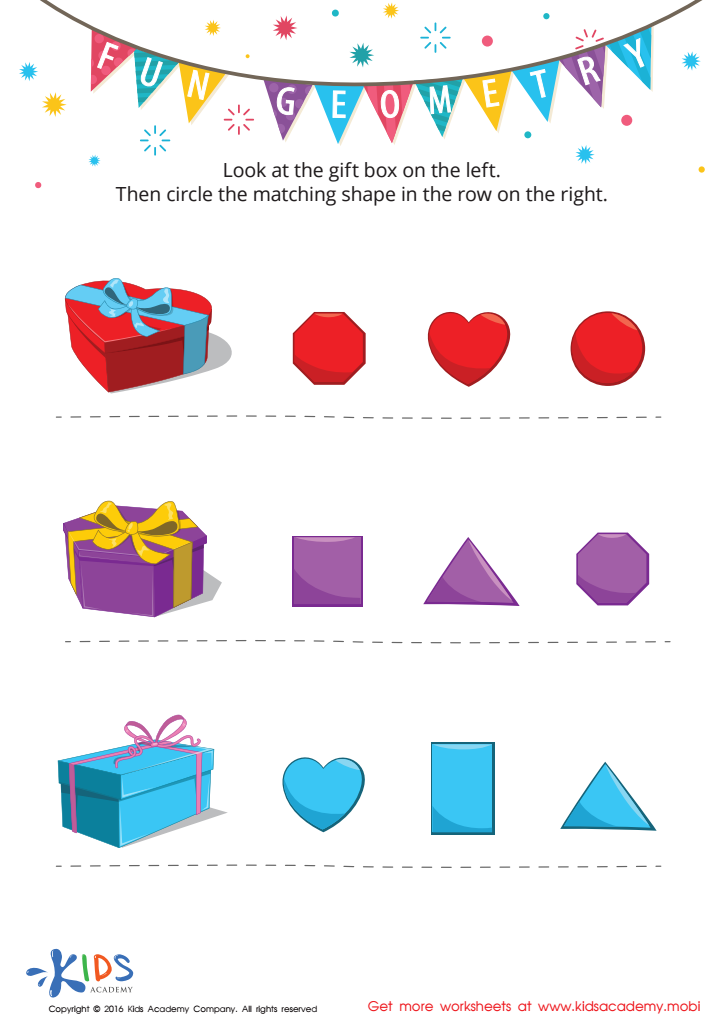
Fun Geometry Worksheet
Give your child the gift of learning with this fun and educational geometry matching worksheet! It'll help them develop essential matching and problem-solving skills while having fun. Vibrant pictures will excite them to complete it and get a better grasp of the world around them.
Fun Geometry Worksheet
Worksheet
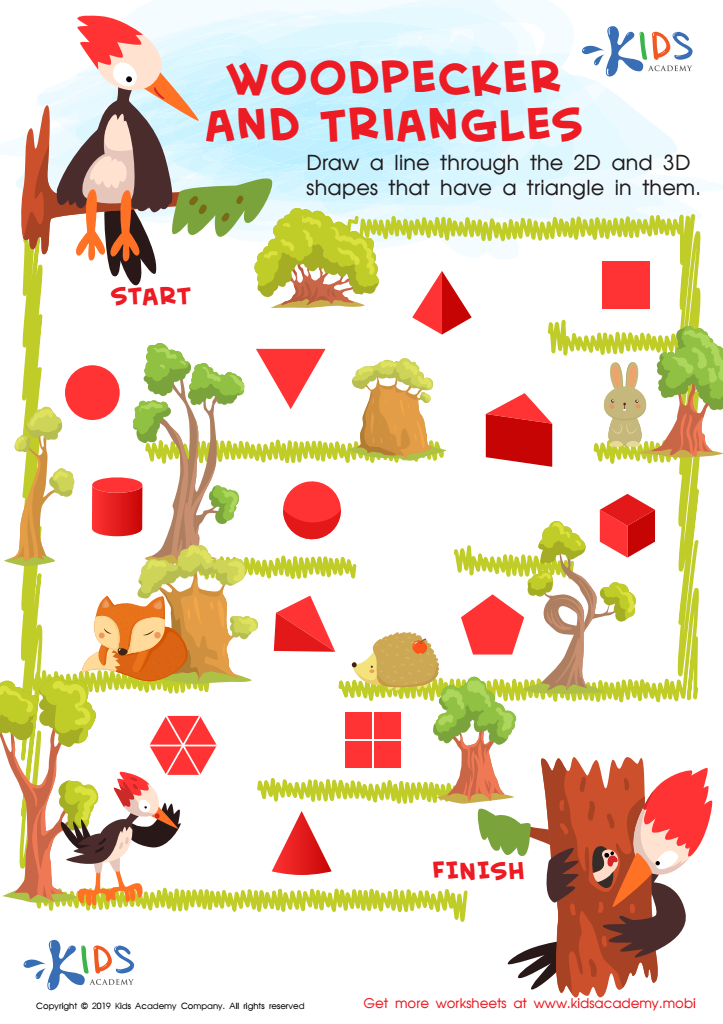
Woodpecker and Triangles Worksheet
Woodpeckers peck wood, and this printout helps kids learn about triangles. Ask your kindergartners to draw a triangle, then draw a line through the shapes that have a triangle in them to help the woodpecker get out of the maze.
Woodpecker and Triangles Worksheet
Worksheet
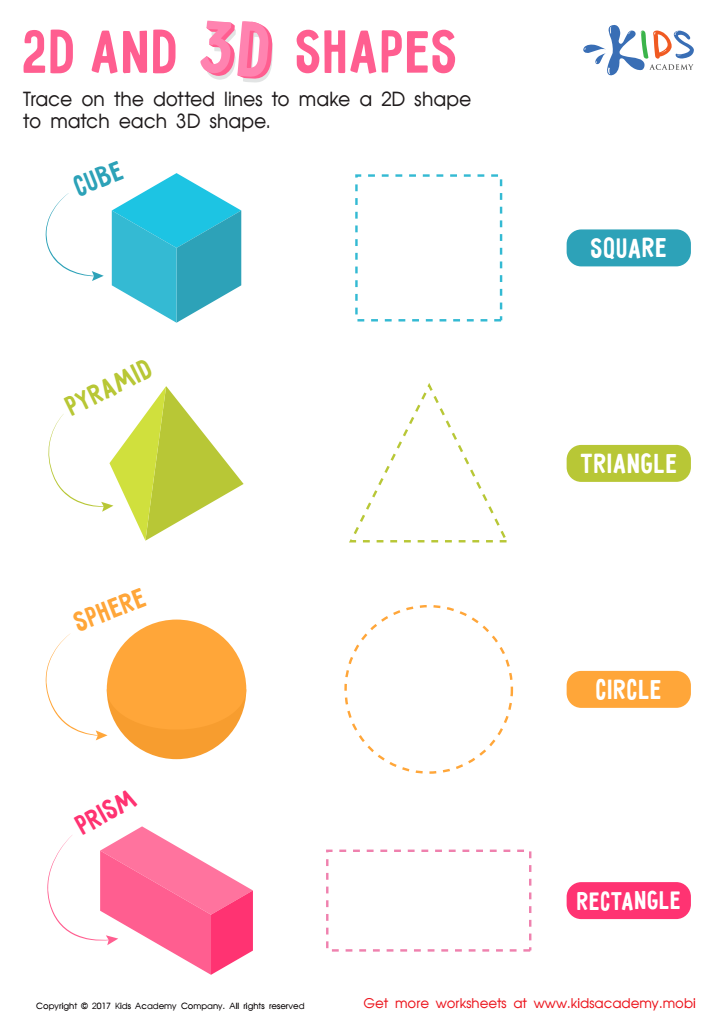
2D and 3D Shapes Worksheet
Introduce your child to 3D and 2D with this traceable worksheet. With dotted lines, help them trace and make a 2D shape for each 3D shape: square, triangle, rectangle, and circle. Show them there's more than one way to draw! You may have taken them to a 3D movie, or they've seen some fantastic 3D art. Now they can wonder no more.
2D and 3D Shapes Worksheet
Worksheet
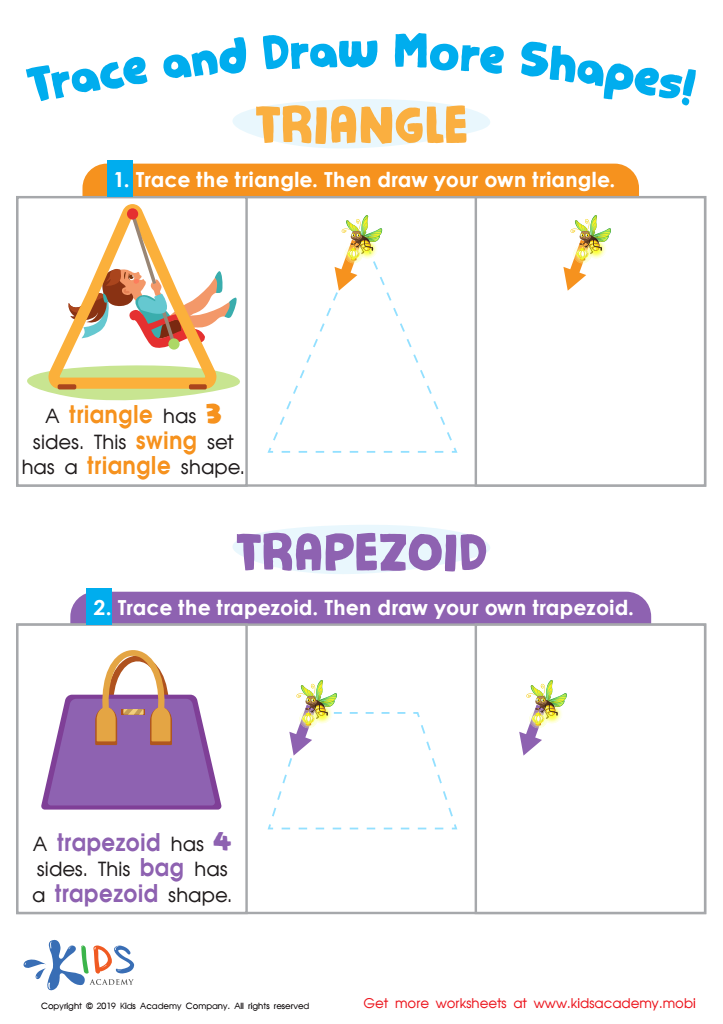
Trace and Draw More Shapes Worksheet
Help your kids with more learning! Look at images in the worksheet, read facts about the shapes, then help your kids trace and draw. This reinforces that learning is never done; use this simple worksheet to help your kids with school homework and more!
Trace and Draw More Shapes Worksheet
Worksheet
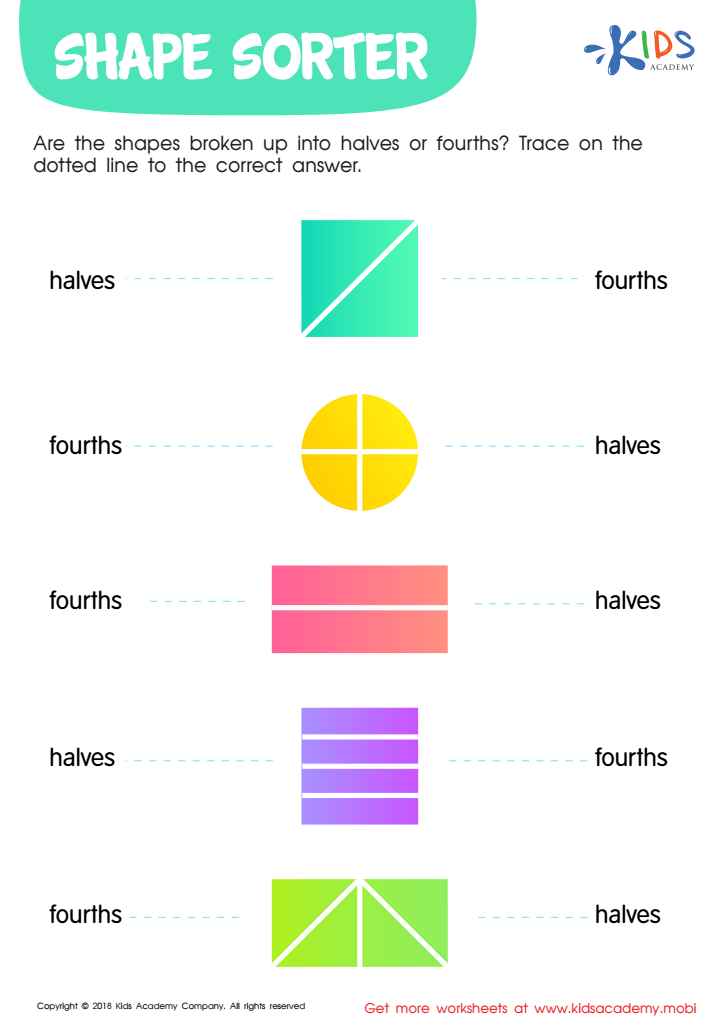
Shape Sorter Worksheet
Ask your child if they know halves and fourths. If not, explain that halves are when a shape is divided into two equal parts and fourths is when a shape is divided into four equal parts. Look through this worksheet with your child and let them trace the dotted lines to the correct answer to show whether the shapes are cut into halves or fourths.
Shape Sorter Worksheet
Worksheet
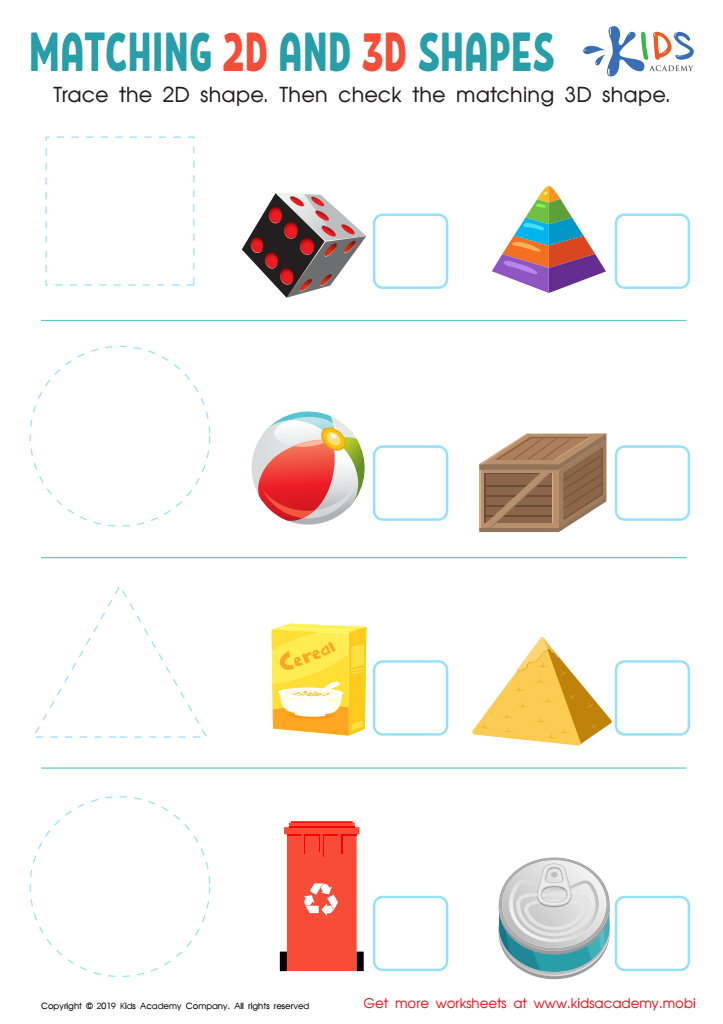
Matching 2D and 3D Shapes Worksheet
Before starting this worksheet, ask your kids what shapes they know and point out the 2D and 3D shapes on it. Help your kids trace the 2D shapes and then match them to the 3D versions. It'll be a fun new world for your kids to explore!
Matching 2D and 3D Shapes Worksheet
Worksheet
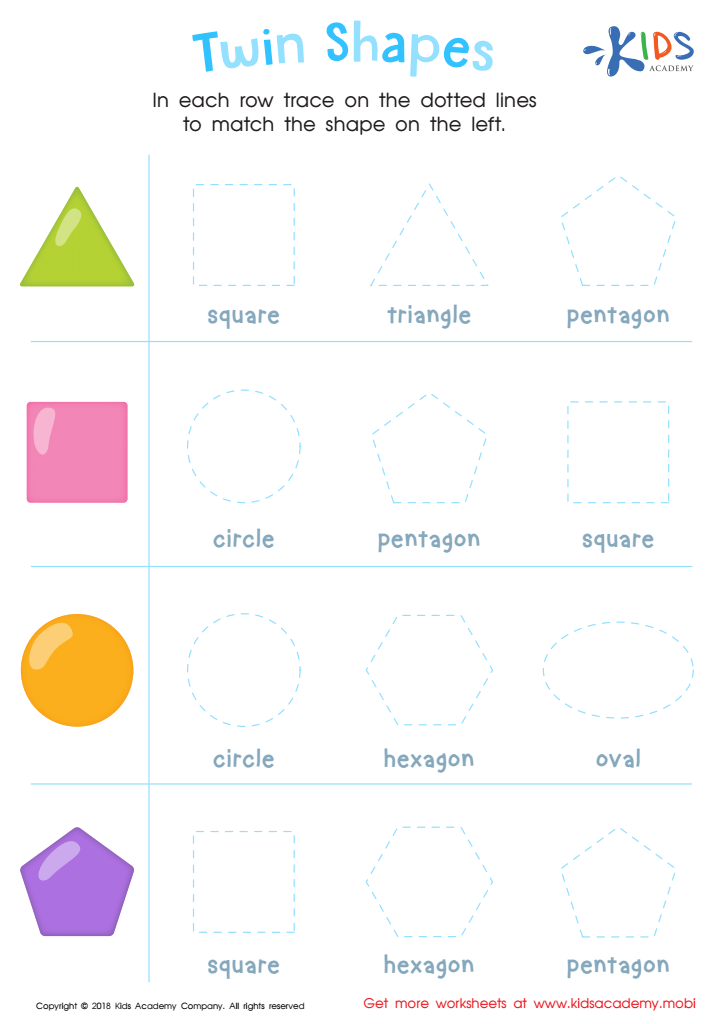
Twin Shapes Dot-to-Dot Worksheet
Test your child's ability to copy with this worksheet. Ask them to find and name the four shapes on the left. Then, they must match each with the dotted lines on the right. Help your child with all four shapes in this fun exercise.
Twin Shapes Dot-to-Dot Worksheet
Worksheet
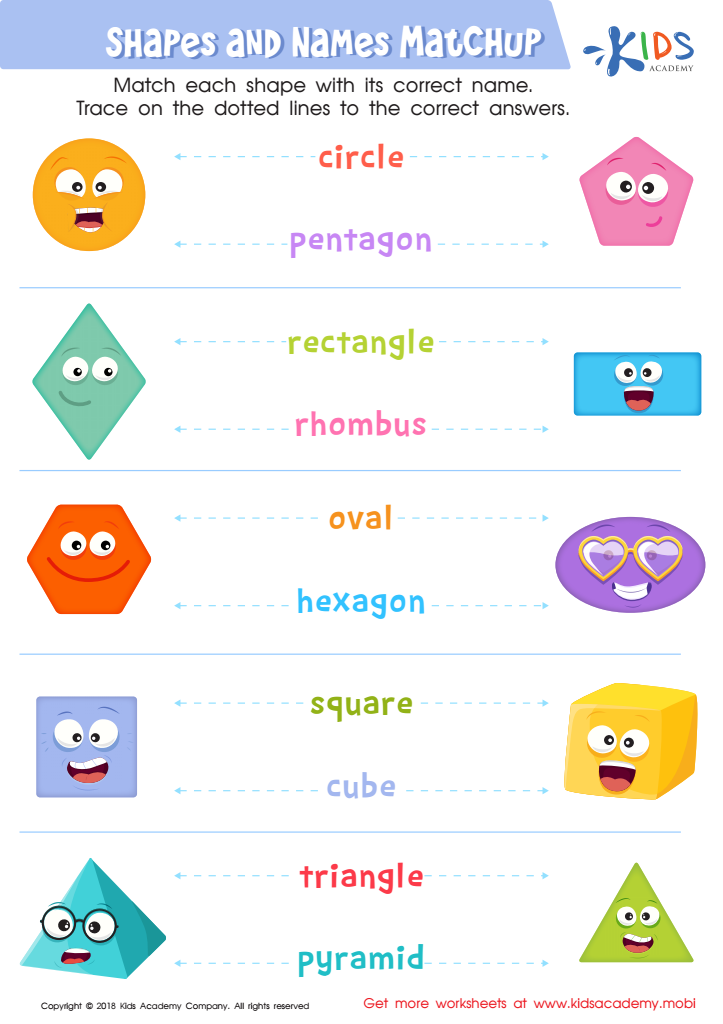
Shapes and Names Matchup Worksheet
Introduce your students to shapes if they aren't familiar. Look at the sheet with them and ask them to identify shapes. Help them match each shape to its name, then trace the dotted lines to the answers. Even if they haven't seen shapes before, this exercise will be easy - with your help!
Shapes and Names Matchup Worksheet
Worksheet
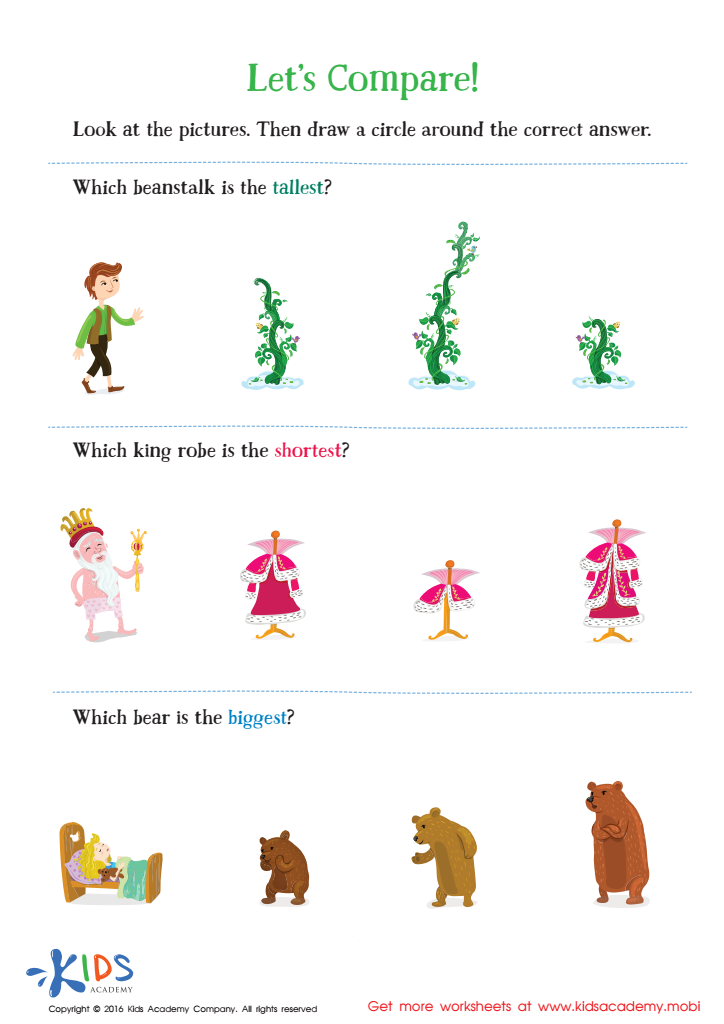
Fairy Tale Worksheet: Let's Compare
Preschoolers need to recognize different sizes of objects. This worksheet combines fun fairy tales with size practice, helping them read, problem solve, and sort through pictures. Your child will love the images and be eager to complete it. Enhance their learning by talking about the tales to build comprehension.
Fairy Tale Worksheet: Let's Compare
Worksheet
Join Kids Academy for Free
Who is primarily going to use this learning content?






Shape recognition is a vital skill for young children, offering numerous educational and developmental benefits. When parents or teachers focus on shape recognition for ages 4-8, they play a crucial role in laying the foundation for their mathematical and cognitive development.
Firstly, recognizing and understanding shapes aid in the development of spatial awareness and geometry skills, essential components of early math education. Children learn to identify, compare, and classify different shapes, fostering critical thinking and problem-solving skills.
Moreover, shape recognition develops visual and fine motor skills. Children enhance their ability to visually discern different shapes and replicate them through drawing and crafting activities, strengthening hand-eye coordination and dexterity.
Additionally, shape recognition helps with literacy skills. Recognizing shapes in letters can improve reading and writing as children notice the geometric patterns letters form, aiding their understanding of letter formation and contributing to early literacy.
Lastly, engaging in shape recognition challenges nurtures a child's sense of curiosity and eagerness to learn. Activities involving shapes can be playful and enjoyable, stimulating creativity and imagination.
In summary, emphasizing shape recognition not only supports foundational academic skills but also fosters overall cognitive, motor, and creative development, making it a vital focus for parents and teachers of young learners.








