
Comparing Fractions Extra Challenge Worksheets for Ages 4-9
5 filtered results
Difficulty Level
Grade
Age
-
From - To
Subject
Activity
Standards
Discover our "Comparing Fractions Extra Challenge Worksheets for Ages 4-9," designed to enhance your child's mathematical skills in a fun and engaging way. These worksheets provide a variety of exercises that focus on comparing fractions, enabling young learners to build confidence in their understanding of this important concept. Each activity is tailored to accommodate different learning levels, ensuring that children can progress at their own pace. Perfect for use at home or in the classroom, our challenging worksheets encourage problem-solving skills and critical thinking. Download now to help your child master fractions and develop a love for math!
Favorites
With answer key
Interactive
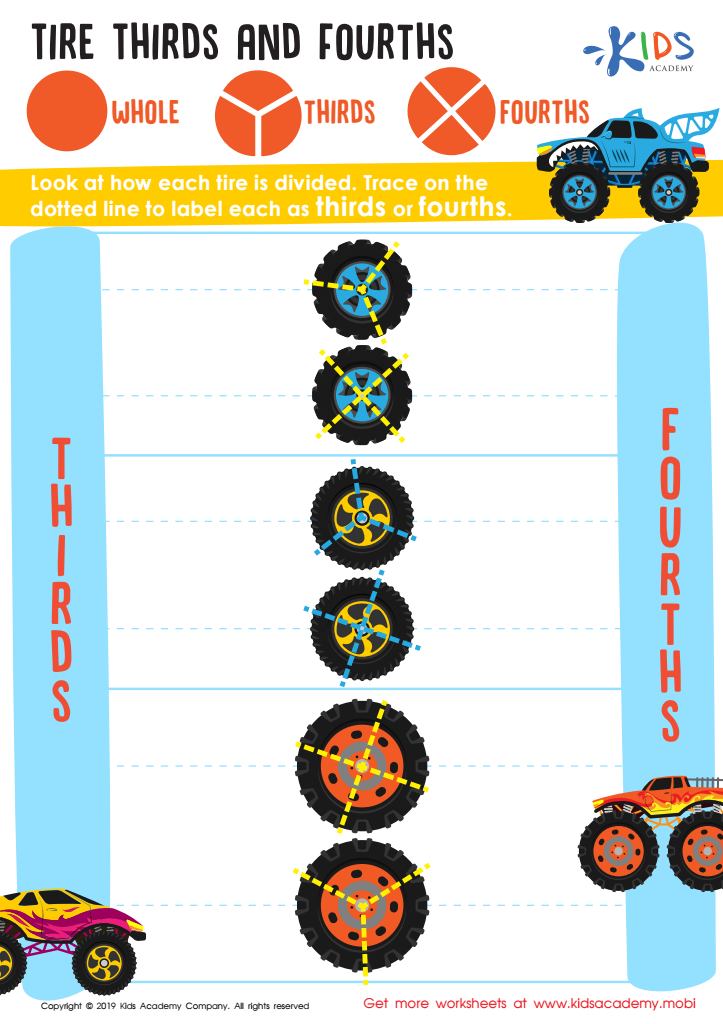
Tire Thirds and Fourths Worksheet
Learning geometry is key in your child's education. Have them identify and name shapes cut into 2, 3 and 4 parts. Test their knowledge with this worksheet - trace the dotted line to label each as third or fourth. Encourage them to keep learning!
 Assign to My Students
Tire Thirds and Fourths Worksheet
Worksheet
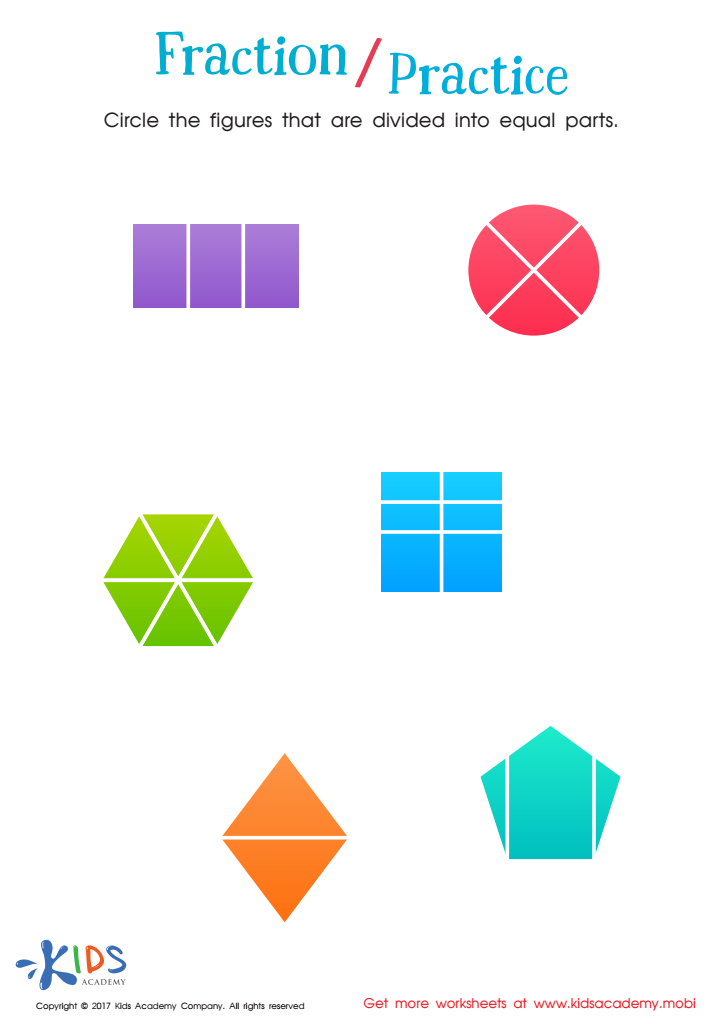
Fractions: Shapes Worksheet
Get your printable now.
Kids learn math differently today than you did in school; understanding concepts rather than memorizing facts. Help your child understand fractions with this printable worksheet. It'll help your child recognize parts of a whole, identify equal parts and build a foundation for numeracy. A better understanding sets kids up for math success! Get your printable now.
Fractions: Shapes Worksheet
Worksheet
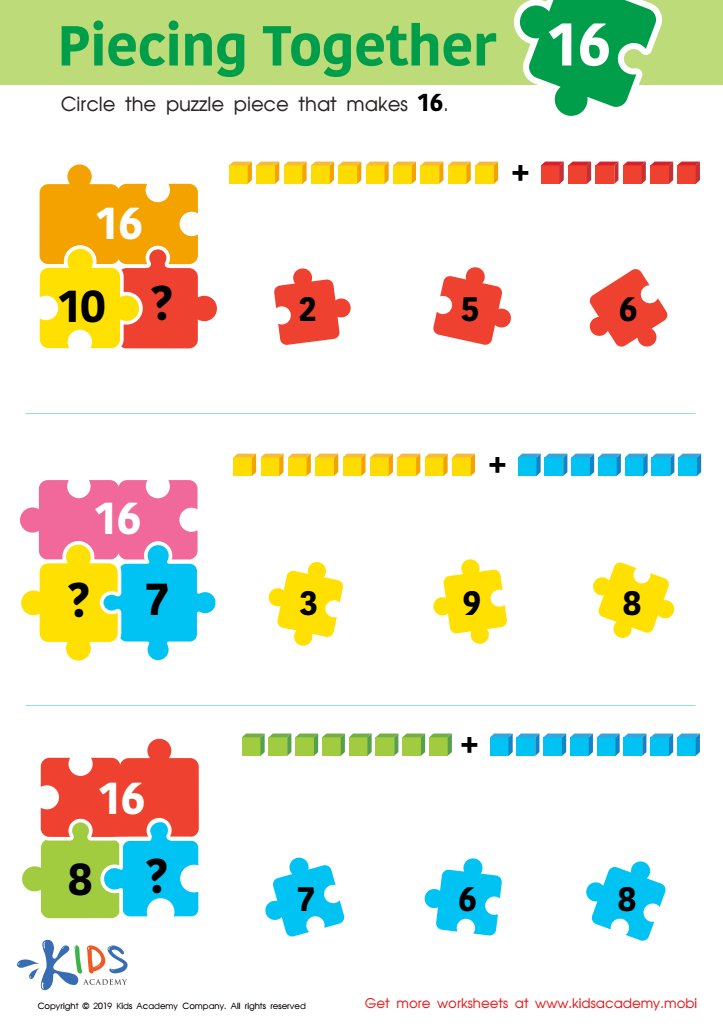
Piecing Together 16 Worksheet
Combine learning with fun using this colorful worksheet! Ask your preschoolers what they see in the picture, then help them solve the mathematical equations on the puzzle pieces. One equation is missing on each; have them circle the piece that will make the bottom puzzle piece numbers equal 16. Use puzzles and bright colors to teach - it's one of the best ways your kids can learn!
Piecing Together 16 Worksheet
Worksheet
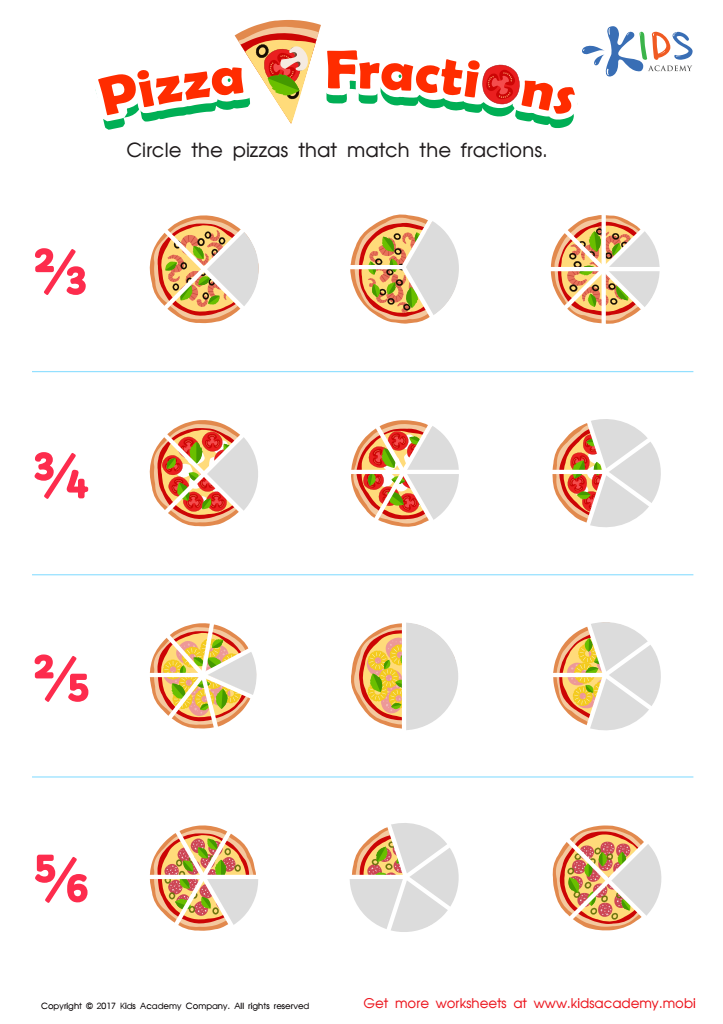
Fractions: Pizza Printable
Fractions can be tricky for kids, but this pizza fractions printable can help! Kids can understand fractions by seeing them, as they use one of their favorite foods. It helps them grasp the concept and gain a deeper understanding of what fractions represent. Extend their learning by quizzing them when you order pizza next time.
Fractions: Pizza Printable
Worksheet
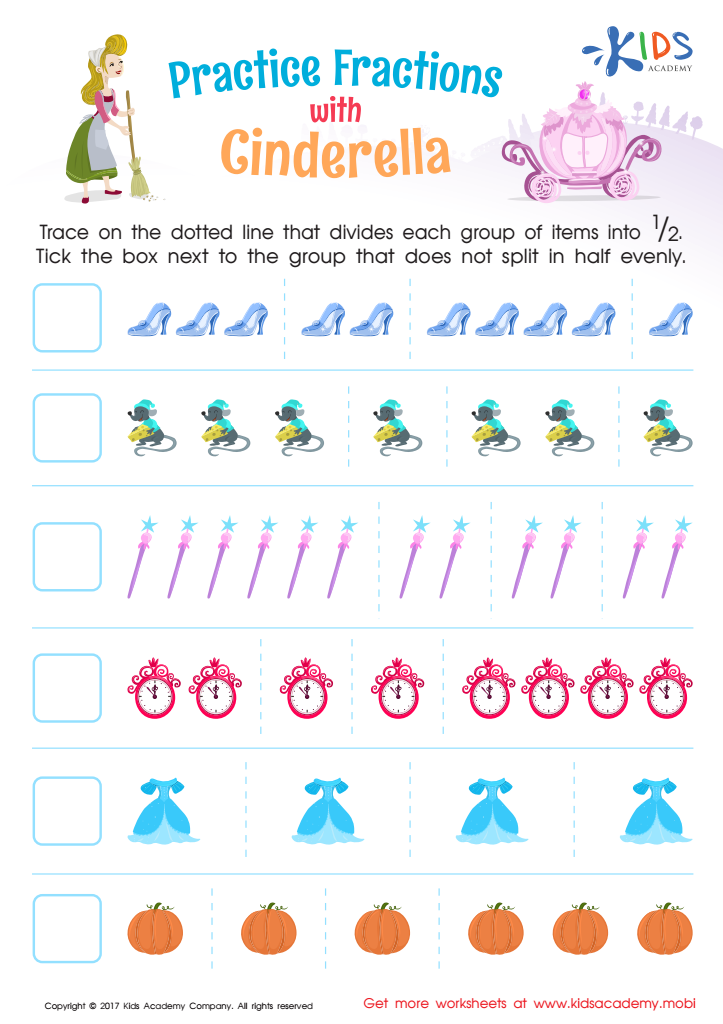
Fractions: Cinderella Printable
Cinderella and ½ are the perfect pair to excite your child about learning fractions.
Fractions: Cinderella Printable
Worksheet
Join Kids Academy for Free
Who is primarily going to use this learning content?





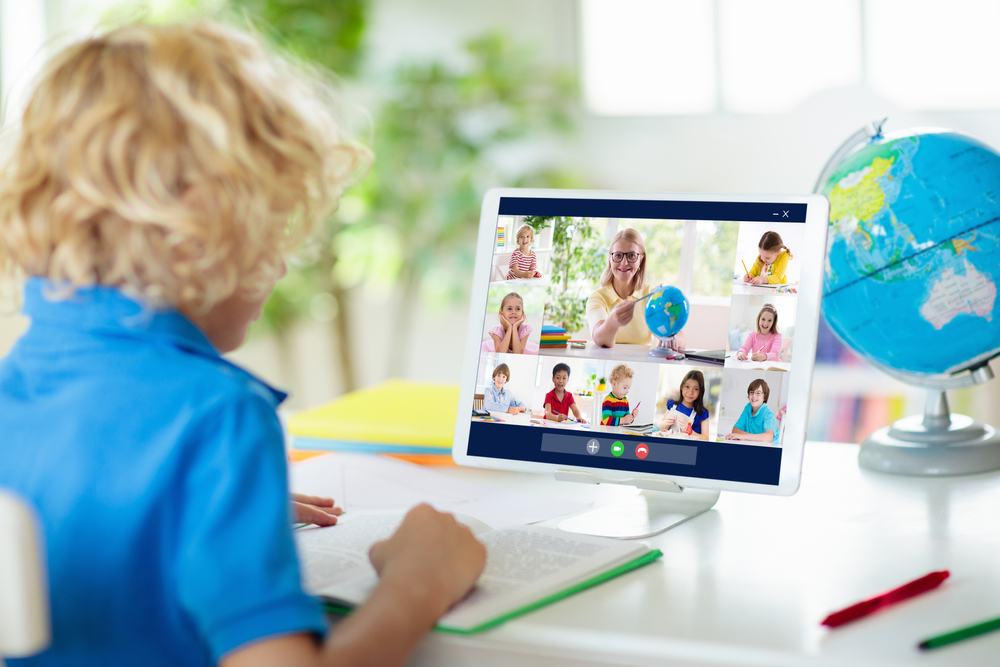


Comparing fractions is a fundamental mathematical concept that plays a crucial role in a child's early development of numerical understanding. For parents and teachers working with children aged 4-9, engaging them in "Comparing Fractions" activities offers multiple benefits. First, mastering fraction comparison enhances a child's ability to grasp essential mathematical concepts, fostering mathematical fluency as they progress through their education.
Moreover, understanding fractions lays the groundwork for more complex topics such as addition, subtraction, and even real-world applications like cooking or budgeting. By using fun and interactive methods tailored to younger audiences, such as visual aids, games, or hands-on activities, children remain engaged and develop a positive attitude towards math.
Additionally, comparing fractions encourages critical thinking and problem-solving skills as children evaluate and analyze different numerical relationships. This foundational knowledge not only aids in their academic success but also builds confidence and resilience in tackling challenging tasks.
Therefore, parents and teachers should prioritize fraction comparisons as an essential building block, setting the stage for a lifelong appreciation of math in everyday life and ultimately contributing to well-rounded educational development. Emphasizing these skills early on also creates more cohesive parent-teacher collaboration in supporting children's learning journeys.








