Basic geometry understanding Extra Challenge Worksheets for Ages 6-7
4 filtered results
-
From - To
Explore our Basic Geometry Understanding Extra Challenge Worksheets designed specifically for children ages 6-7! These engaging printable worksheets offer a fun and interactive way for young learners to strengthen their geometric skills. From identifying shapes and understanding angles to exploring patterns and measuring lengths, these challenges encourage critical thinking and boost confidence in mathematical abilities. Perfect for home or classroom use, these worksheets are tailored to complement foundational geometry lessons while providing an extra layer of challenge. Help your child develop a solid understanding of geometry concepts while enjoying diverse activities that stimulate creativity and problem-solving skills. Let the learning adventures begin!
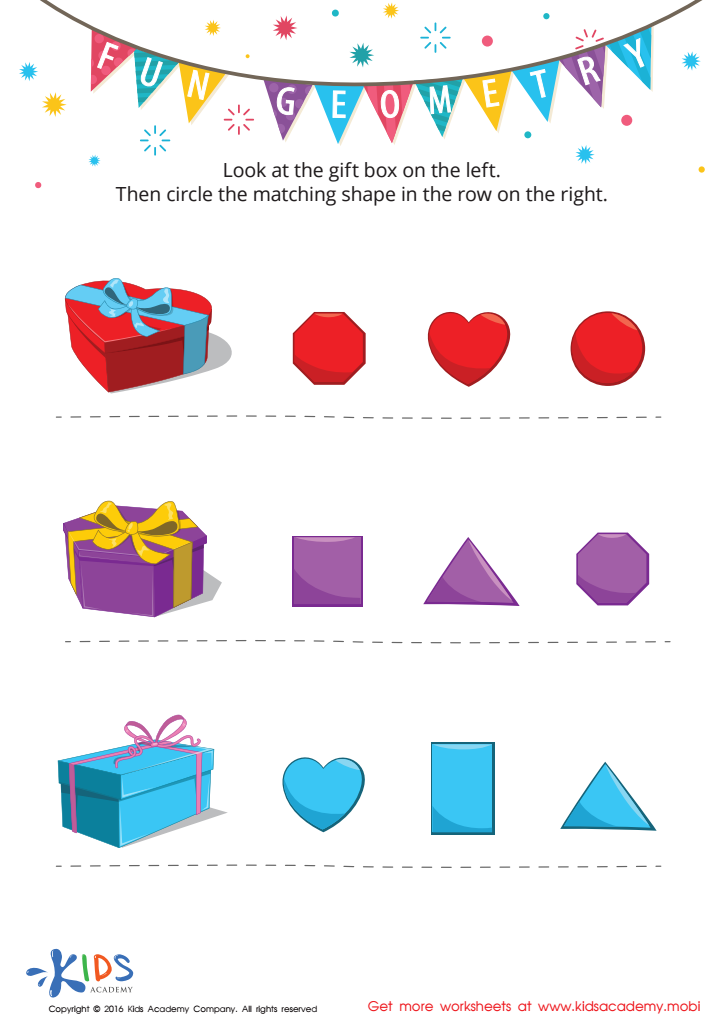
Fun Geometry Worksheet
 Assign to My Students
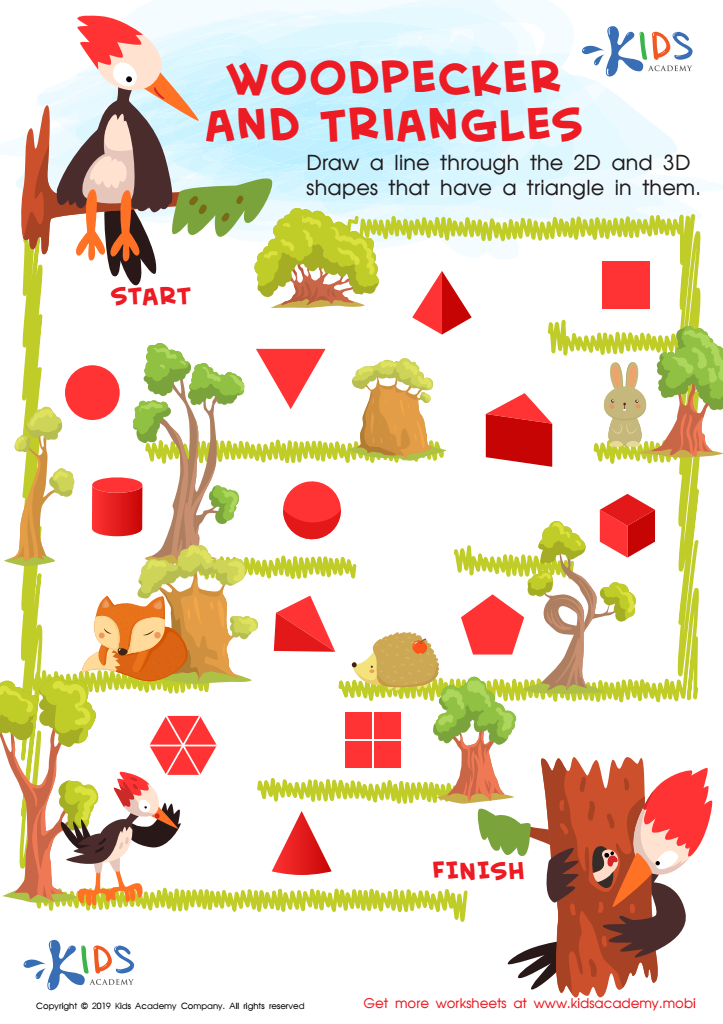
Woodpecker and Triangles Worksheet
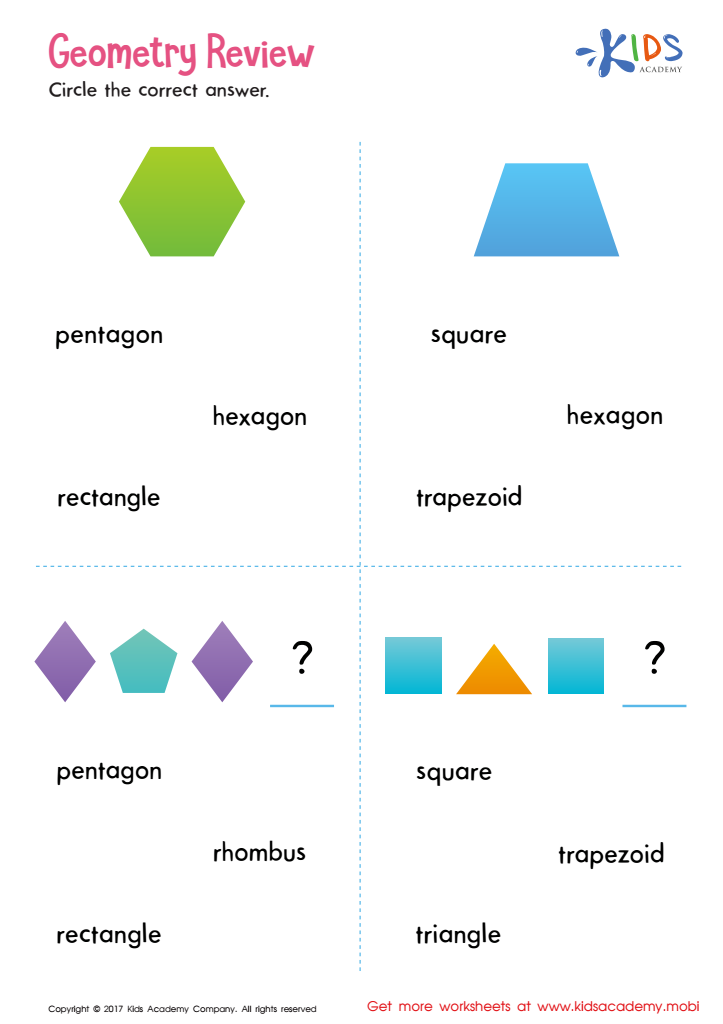
Geometry Review Printable
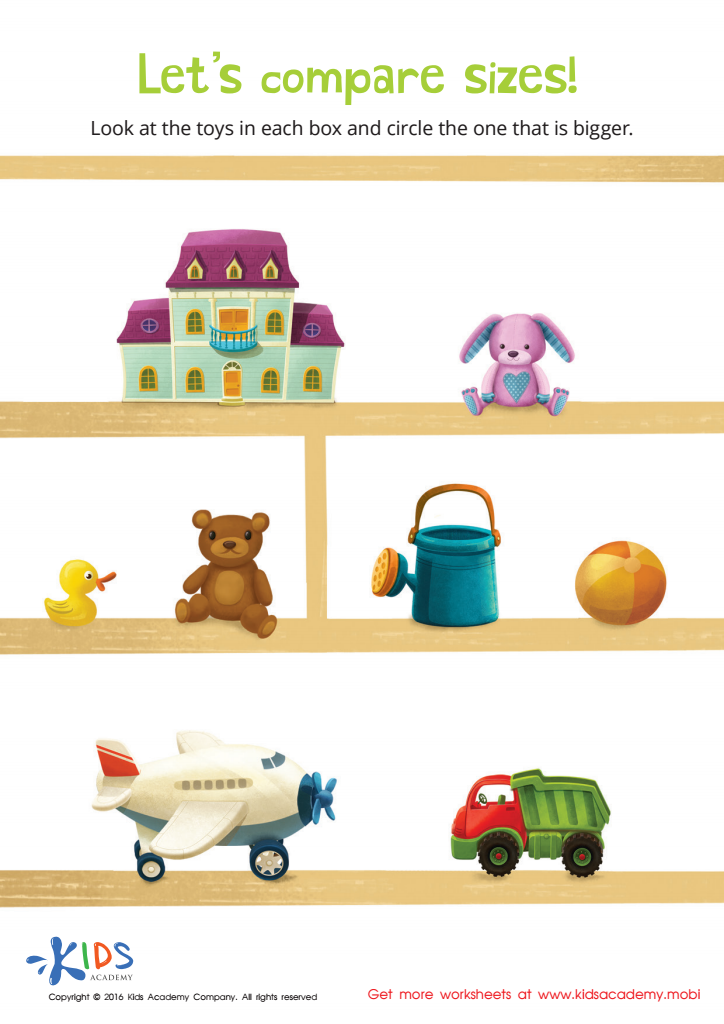
Classifying by Size Sorting Worksheet






Basic geometry understanding is crucial for students aged 6-7 as it lays the foundation for critical thinking and problem-solving skills they will use throughout their education and everyday lives. At this developmental stage, children are naturally curious and eager to explore the world around them. Engaging them in geometry helps to cultivate this curiosity by introducing concepts of shapes, sizes, and spatial awareness.
By understanding geometry, children learn to recognize and categorize various shapes, which enhances their ability to make connections in mathematics and art, and strengthens their visual-spatial skills. These skills improve their overall cognitive development, aiding in their ability to visualize and manipulate objects in space, which is essential for subjects like science and engineering as they progress in school.
Additionally, incorporating geometry into learning invites creative exploration, making math fun and relatable. It fosters teamwork and communication when students work together on shape-related activities, thus enhancing social skills. When parents and teachers prioritize basic geometry learning, they set students on a path toward success by building confidence and a solid mathematical foundation that will benefit them as they advance academically. Encouraging this understanding can spark a lifelong interest in mathematics and related fields.








