Shape identification Extra Challenge Worksheets for Ages 6-7
5 filtered results
-
From - To
Enhance your child’s shape recognition skills with our "Shape Identification Extra Challenge Worksheets for Ages 6-7"! Designed to engage young learners, these fun and interactive worksheets provide a stimulating opportunity to explore and identify various shapes. Ideal for advanced learners, the extra challenges encourage critical thinking as children match, classify, and solve puzzles related to shapes. With colorful illustrations and diverse activities, students will enjoy honing their understanding of geometric figures while developing essential early math skills. Perfect for classrooms or home, our worksheets ensure that learning is both effective and enjoyable. Download now to inspire your child's love for shapes!
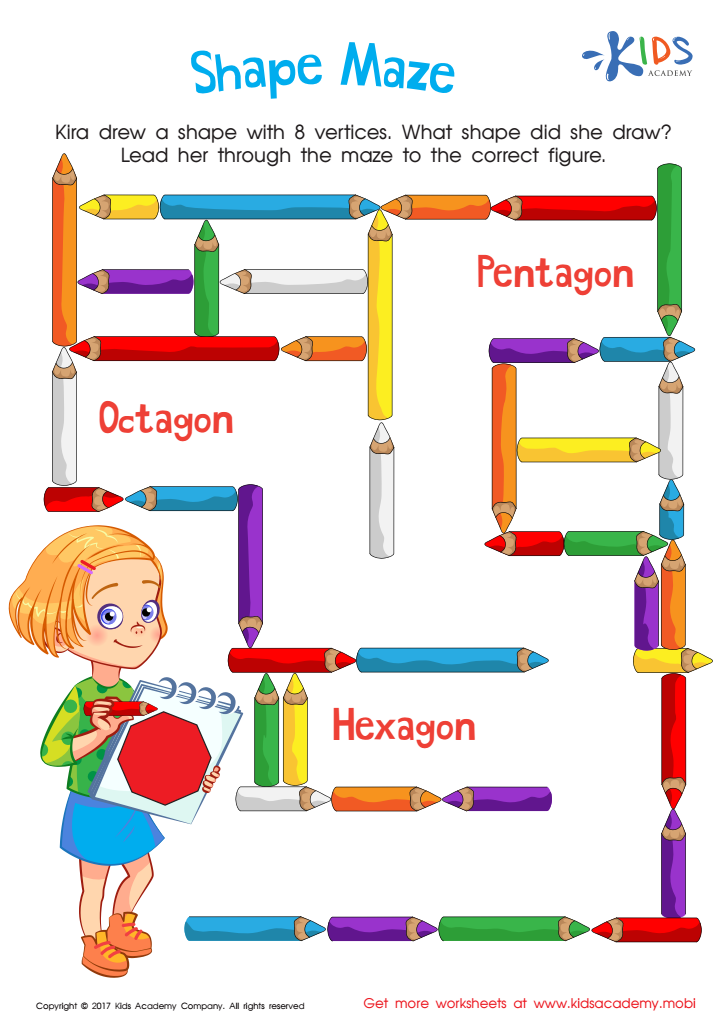
Shape Maze Worksheet
 Assign to My Students
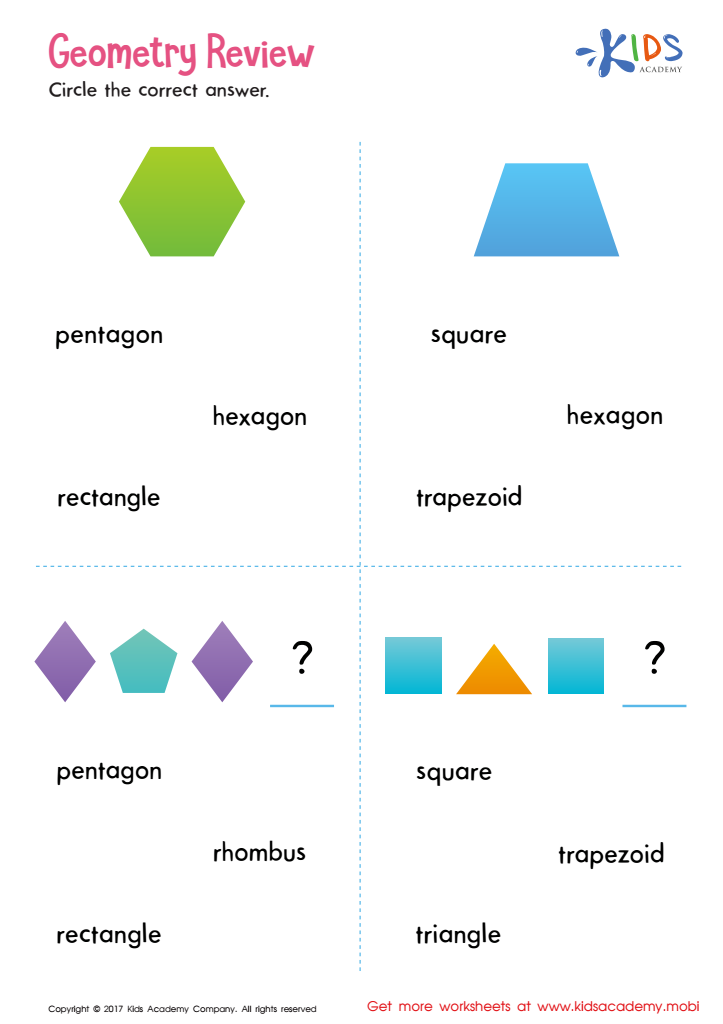
Geometry Review Printable
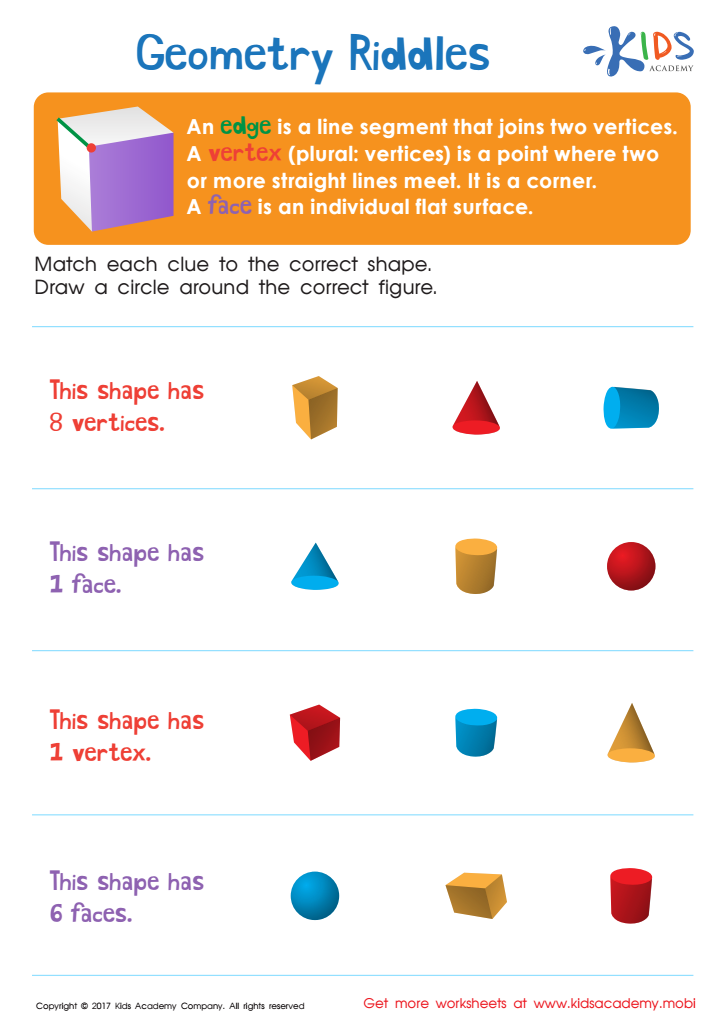
Geometry Riddles Printable
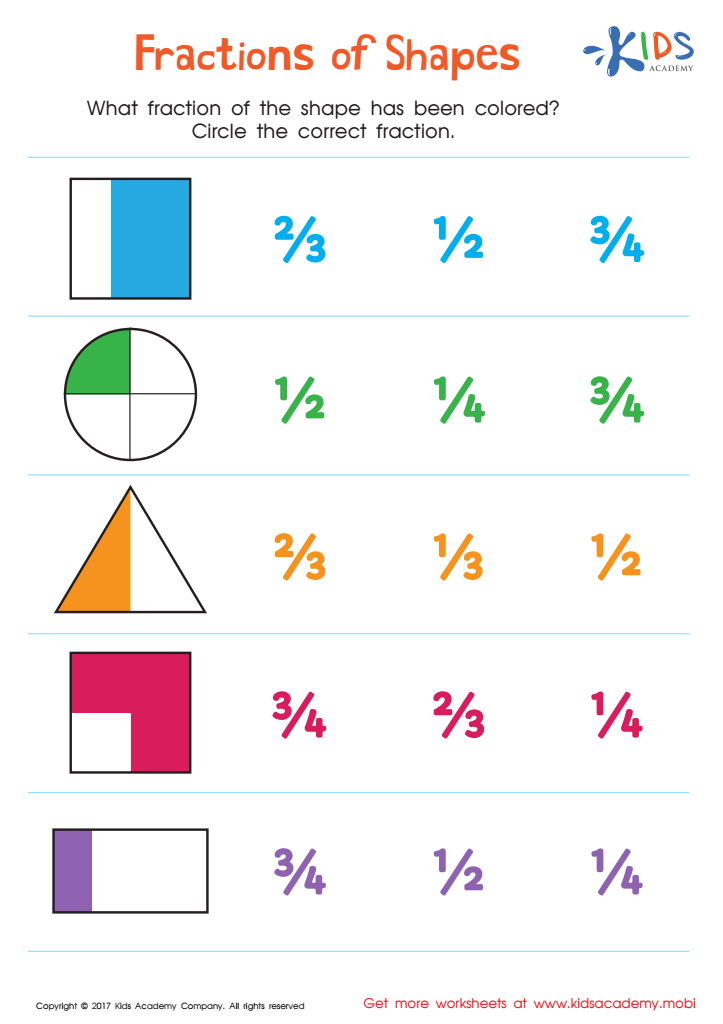
Fractions of Shapes: Math Concept Worksheet
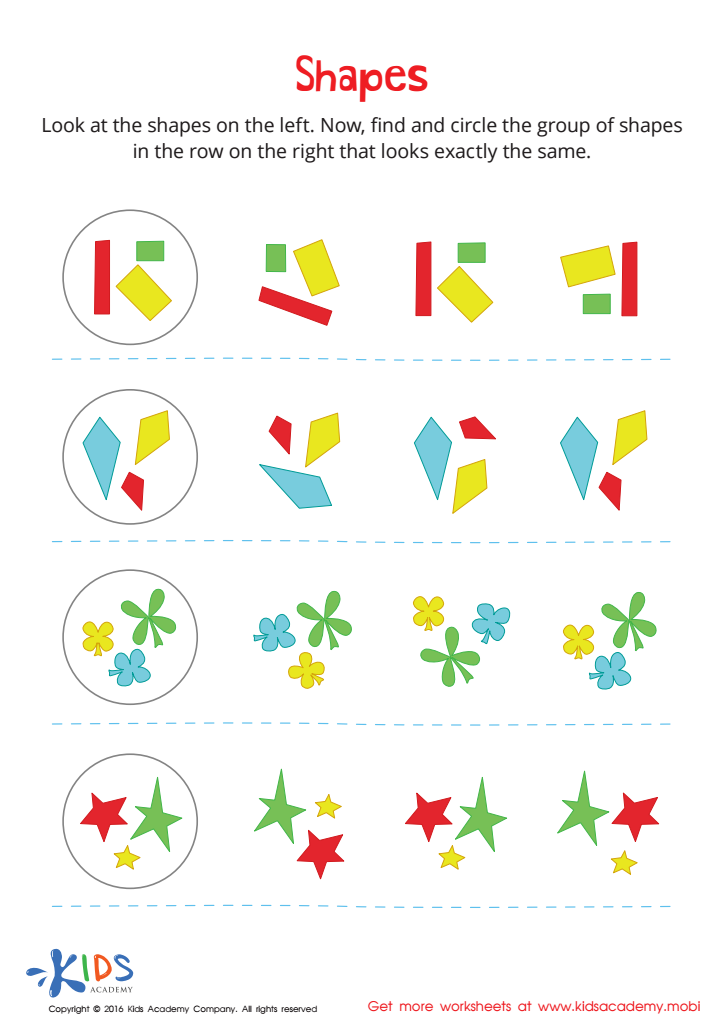
Shapes Worksheet







Shape identification is a fundamental skill that lays the groundwork for various aspects of a child's development, particularly for those aged 6-7. For parents and teachers, recognizing the importance of this skill is crucial for several reasons.
Firstly, understanding shapes helps children develop essential cognitive skills. It enhances their spatial awareness and critical thinking, enabling them to make connections between different objects in their environment. This enhances their ability to visualize and understand two-dimensional versus three-dimensional shapes.
Secondly, shape identification plays a significant role in math readiness. As children encounter concepts such as symmetry, congruence, and geometry in future math lessons, a strong foundation in shape identification becomes invaluable. It acts as a precursor to more complex math topics, making transitions smoother and boosting confidence.
Additionally, reinforcing shape identification through challenges fosters engagement and motivation. Extra challenges stimulate curiosity and creativity, allowing children to explore interactions between shapes, such as through art projects or games. This playful approach not only makes learning fun but also deepens their understanding.
Ultimately, by prioritizing shape identification, parents and teachers empower children to build essential skills for future academic success while nurturing a lifelong love for learning.








