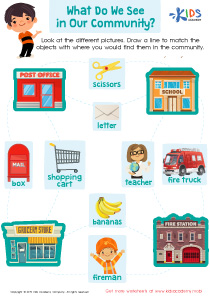
Shape identification Extra Challenge Math Worksheets for Ages 6-7
5 filtered results
-
From - To
The "Shape Identification Extra Challenge Math Worksheets for Ages 6-7" provide an engaging way for young learners to enhance their geometric understanding. These advanced worksheets are designed to challenge children while solidifying their ability to recognize and classify various shapes. Through interactive exercises, students will explore shapes in diverse scenarios, ensuring mastery of concepts from triangles to hexagons. Ideal for reinforcing classroom learning, these worksheets can be used at home or in educational settings. Encourage critical thinking and shape recognition skills in your child with these fun, stimulating activities that make math a joyful experience! Perfect for adventurous young mathematicians!
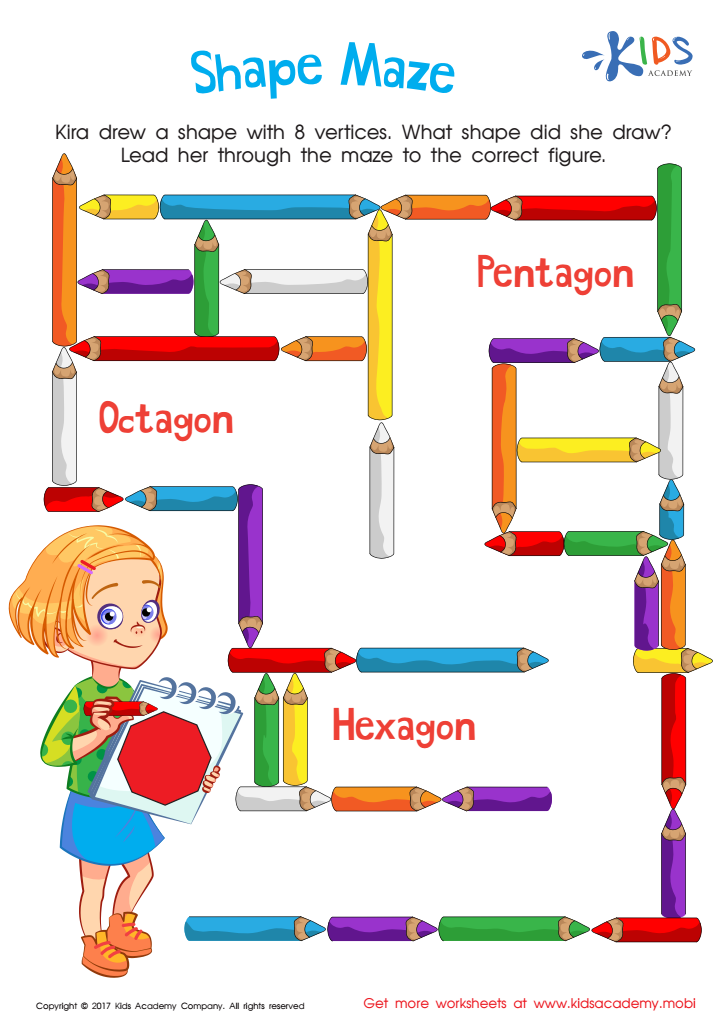
Shape Maze Worksheet
 Assign to My Students
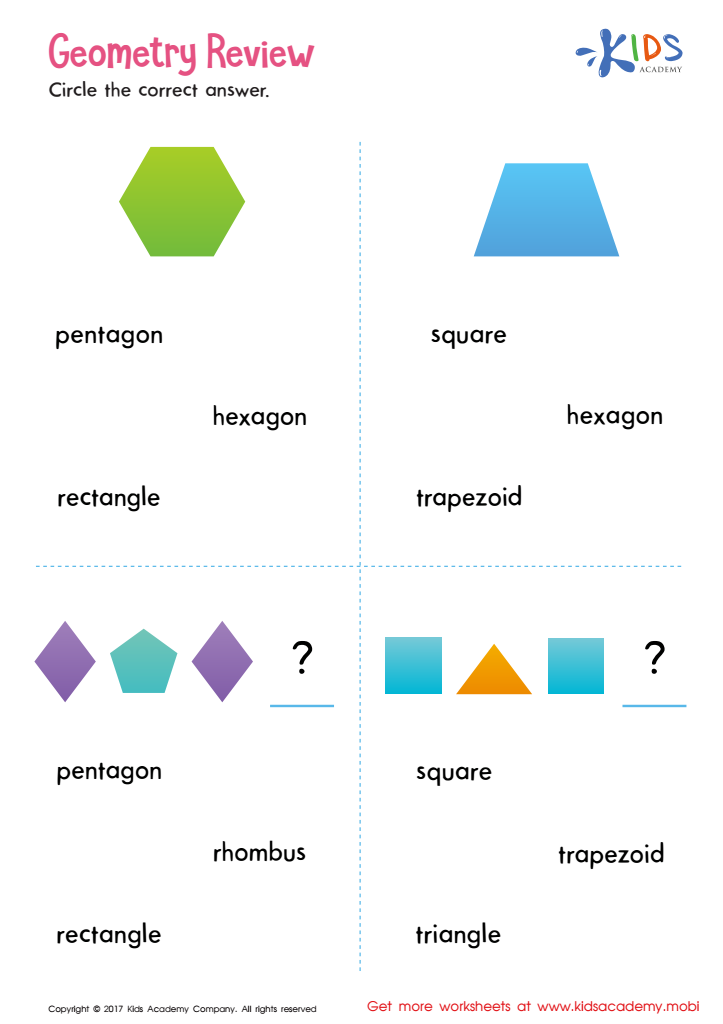
Geometry Review Printable
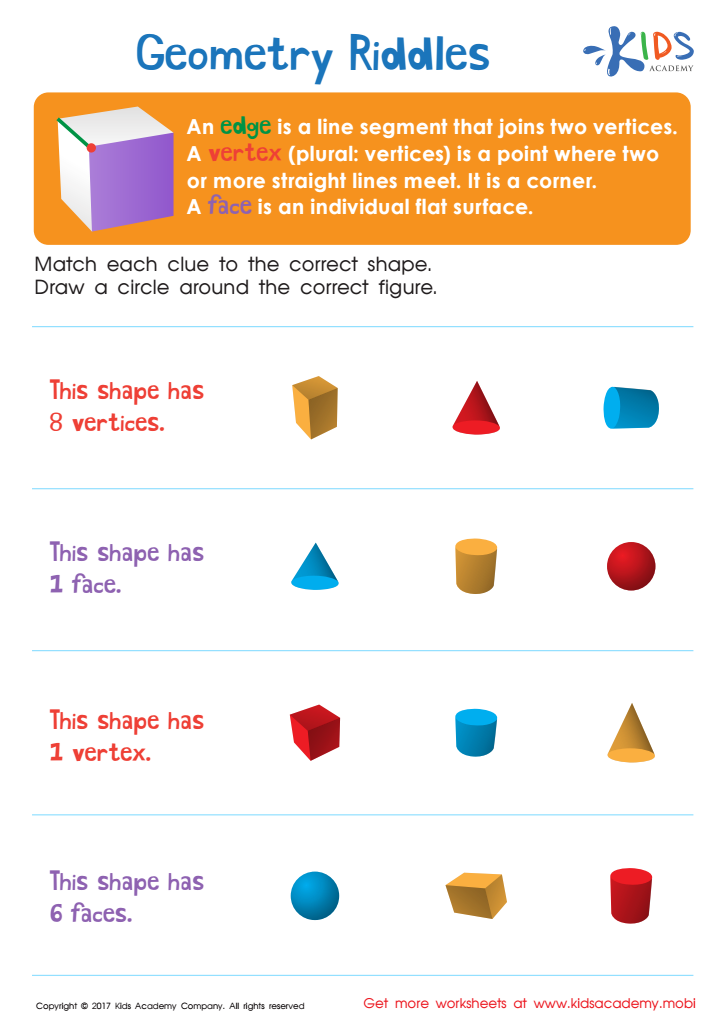
Geometry Riddles Printable
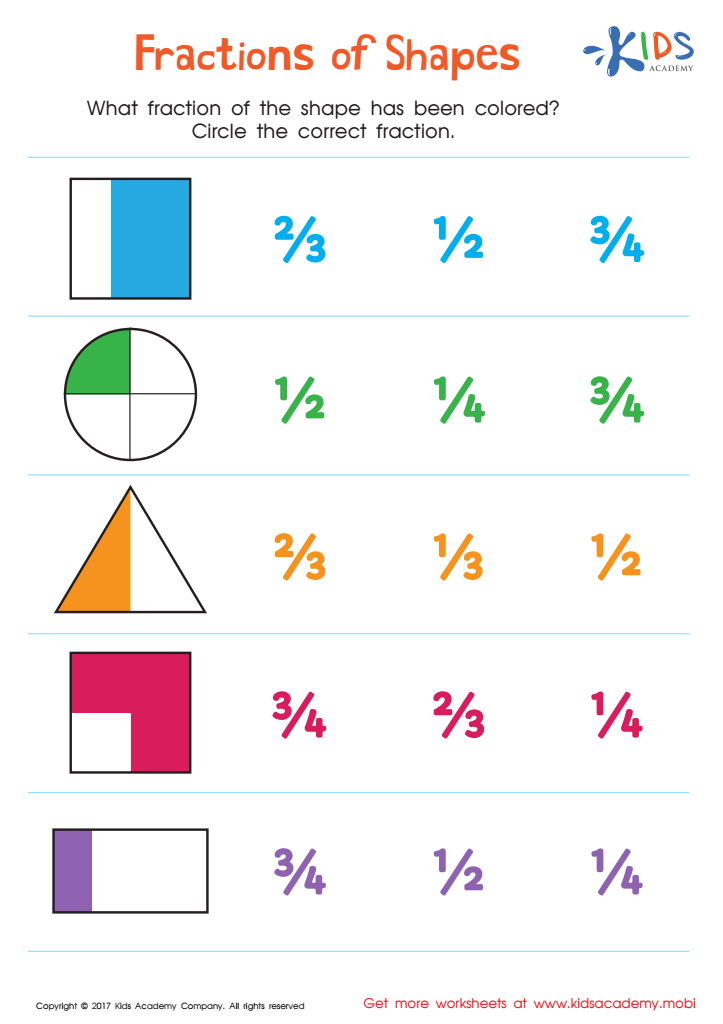
Fractions of Shapes: Math Concept Worksheet
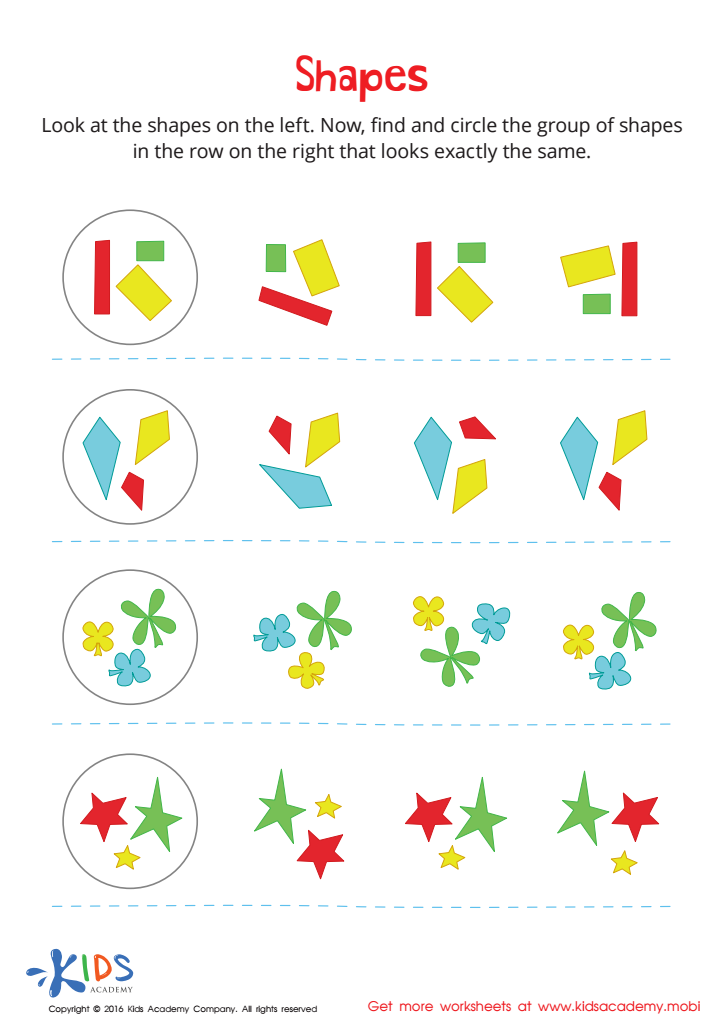
Shapes Worksheet






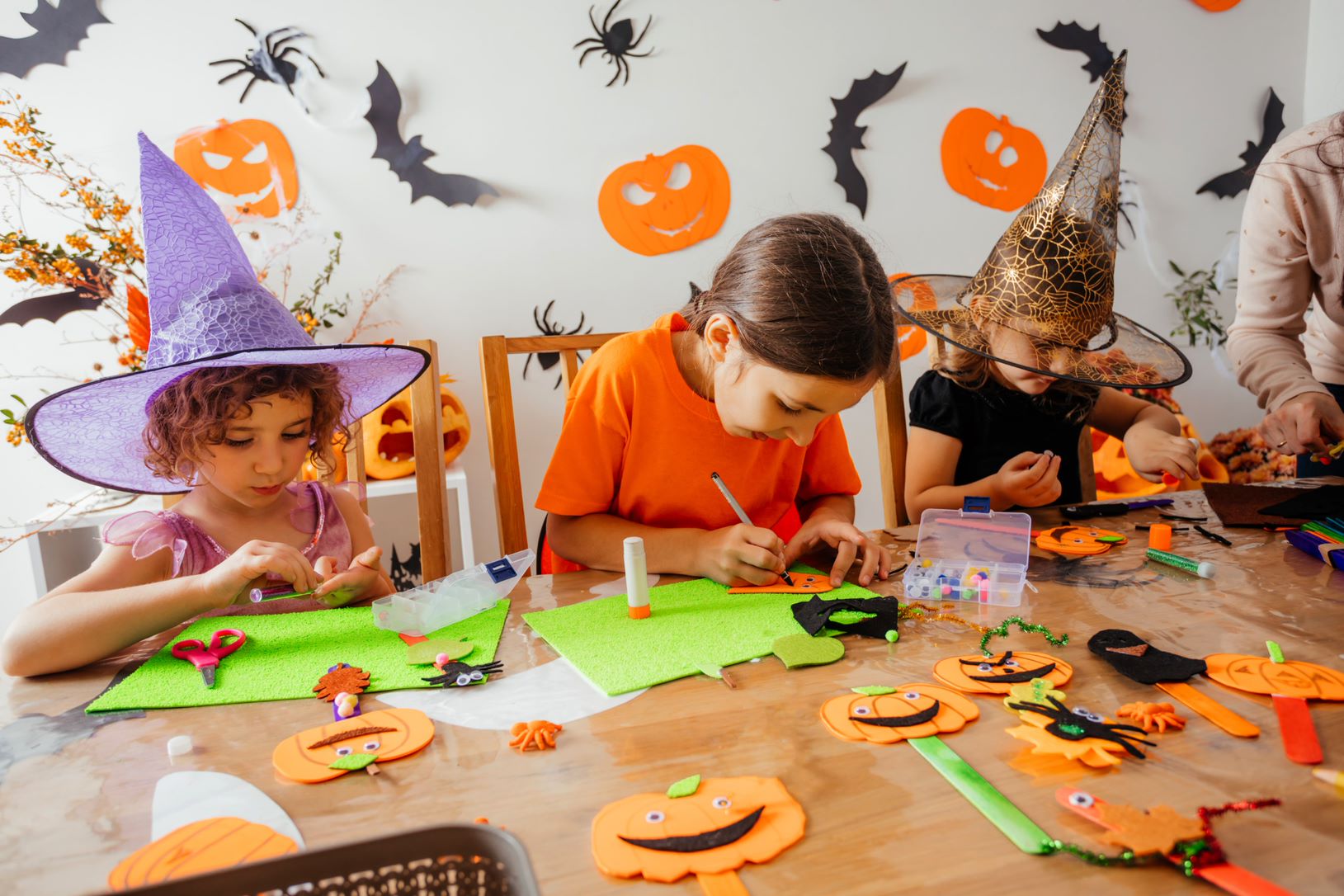
Shape identification is a fundamental mathematical concept that can significantly impact a child's cognitive and spatial development, making Shape Identification Extra Challenge Math essential for ages 6-7. At this early developmental stage, children are naturally curious about their environment, and introducing them to various shapes helps sharpen their visual perception and critical thinking skills. Understanding shapes lays the groundwork for higher-level math concepts, such as geometry, measurement, and spatial reasoning.
Moreover, engaging children in extra-challenge activities fosters a growth mindset, encouraging them to explore problem-solving strategies and develop resilience as they tackle new challenges. Shape identification activities also promote cognitive connections, as children learn to classify, compare, and relate different shapes to real-world objects, enriching their understanding of the world around them.
Furthermore, parents and teachers play an essential role in creating an environment where mathematical literacy thrives. Supporting shape identification activities at home and in the classroom contributes to a child's confidence and interest in math. This foundational skill not only enhances academic success but also nurtures a love for learning, helping children become motivated, life-long learners who appreciate the value of mathematics in everyday life.