Extra Challenge Tracing Shapes Worksheets for Ages 6-8
4 filtered results
-
From - To
Boost your child’s learning with our Extra Challenge Tracing Shapes Worksheets, designed for ages 6-8! These engaging worksheets offer a fun way to enhance fine motor skills, shape recognition, and spatial awareness through tracing activities. With delightful visuals and varying difficulty levels, your child will enjoy the challenges that reinforce their knowledge of different shapes while improving handwriting and control. Perfect for homeschooling or classroom use, these worksheets encourage creativity and focus in young learners. Discover the joy of learning with our thoughtfully crafted tracing shapes worksheets that make mastering key concepts an exciting adventure! Download and print today!
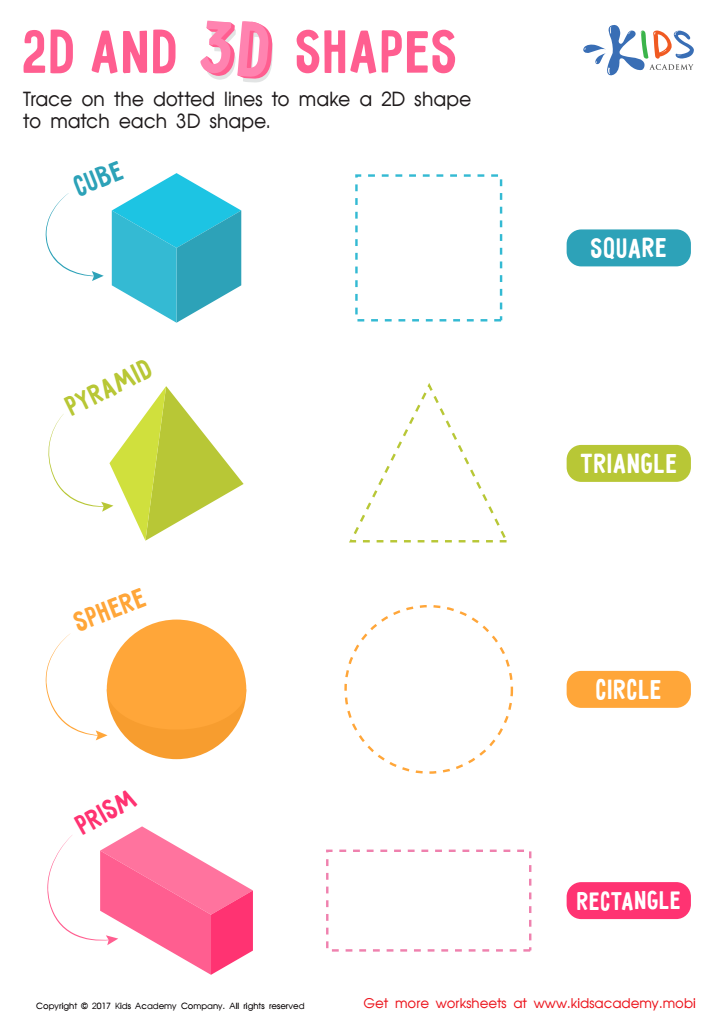
2D and 3D Shapes Worksheet
 Assign to My Students
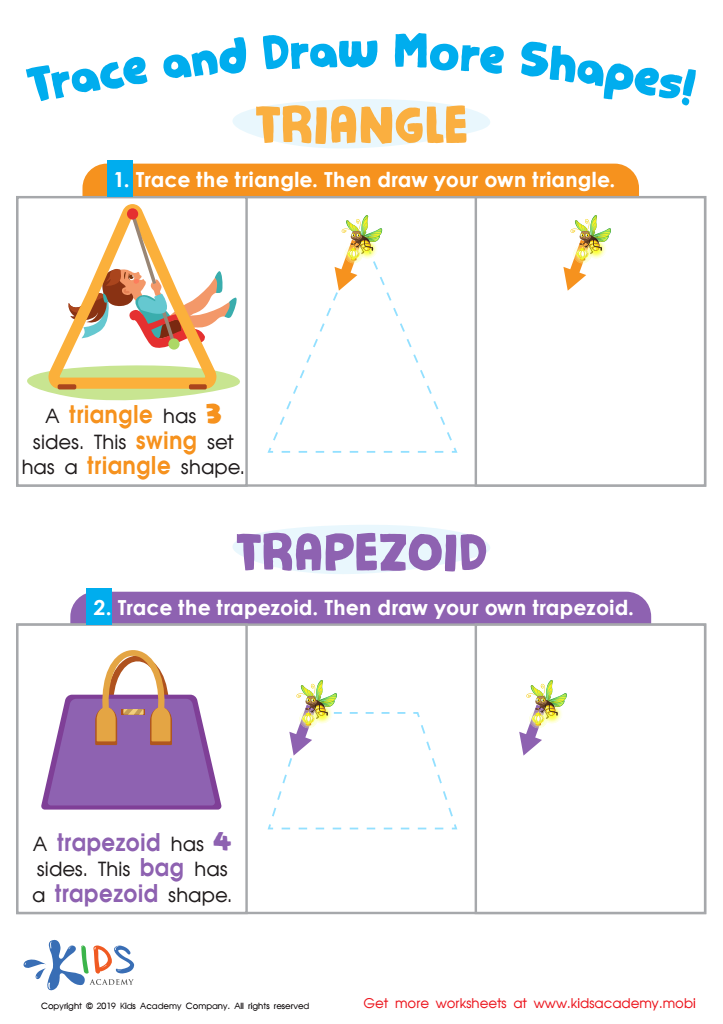
Trace and Draw More Shapes Worksheet
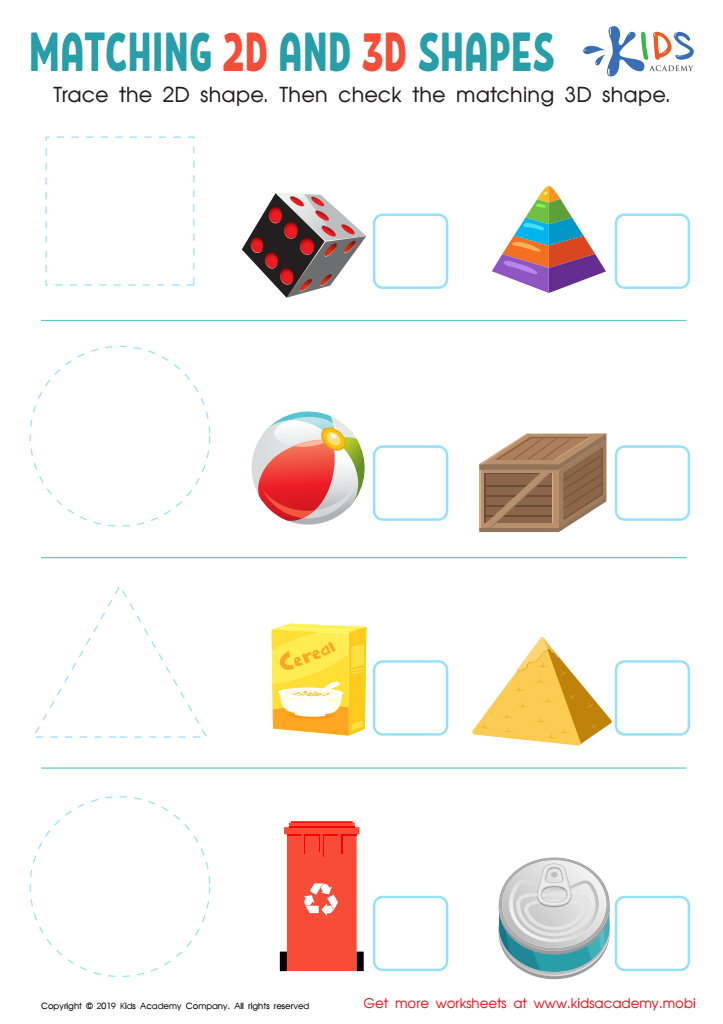
Matching 2D and 3D Shapes Worksheet
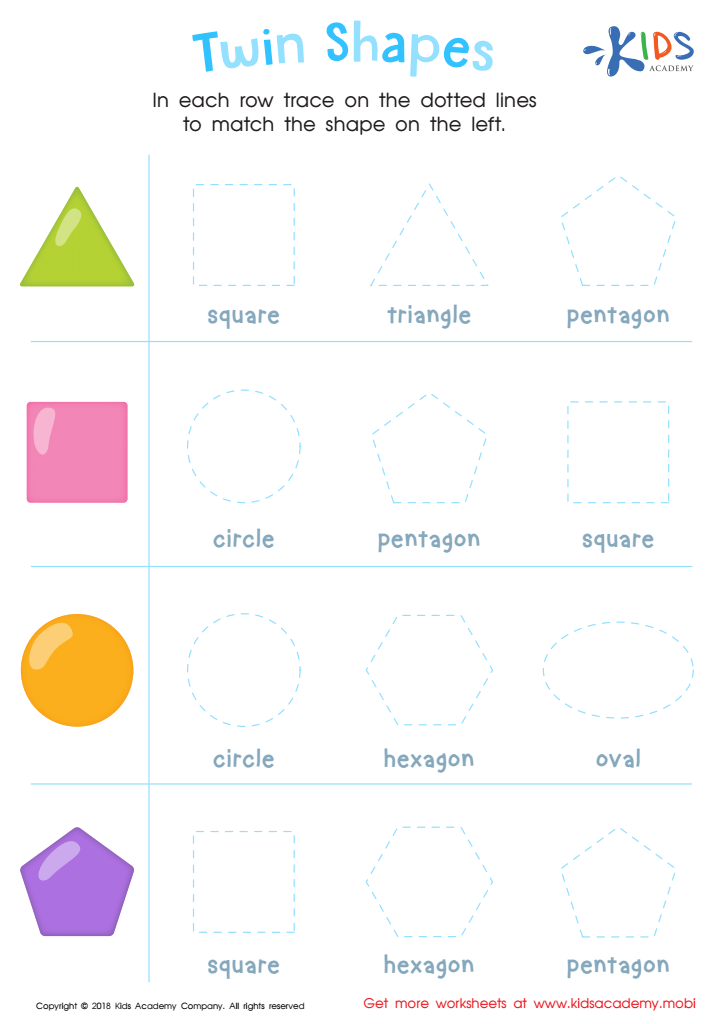
Twin Shapes Dot-to-Dot Worksheet








Parents and teachers should care about Extra Challenge Tracing Shapes for children aged 6-8 because it plays a crucial role in early childhood development. Engaging in shape tracing activities enhances fine motor skills, which are essential for tasks like writing, using scissors, and personal self-care. These skills develop hand-eye coordination and dexterity, setting a solid foundation for future learning.
Moreover, tracing shapes aids in cognitive development by promoting visual-spatial awareness and shape recognition. As children learn to identify and differentiate various shapes, they simultaneously strengthen their critical thinking skills, which are essential for problem-solving later in life.
Extra Challenge Tracing Shapes also fosters children’s creativity and imagination. When children manipulate shapes in different ways, they gain confidence in their artistic expression, contributing to emotional development and self-esteem. Furthermore, such activities can be integrated into fun, themed lessons that make learning contextual and relatable.
Finally, engaging in tracing exercises can be a bonding experience between parents, teachers, and children, providing opportunities for shared learning and encouragement. In summary, Extra Challenge Tracing Shapes is a valuable tool that supports multiple areas of development, making it a priority for caregivers in nurturing well-rounded learners.