Extra Challenge Area and Perimeter Worksheets for Ages 7-8
5 filtered results
-
From - To
Welcome to our Extra Challenge Area and Perimeter Worksheets for Ages 7-8! These engaging worksheets are meticulously designed to enhance your child's understanding of area and perimeter concepts through exciting problems and activities. Suitable for young learners, our materials encourage critical thinking and improve problem-solving skills. With a variety of challenges, students will explore different shapes and units of measurement, making math both fun and educational. Perfect for classroom use or at-home practice, our worksheets cater to diverse learning styles, ensuring every child can excel. Let your child take on a challenge today and build a strong foundation in math!
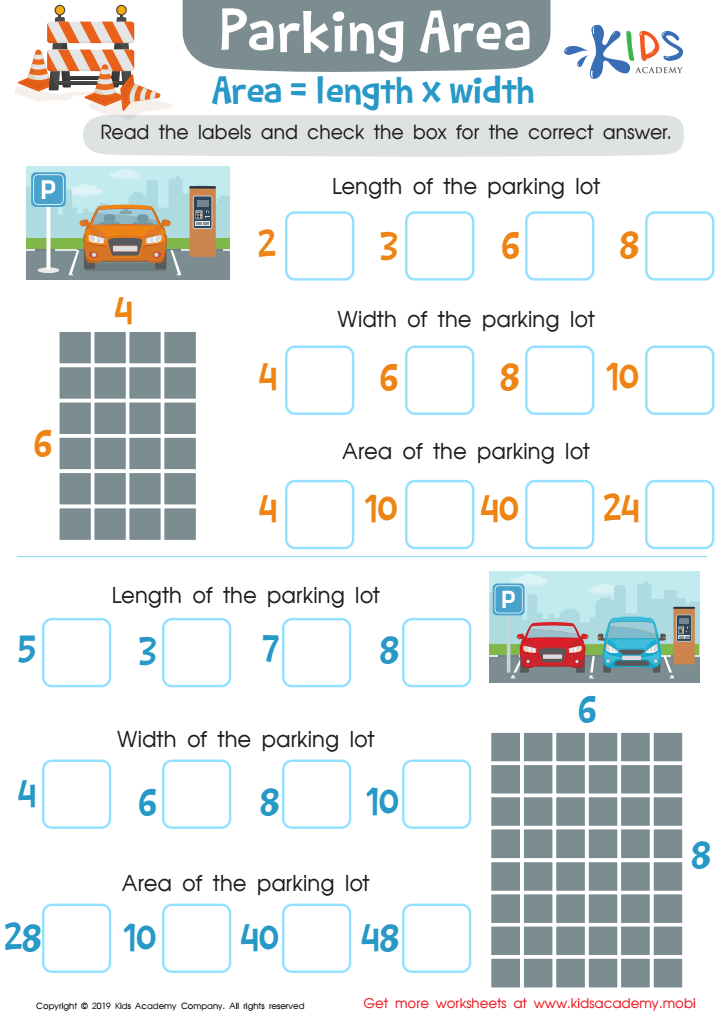
Parking Area Worksheet
 Assign to My Students
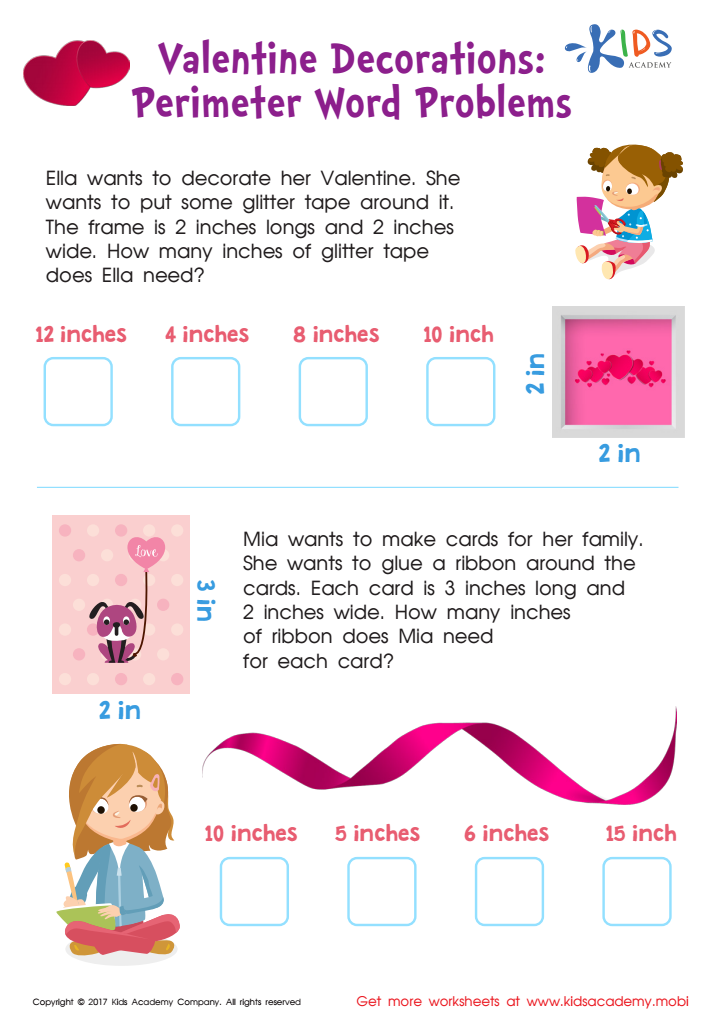
Perimeter Word Problems Worksheet
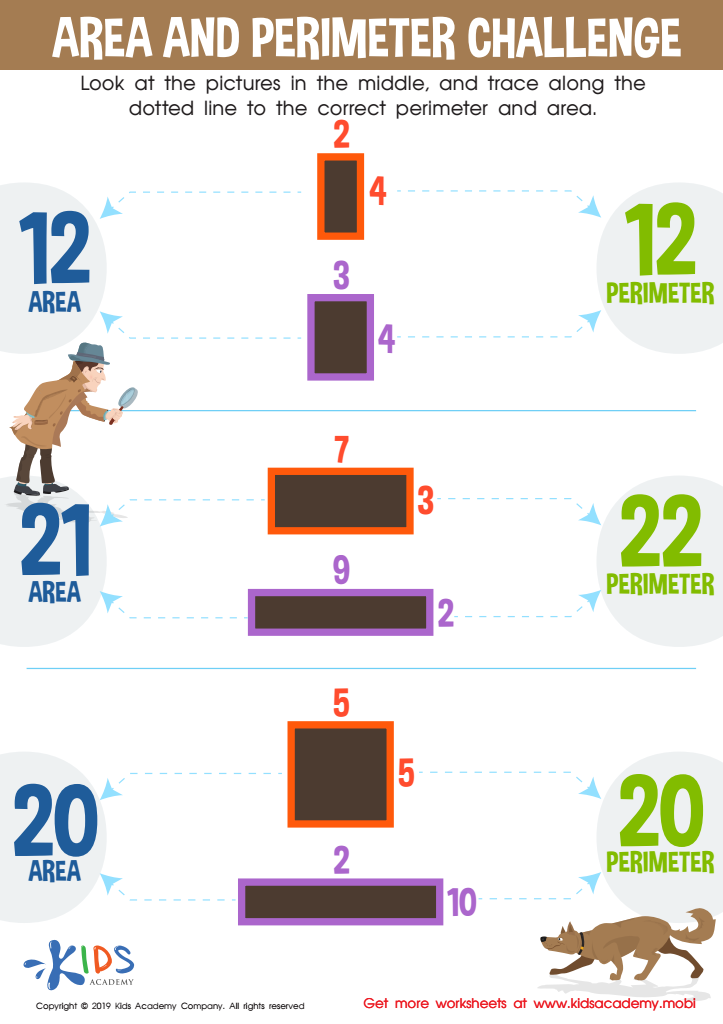
Area and Perimeter Challenge Worksheet
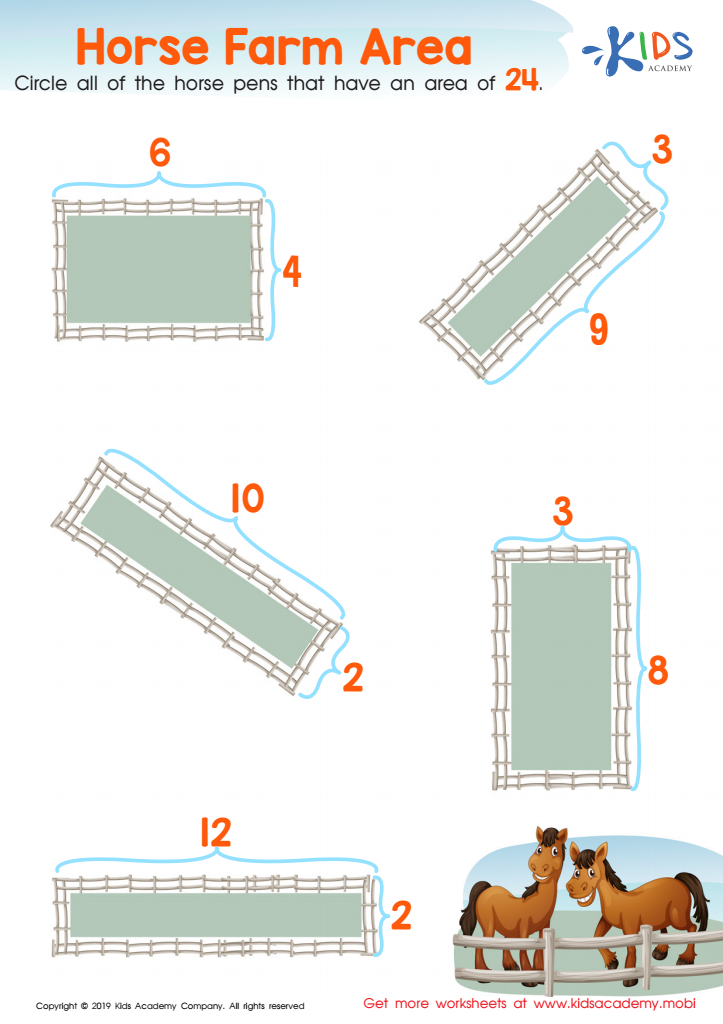
Horse Farm Area Worksheet
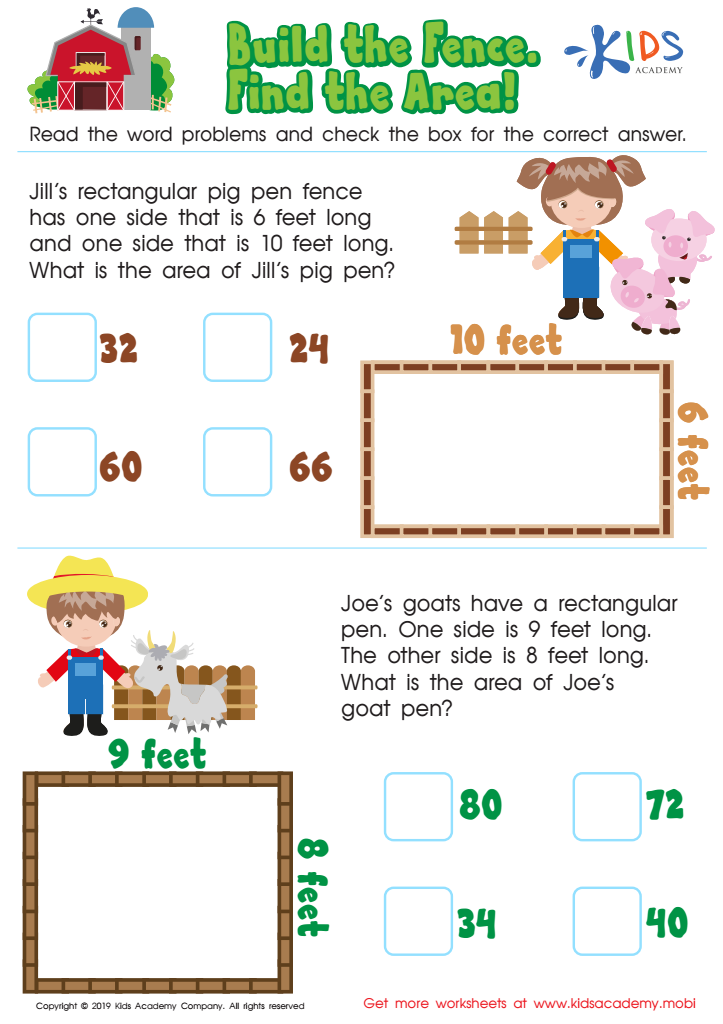
Build the Fence, Find the Area Worksheet








Parents and teachers should care about Extra Challenge Area and Perimeter for Ages 7-8 because mastering these concepts lays a crucial foundation for a child’s mathematical understanding and spatial reasoning skills. At this age, children are curious and eager to explore, making it the perfect time to introduce more challenging concepts related to area and perimeter.
Engaging students with extra challenges encourages critical thinking and problem-solving skills. Learning about area and perimeter not only develops measurement skills but also helps them understand real-world applications—such as how to calculate the space needed for furniture in a room or the amount of material needed for a project.
Moreover, challenge areas can foster a growth mindset. Encouraging children to tackle difficult problems promotes resilience and reinforces that perseverance leads to improvement. Parents and teachers can also use these challenges to identify students' interests and strengths, allowing for tailored support to meet individual learning needs.
By encouraging exploration and academic growth in these areas, parents and teachers can help children become confident mathematical thinkers, setting them up for success in future mathematical concepts and everyday problem-solving. These skills are essential not only in school life but also in understanding the world around them.