
Understanding fractions Extra Challenge Math Worksheets for Ages 7-8
10 filtered results
Difficulty Level
Grade
Age
-
From - To
Subject
Activity
Standards
Introducing our "Understanding Fractions Extra Challenge Math Worksheets," specifically crafted for ages 7-8. These engaging worksheets are designed to deepen young learners' grasp of fractions, enhancing their problem-solving skills through fun and interactive tasks. Each worksheet offers a variety of challenges, from identifying and comparing fractions to solving word problems and visualizing fractions in everyday contexts. Perfect for both classroom and at-home learning, these materials support children in mastering this essential math concept. Set your students on the path to success with our expertly developed resources and watch their confidence in math grow! Discover more at Kids Academy.
Favorites
With answer key
Interactive
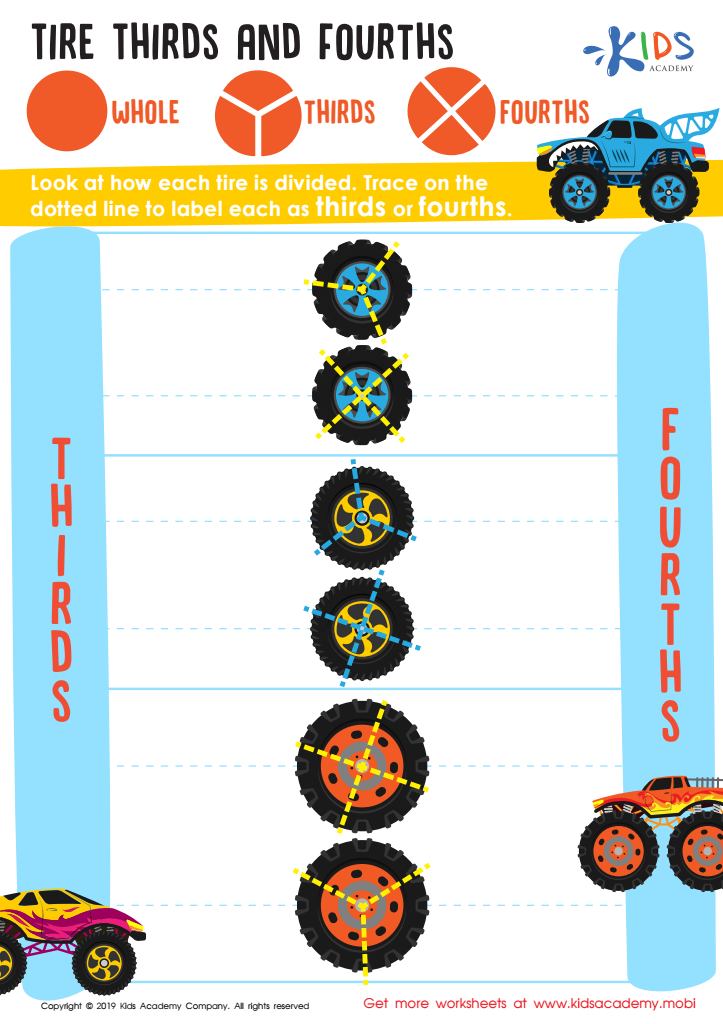
Tire Thirds and Fourths Worksheet
Learning geometry is key in your child's education. Have them identify and name shapes cut into 2, 3 and 4 parts. Test their knowledge with this worksheet - trace the dotted line to label each as third or fourth. Encourage them to keep learning!
 Assign to My Students
Tire Thirds and Fourths Worksheet
Worksheet
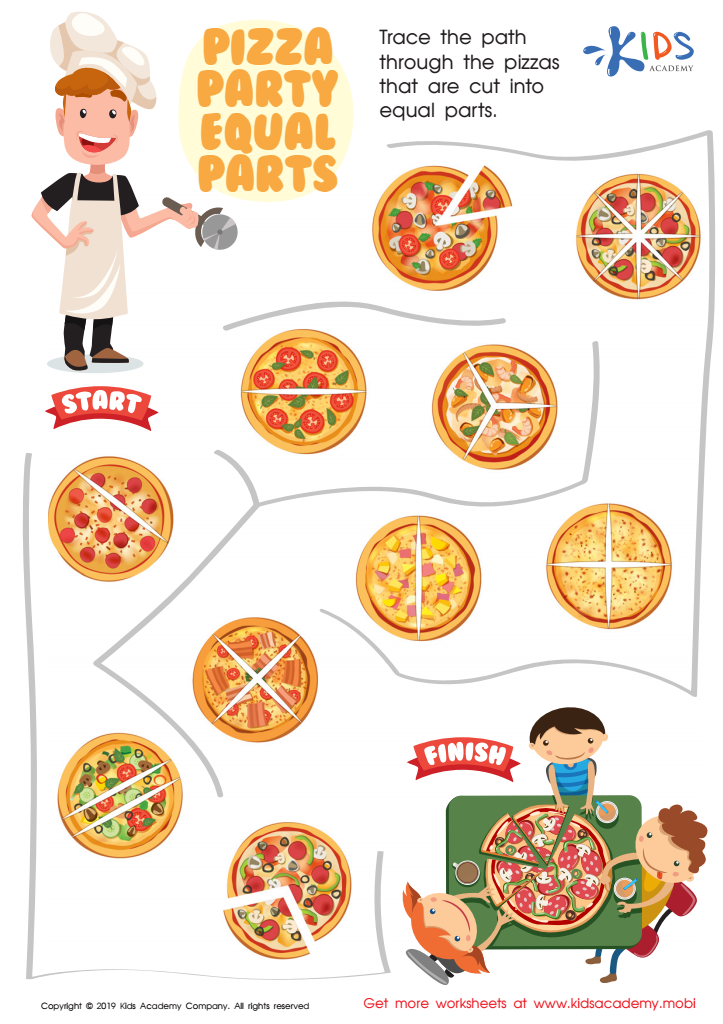
Pizza Party Equal Parts Worksheet
Love pizza? This printout is a great way to help kids learn about equal parts! Kids must identify pizzas cut into equal parts, then trace the path through the pizzas. It's an exciting maze - and a great way to help kids learn! Get the traceable pdf today and let the fun begin!
Pizza Party Equal Parts Worksheet
Worksheet
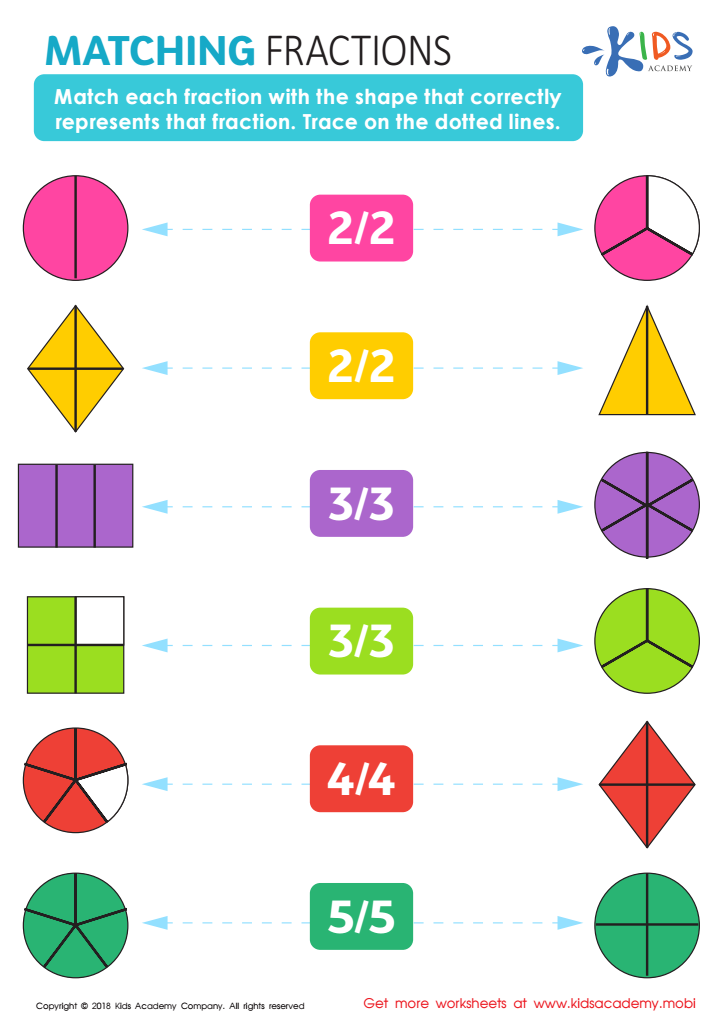
Matching Fractions Worksheet
This worksheet uses colorful images to engage students. On the left are six shapes, mirrored on the right, with fractions in the middle. Students must match up the fraction with the right shape. It's a fun way to sharpen fractions skills!
Matching Fractions Worksheet
Worksheet
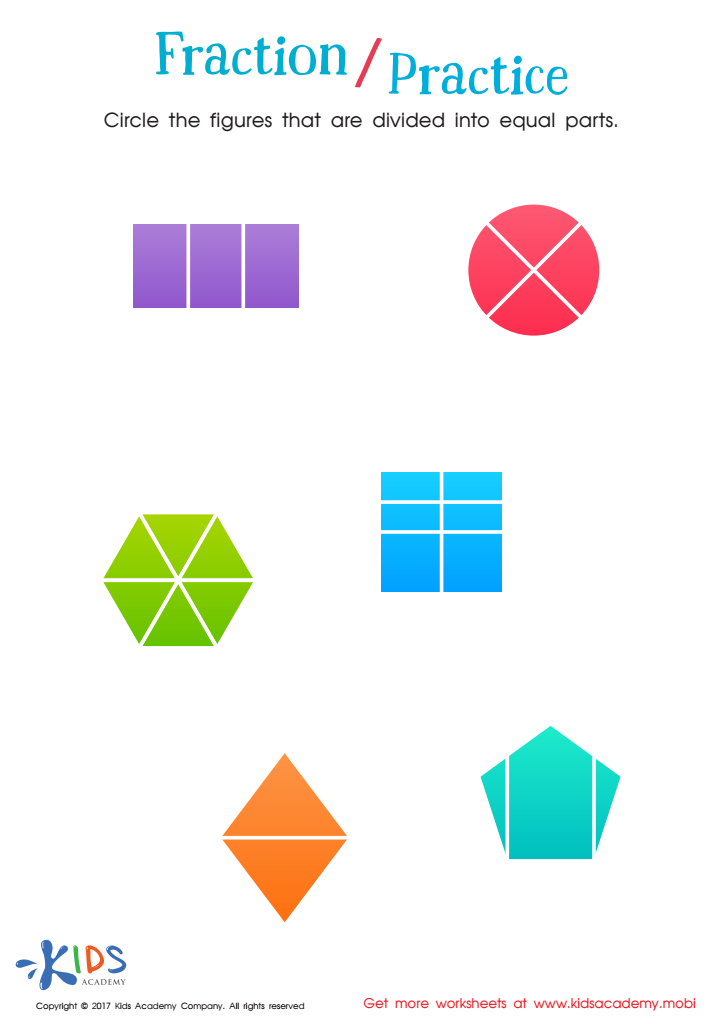
Fractions: Shapes Worksheet
Get your printable now.
Kids learn math differently today than you did in school; understanding concepts rather than memorizing facts. Help your child understand fractions with this printable worksheet. It'll help your child recognize parts of a whole, identify equal parts and build a foundation for numeracy. A better understanding sets kids up for math success! Get your printable now.
Fractions: Shapes Worksheet
Worksheet
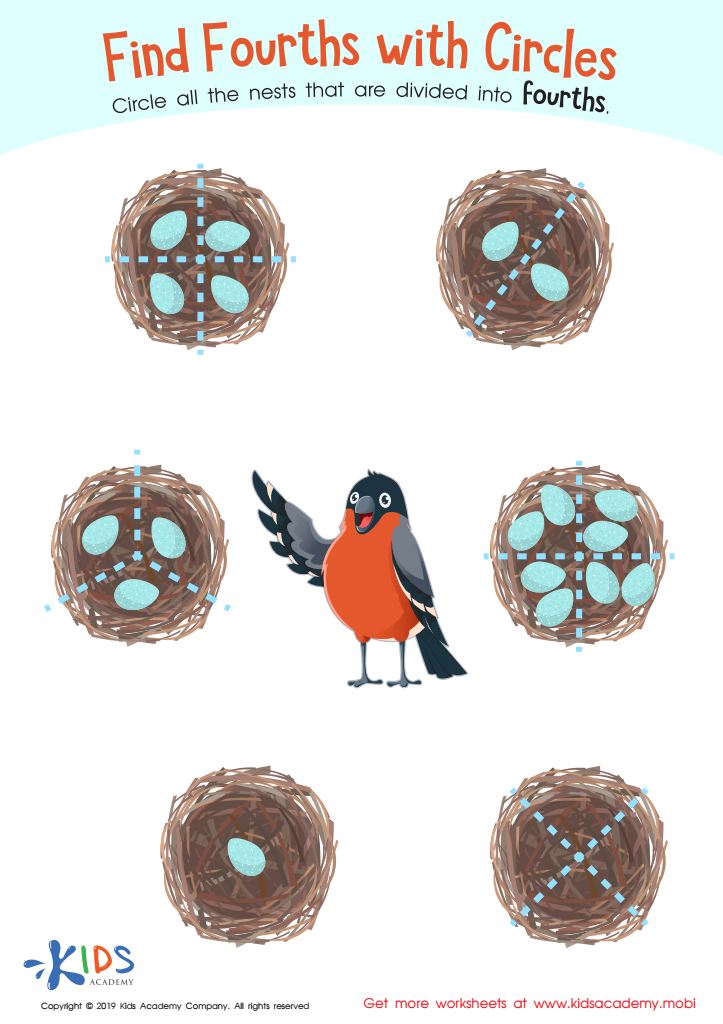
Find Fourths Circles Worksheet
Finding fractions with this Find Fourths with Circles worksheet can be fun! Your child will see a picture of circles divided into different fractions and circle the nests divided into fourths. With the help of their cheery bird friend, they can look for nests with four equal parts and be successful in finding the correct nest.
Find Fourths Circles Worksheet
Worksheet
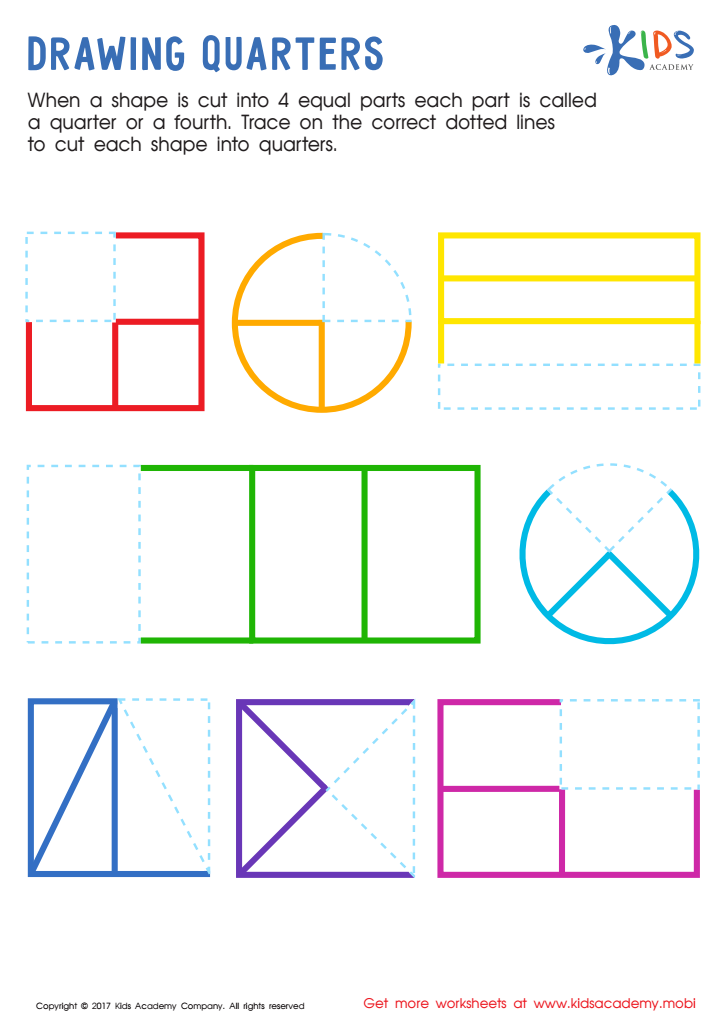
Drawing Quarters Worksheet
Help your kids divide shapes into quarters! Have them trace dotted lines to cut each shape into 4 equal parts. Each of the 4 parts is called a quarter or a fourth. This worksheet will help kids learn more about dividing shapes into four equal parts.
Drawing Quarters Worksheet
Worksheet
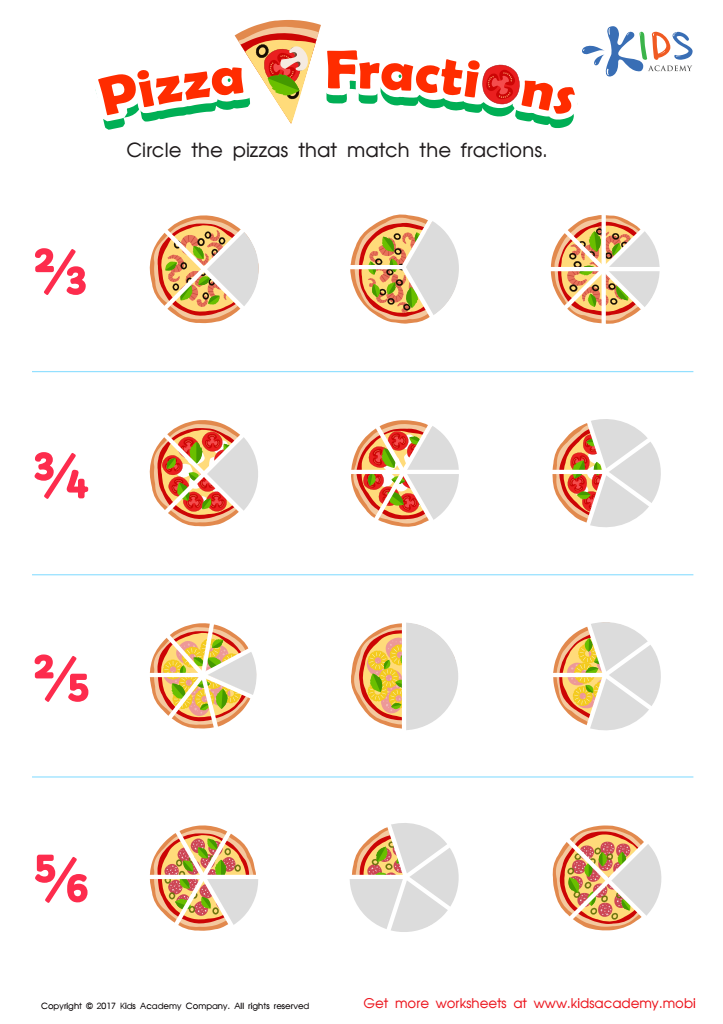
Fractions: Pizza Printable
Fractions can be tricky for kids, but this pizza fractions printable can help! Kids can understand fractions by seeing them, as they use one of their favorite foods. It helps them grasp the concept and gain a deeper understanding of what fractions represent. Extend their learning by quizzing them when you order pizza next time.
Fractions: Pizza Printable
Worksheet
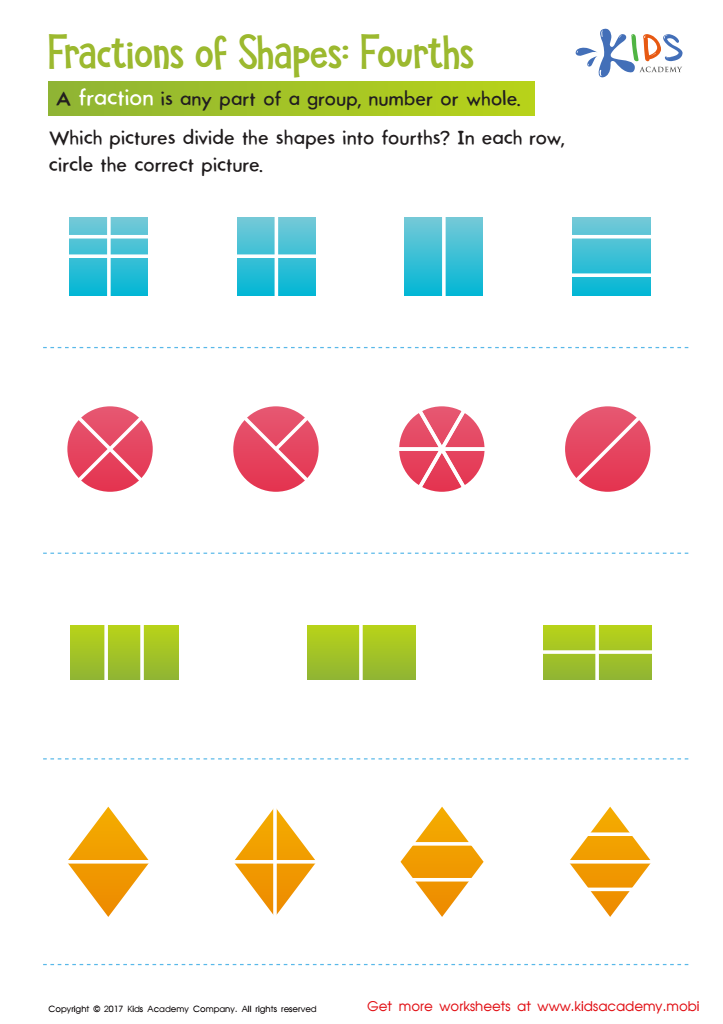
Fractions of Shapes Worksheet
It will also show them how fractions are represented in everyday shapes.
Fractions of Shapes Worksheet
Worksheet
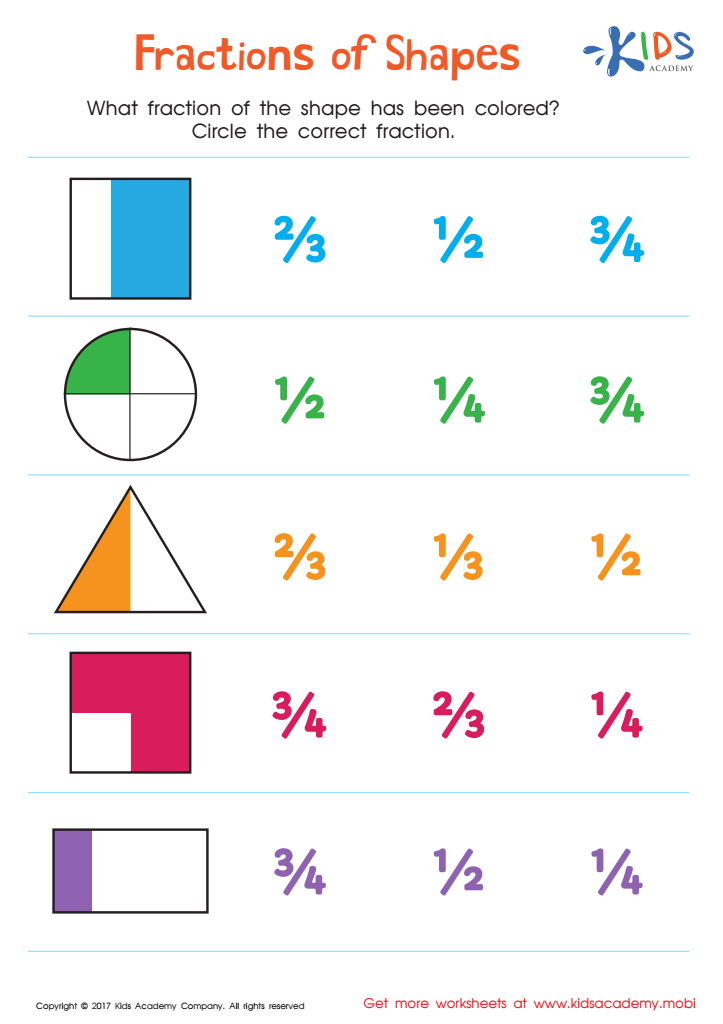
Fractions of Shapes: Math Concept Worksheet
Fractions can be tricky, but with pictures to illustrate them, they become much easier to understand. Our fractions of shapes worksheet is a great way to help children visualize fractions and gain a better understanding of them.
Fractions of Shapes: Math Concept Worksheet
Worksheet
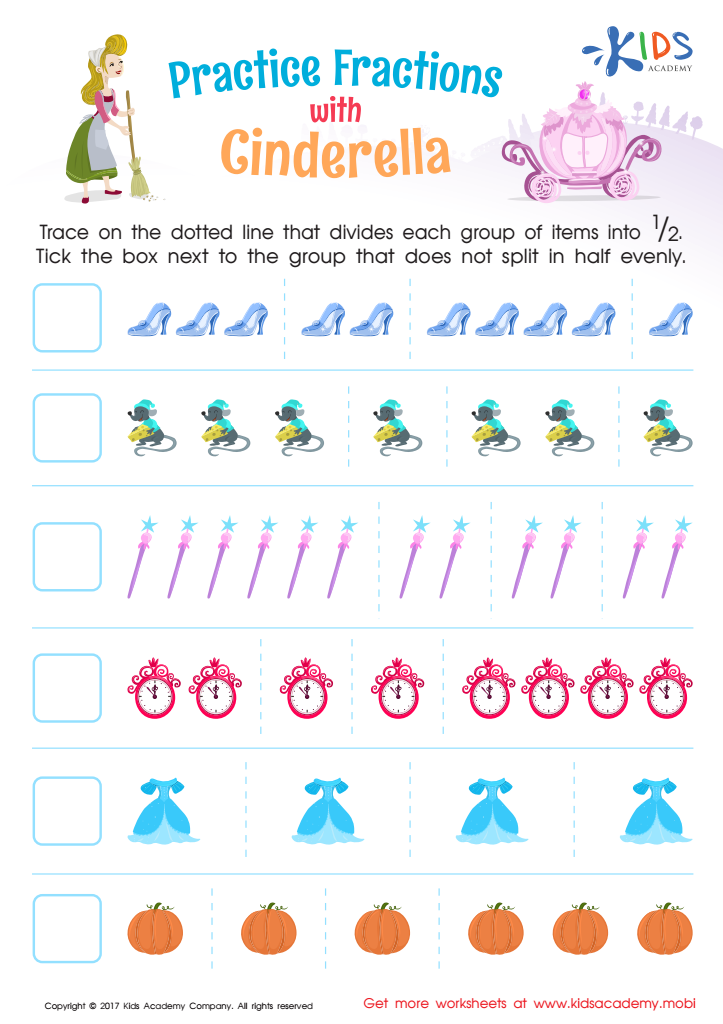
Fractions: Cinderella Printable
Cinderella and ½ are the perfect pair to excite your child about learning fractions.
Fractions: Cinderella Printable
Worksheet
Join Kids Academy for Free
Who is primarily going to use this learning content?





Understanding fractions is a foundational skill in mathematics that plays a crucial role in a child’s academic development, particularly for ages 7-8. At this age, children are forming critical thinking and problem-solving skills that will be the building blocks for more advanced concepts. Fractions are not just numbers; they represent parts of a whole, relationships between quantities, and essential operations like division and multiplication.
By engaging with extra challenge math problems focused on fractions, children enhance their numerical fluency and flexibility. This strengthens their ability to understand and manipulate various forms of numbers, which is necessary for mastering more complex math topics such as algebra, geometry, and probability later in their education.
Parents and teachers should care because early exposure to challenging fraction problems nurtures a positive attitude towards math. It prevents math anxiety and builds confidence as children realize that they can tackle difficult concepts. Additionally, fractions are ubiquitously applicable in real-world situations like cooking, sharing, and comparing quantities.
By prioritizing a deep comprehension of fractions through extra challenges, parents and teachers empower children to achieve long-term success not only in their academic pursuits but also in their everyday lives. Fostering this early understanding lays a framework for continual growth and a lifelong appreciation of mathematics.








