Understanding fractions Extra Challenge Geometry Worksheets for Ages 7-9
8 filtered results
-
From - To
Unlock the world of fractions with our "Understanding Fractions Extra Challenge Geometry Worksheets" designed specifically for children ages 7 to 9. These engaging worksheets provide a fun yet challenging way for young learners to grasp fundamental concepts of fractions through geometric shapes. With a range of exercises, including matching, coloring, and problem-solving, children will enhance their critical thinking skills and deepen their understanding of how fractions interact with geometry. Perfect for supplementing classroom learning or for at-home practice, our worksheets create a solid foundation for future math success. Dive into our collection and make learning fractions an enjoyable adventure!
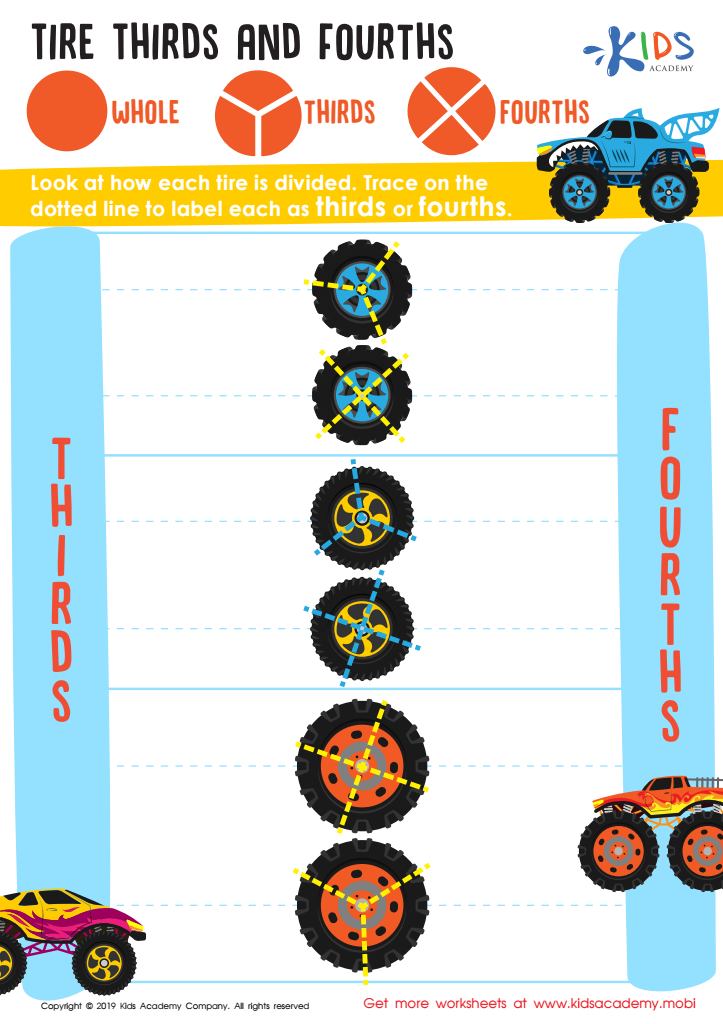
Tire Thirds and Fourths Worksheet
 Assign to My Students











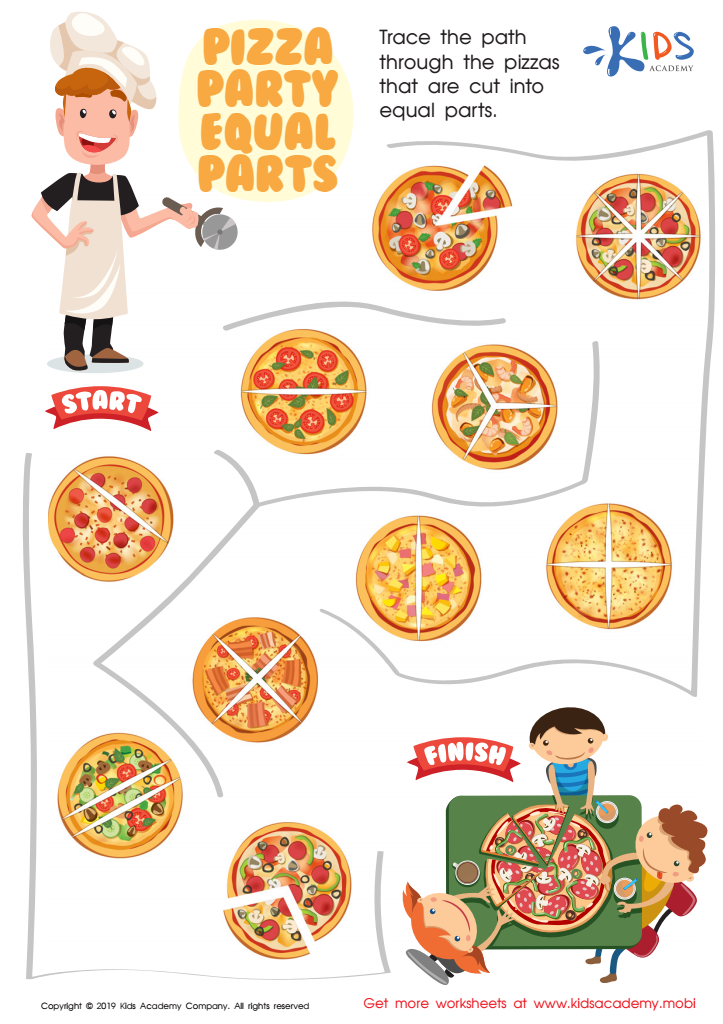
Pizza Party Equal Parts Worksheet
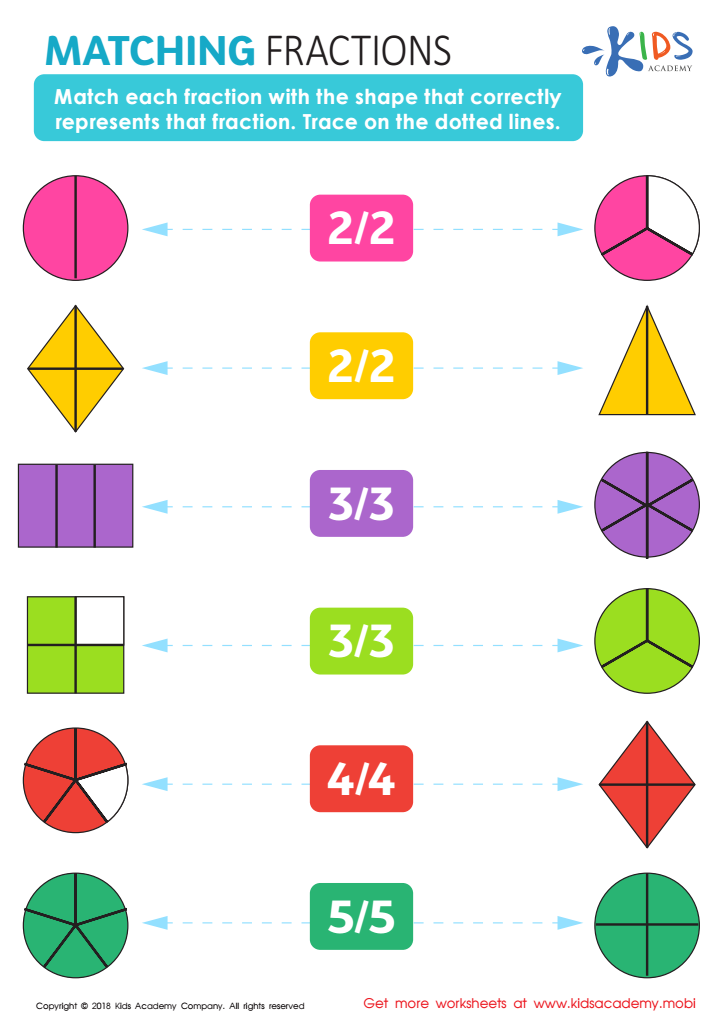
Matching Fractions Worksheet
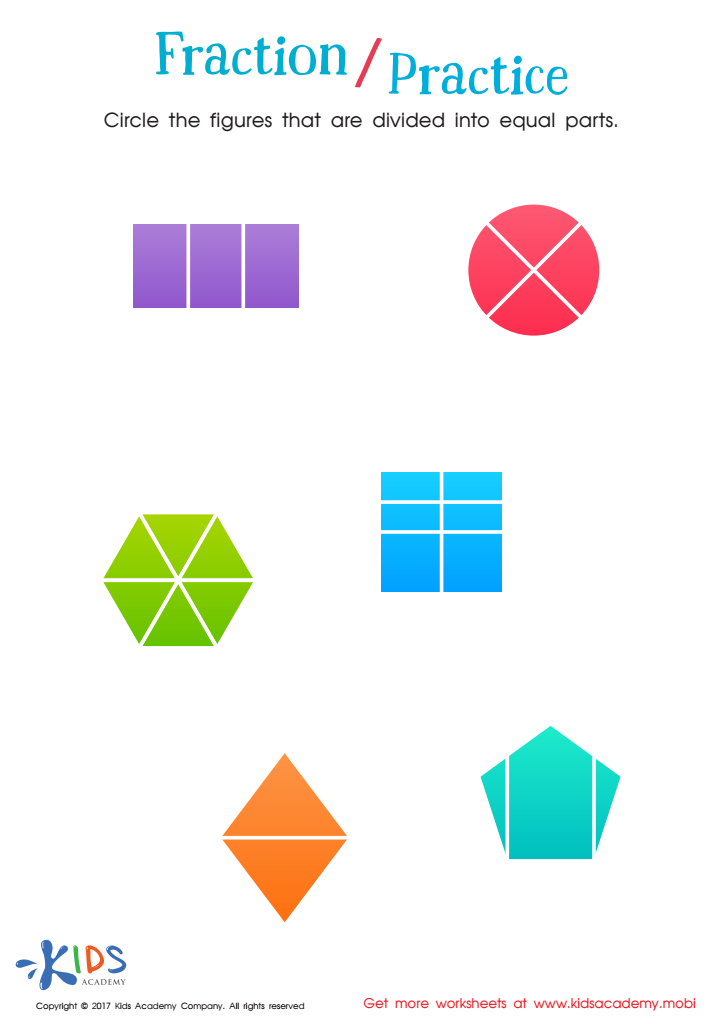
Fractions: Shapes Worksheet
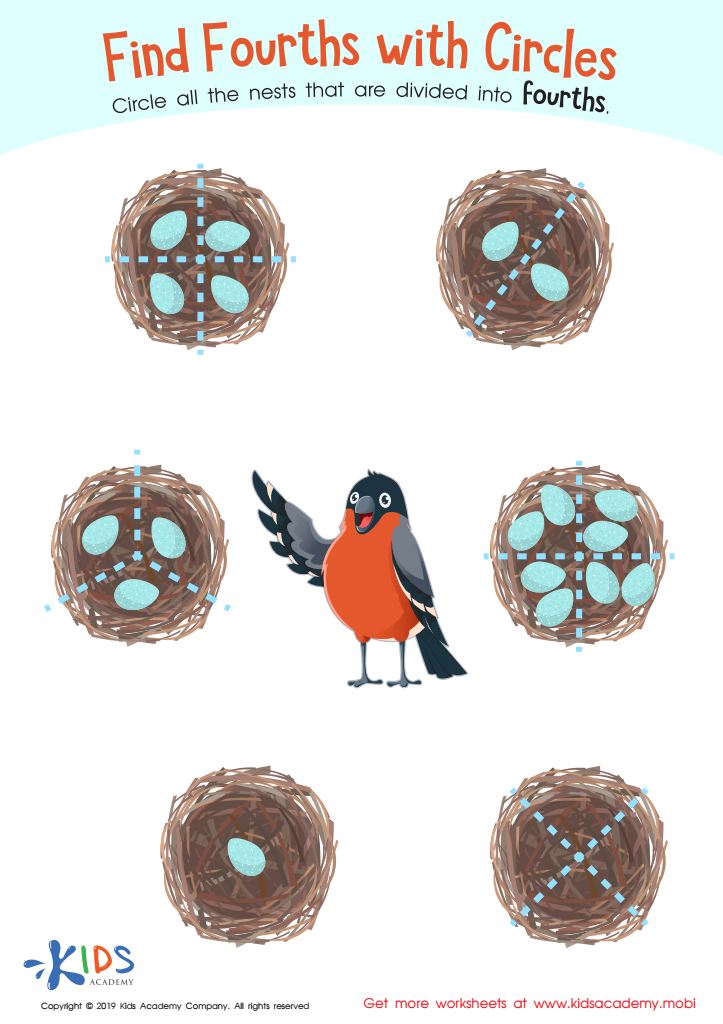
Find Fourths Circles Worksheet
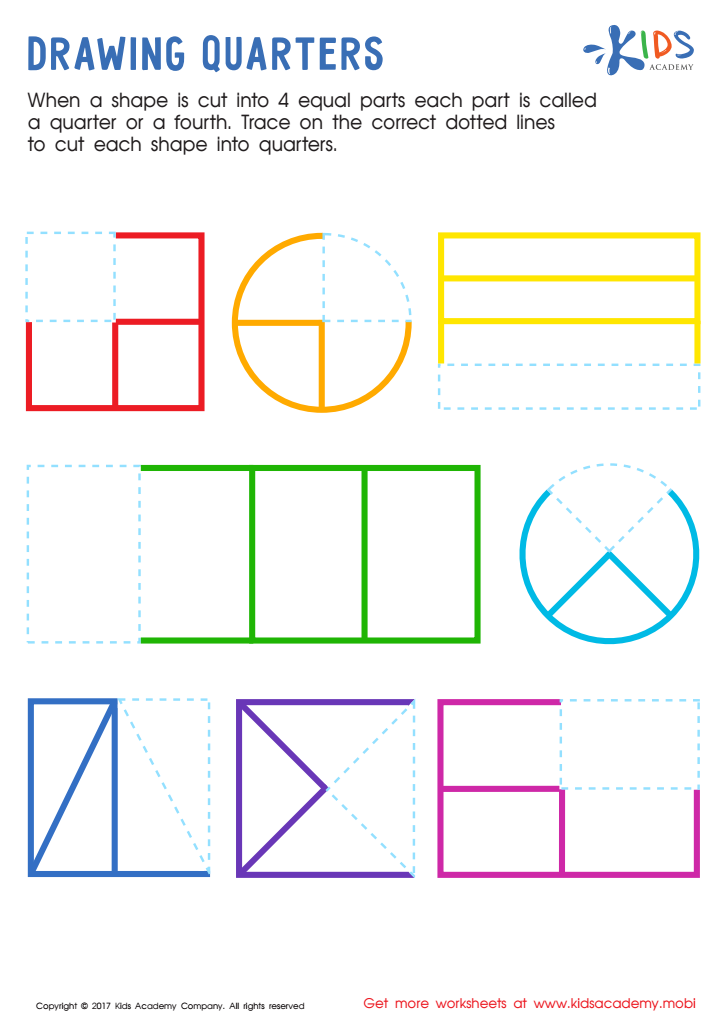
Drawing Quarters Worksheet
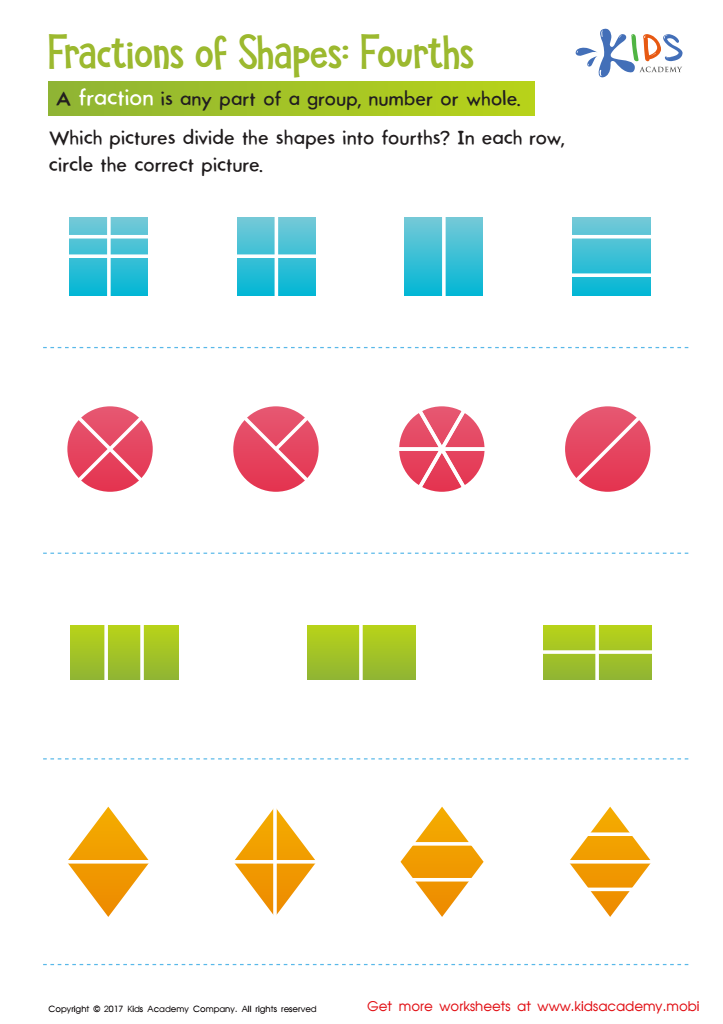
Fractions of Shapes Worksheet
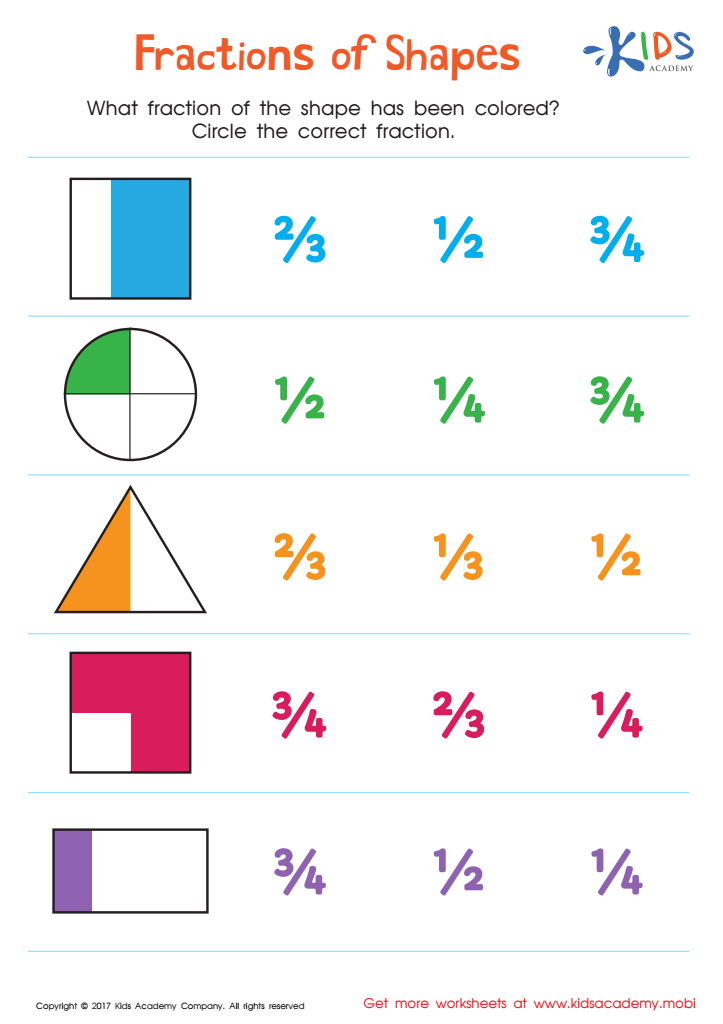
Fractions of Shapes: Math Concept Worksheet








Understanding fractions and geometry is crucial for children aged 7-9, as these concepts lay the foundational skills for advanced mathematical reasoning and problem-solving in future grades. Mastery of fractions enables children to comprehend and express parts of a whole, which is vital in everyday life—be it in cooking, measuring, or budgeting. When parents and teachers focus on these skills, they help students develop a strong sense of numerical literacy, applicable in various tasks.
Geometry challenges, such as understanding shapes, symmetry, and spatial relationships, nurture critical thinking and visual-spatial reasoning. These concepts encourage creativity and innovation as children learn to conceptualize and manipulate shapes. Embracing these challenges fosters confidence and enjoyment in mathematics, mitigating the onset of math anxiety commonly seen in later years.
Moreover, comprehension of fractions and geometry strengthens problem-solving abilities, essential in both academic pursuits and real-world situations. Parents and teachers play a vital role in nurturing these skills, guiding children through engaging activities that promote collaborative learning. Ultimately, by emphasizing understanding in these areas, we equip children not just for math exams, but for a lifetime of effective decision-making and analytical thinking.