Shape identification Extra Challenge Geometry Worksheets for 7-Year-Olds
4 filtered results
-
From - To
Introducing our "Shape Identification Extra Challenge Geometry Worksheets" designed specifically for 7-year-olds! These engaging and colorful worksheets offer an exciting opportunity for young learners to reinforce their understanding of various shapes through fun challenges. Each worksheet focuses on identifying, classifying, and comparing shapes, fostering critical thinking and spatial awareness. Perfect for home or classroom use, these activities are tailored to meet educational standards while providing children with a stimulating way to explore geometry. Help your child become a shape expert with our carefully crafted worksheets that make learning both enjoyable and educational. Get ready to enhance their geometry skills today!
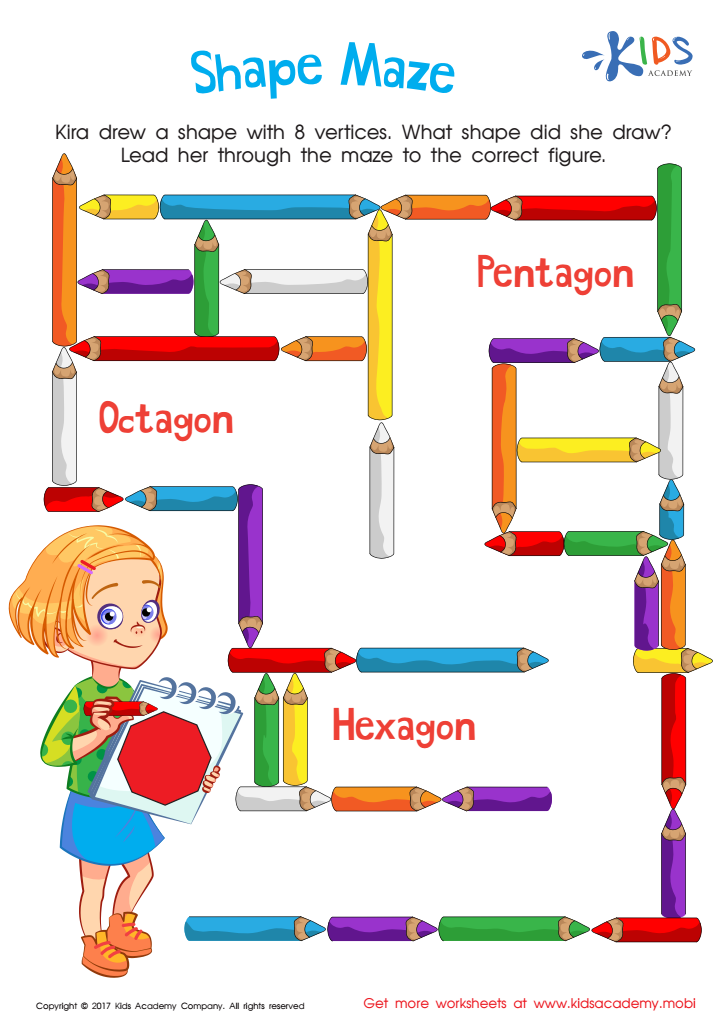
Shape Maze Worksheet
 Assign to My Students











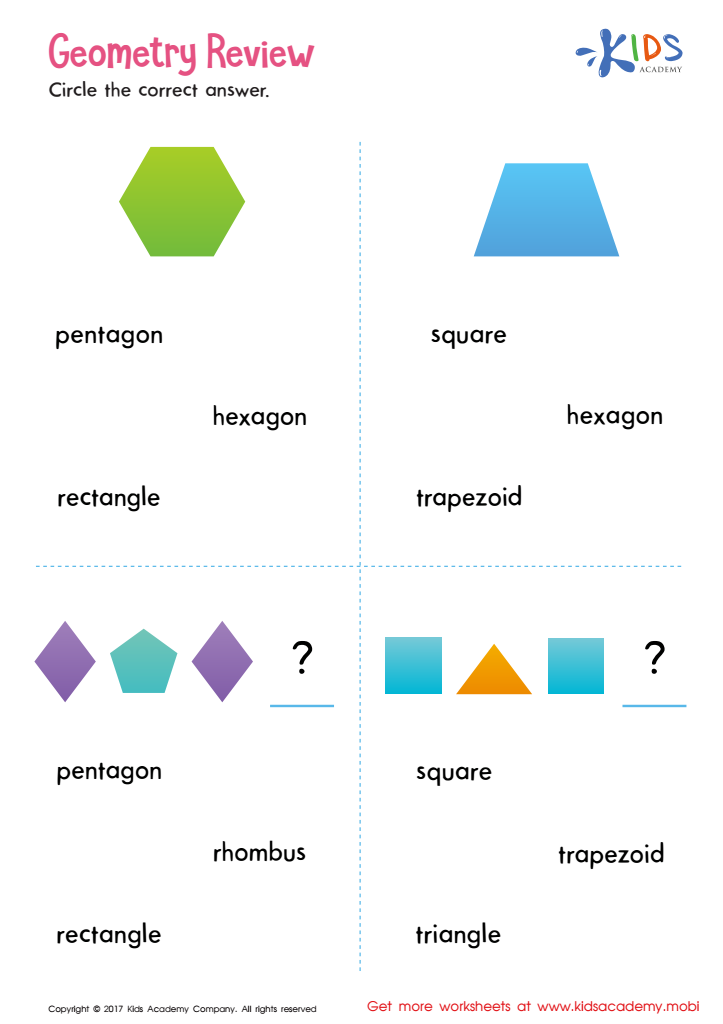
Geometry Review Printable
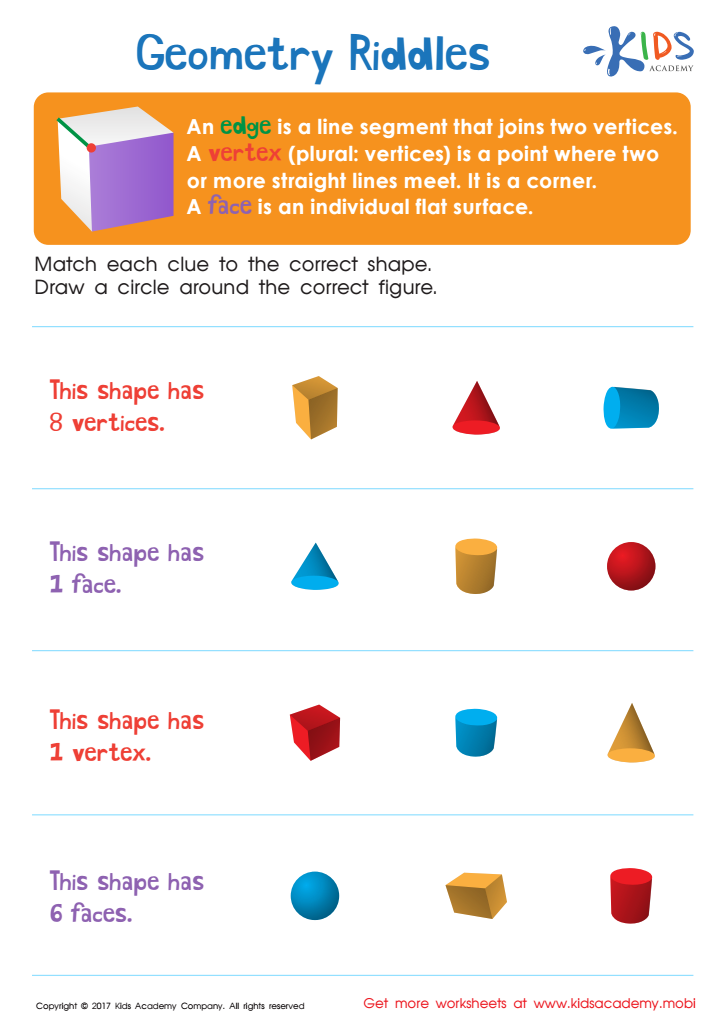
Geometry Riddles Printable
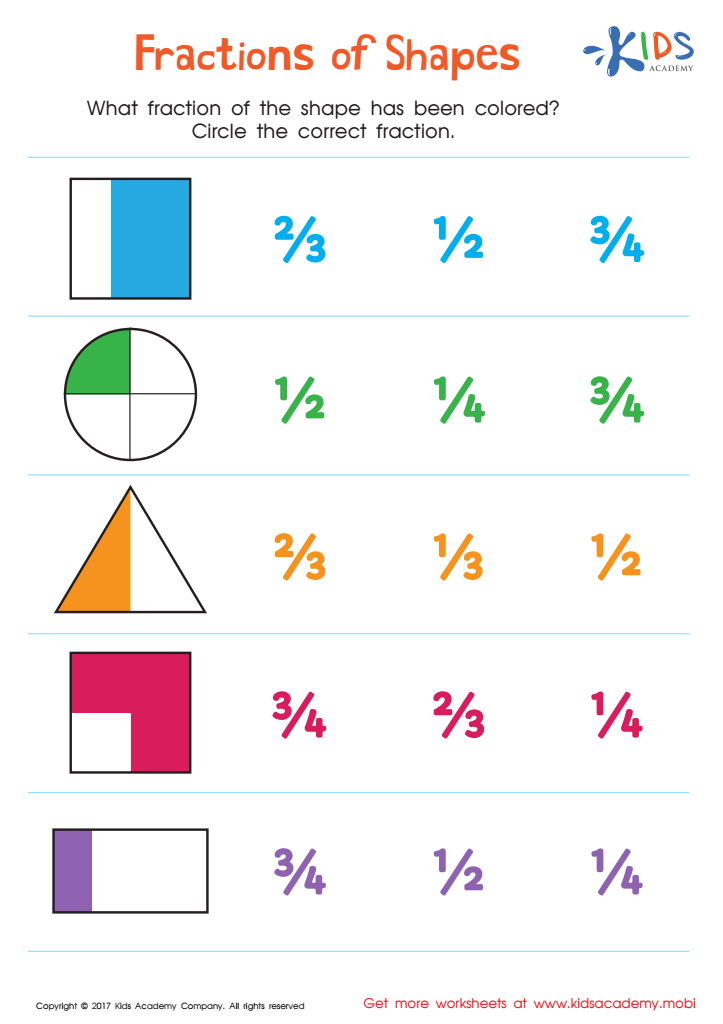
Fractions of Shapes: Math Concept Worksheet








Shape identification is a fundamental skill that plays a crucial role in a child's overall development, especially when tailored to the needs of 7-year-olds. For parents and teachers, understanding the significance of this skill within the context of geometry and spatial reasoning is essential.
First, shape identification fosters cognitive development. By recognizing and categorizing shapes, children enhance their analytical and critical thinking skills. This forms the groundwork for more complex mathematical concepts. Additionally, geometry skills are foundational in real-life applications, such as understanding maps, architecture, and even art.
Moreover, engaging children in shape identification activities promotes fine motor skills and language development. As they describe shapes and their attributes, they enrich their vocabulary and communication skills. This not only boosts academic abilities but also encourages social interaction during collaborative play and learning.
The extra challenge in shape identification can help to keep children engaged and motivated. These advanced activities can spark curiosity and creativity, allowing children to explore shapes in-depth, thus making learning enjoyable. Therefore, parents and teachers should prioritize shape identification as it not only enhances mathematical reasoning but also supports overall cognitive, social, and emotional development in young learners.








