Comparing Fractions Extra Challenge Grade 1 Worksheets
3 filtered results
-
From - To
Enhance your child's math skills with our "Comparing Fractions Extra Challenge Grade 1 Worksheets"! Perfect for young learners, these engaging resources provide an opportunity for students to practice identifying and comparing fractions. With colorful visuals and fun exercises, children will develop a solid understanding of how to compare fractions, fostering essential critical thinking skills. Designed to complement classroom learning, these worksheets offer extra challenges that keep students motivated and excited about math. Ideal for both classroom use and homeschooling, download our worksheets today and help your first grader master fraction comparisons in an enjoyable way!
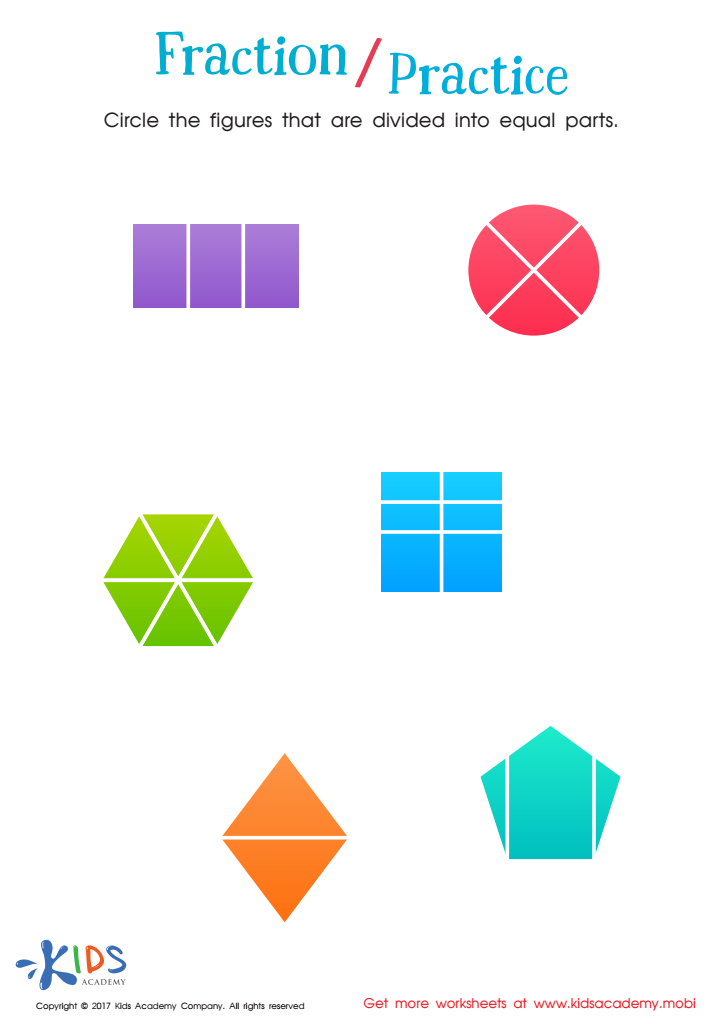
Fractions: Shapes Worksheet
 Assign to My Students
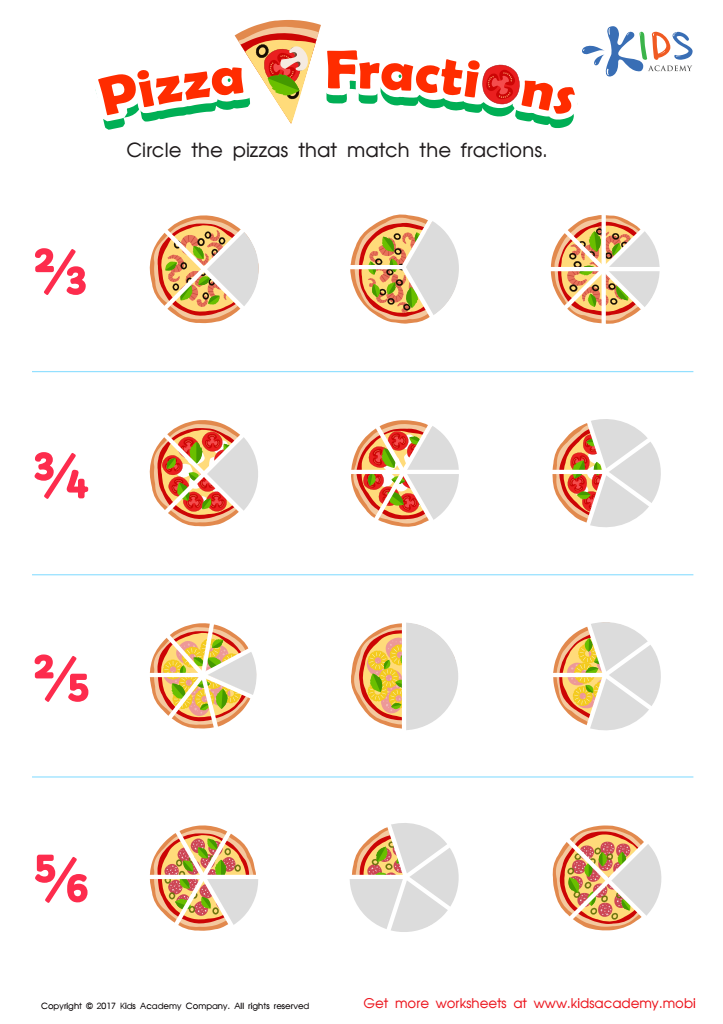
Fractions: Pizza Printable
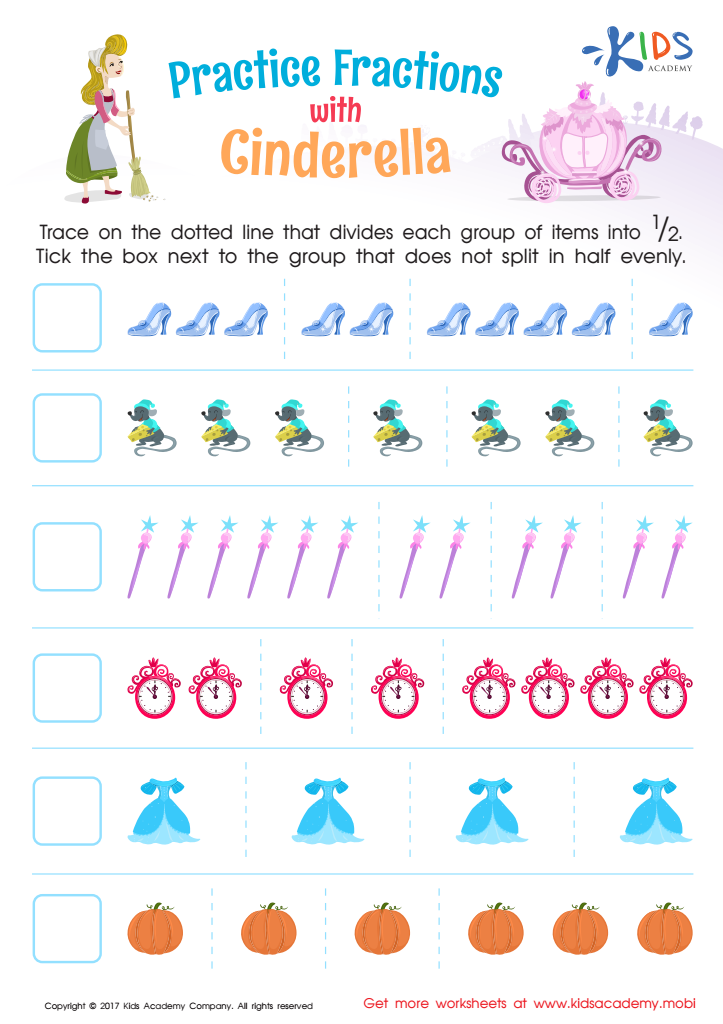
Fractions: Cinderella Printable







Comparing fractions is a fundamental mathematical concept that plays a crucial role in early education. For first graders, engaging with concepts like comparing fractions lays a solid foundation for future mathematical learning. Parents and teachers should care about the “Comparing Fractions Extra Challenge” specifically for several reasons.
Firstly, mastering fractions nurtures critical thinking skills. When children compare fractions, they learn to analyze and evaluate quantities, enhancing their problem-solving abilities. This not only aids in math but fosters overall cognitive development.
Secondly, learning to compare fractions helps children understand the concepts of equivalence and inequality. These skills are essential for daily life, whether they are sharing snack portions or understanding measurements in recipes.
Furthermore, working on comparing fractions encourages collaboration between parents, teachers, and students. By taking on challenging tasks together, they foster a supportive learning environment, which boosts children's confidence and enthusiasm for math.
Finally, early exposure to such concepts can spark a love for learning that lasts a lifetime. Overall, prioritizing the “Comparing Fractions Extra Challenge” benefits students directly, supporting their academic growth and preparing them for more complex mathematical concepts in the future.