Division practice Kindergarten Worksheets
5 filtered results
-
From - To
Introduce your little learners to the foundational concepts of division with our engaging kindergarten worksheets! Designed to make learning fun and interactive, our division practice worksheets help children understand basic division through simple, illustrative problems. Featuring colorful images and easy-to-follow instructions, these printables are perfect for beginning their math journey. Boost their problem-solving skills and reinforce their understanding with hands-on activities that lay the groundwork for future math success. Start your child on the path to math mastery today with our expertly crafted division practice worksheets tailored specifically for young minds. Visit Kids Academy for more educational resources.
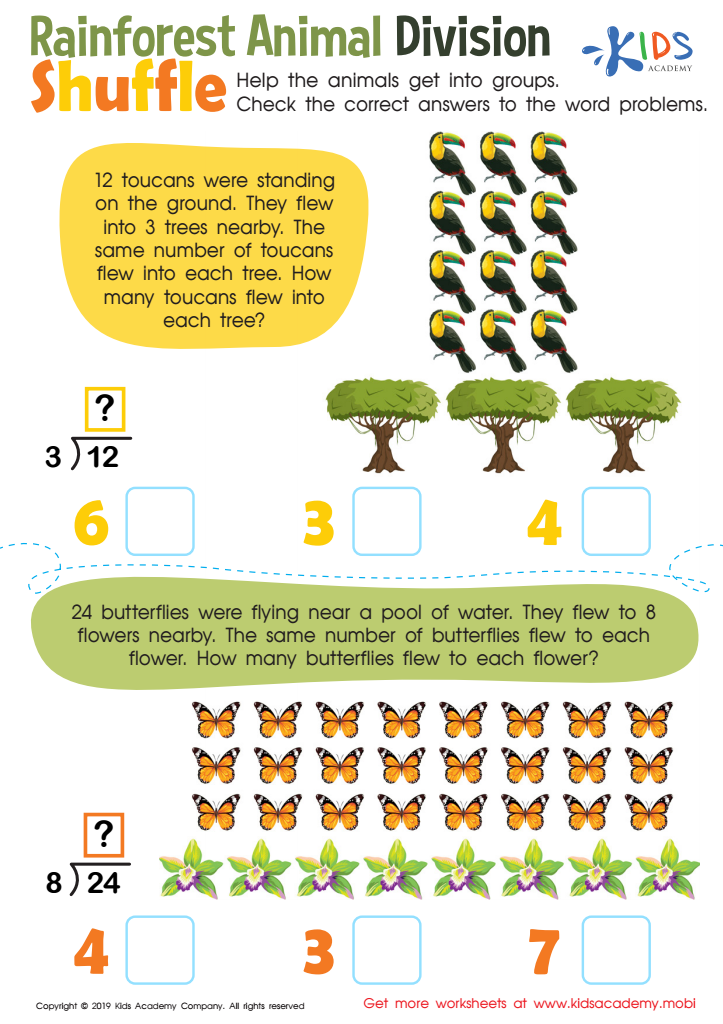
Rainforest Animal Division Worksheet
 Assign to My Students
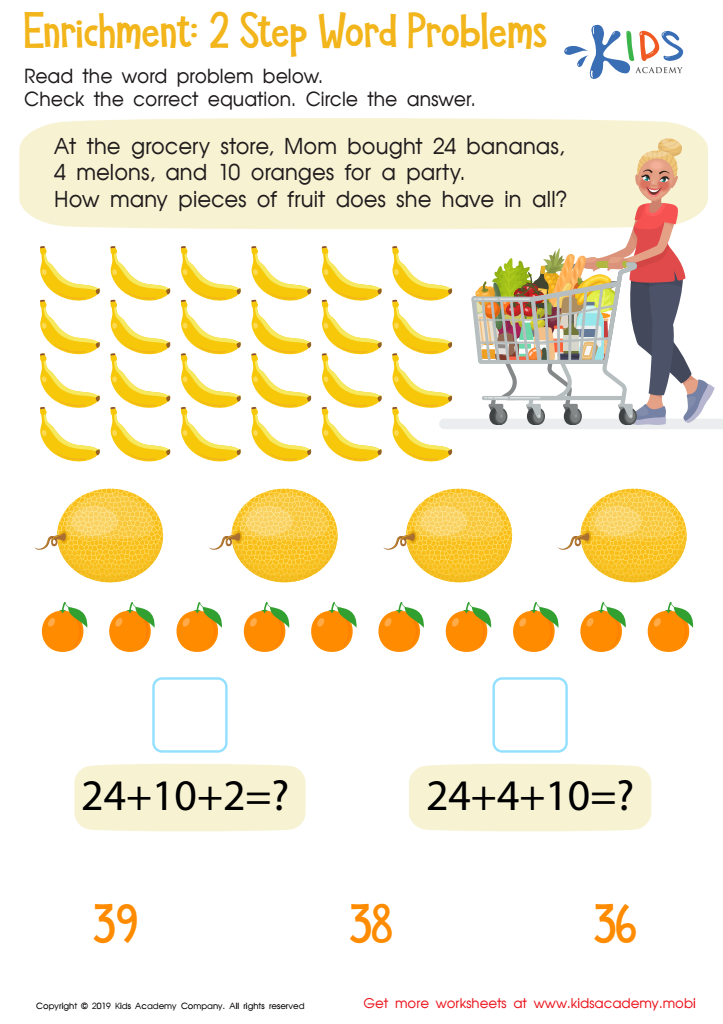
Enrichment -2 Step Word Problems Worksheet
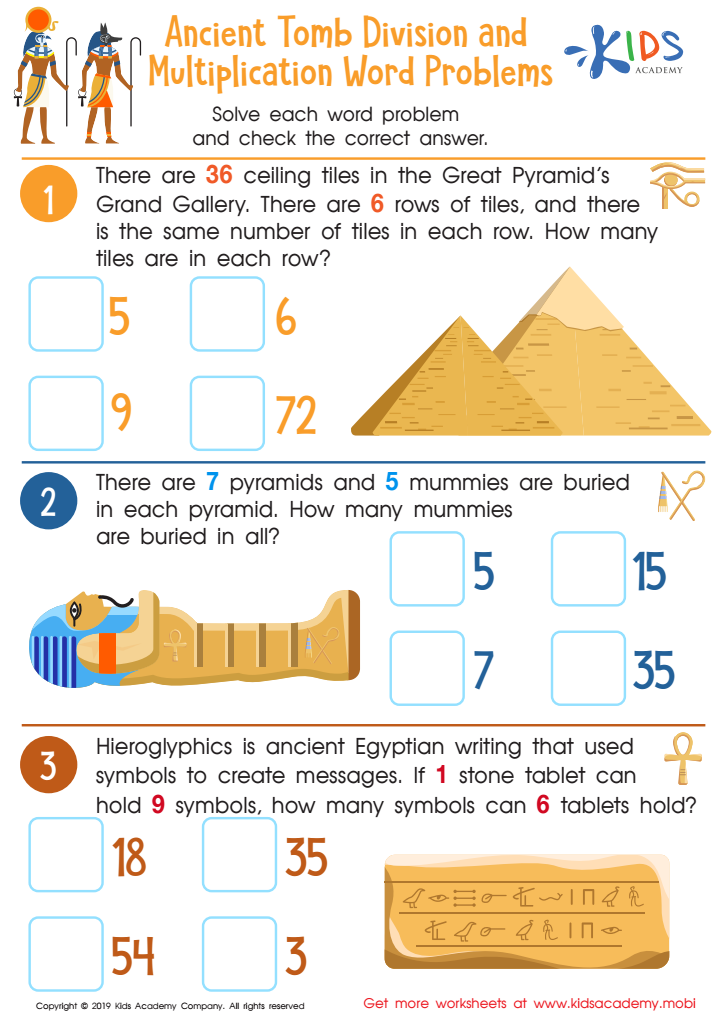
Ancient Tomb Division and Multiplication Word Problems Worksheet
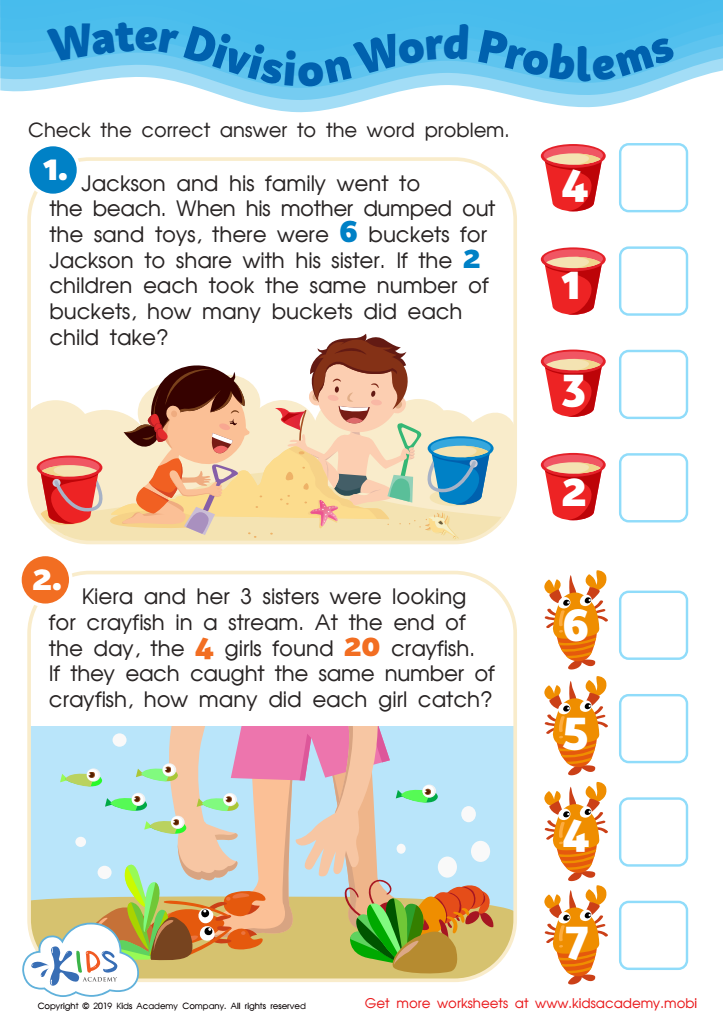
Water Division Word Problems Worksheet
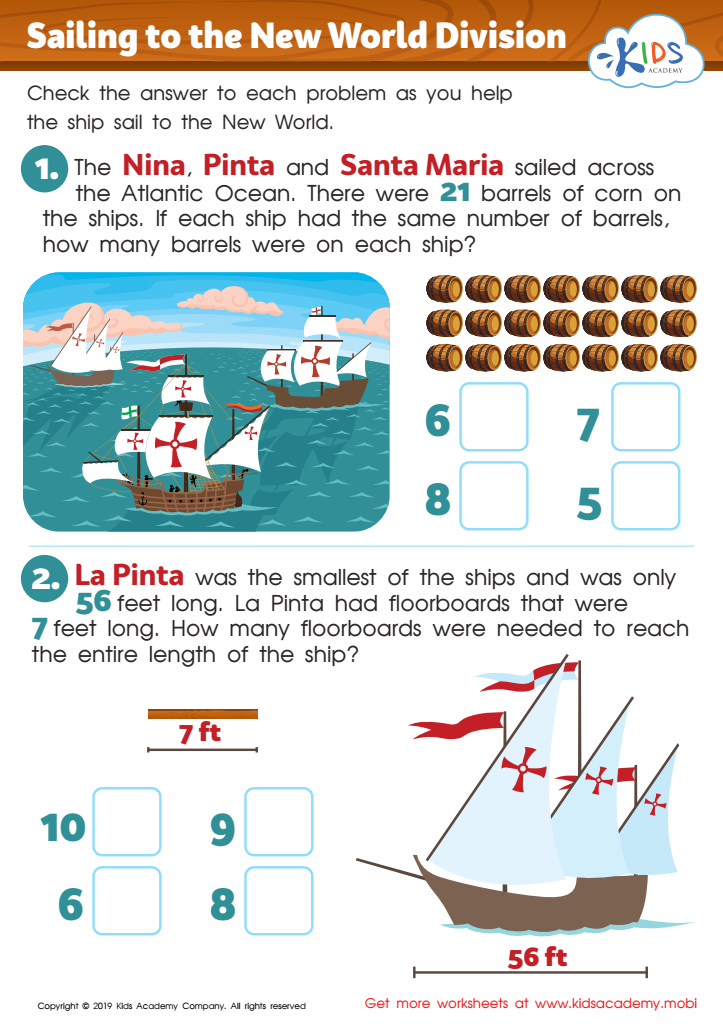
Sailing to the New World Division Worksheet



.jpg)



Parents and teachers should prioritize division practice in kindergarten as a fundamental building block for future mathematical understanding. Introducing division concepts early fosters a strong number sense, essential for grasping more complex math topics later. When children learn to share or divide items equally, they are not just learning a mathematical operation; they are also developing problem-solving skills and logical thinking.
Early exposure to division helps children understand the relationship between numbers and improves their confidence in math. Kindergarten students often engage in hands-on activities such as sharing blocks or snacks, making abstract concepts concrete and easier to understand. This practical approach makes learning interactive and fun, which enhances their engagement and retention.
Furthermore, early math skills are closely linked to future academic success. Research shows that children proficient in basic math are more likely to excel in school. Consequently, familiarizing students with division at a young age can set them on a path toward proficiency in more advanced math classes and everyday problem-solving tasks.
In essence, prioritizing division practice in kindergarten aids in building a robust mathematical foundation, fostering cognitive development, and setting children up for long-term academic achievement and confidence in their abilities.








