Mathematical thinking Kindergarten Worksheets
3 filtered results
-
From - To
Enhance your kindergarten classroom with our engaging Mathematical Thinking worksheets! Designed specifically for young learners, these worksheets focus on building fundamental math skills through fun and interactive activities. Students will explore concepts such as counting, number recognition, simple addition and subtraction, patterns, and measuring. Our worksheets encourage critical thinking, creativity, and problem-solving, setting a strong foundation for future math success. With colorful designs and age-appropriate challenges, these resources capture children's attention while promoting essential mathematical understanding. Explore our collection today and watch your students develop confidence and love for math in a playful and supportive environment! Perfect for teachers and parents alike!
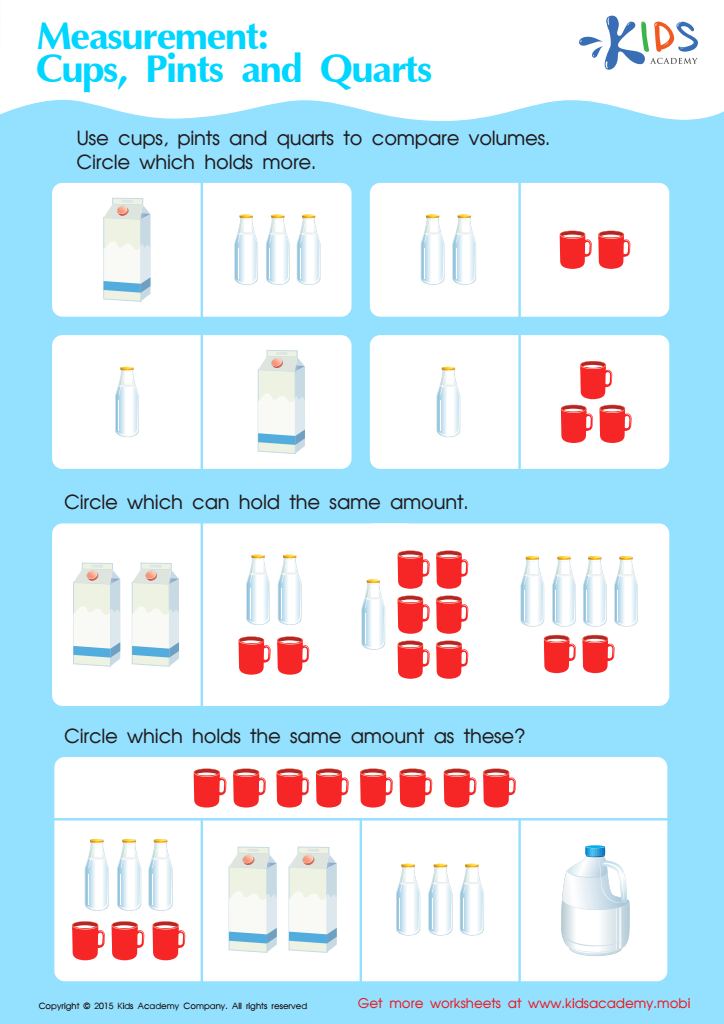
Measurement: Compare Volumes Worksheet
 Assign to My Students
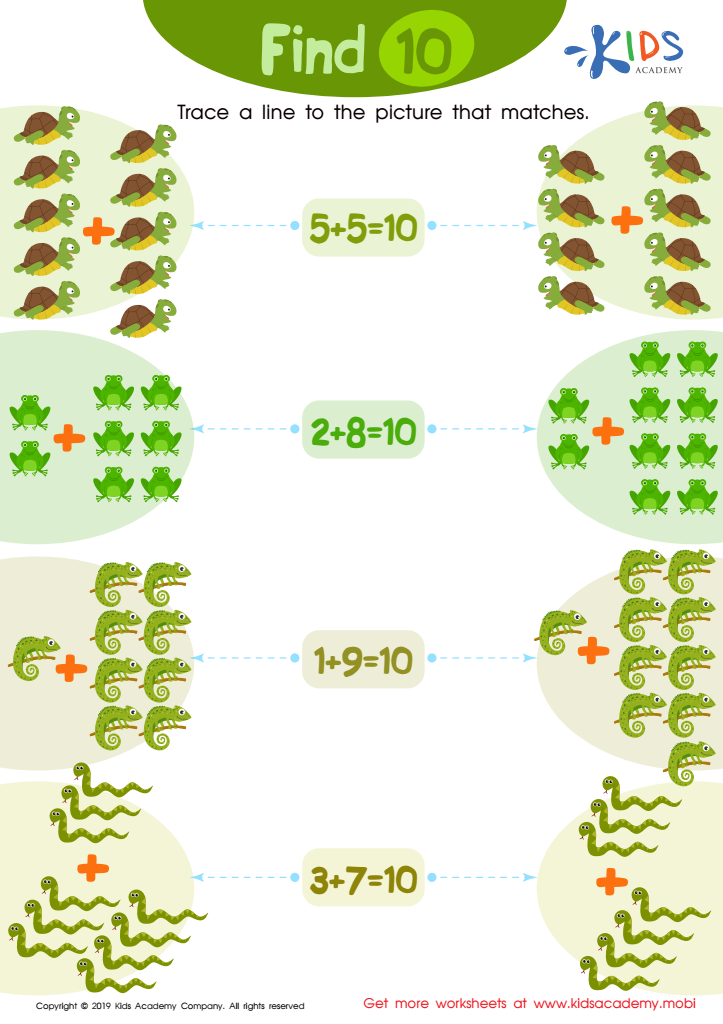
Find 10 Worksheet
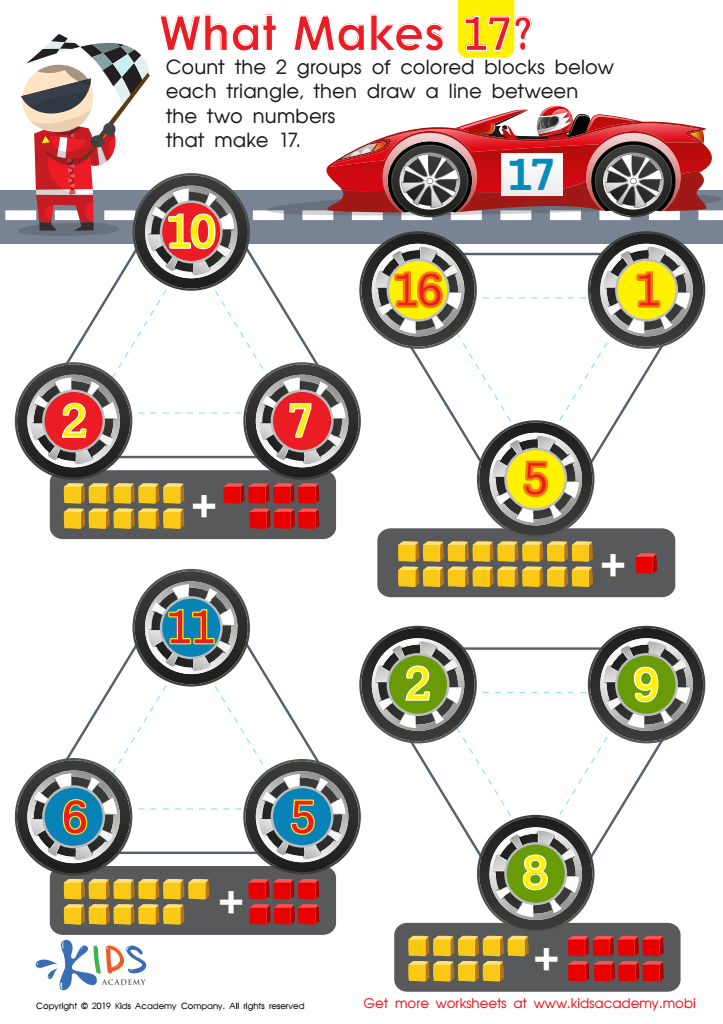
What Makes 17 Worksheet








Mathematical thinking in kindergarten is a fundamental building block for children's cognitive development and lifelong learning. At this early stage, children are naturally curious and eager to explore mathematical concepts, making it an ideal time to cultivate their interest in numbers, patterns, and problem-solving.
Parents and teachers should care about mathematical thinking because it fosters critical skills essential for daily life and future academic success. Early exposure to mathematical concepts helps children develop number sense, enhance their reasoning abilities, and engage in logical thinking. This skill set is crucial not only for advanced mathematics but also for other subjects, such as science and technology.
Moreover, supporting mathematical thinking in kindergarten promotes confidence and resilience. When children engage in hands-on activities, such as counting objects or identifying shapes, they learn through play while building a positive attitude towards math. This positive foundation reduces anxiety around mathematics later on, encouraging them to embrace challenges and develop a growth mindset.
Lastly, early mathematical experiences contribute to equal opportunities in learning. By actively engaging children in mathematical thinking from a young age, parents and teachers can help bridge gaps in understanding, ensuring all children, regardless of background, have the chance to succeed.