
Understanding Sequences Kindergarten Worksheets
8 filtered results
Difficulty Level
Grade
Age
-
From - To
Subject
Activity
Standards
Unlock your child's potential with our "Understanding Sequences Kindergarten Worksheets" designed for early learners to grasp the concept of sequences intuitively. These engaging and colorful worksheets introduce young minds to order and patterns through fun, hands-on activities. Each sheet encourages logical thinking and improves critical problem-solving skills, making learning playful and effective. Suitable for classroom or home use, our expertly crafted resources help build a solid foundation in math and cognitive development. Explore our selection today to support your kindergartener in mastering sequences effortlessly and joyfully!
Favorites
With answer key
Interactive
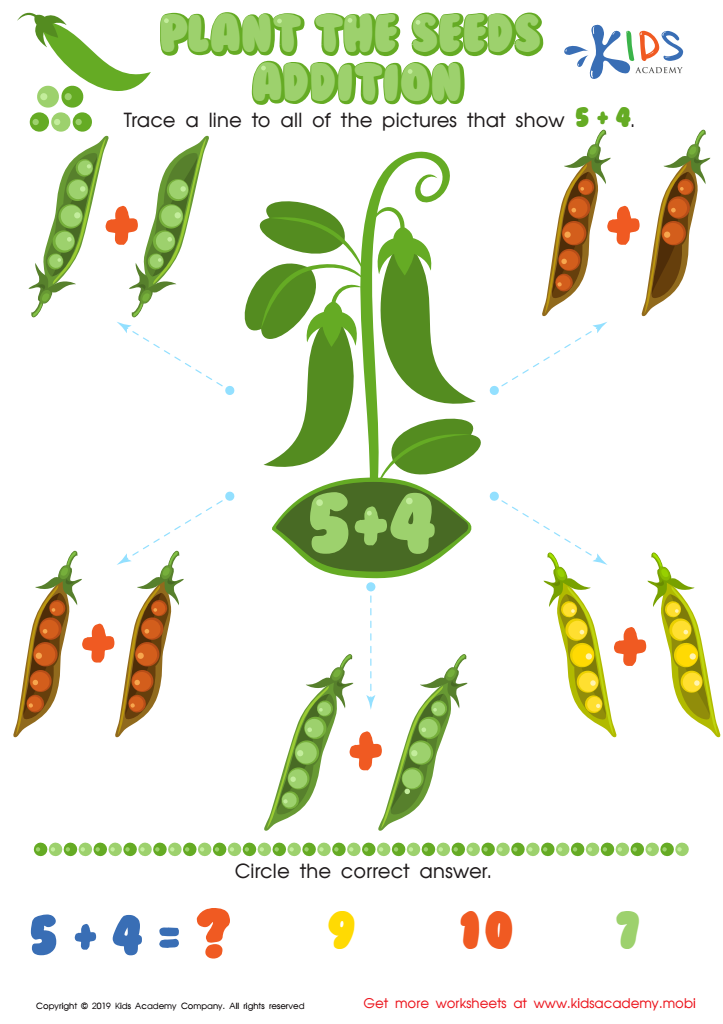
Plant the Seeds Addition Worksheet
This worksheet combines math and learning about plants. Ask kids to name their favorite plants and which ones they see the most. Have them trace a line to all pictures in the middle which show the equation 5+4. Enjoy the beauty of plants while introducing math skills!
 Assign to My Students
Plant the Seeds Addition Worksheet
Worksheet
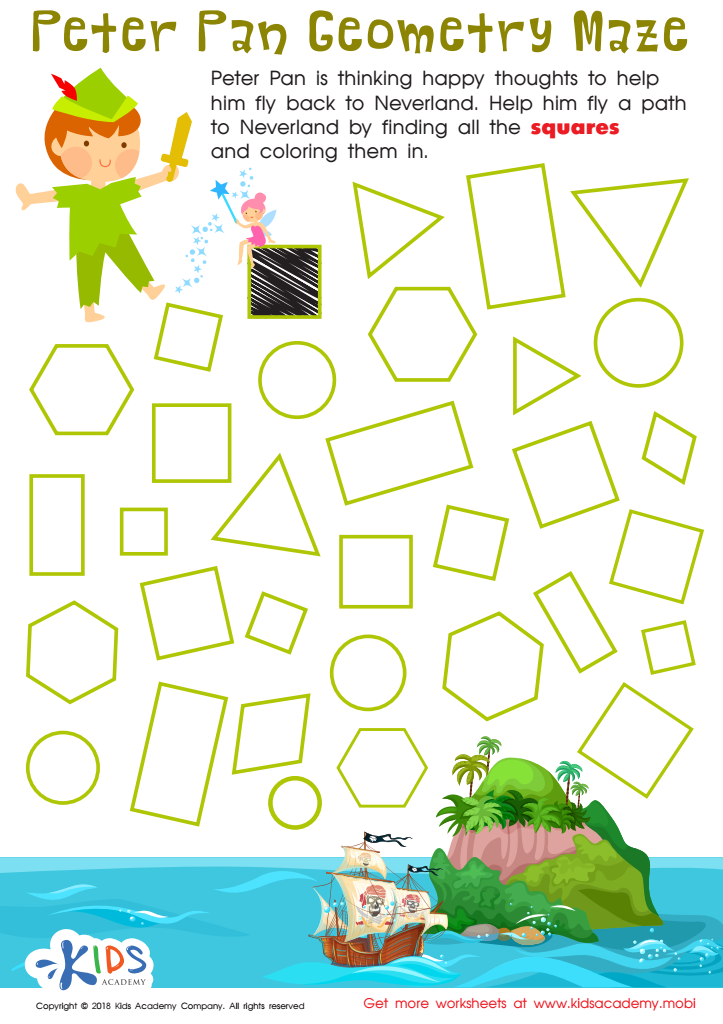
Peter Pan Worksheet
Kindergarteners can join Peter Pan on an adventure to Neverland! They can help him by coloring squares to create a path, strengthening their shape identification skills in a fun maze. Let the journey begin!
Peter Pan Worksheet
Worksheet
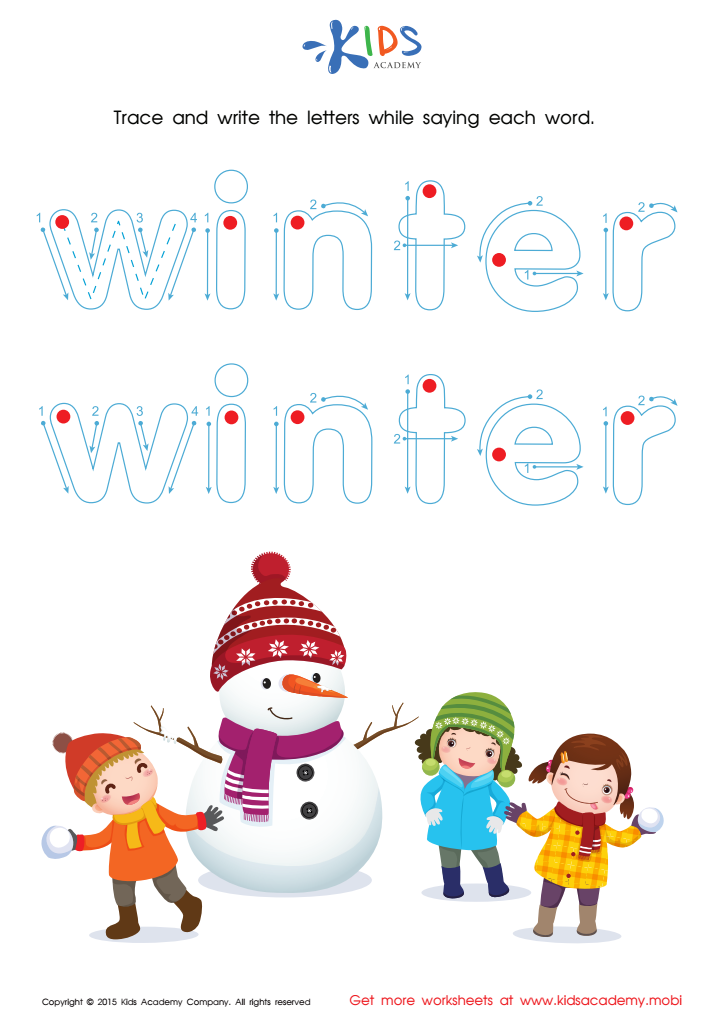
Snowman Tracing Winter Words Worksheet
This free winter printable teaches handwriting and spelling with the word "snowman". It's a fun way to get your kid ready for Christmas cheer! Want more tracing worksheets? Check out here.
Snowman Tracing Winter Words Worksheet
Worksheet
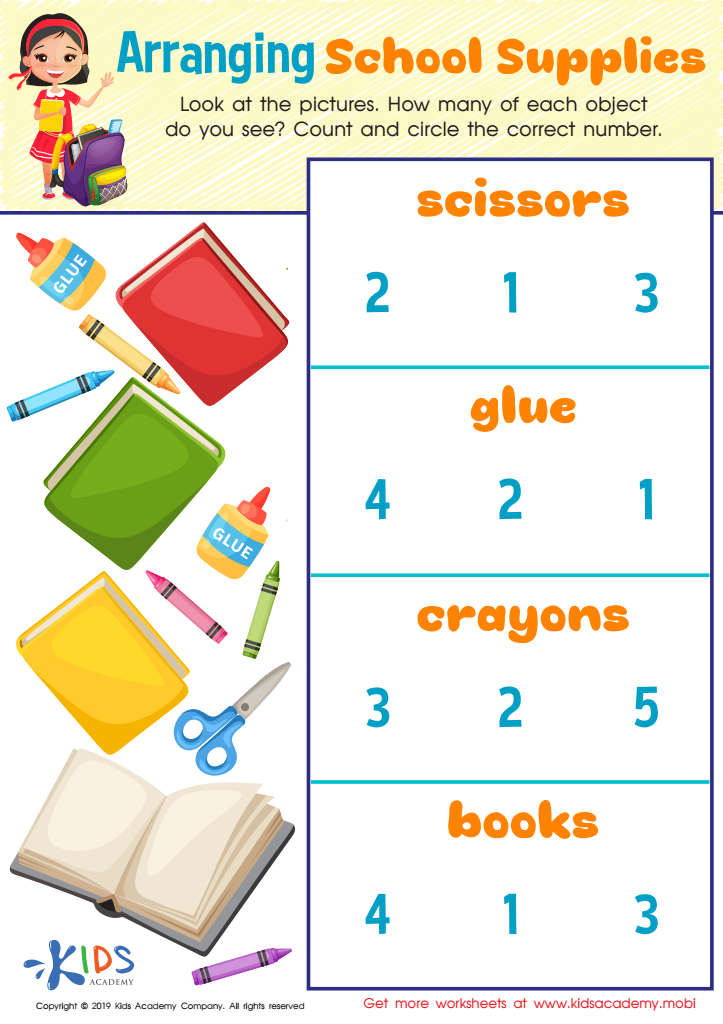
Arranging School Supplies Worksheet
Help your kids identify and count the school supplies in this colorful printout. Ask them to circle the correct number from the options provided. This is an easy and fun way for your child to practice their counting skills and recognize everyday objects.
Arranging School Supplies Worksheet
Worksheet
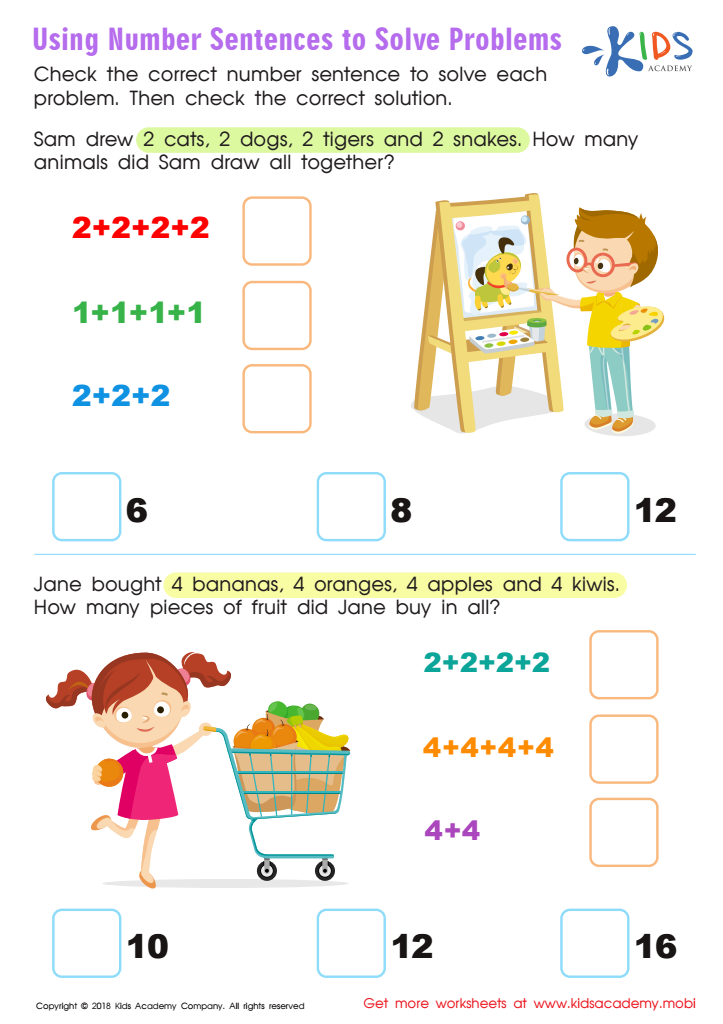
Using Number Sentences to Solve Problems Worksheet
Solving math problems requires an efficient strategy. Picture representation can help young mathematicians with basic addition problems, especially when it involves repeated addends. As they gain confidence, they'll be able to apply their number sentence solving abilities to more complex equations.
Using Number Sentences to Solve Problems Worksheet
Worksheet
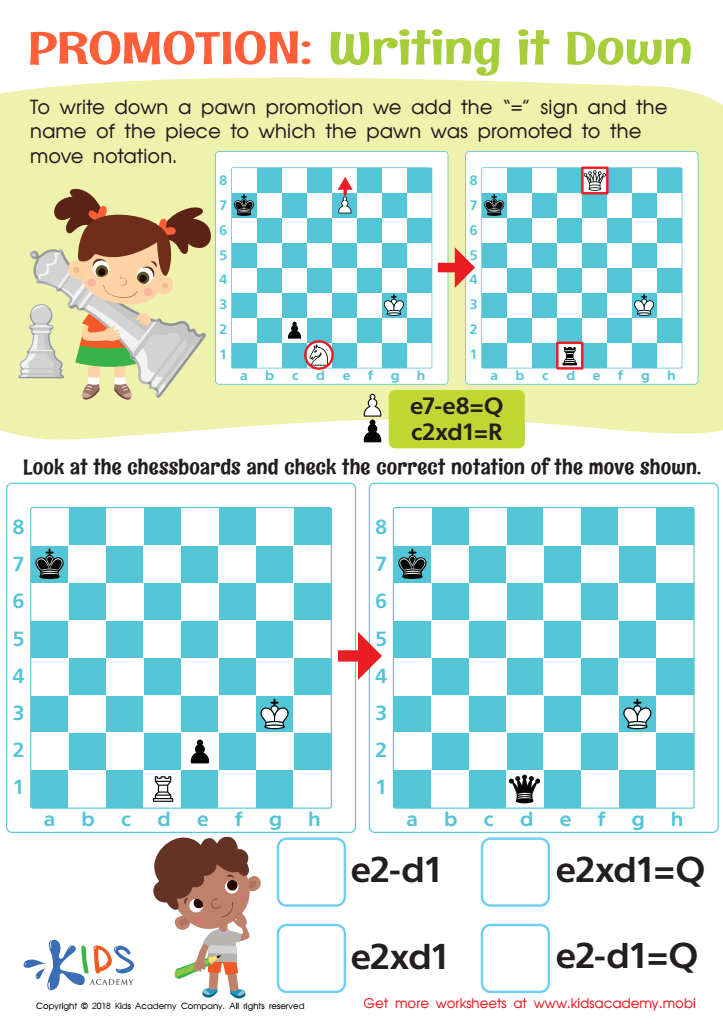
Writing it Down Worksheet
To document pawn promotion, add "=<piece name>" to the move notation. For example: e7-e8=Q. Ask your child to look at the chessboard and take note of the moves. Check the notations are correct. (80 words)
Writing it Down Worksheet
Worksheet
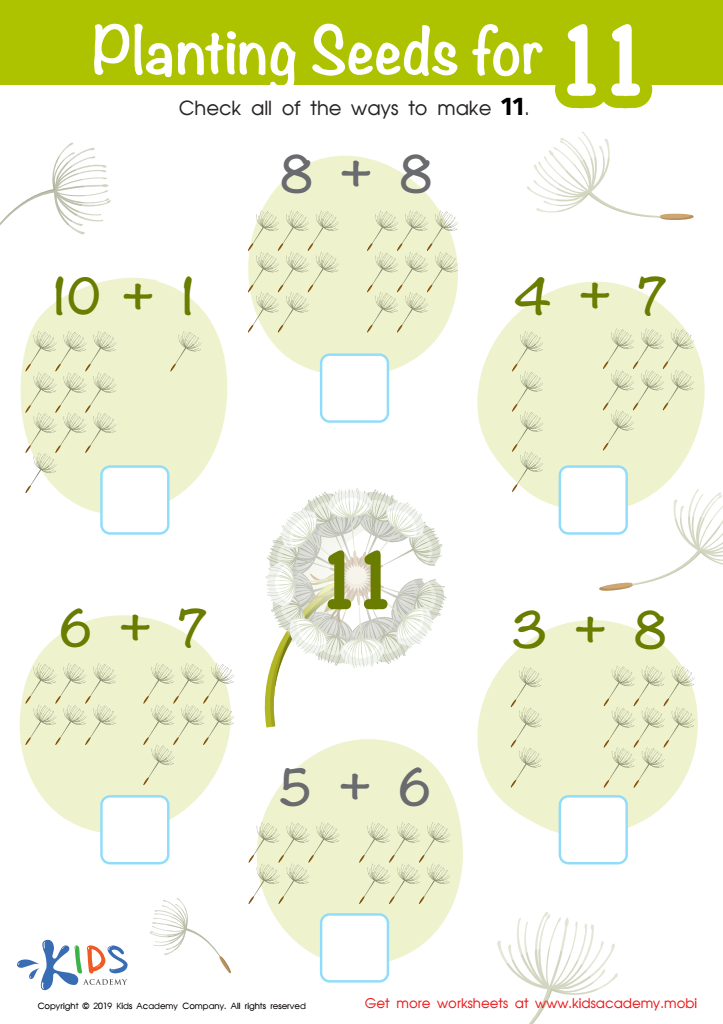
Planting Seeds for 11 Worksheet
Before starting, ask your students to count as high as they can. Explain that different numbers can add up to the same total. Give examples like 2+2 =4 and 3+1 =4. Ask if they can think of other examples. Then have them work through the equations in the printout and circle all that add up to 11.
Planting Seeds for 11 Worksheet
Worksheet
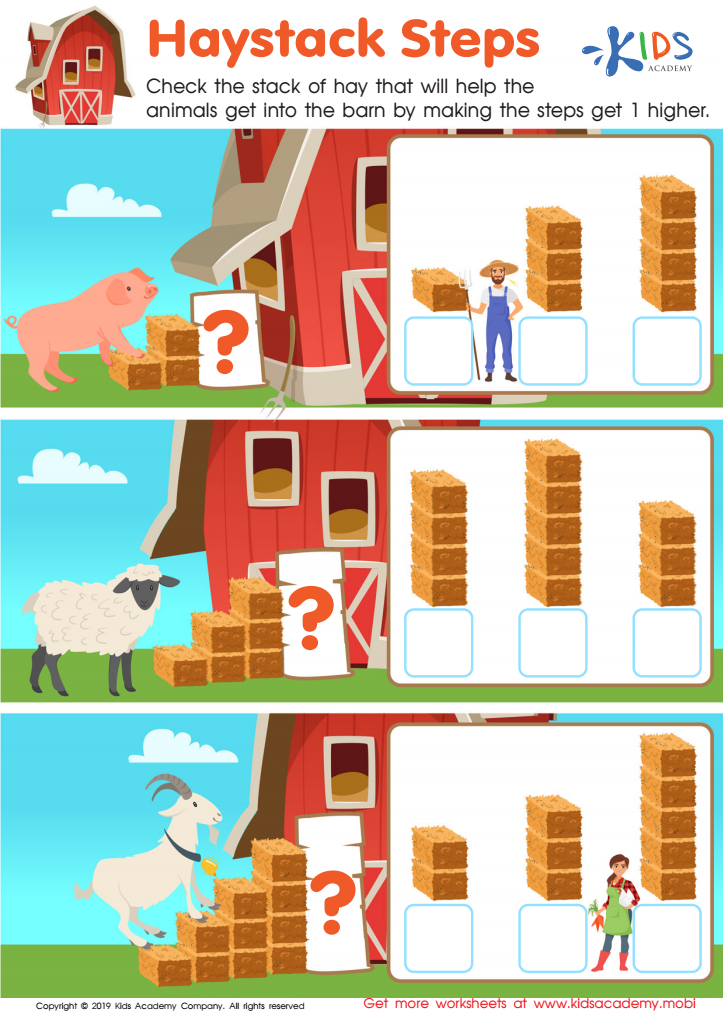
Haystack Steps Worksheet
Have your kids ever visited a farm? What activities and sights did they enjoy? Farmers are essential to our lives, growing food and providing us with dairy and eggs. In this worksheet, a farmer has made a haystack for his animals to climb into the barn. Ask your kids to add an extra layer to the stack to make the climb easier.
Haystack Steps Worksheet
Worksheet
Join Kids Academy for Free
Who is primarily going to use this learning content?



%20(1).jpg)



Understanding sequences is crucial for kindergartners as it lays the foundation for future learning in areas such as mathematics, literacy, and daily routines. Parents and teachers who prioritize teaching sequences help children develop essential cognitive skills, such as logical thinking and pattern recognition, which are foundational for problem-solving and critical thinking.
When children learn to recognize sequences, whether in counting numbers, ordering events in a story, or following steps in a task, they develop an innate sense of order and predictability. This consistency is reassuring for young learners and enhances their ability to grasp more complex concepts later on, such as addition and subtraction in math, or understanding cause and effect in reading comprehension.
Moreover, mastering sequences improves memory retention and organizational skills. For instance, in daily activities, understanding sequences aids children in brushing their teeth, getting dressed, or following classroom routines without constant supervision, fostering independence and self-confidence.
Ultimately, by focusing on sequences, parents and teachers are equipping children with the tools needed for effective communication and day-to-day functioning, setting a precedent for continuous educational and personal growth. This attention to fundamental skills emphasizes the importance of early cognitive development and creates a supportive learning environment that appreciates the interconnectedness of life and learning.








