
Cognitive Development Kindergarten Addition Worksheets
5 filtered results
Difficulty Level
Grade
Age
-
From - To
Subject
Activity
Standards
Discover our engaging "Cognitive Development Kindergarten Addition Worksheets," designed to enhance young learners' cognitive skills through fun and interactive math exercises. These printables focus on boosting critical thinking, problem-solving, and number recognition, laying a strong foundation in basic addition for kindergarteners. Perfect for both classroom and home use, our worksheets offer a diverse range of activities to cater to different learning styles and make math enjoyable. Emphasizing playful learning combined with educational rigour, Kids Academy ensures your child’s cognitive development is nurtured every step of the way. Unlock their potential with our expertly crafted resources today!
Favorites
With answer key
Interactive
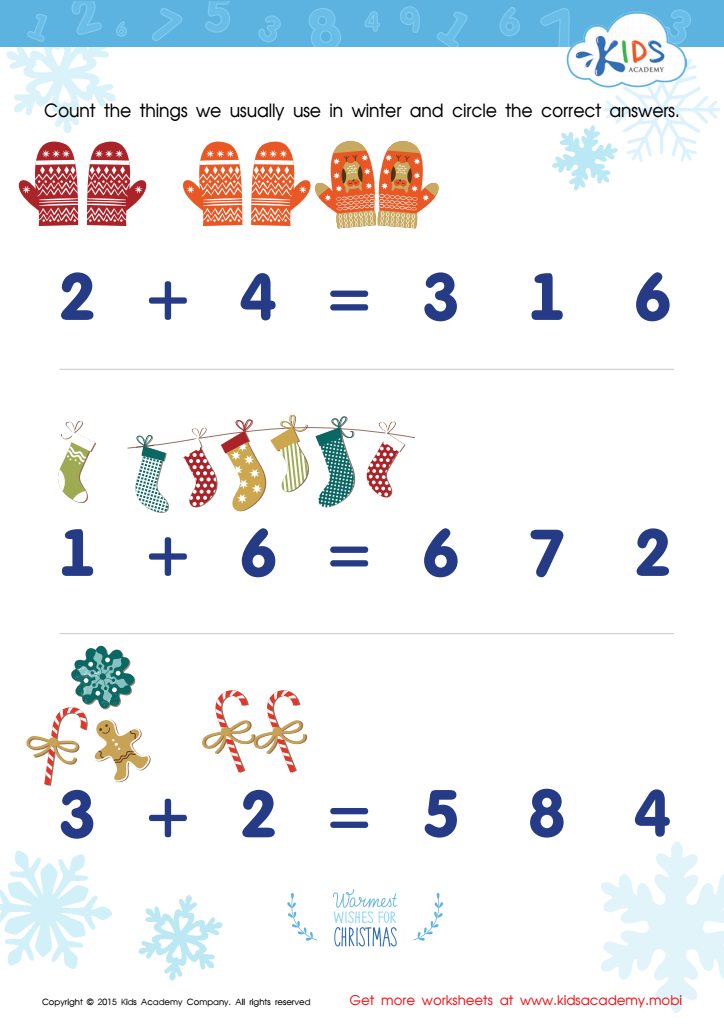
Count Winter Things Worksheet
This chilly winter afternoon, help your kid warm up with Kids Academy's free math worksheet - full of bright pictures and addition practice. Let them count the things and write in the numbers for a great brain training and math head start. Get more free math worksheets here. (80 words)
 Assign to My Students
Count Winter Things Worksheet
Worksheet
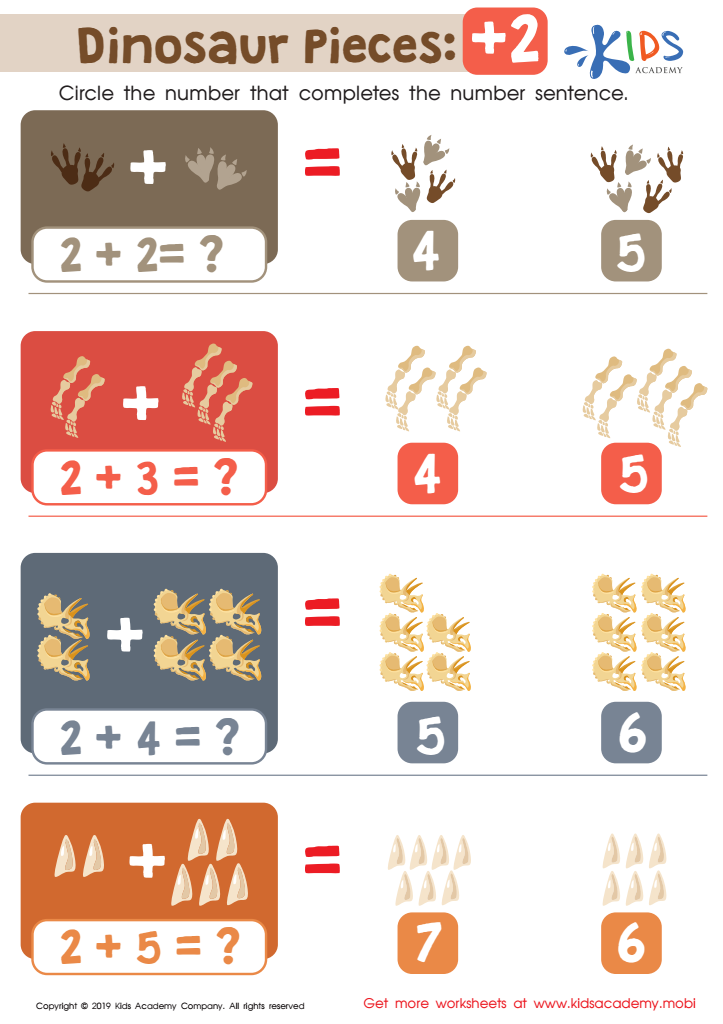
Dinosaur Pieces: +2 Worksheet
Kids love dinosaurs! See if your kids can solve these three equations featuring the mysterious creatures. Download the PDF and have them circle the number that completes each equation. Dinosaurs are extinct, not seen for thousands of years, but they can still help kids work on their math skills!
Dinosaur Pieces: +2 Worksheet
Worksheet
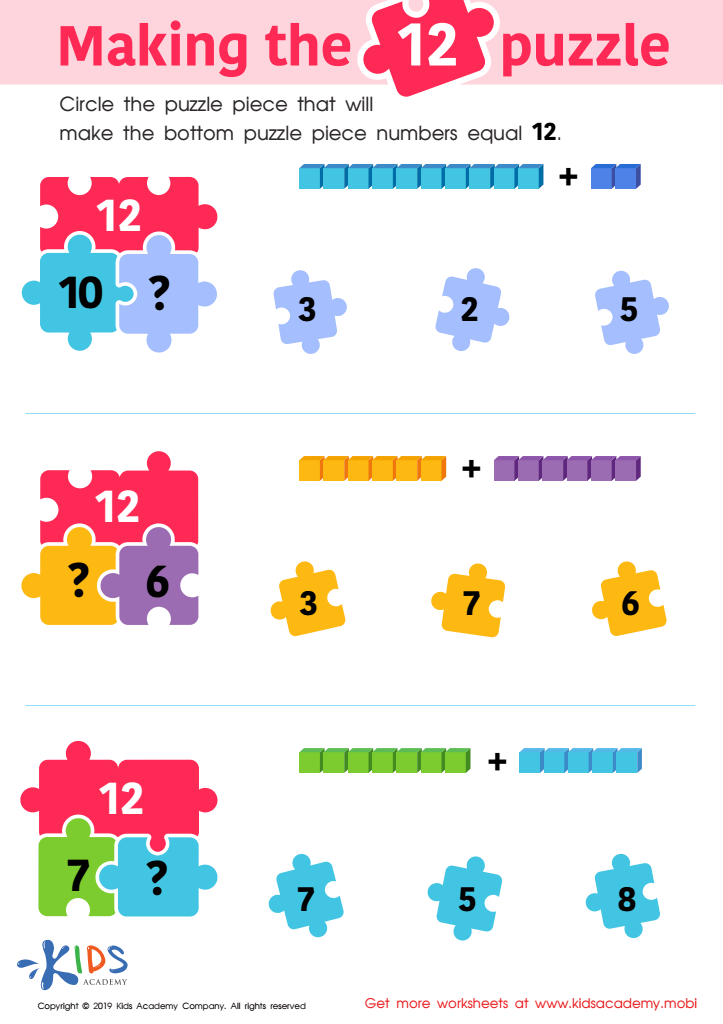
Making the 12 Puzzle Worksheet
Engage preschoolers in learning with this fun and colorful worksheet. Ask them to look at the picture and identify the missing equation on each puzzle piece; then help them solve the problems. When all the puzzle pieces make the bottom numbers equal 12, have them circle it. This is a great way to combine learning and fun!
Making the 12 Puzzle Worksheet
Worksheet
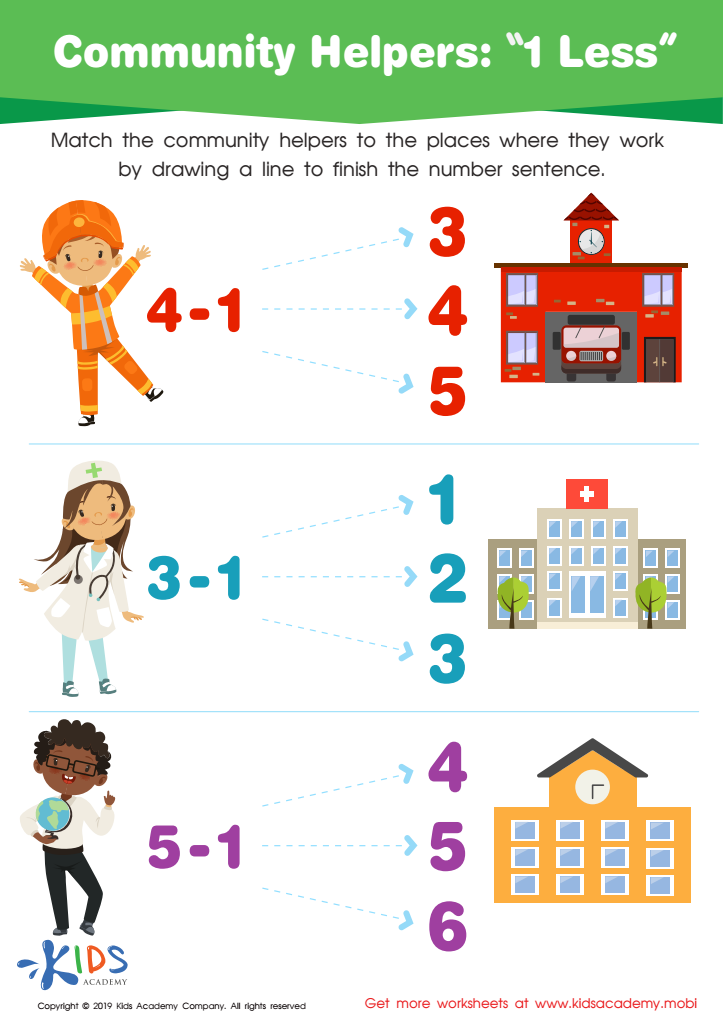
Community Helpers: 1 less Worksheet
Look at this worksheet with your child and ask them to identify the different community helpers. Match them to the places where they work by drawing a line to finish the number sentence. This helps them identify the people that help keep the community organized and running smoothly. Examples of community helpers include doctors, police officers, firefighters, teachers, etc.
Community Helpers: 1 less Worksheet
Worksheet
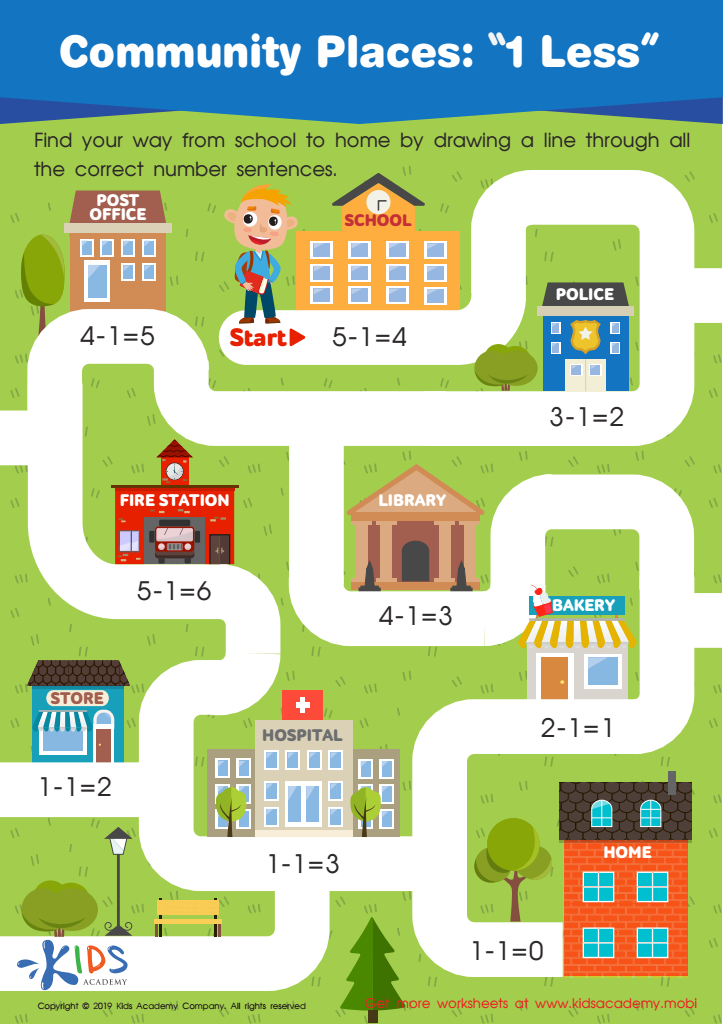
Community Places: 1 Less Worksheet
Have your kindergarteners draw a line through the correct number sentences as they find their way home from school. Ask them to identify the people, places, and buildings in their community and the jobs they do.
Community Places: 1 Less Worksheet
Worksheet
Join Kids Academy for Free
Who is primarily going to use this learning content?







.jpg)
Cognitive development is crucial for young learners, and understanding kindergarten addition supports this growth significantly. At this stage, children's brains are extraordinarily receptive, and engaging them in early mathematical concepts like addition lays a foundation for critical thinking, problem-solving, and logical reasoning skills. Parents and teachers should prioritize cognitive development because it has a long-term impact on educational success and everyday functioning.
Introducing kindergarten addition helps children develop number sense, the ability to understand and work with numbers. It cultivates essential skills like counting, recognizing patterns, and making connections between numbers—skills that are vital not just in math, but across all areas of learning. When children grasp basic addition, they enhance their working memory, learn to follow sequential steps, and boost their confidence in handling more complex tasks.
Furthermore, early exposure to mathematical principles fosters a positive attitude towards the subject. When supported by engaging activities and resources, children begin to see math as fun and accessible, rather than intimidating. Participative and positive reinforcement from both parents and teachers thus not only contributes to cognitive development but also nurtures a lifelong love for learning and curiosity. مندicipatively It's fundamental for educators and parents to recognize and support these connections to promote well-rounded intellectual growth.








