
Basic Math Skills Comparison Worksheets
3 filtered results
Difficulty Level
Grade
Age
-
From - To
Subject
Activity
Standards
Our "Basic Math Skills Comparison Worksheets" are designed to give young learners a solid foundation in essential math concepts. These engaging and printable worksheets focus on comparing numbers, sizes, and quantities, helping children develop critical thinking and problem-solving skills. Each activity is tailored to make learning interactive and enjoyable, fostering confidence in mathematical abilities. Created by experienced educators, our worksheets provide practical exercises for students to practice at home or in the classroom. Equip your child with the tools they need to excel in math with our user-friendly and fun resources. Enhance their learning journey today!
Favorites
With answer key
Interactive
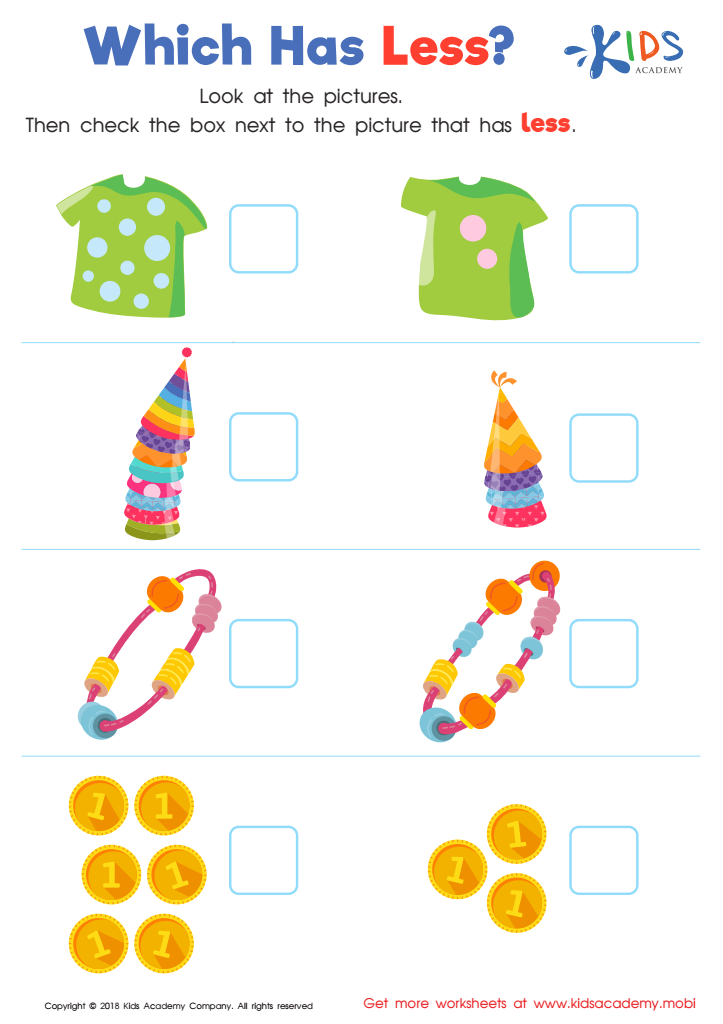
Which Has Less? Worksheet
Kids can develop their number sense by comparing and contrasting objects to identify which has less. This worksheet helps them practice: it's bright and colorful, featuring familiar objects and pictures to count, strengthening basic counting skills. It's the perfect warm-up for comparing and contrasting larger numbers.
 Assign to My Students
Which Has Less? Worksheet
Worksheet
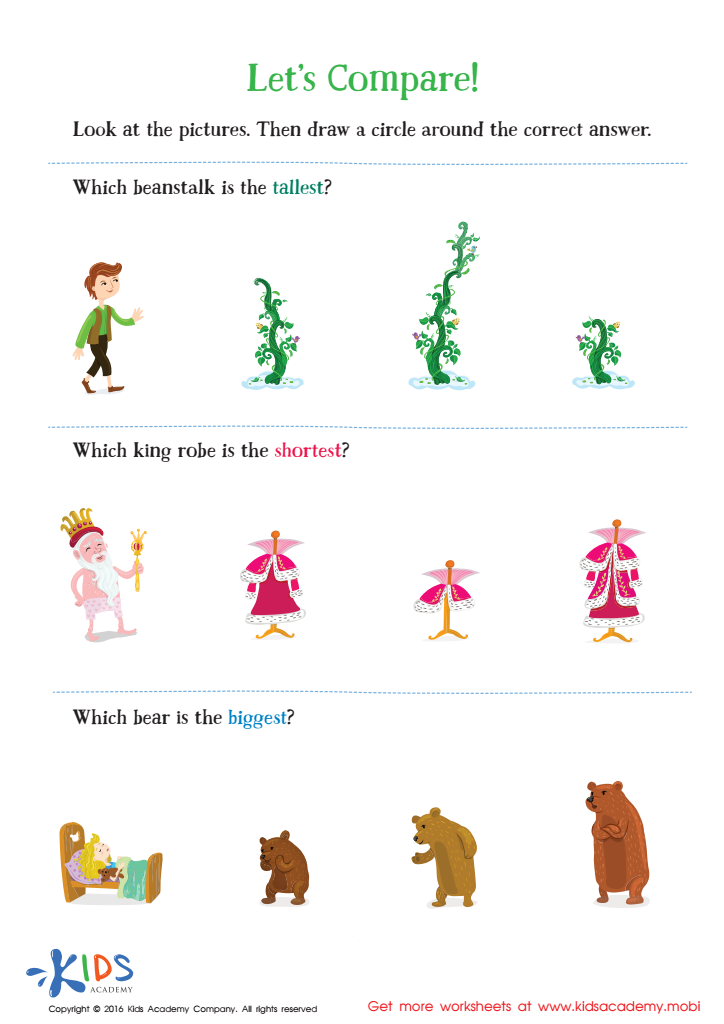
Fairy Tale Worksheet: Let's Compare
Preschoolers need to recognize different sizes of objects. This worksheet combines fun fairy tales with size practice, helping them read, problem solve, and sort through pictures. Your child will love the images and be eager to complete it. Enhance their learning by talking about the tales to build comprehension.
Fairy Tale Worksheet: Let's Compare
Worksheet
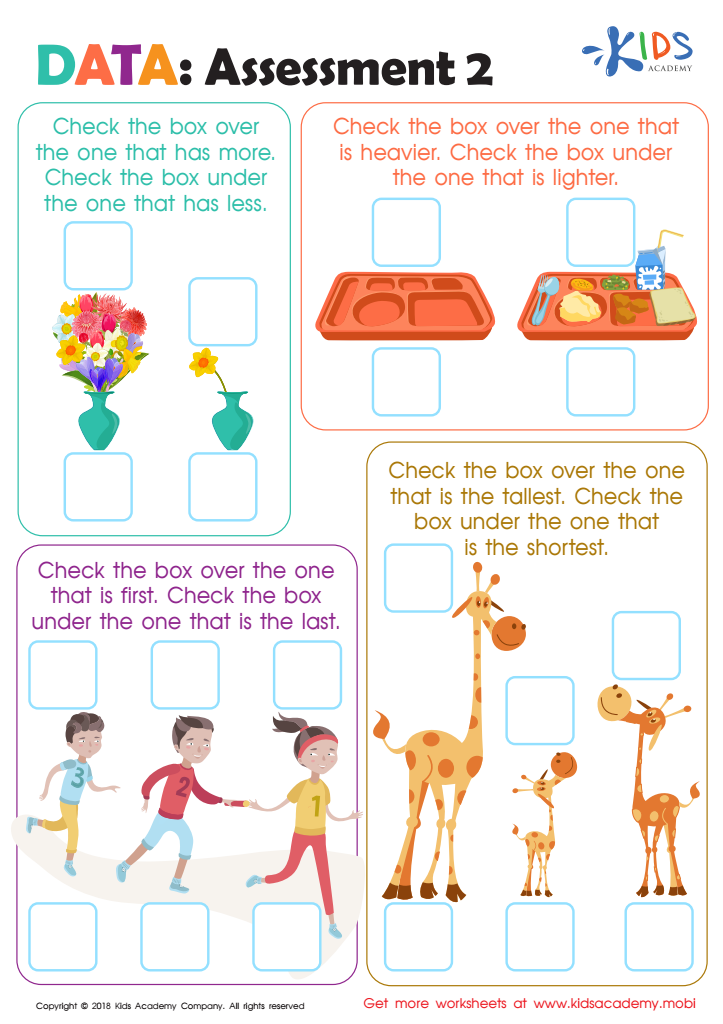
Data: Assessment 2 Worksheet
This printable worksheet tests students' understanding of words related to quantity and measurement, such as "more", "less", "heavy", "light", "first", "last", "tall", and "short". It helps children compare and contrast when solving measurement problems. Ideal for math classes, it encourages students to gain the essential skills needed in subjects like math, science, and reading.
Data: Assessment 2 Worksheet
Worksheet
Join Kids Academy for Free
Who is primarily going to use this learning content?





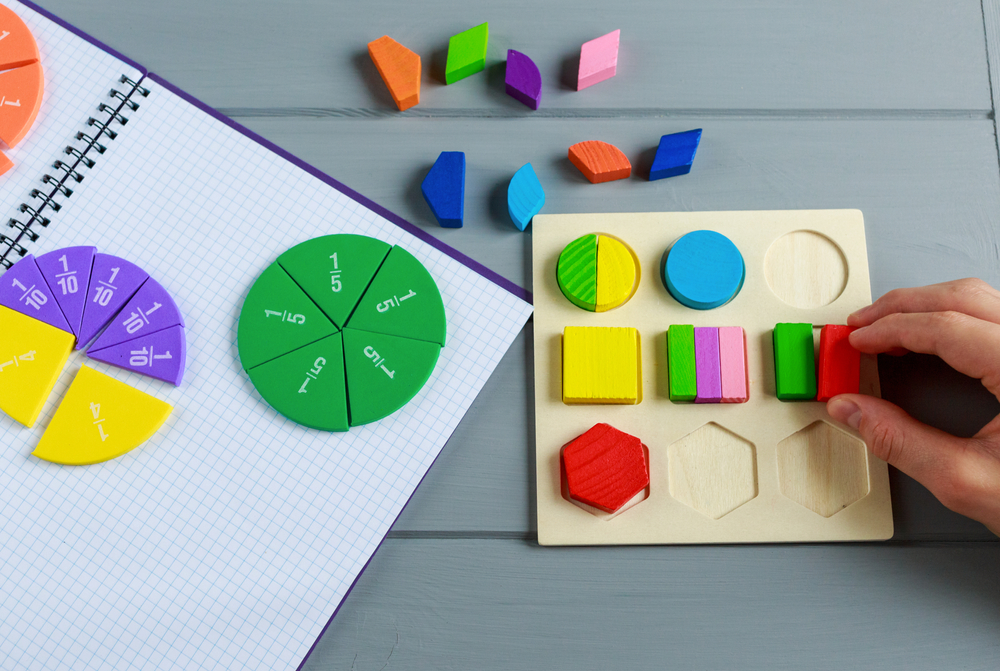
Understanding basic math skills comparison is crucial for both parents and teachers because these foundational abilities set the stage for future academic success and everyday life competence. When parents and teachers pay attention to a child's comparison skills—such as identifying which number is greater, smaller, equal, or different—they are essentially supporting the child's ability to make sense of the world mathematically.
First, these skills are foundational for more advanced concepts in mathematics. Without a solid grasp of basic comparisons, children may struggle with tasks like performing arithmetic operations, understanding place value, and solving word problems, which could lead to gaps in learning as they progress through the curriculum.
Second, developing strong basic math skills early on boosts confidence and fosters a positive attitude towards mathematics. When children can accurately compare numbers and understand simple differences or similarities, they feel accomplished and are less likely to experience math anxiety.
Lastly, basic comparison skills have real-world applications. These skills help children make everyday decisions, such as comparing prices, measuring ingredients for a recipe, or determining the time needed to complete a task.
By emphasizing these foundational math comparisons, parents and teachers can create a stable platform for ongoing learning and practical life skills, thereby giving children the tools they need to succeed academically and function efficiently in their daily lives.








