
Animal recognition Numbers Worksheets
8 filtered results
Difficulty Level
Grade
Age
-
From - To
Subject
Activity
Standards
Explore our engaging Animal Recognition Numbers Worksheets designed to enhance early math skills through fun and interactive learning! These worksheets effortlessly integrate animal recognition with number identification, allowing young learners to connect familiar creatures with their corresponding numerals. Perfect for preschool and kindergarten, our activities not only foster counting skills but also develop fine motor skills and visual recognition. Each worksheet features vibrant illustrations to maintain children's interest and encourage participation. Watch as your little ones gain confidence in their abilities while enjoying the educational journey through the animal kingdom! Discover easy ways to make learning numbers a delightful experience today!
Favorites
With answer key
Interactive
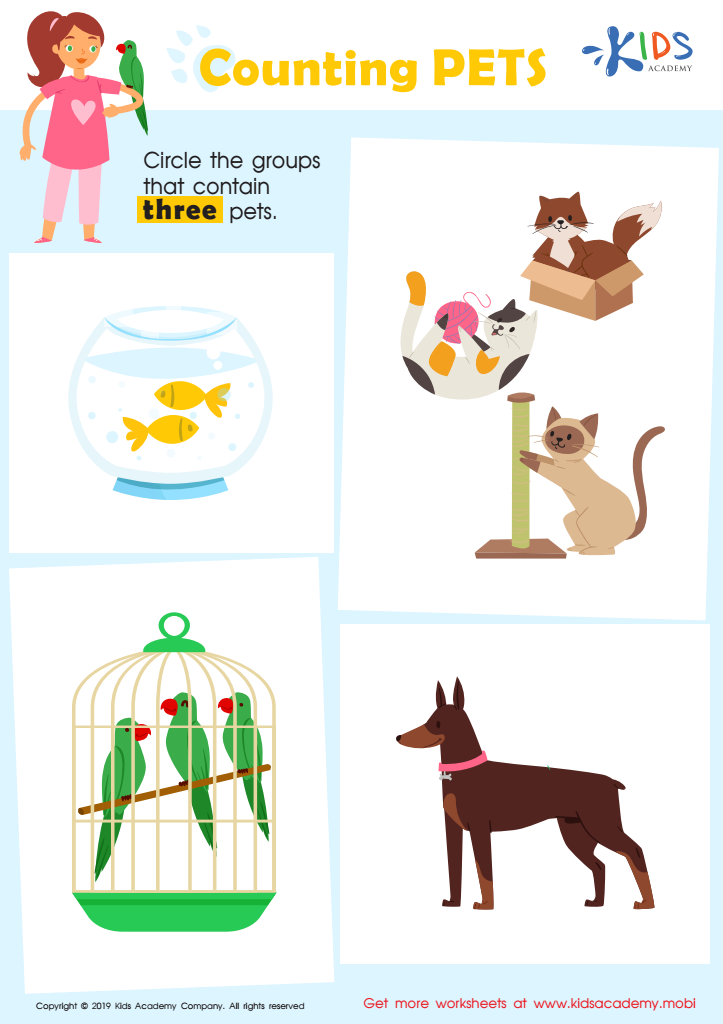
Counting Pets Worksheet
Kids adore their pets, making this free pet counting worksheet the perfect way to combine something they love with math skills. They'll count the number of pets, circle the pictures with three pets, and use one-to-one picture representation to help. This exercise will cultivate their learning and reinforce their love of animals!
 Assign to My Students
Counting Pets Worksheet
Worksheet
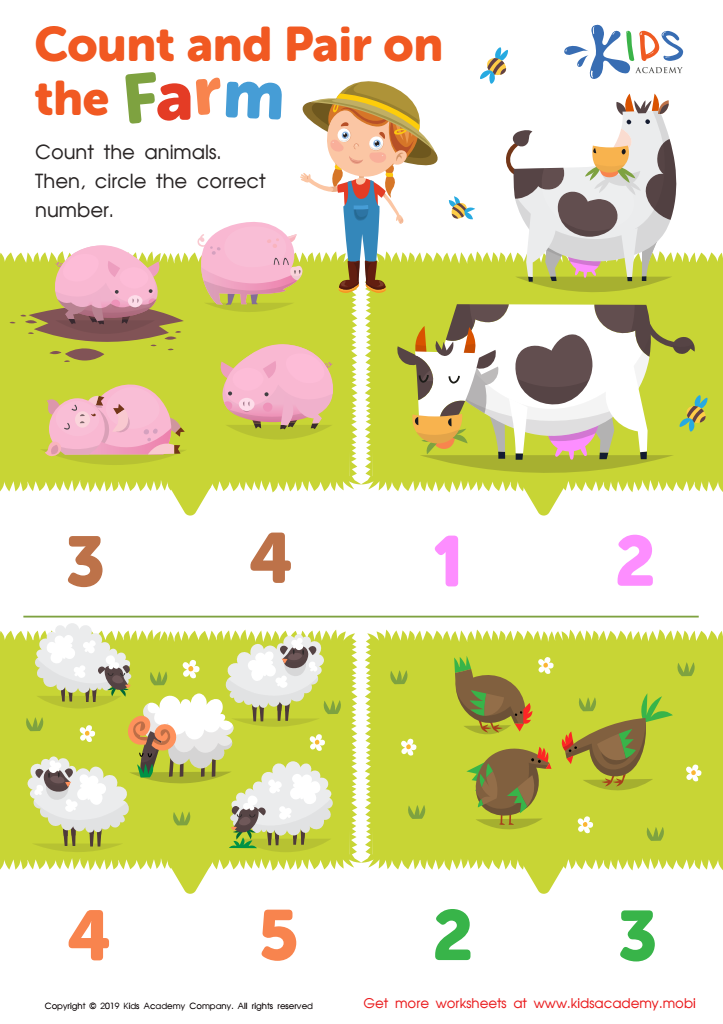
Count and Pair on the Farm Worksheet
Farms are essential to our society: they grow food and crops, and raise animals for us to use. Kids can have a great time at a farm, engaging in activities like identifying animals, counting them, and circling the correct number. On this worksheet, ask your kids to try all three!
Count and Pair on the Farm Worksheet
Worksheet
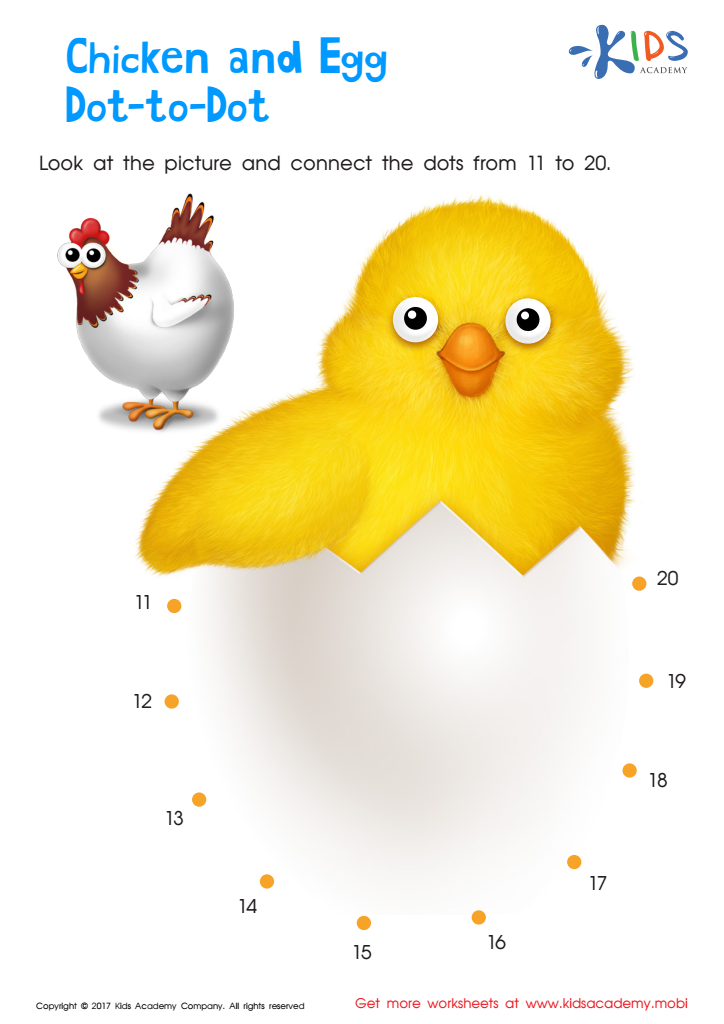
Ordering 11–20: Chicken & Egg Dot–to–dot Worksheet
Help your child hatch the chick and practice their counting skills with this dot to dot worksheet – the chicken came first! Connect the dots 11-20 to have fun and learn at the same time. Experience meaningful practice and gain confidence while drawing great pictures.
Ordering 11–20: Chicken & Egg Dot–to–dot Worksheet
Worksheet
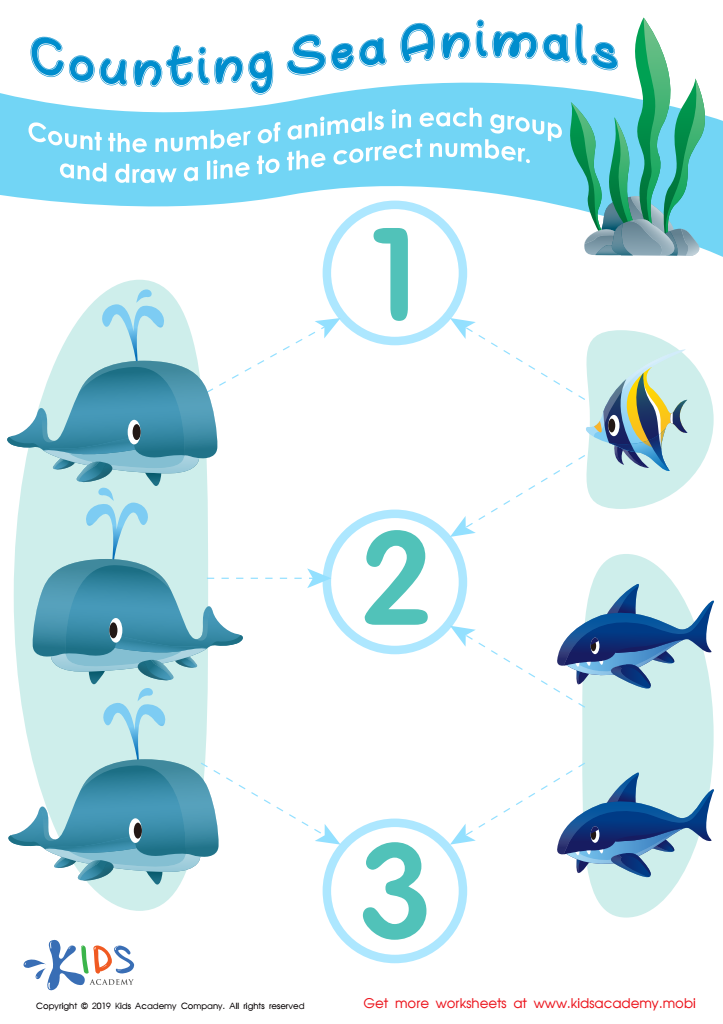
Counting Sea Animals Worksheet
Kids adore sea creatures for their captivating, unknown nature. Let them use this free worksheet to practice counting, where they match numbers to groups of animals. Through traceable lines, they'll easily connect numbers to sea creatures and learn math with vibrant, underwater fun!
Counting Sea Animals Worksheet
Worksheet
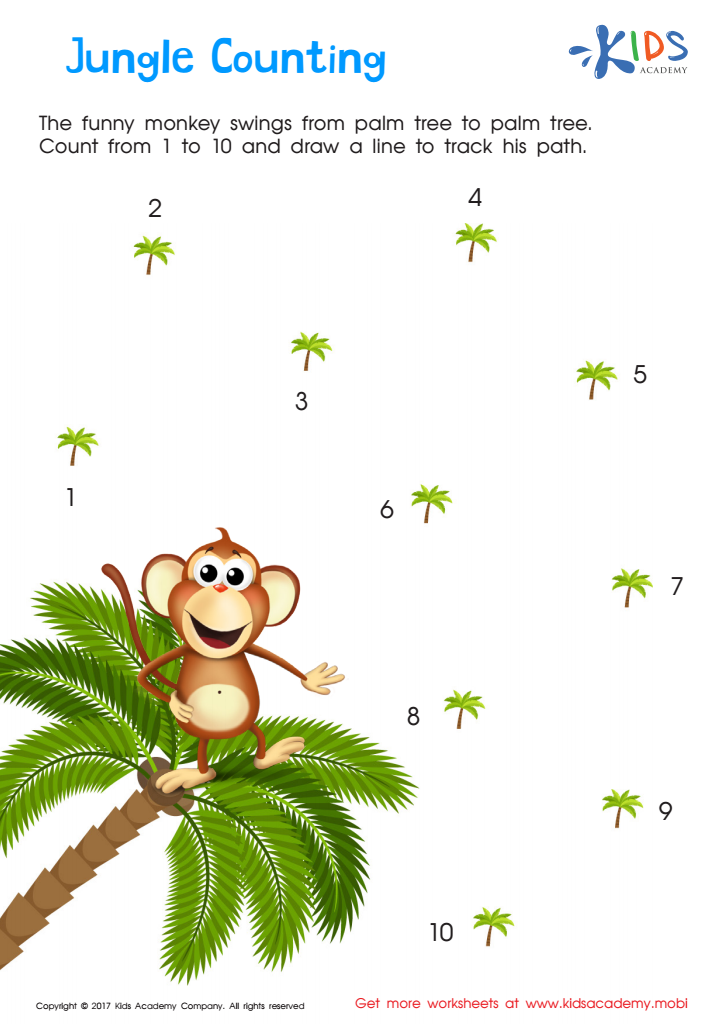
Jungle Counting Connect Dots Worksheet
Help your child count from 1-10 and practice problem solving skills with this dot to dot worksheet. Your child will enjoy helping the cute monkey swing from tree to tree while honing their math skills. Let them have a jungle-themed counting adventure!
Jungle Counting Connect Dots Worksheet
Worksheet
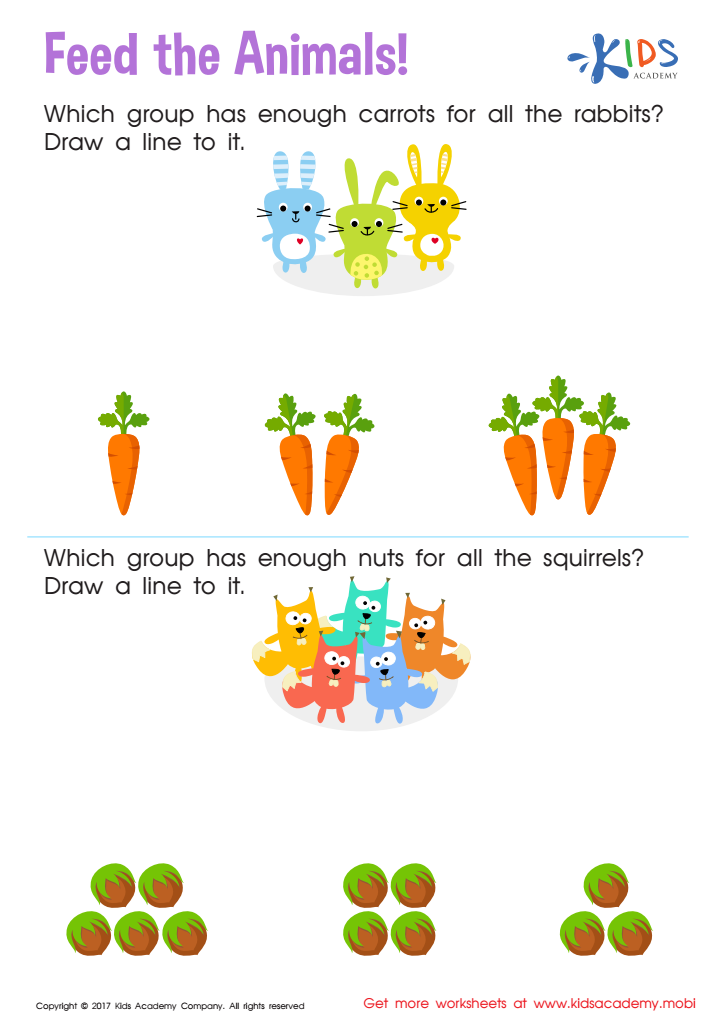
Count and Match: Feed the Animals Worksheet
Learning and growing involves more than just numbers, phonics and comparison. This Feed the Animals worksheet helps kids to exercise their reasoning skills. They must work out how many rabbits and carrots there are, and then repeat the process for the squirrels. This encourages problem solving and counting skills.
Count and Match: Feed the Animals Worksheet
Worksheet
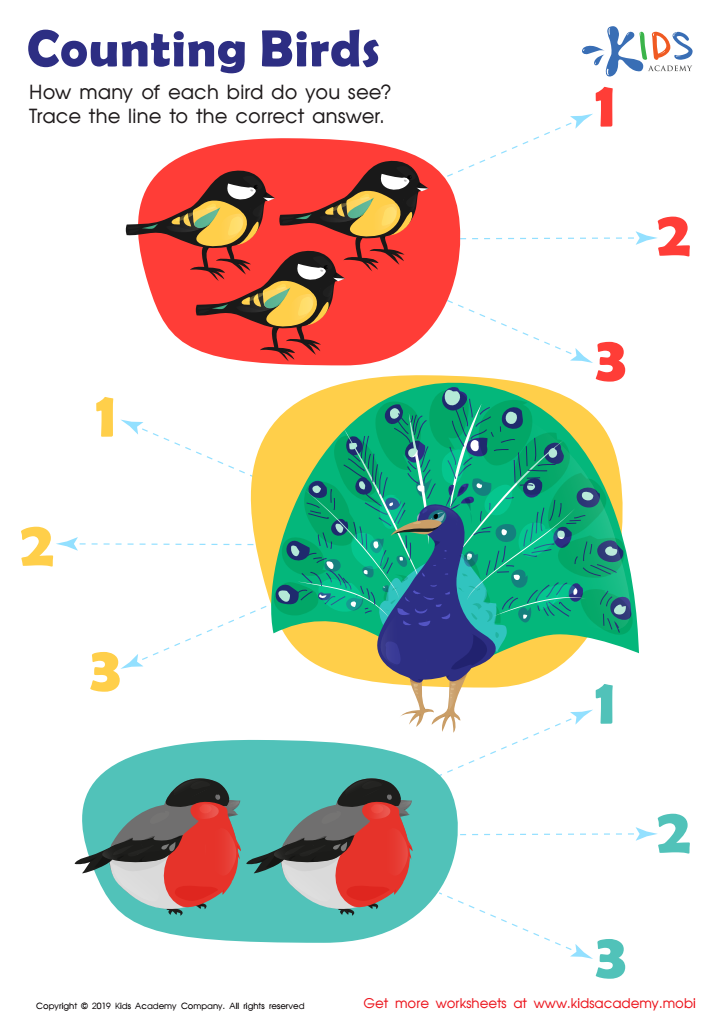
Counting Birds Worksheet
Kids love counting! With each number they learn, they can make a one-to-one representation with an item. The more practice they get, the better. Try this counting worksheet with traceable lines, to give your children practice and work on their fine motor skills. They will enjoy connecting the picture to the right number, and will feel like mathematicians with each success!
Counting Birds Worksheet
Worksheet
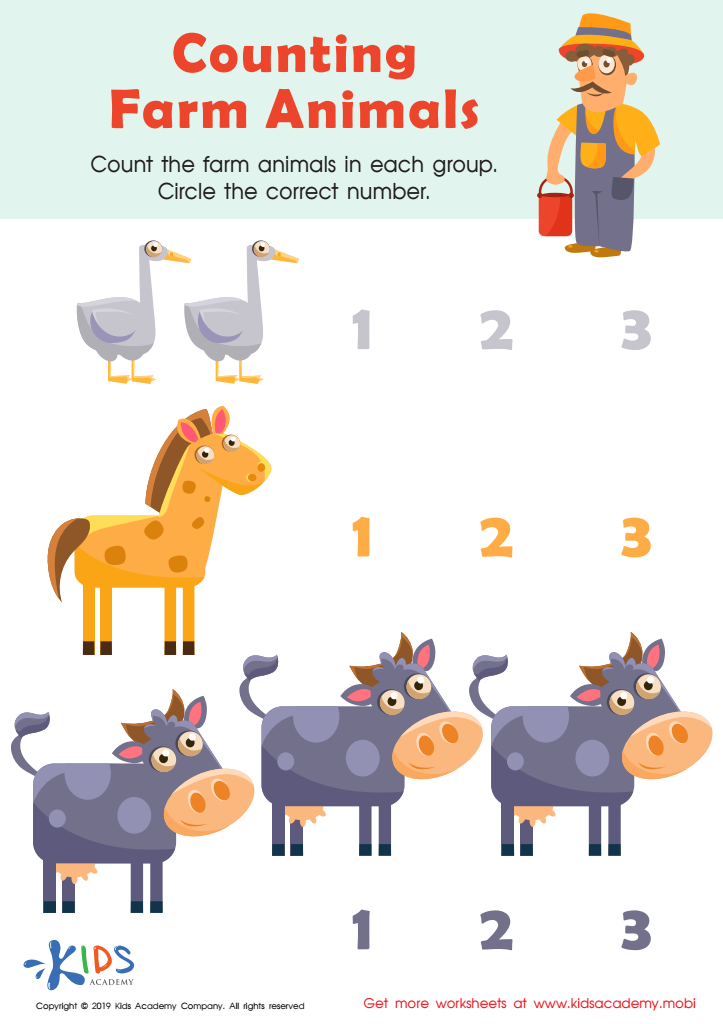
Counting Farm Animals Worksheet
Kids love farms! That's why this free farm animals counting worksheet is great for building number sense and counting skills. Have your young mathematician count the pictures, then circle the corresponding number. It's a fun and meaningful way to practice counting.
Counting Farm Animals Worksheet
Worksheet
Join Kids Academy for Free
Who is primarily going to use this learning content?






Animal recognition numbers, which are unique identifiers assigned to animals for various purposes such as tracking health, breeding, and research, are important for parents and teachers to understand. Firstly, incorporating this concept into educational programs can help students appreciate wildlife conservation and animal welfare. Understanding how these numbers facilitate responsible pet ownership and conservation efforts helps cultivate empathy and respect for all living creatures.
Additionally, teaching children about animal recognition numbers can foster critical thinking and problem-solving skills. As students learn how farmers, scientists, and conservationists use these identifiers to monitor animal populations and manage species health, they gain insight into real-world applications of science and mathematics.
Moreover, introducing this topic can fuel discussions about ethical considerations in animal treatment, addressing issues like overpopulation and breeding practices. When students grasp the importance of caring for animals and tracking their well-being, it instills a sense of responsibility that extends to environmental stewardship.
Finally, for parents and teachers, fostering awareness about animal recognition numbers can promote community engagement, as they encourage discussions around local wildlife conservation and responsible pet management practices. This not only supports wildlife around us but also strengthens family and community bonds through shared values.








