Comparing sizes Math Worksheets
11 filtered results
-
From - To
Enhance your child's math skills with our engaging "Comparing Sizes Math Worksheets." Designed for early learners, these worksheets are perfect for teaching children how to identify and compare different sizes through fun and interactive activities. Each worksheet encourages kids to observe, measure, and categorize various objects, fostering critical thinking and collaboration. With vibrant illustrations and clear instructions, students can easily improve their understanding of concepts like big and small, tall and short, and more. Ideal for classroom use or at-home practice, these worksheets make math exciting and accessible, empowering young minds to develop a solid foundation in size comparison and geometry.
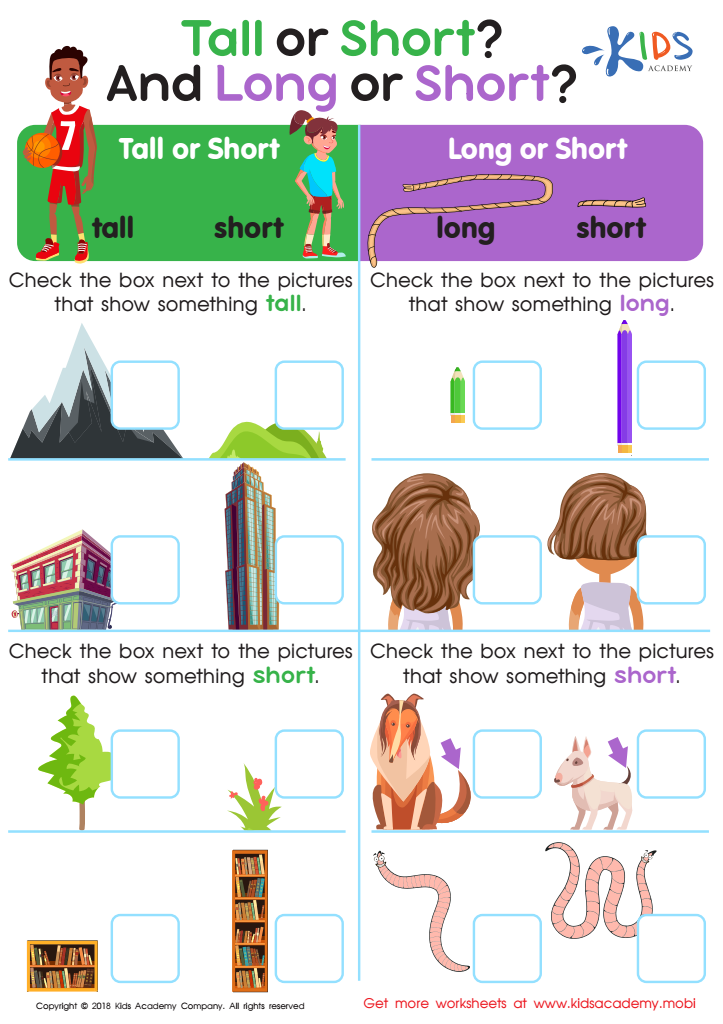
Tall or Short and Long or Short? Worksheet
 Assign to My Students
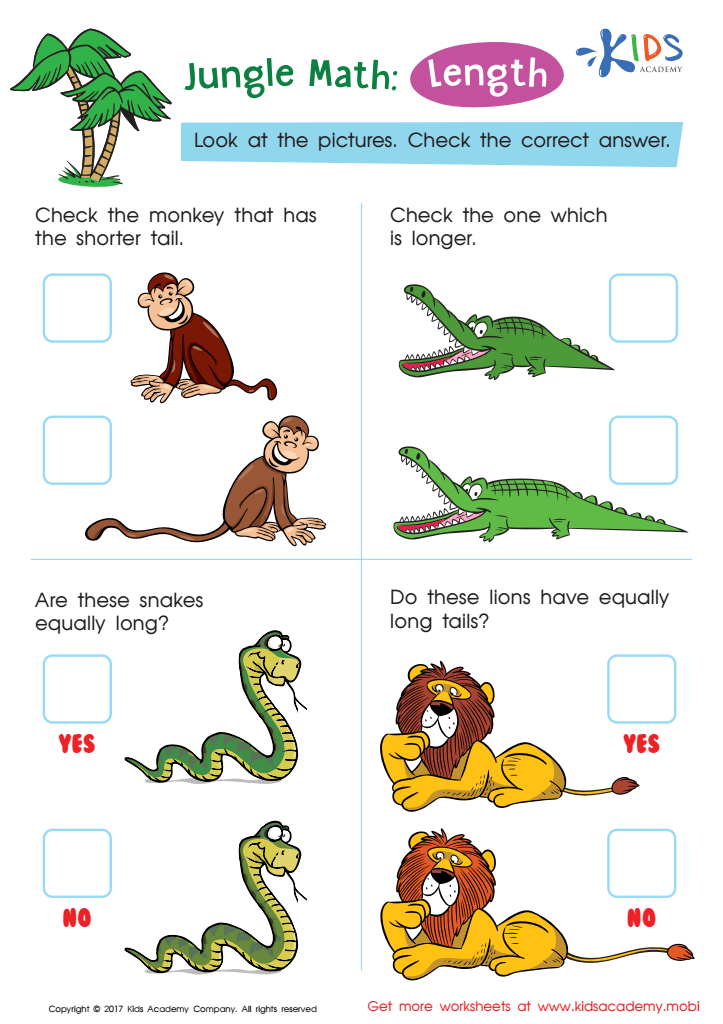
Which One Is Longer - Length Worksheet
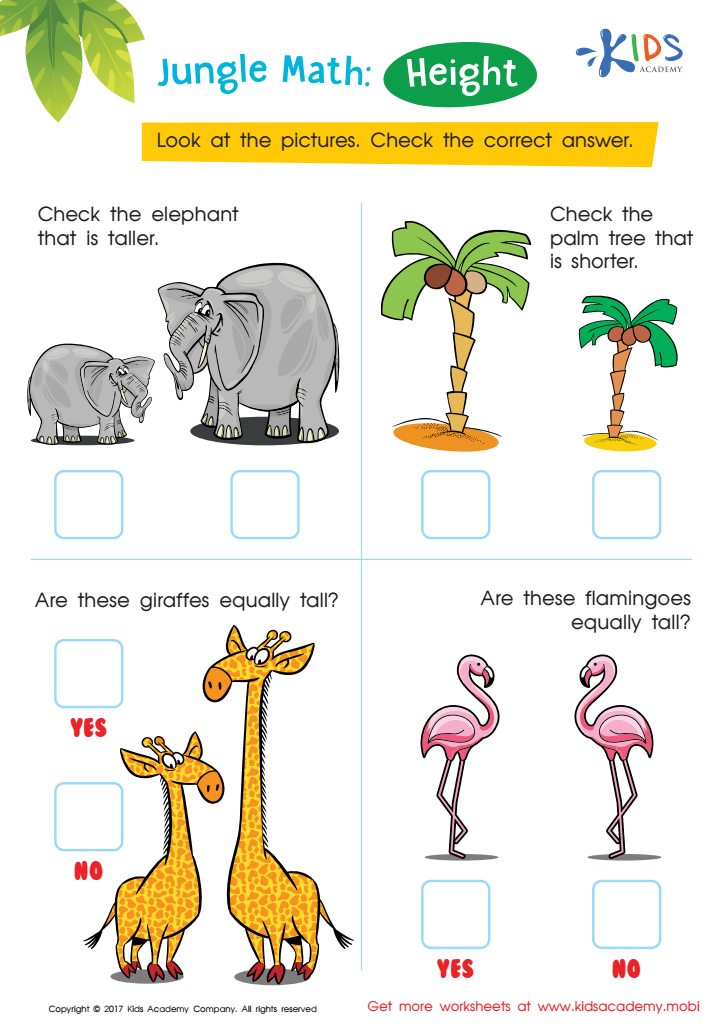
Which Is Taller Worksheet
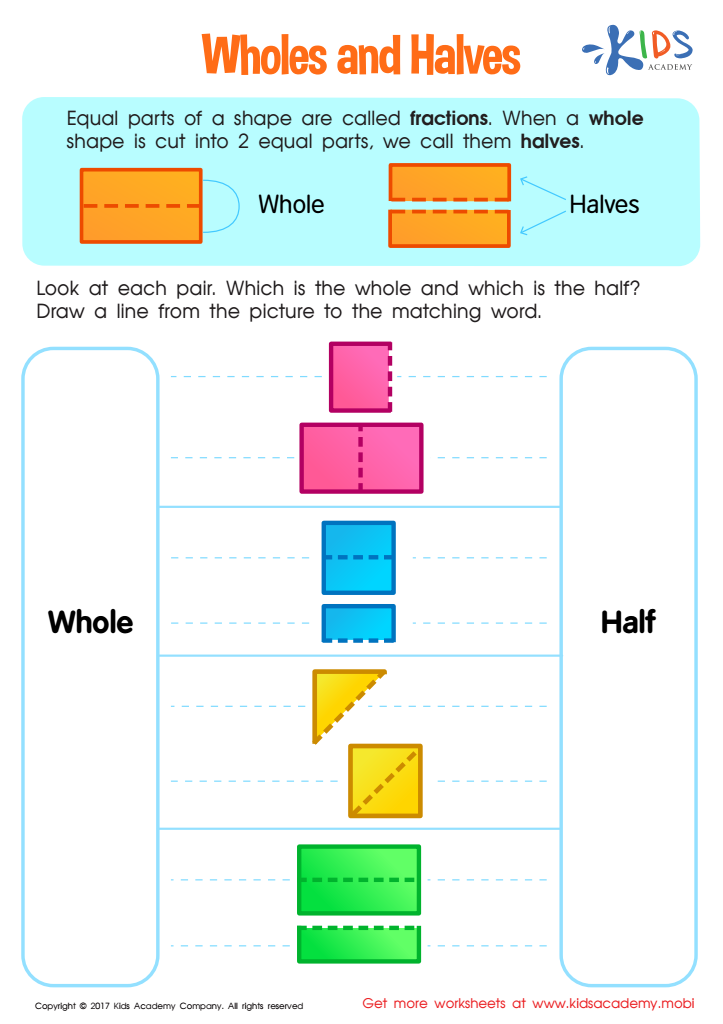
Wholes and Halves Worksheet
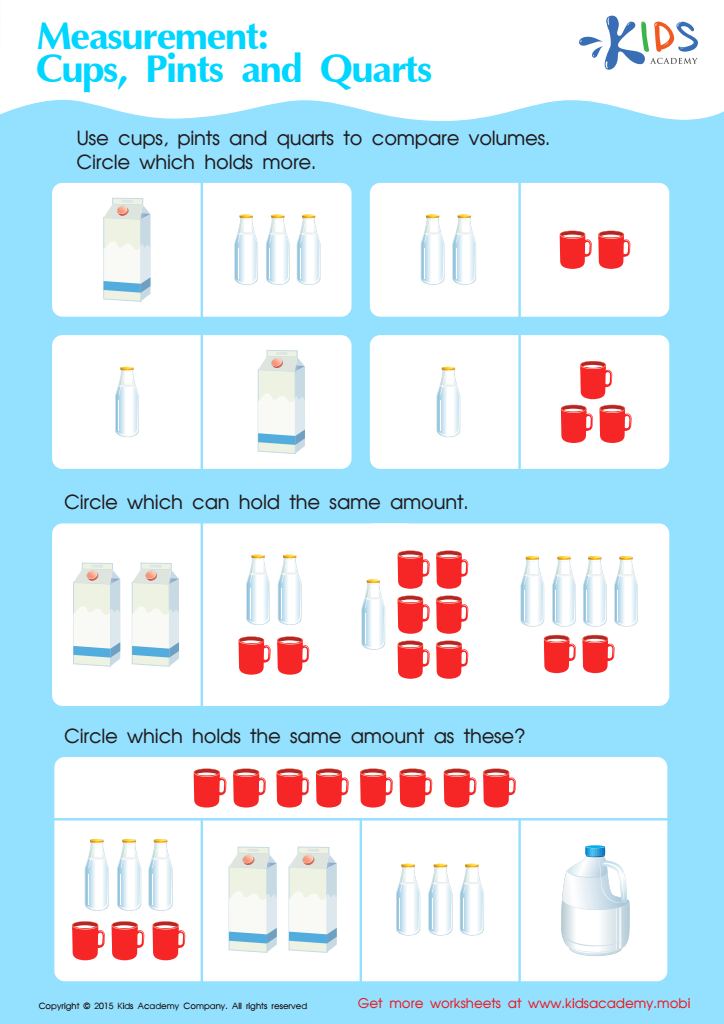
Measurement: Compare Volumes Worksheet
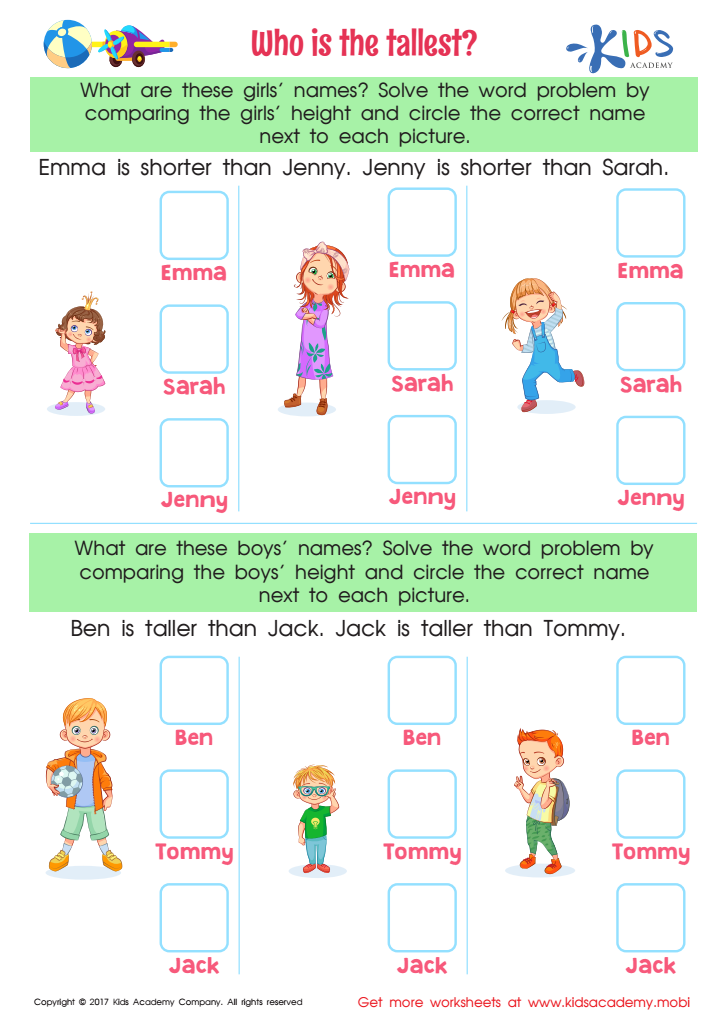
Who Tallest Printable
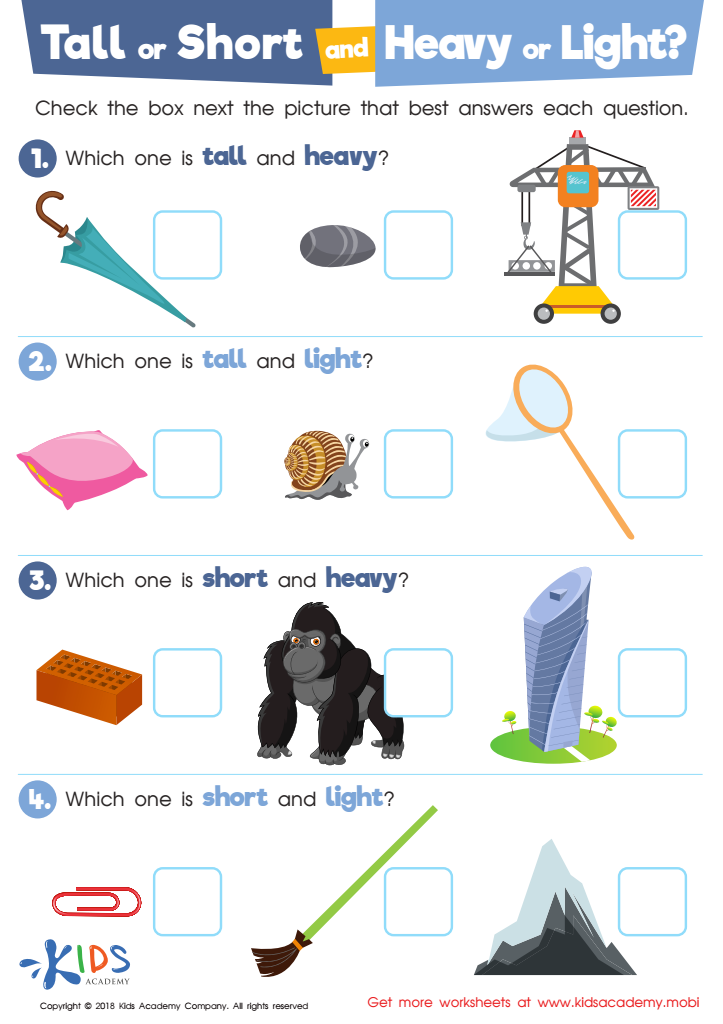
Tall or Short and Heavy or Light? Worksheet
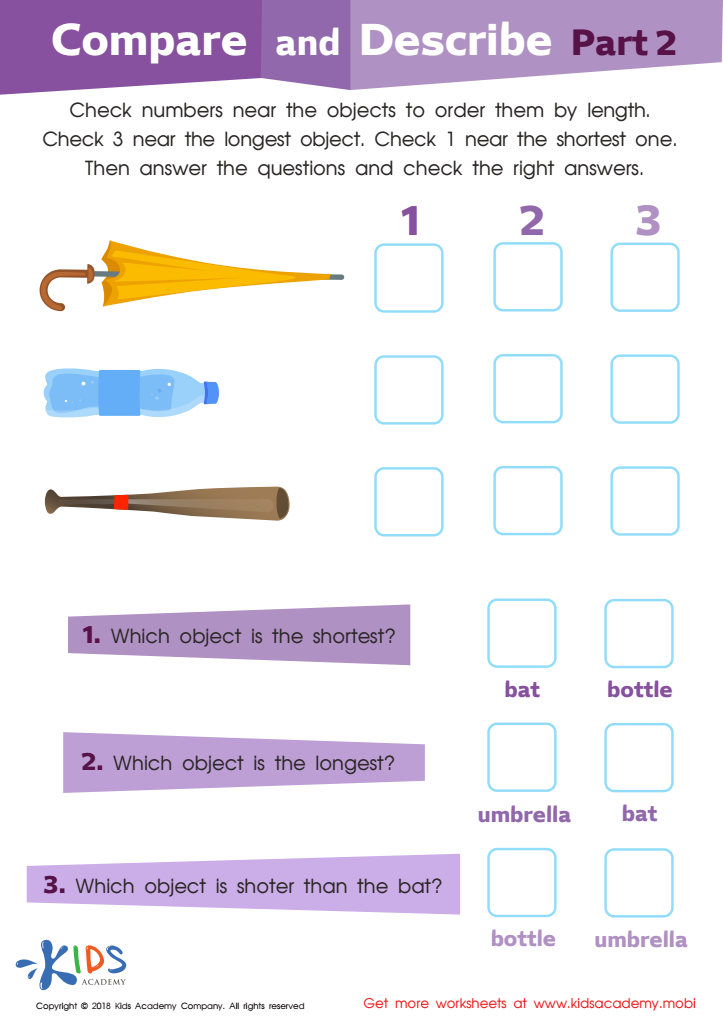
Compare and Describe: Part 2 Worksheet
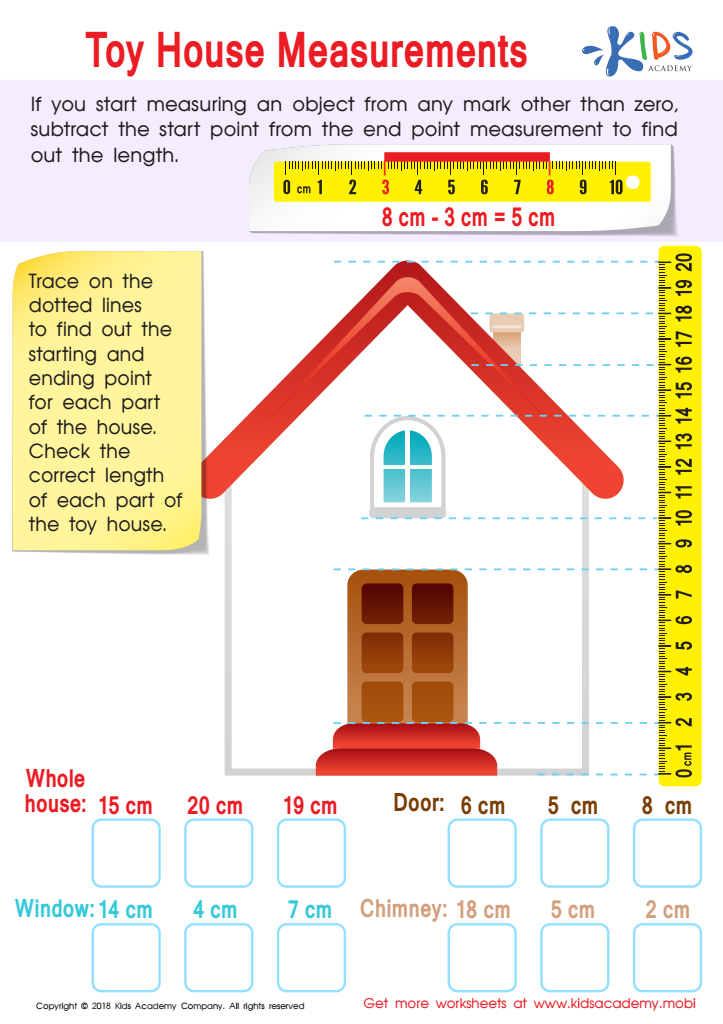
Toy House Measurements Worksheet
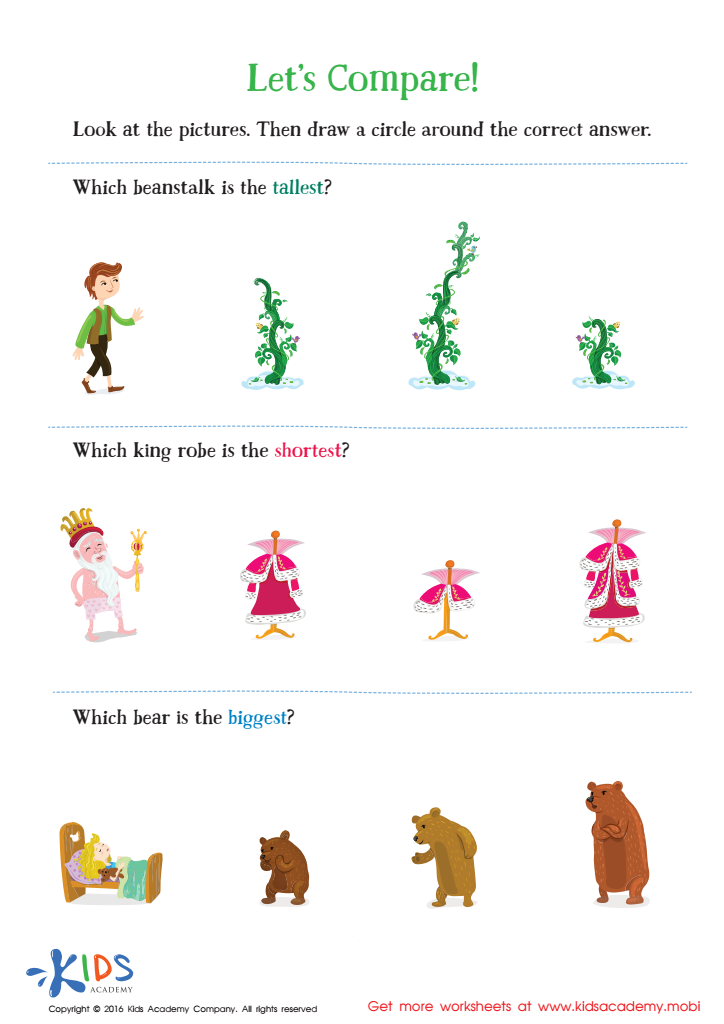
Fairy Tale Worksheet: Let's Compare








Comparing sizes is a fundamental mathematical skill that forms the foundation for a child's understanding of the world. Both parents and teachers should prioritize this concept because it fosters critical thinking and problem-solving abilities in young learners. Understanding size comparisons allows children to categorize objects, recognize patterns, and develop spatial awareness. These skills are essential not just in math but in everyday situations, such as cooking, shopping, and arranging furniture.
Additionally, mastering size comparisons lays the groundwork for more complex mathematical concepts, such as measurement, fractions, and eventually, geometry. When parents and teachers engage children in activities that involve comparing sizes—such as sorting toys, baking (measuring ingredients), or using comparing language (bigger, smaller, taller)—they reinforce these important skills.
By caring about and actively teaching size comparison, adults can help build a child's confidence and enthusiasm for math. This fosters a positive attitude towards learning and lays a strong foundation for academic success throughout their educational journey. Moreover, collaborating in these activities provides opportunities for meaningful bonding, making learning delightful and memorable. Overall, incorporating size comparisons into early education is a vital step in nurturing well-rounded, numerate individuals.








