Recognizing shapes Math Worksheets
35 filtered results
-
From - To
Nurture budding mathematicians with our delightful "Recognizing Shapes Math Worksheets" designed for young learners! At Kids Academy, our printable worksheets ensure children master shape identification through engaging and visually appealing activities. These resources offer a mix of fun challenges like matching, tracing, and coloring to make learning shapes such as circles, squares, triangles, and rectangles exciting. Perfect for early grade levels, our worksheets bolster critical thinking and fine motor skills while laying a strong foundation for future math success. Download, print, and watch your child’s confidence soar as they explore the world of shapes with enthusiasm and joy.
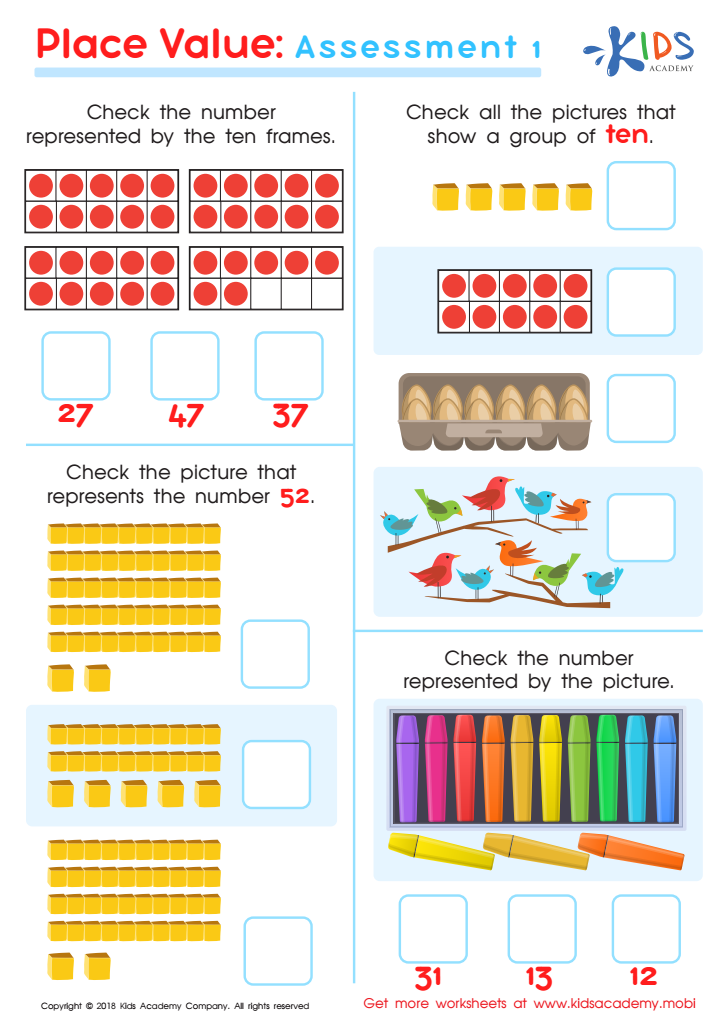
Place Value: Assessment 1 Worksheet
 Assign to My Students
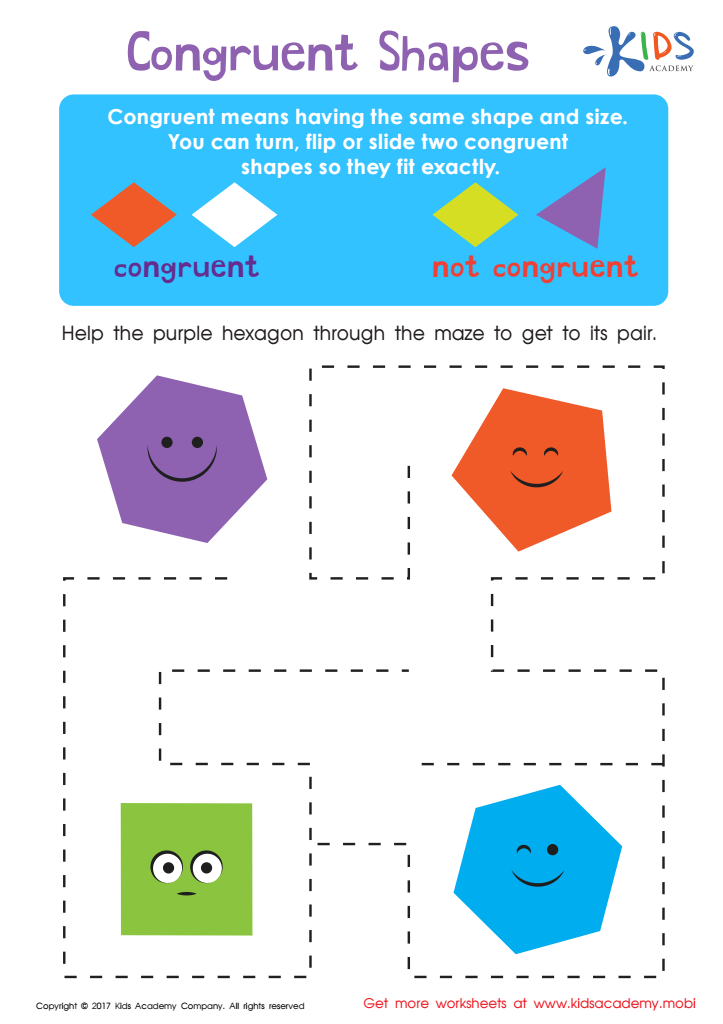
Congruent Shapes Worksheet
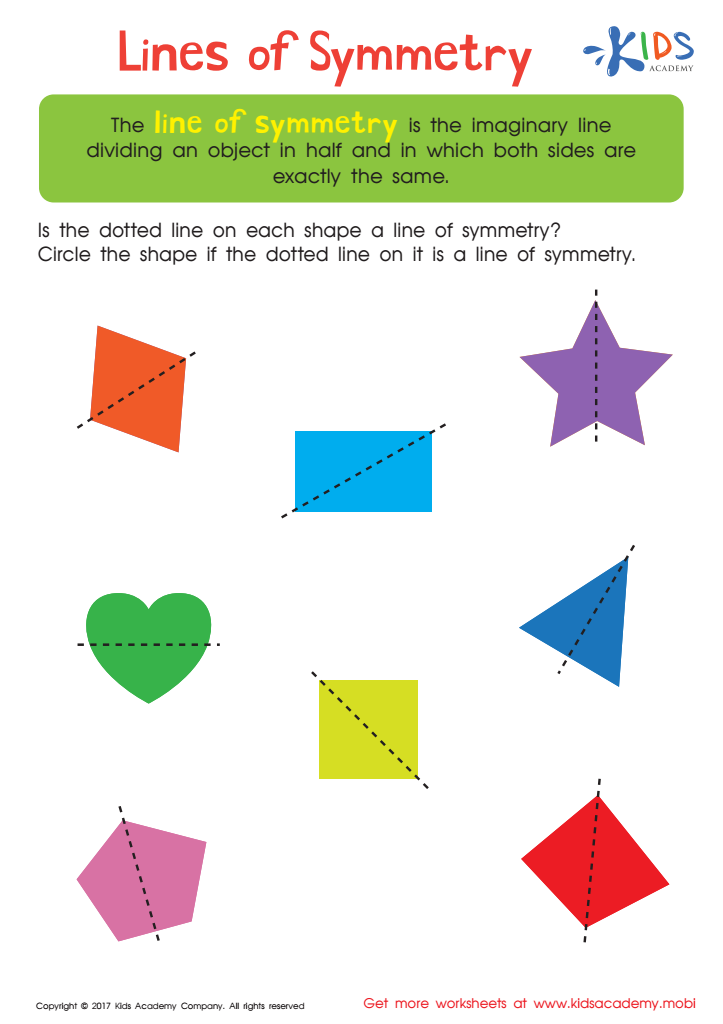
Lines of Symmetry Printable
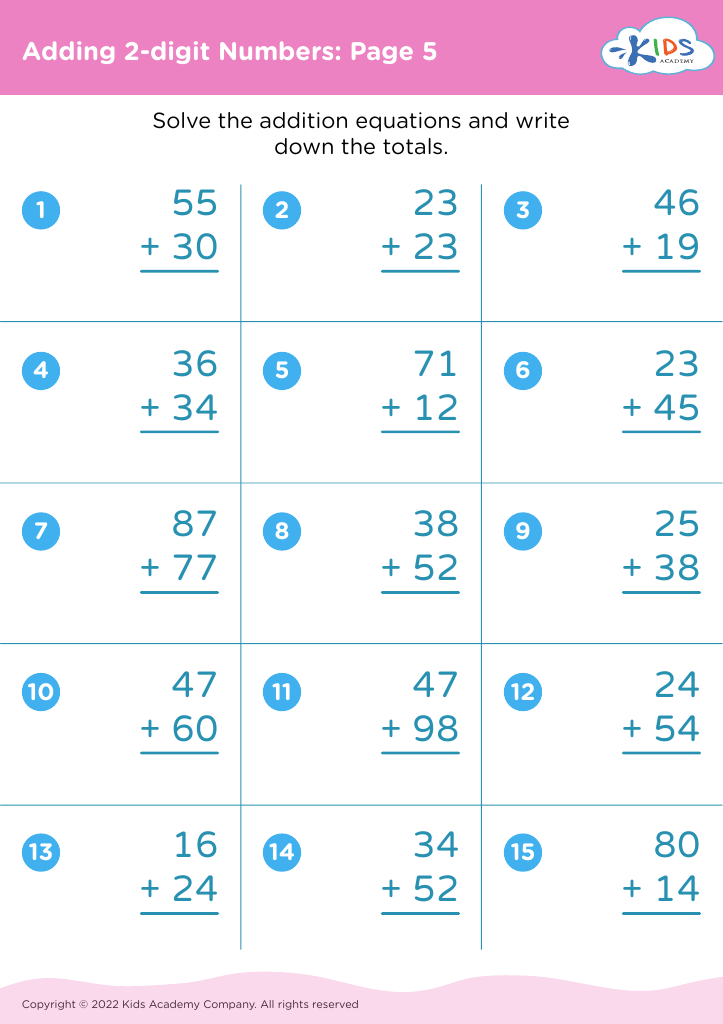
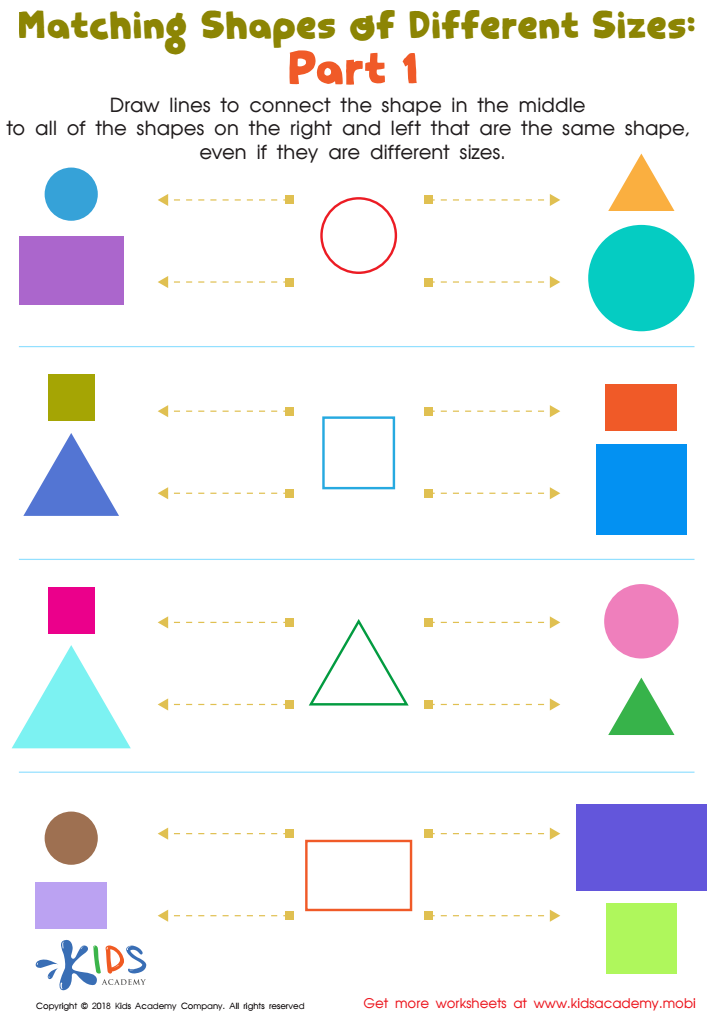
Geometry: part 1 Worksheet
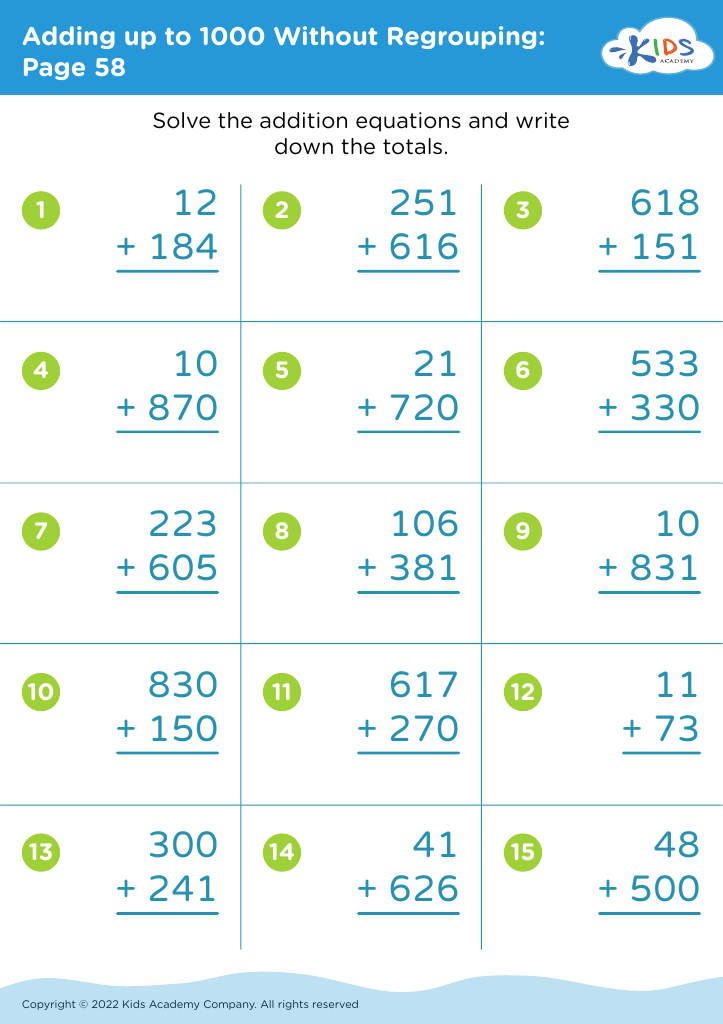
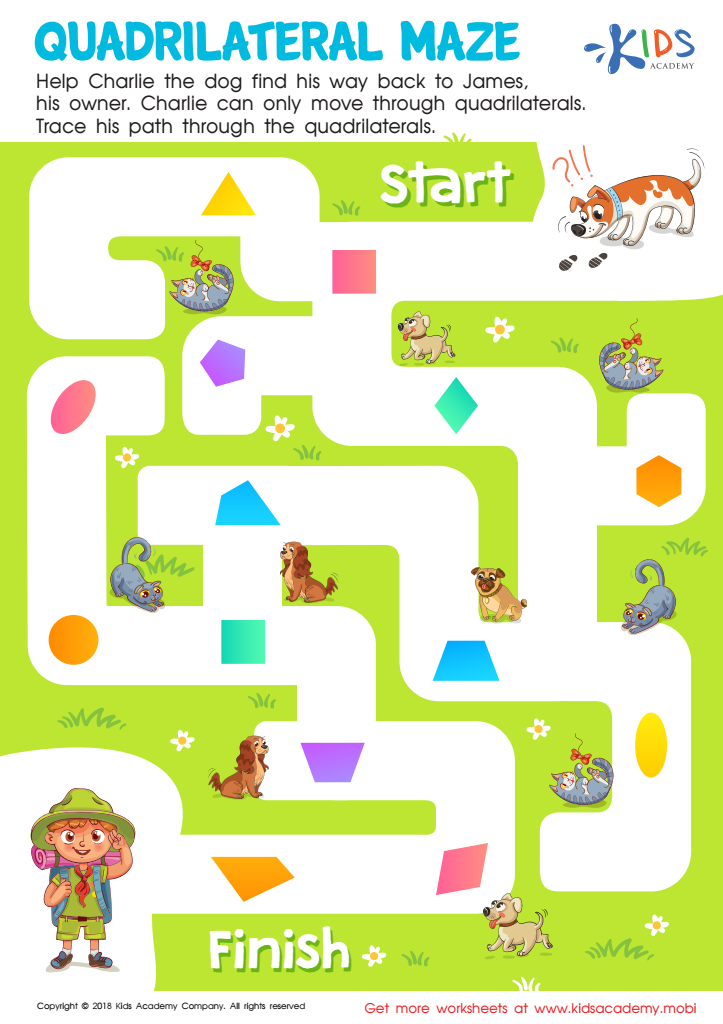
Quadrilateral Maze Worksheet








Recognizing shapes in math is a foundational skill that has far-reaching implications for children's overall cognitive and academic development. Parents and teachers should care deeply about this aspect because it serves as one of the building blocks for more complex mathematical concepts and problem-solving tasks. When children learn to identify and distinguish between shapes like circles, squares, triangles, and rectangles, they begin to develop spatial awareness, which is crucial for understanding geometry and other mathematical disciplines.
Moreover, recognizing shapes enhances a child's observation skills and attention to detail. These skills are not only vital in math but also in other subjects like science and art, promoting a well-rounded education. Shapes are everywhere in our daily environment; from the properties of objects to architecture and nature. Recognizing and understanding shapes thus links learning to real-world contexts, making education more applicable and engaging for young students.
Additionally, shape recognition is critical for developing language and descriptive skills, as children learn to describe objects using geometric vocabulary. This fosters improved communication abilities. For example, describing shapes involves terms like "sides," "corners," and "angles," which broaden a child's vocabulary and help in developing clearer and more precise articulation of ideas. Thus, recognizing shapes is integral to a child's holistic development, making it a critical focus for parents and teachers alike.








