Unlock the secrets of simplifying fractions with our engaging math worksheets! Designed for early learners, these resources help students grasp the concept of reducing fractions to their simplest form. Each worksheet features a variety of exercises, from identifying common factors to practicing fraction simplification. With step-by-step guidance, children will build confidence and strengthen their math skills. Perfect for classroom use or at-home practice, our worksheets offer a fun and interactive way to master this essential math skill. Visit our site to explore a wealth of options and help your child become a fraction pro today!

Check out this FREE Trial Lesson on Math!

Making a Whole from Fractions

Favorites
With answer key
Interactive
  • Simplifying Fractions
  • Math
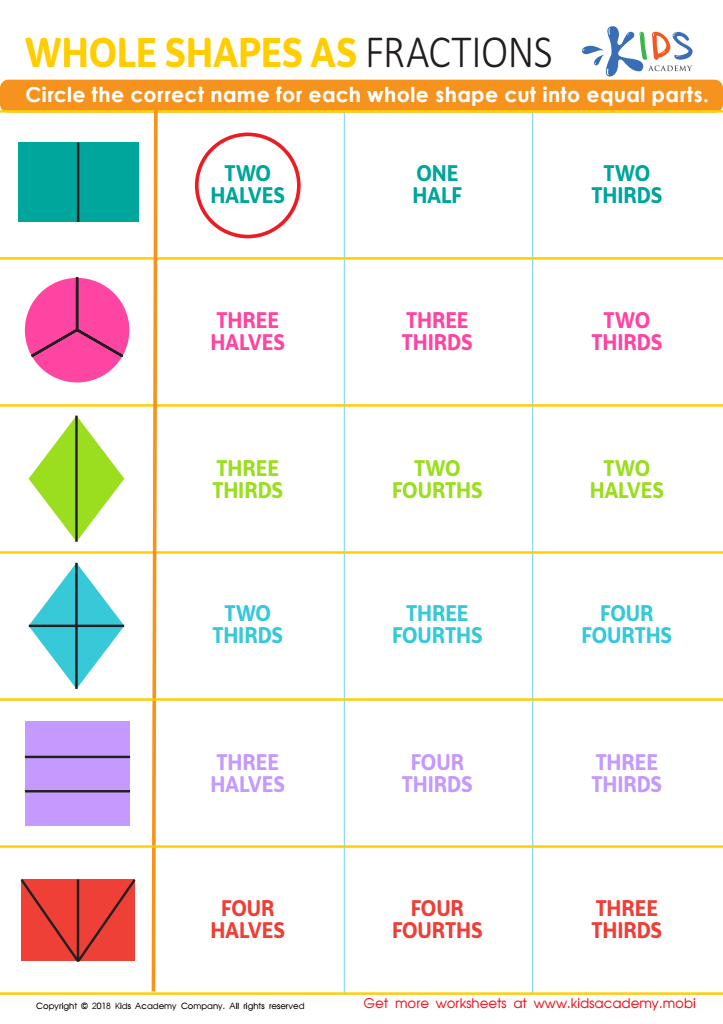
Whole Shapes as Fractions Worksheet

Whole Shapes as Fractions Worksheet

Introduce your child to fractions! After they can draw whole shapes, have them represent them as fractions using a simple worksheet. This will help improve their understanding of naming whole shapes cut into equal parts.
Whole Shapes as Fractions Worksheet
Worksheet
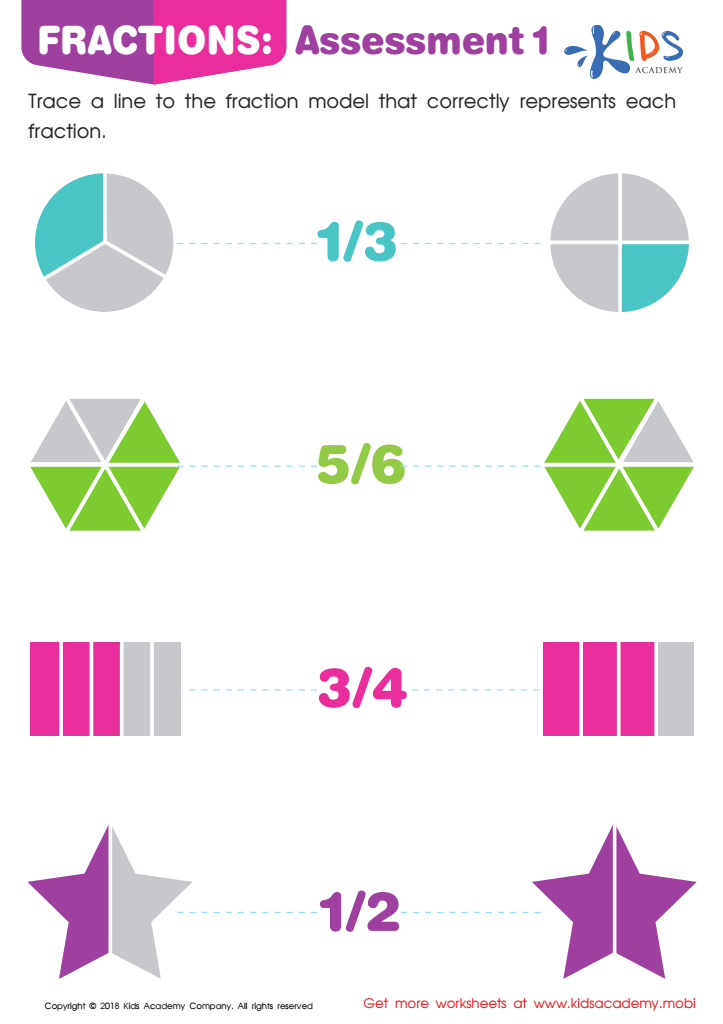
Fractions: Assessment 1 Worksheet

Fractions: Assessment 1 Worksheet

Master fractions easily with this worksheet! It has four sets of fraction models and fraction equations with two models each. Guide your kids to trace a line to the correct fraction model for each equation.
Fractions: Assessment 1 Worksheet
Worksheet
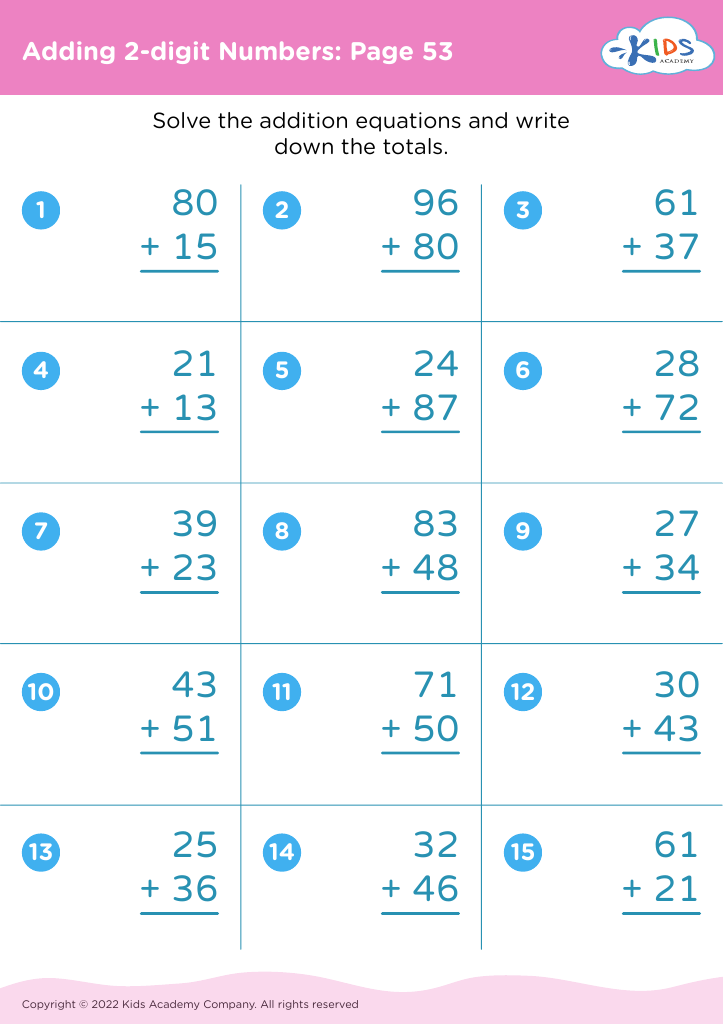
Adding 2-digit Numbers: Page 53

Adding 2-digit Numbers: Page 53

Adding 2-digit Numbers: Page 53
Worksheet
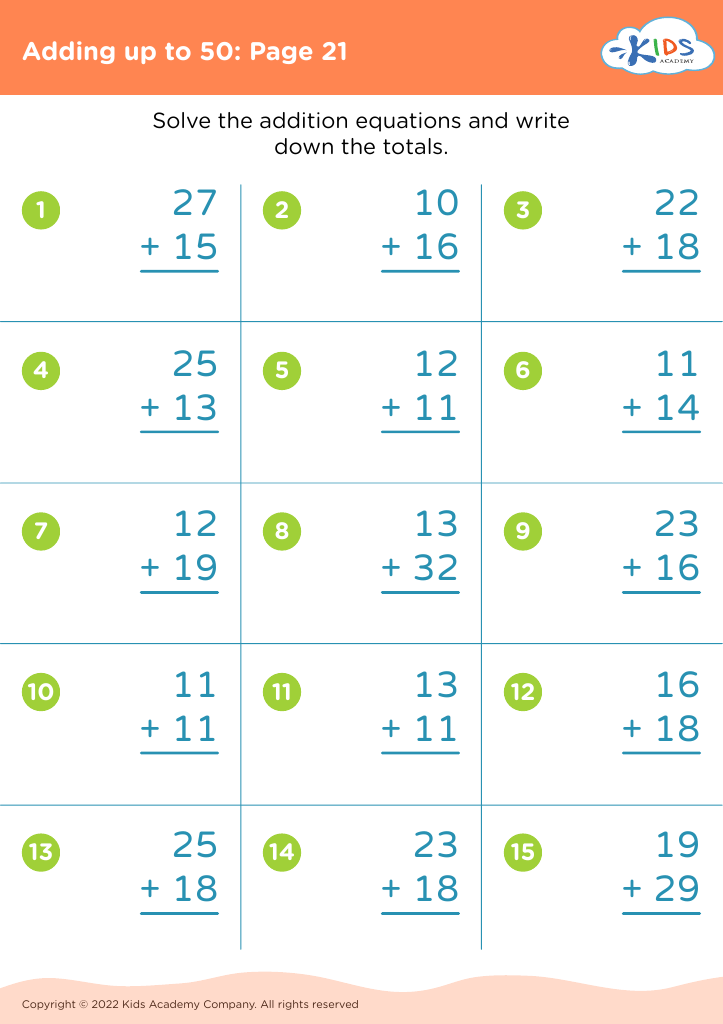
Adding up to 50: Page 21

Adding up to 50: Page 21

Adding up to 50: Page 21
Worksheet
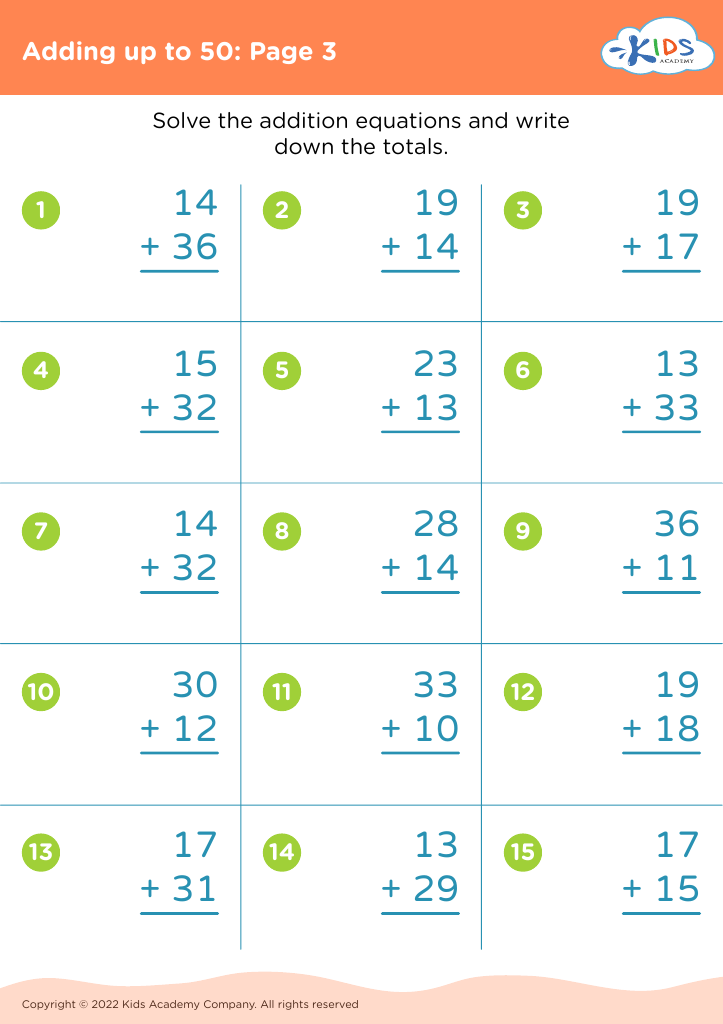
Adding up to 50: Page 3

Adding up to 50: Page 3

Adding up to 50: Page 3
Worksheet
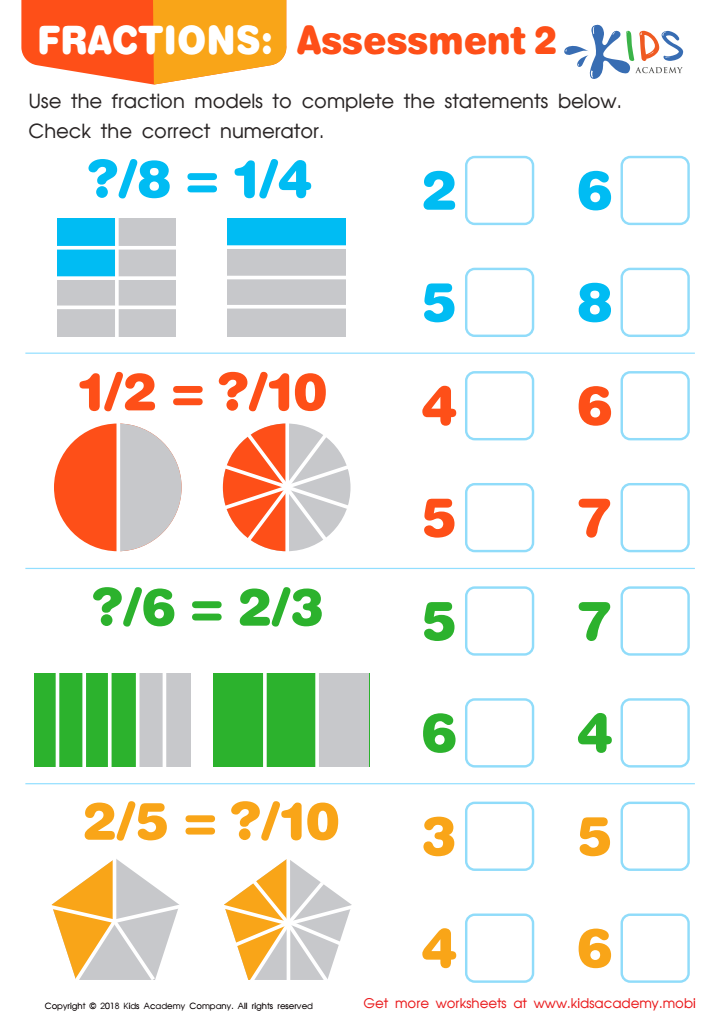
Fractions: Assessment 2 Worksheet
Fractions: Assessment 2 Worksheet

Help your kids understand fractions better with this worksheet. Ask them to complete the fraction statements using the fraction models on the left and then check the correct numerators. This can help clear up any confusion they may have with fractions and fraction models.
Fractions: Assessment 2 Worksheet
Worksheet
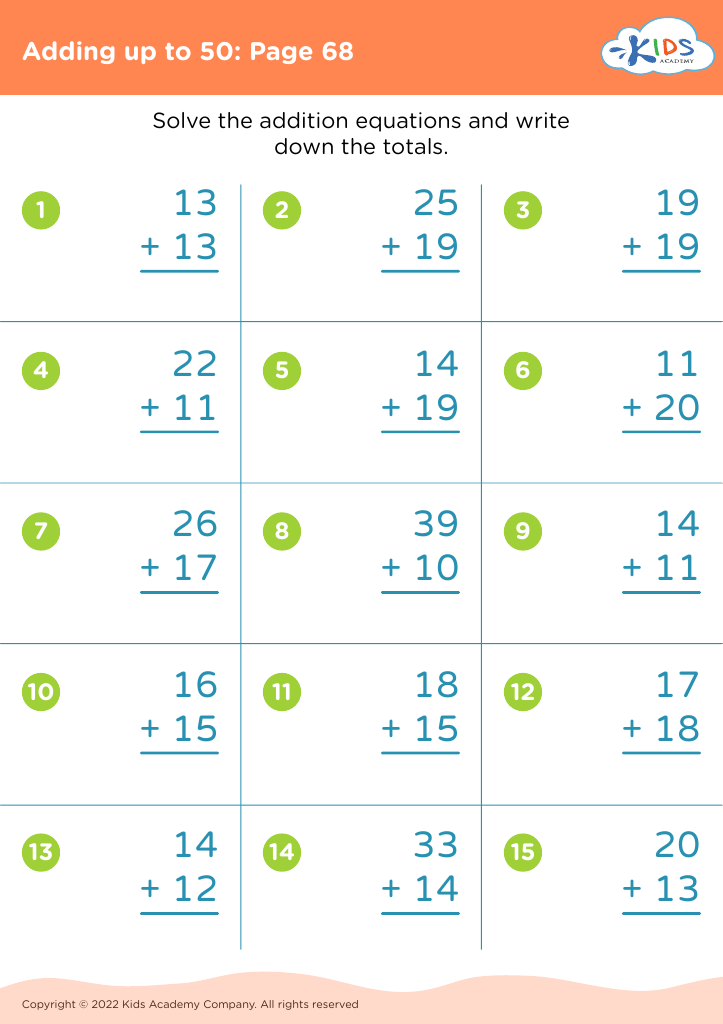
Adding up to 50: Page 68

Adding up to 50: Page 68

Adding up to 50: Page 68
Worksheet
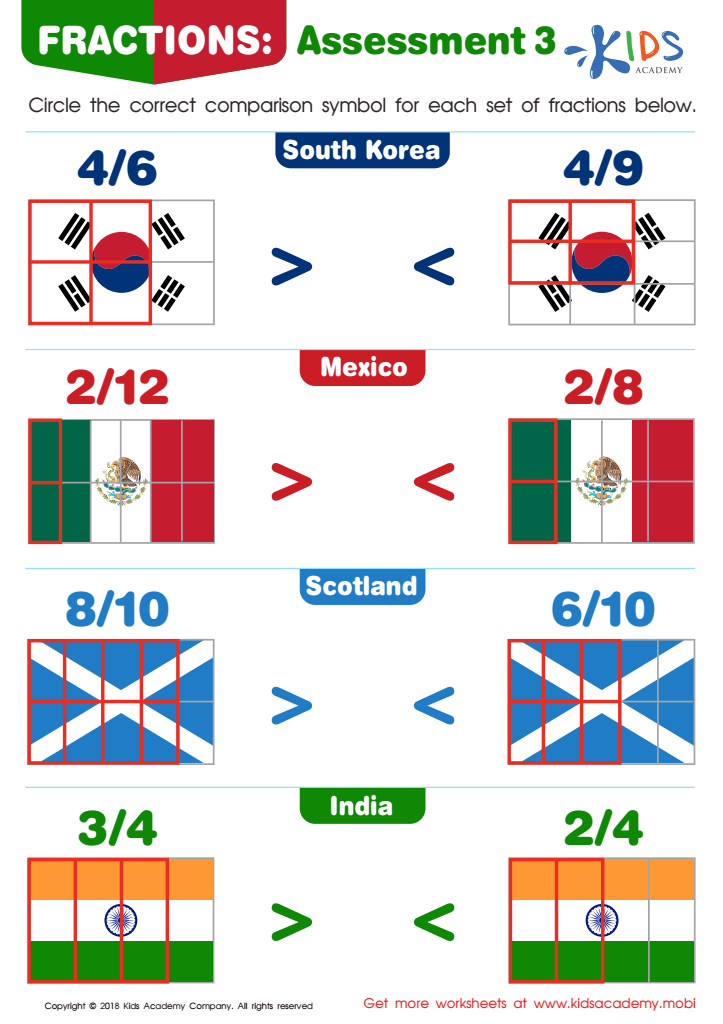
Fractions: Assessment 3 Worksheet
Fractions: Assessment 3 Worksheet
This worksheet helps teach kids about fractions and introduces them to countries and their flags. Have them read the country names and point to the flags. Then help them assess the fractions, and ask them to circle the symbol that shows their values.
Fractions: Assessment 3 Worksheet
Worksheet
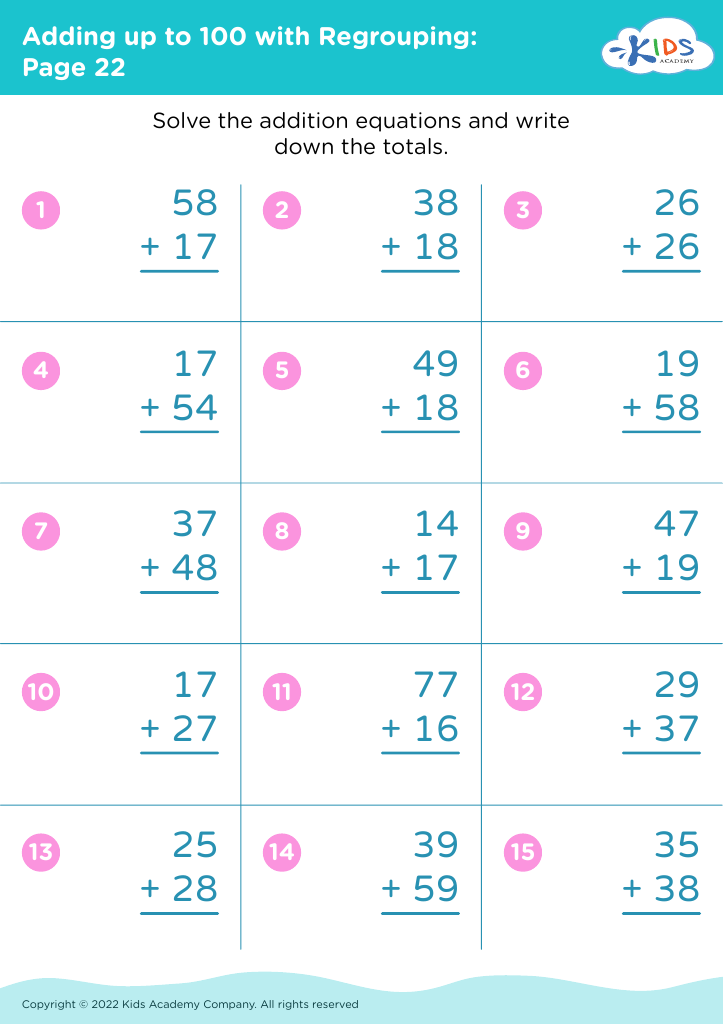
Adding up to 100 with Regrouping: Page 22
Worksheet
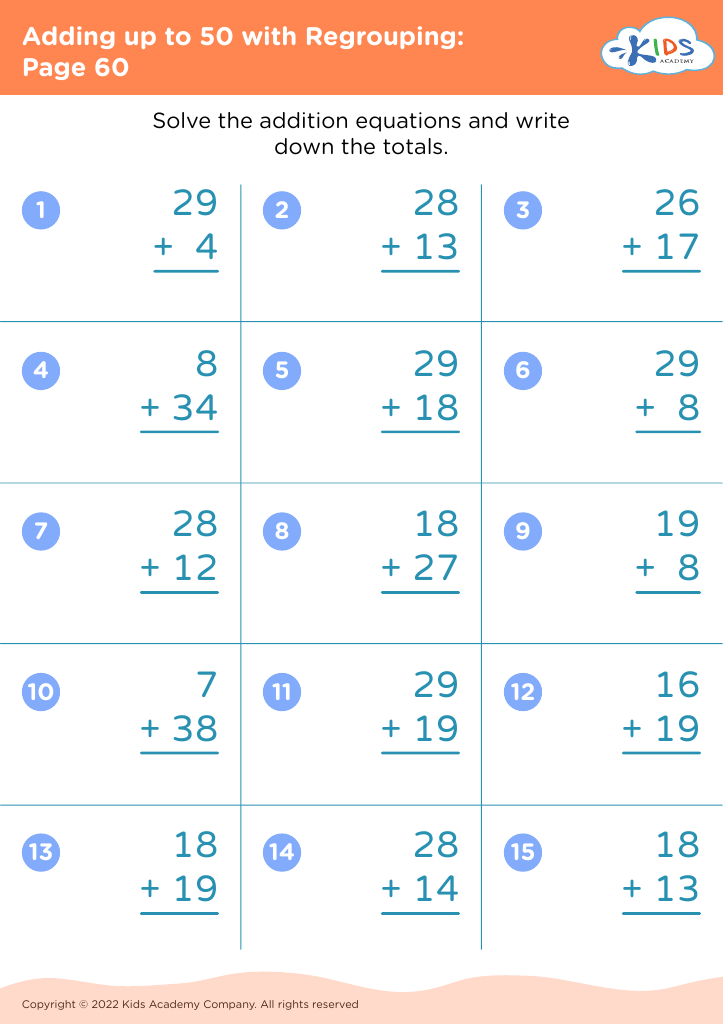
Adding up to 50 with Regrouping: Page 60
Worksheet
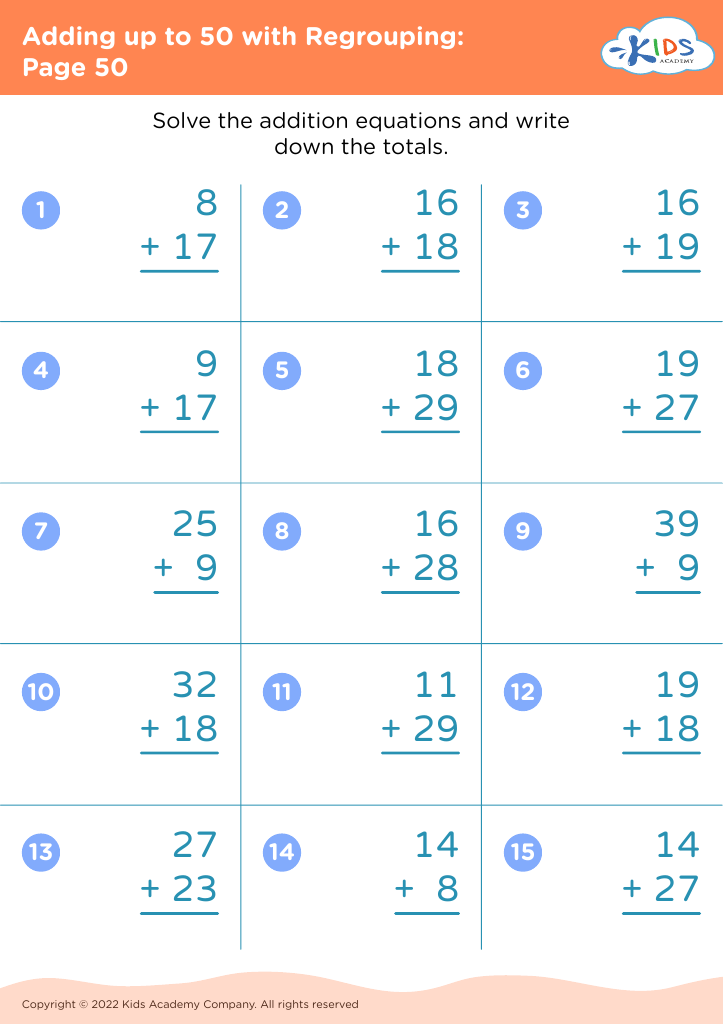
Adding up to 50 with Regrouping: Page 50
Worksheet
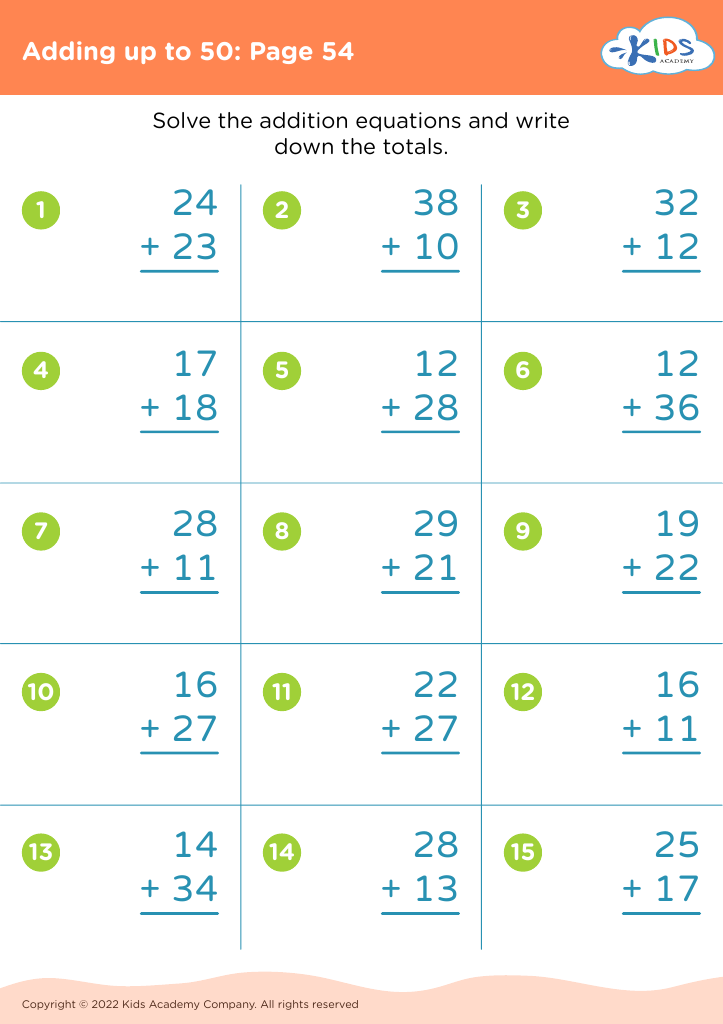
Adding up to 50: Page 54

Adding up to 50: Page 54

Adding up to 50: Page 54
Worksheet
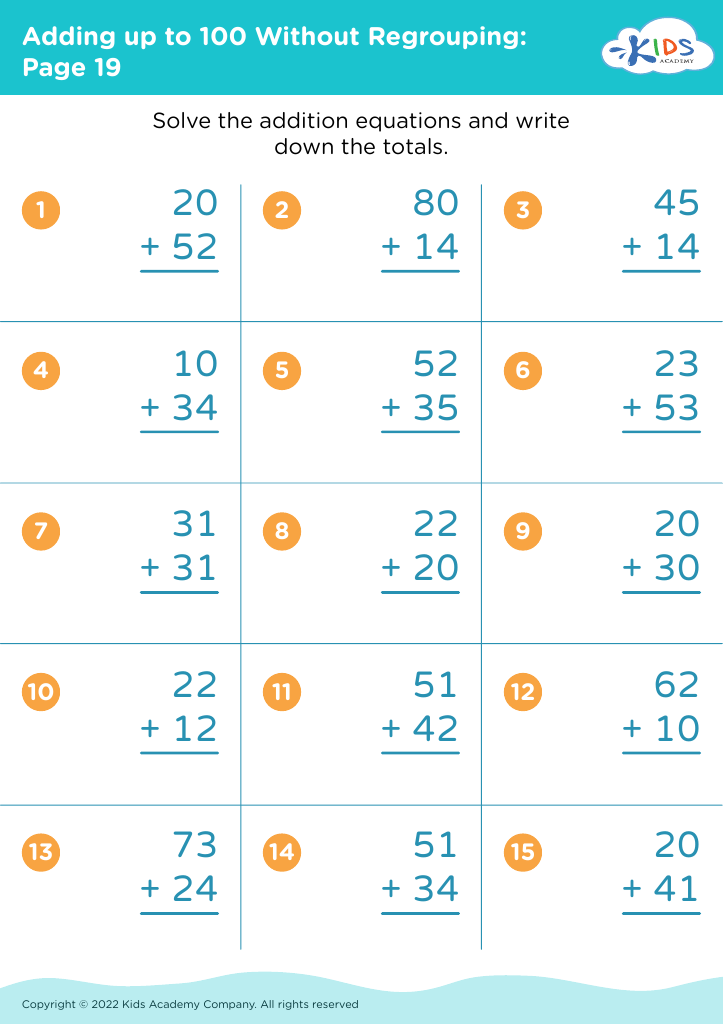
Adding up to 100 Without Regrouping: Page 19
Worksheet
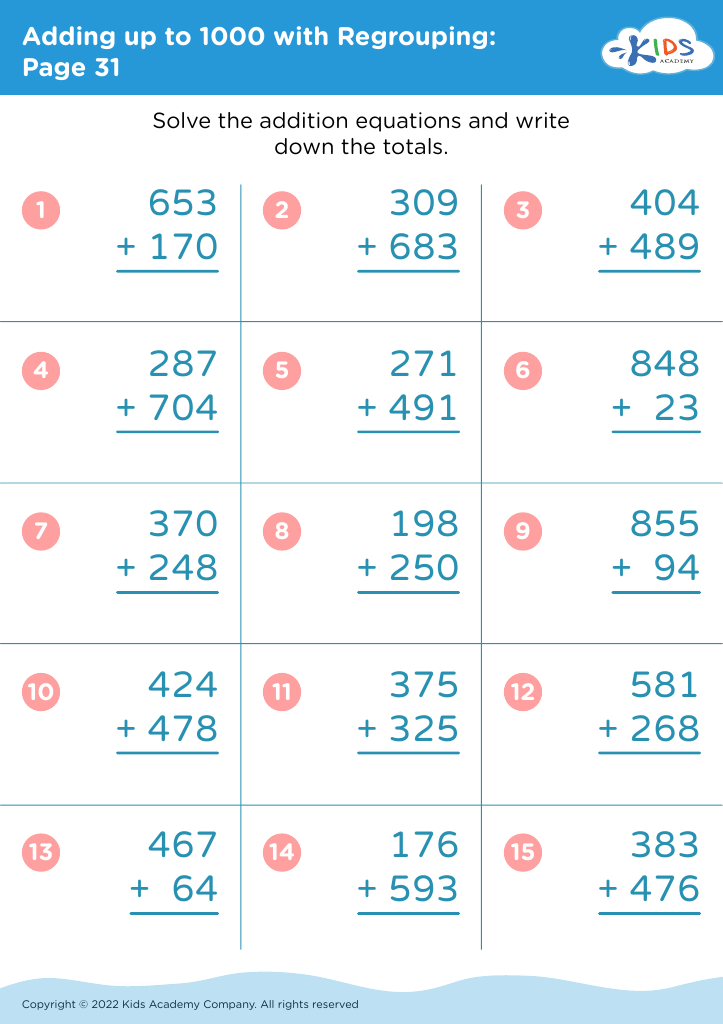
Adding up to 1000 with Regrouping: Page 31
Worksheet
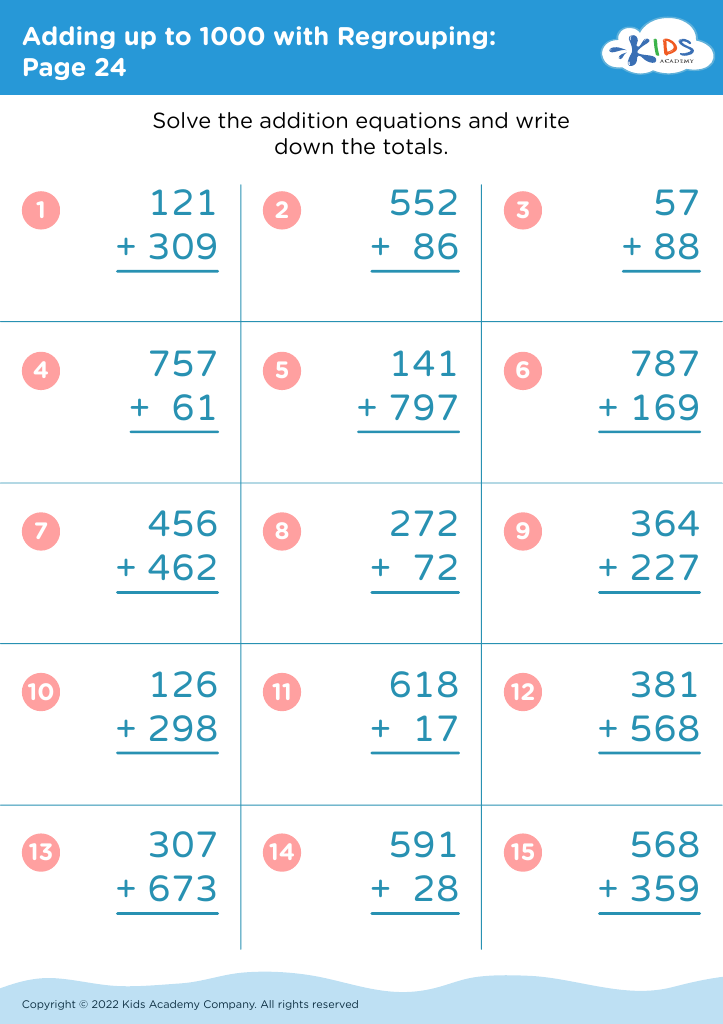
Adding up to 1000 with Regrouping: Page 24
Worksheet
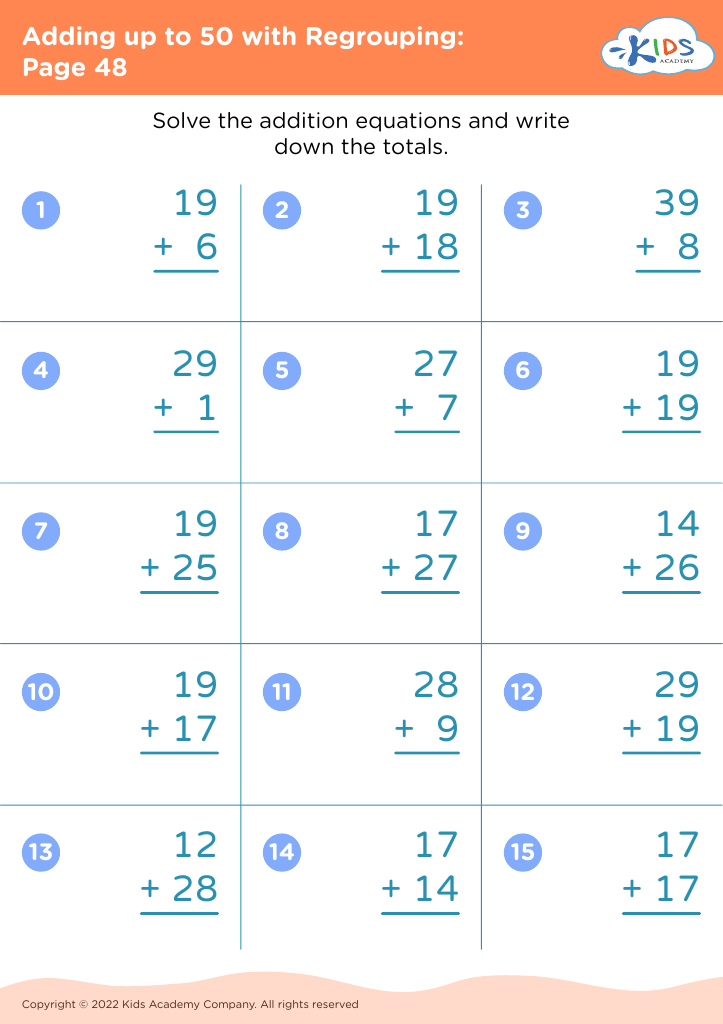
Adding up to 50 with Regrouping: Page 48
Worksheet
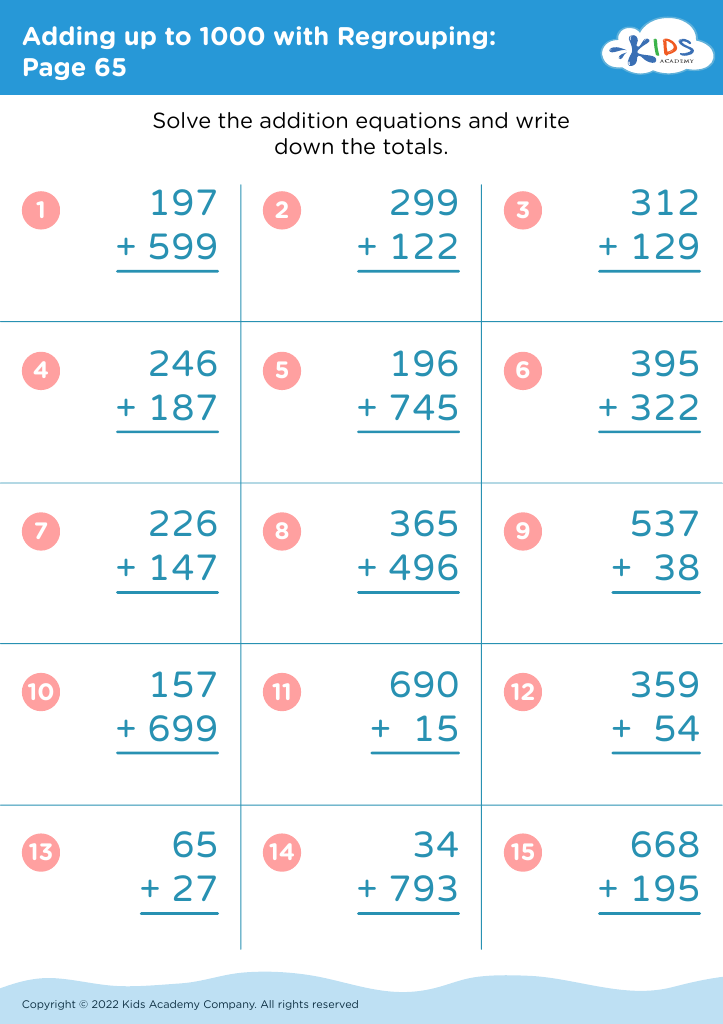
Adding up to 1000 with Regrouping: Page 65
Worksheet
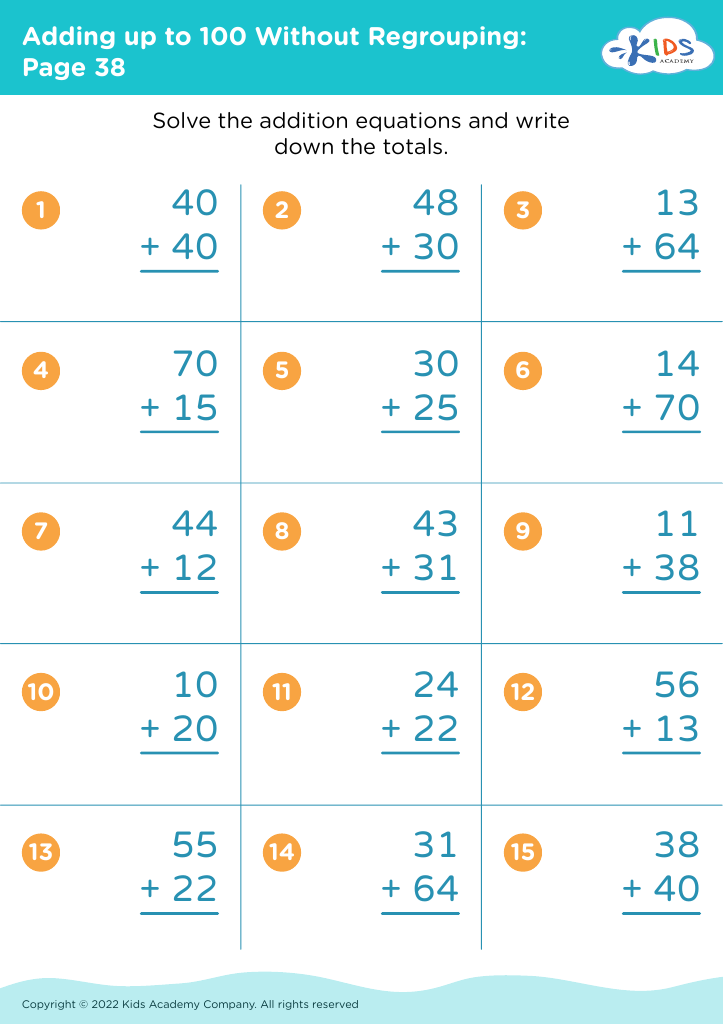
Adding up to 100 Without Regrouping: Page 38
Worksheet
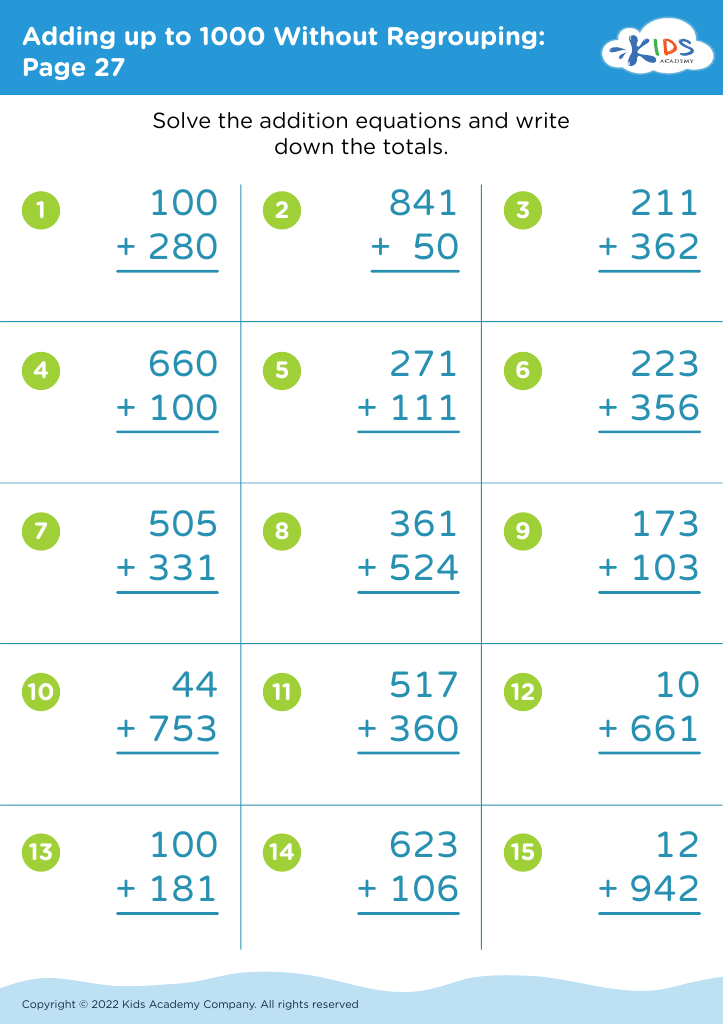
Adding up to 1000 Without Regrouping: Page 27
Worksheet
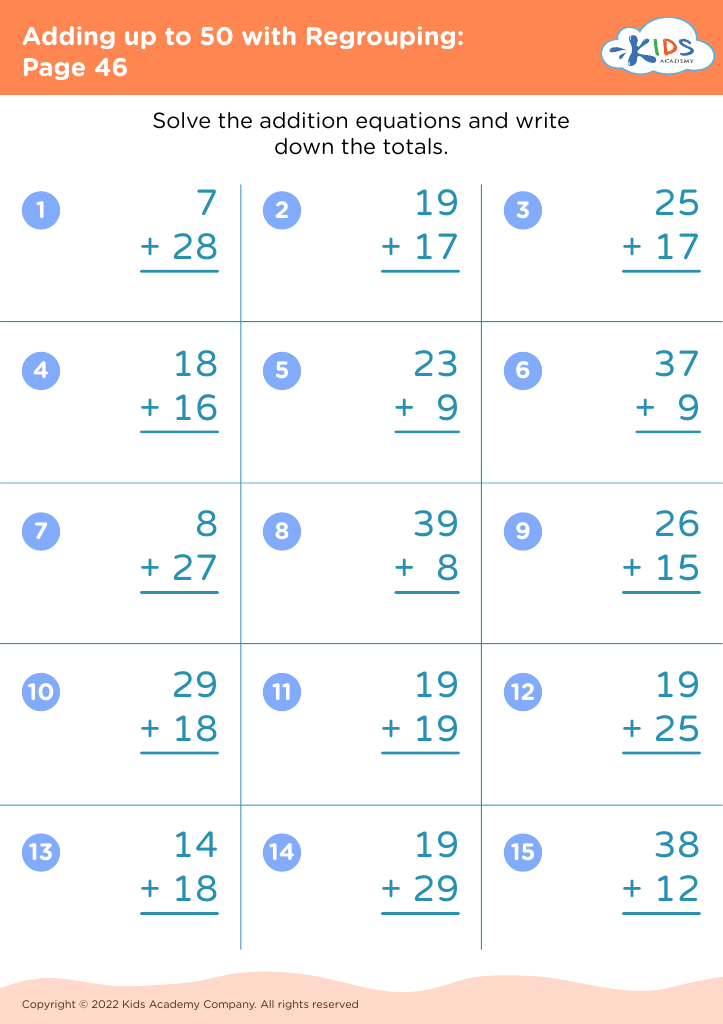
Adding up to 50 with Regrouping: Page 46
Worksheet
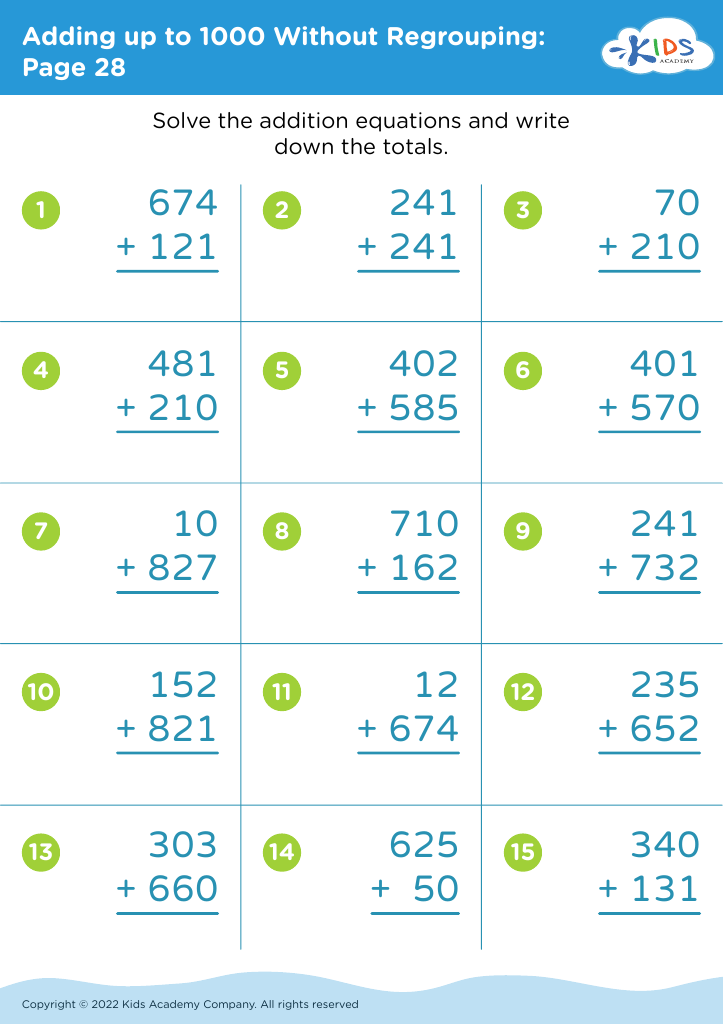
Adding up to 1000 Without Regrouping: Page 28
Worksheet
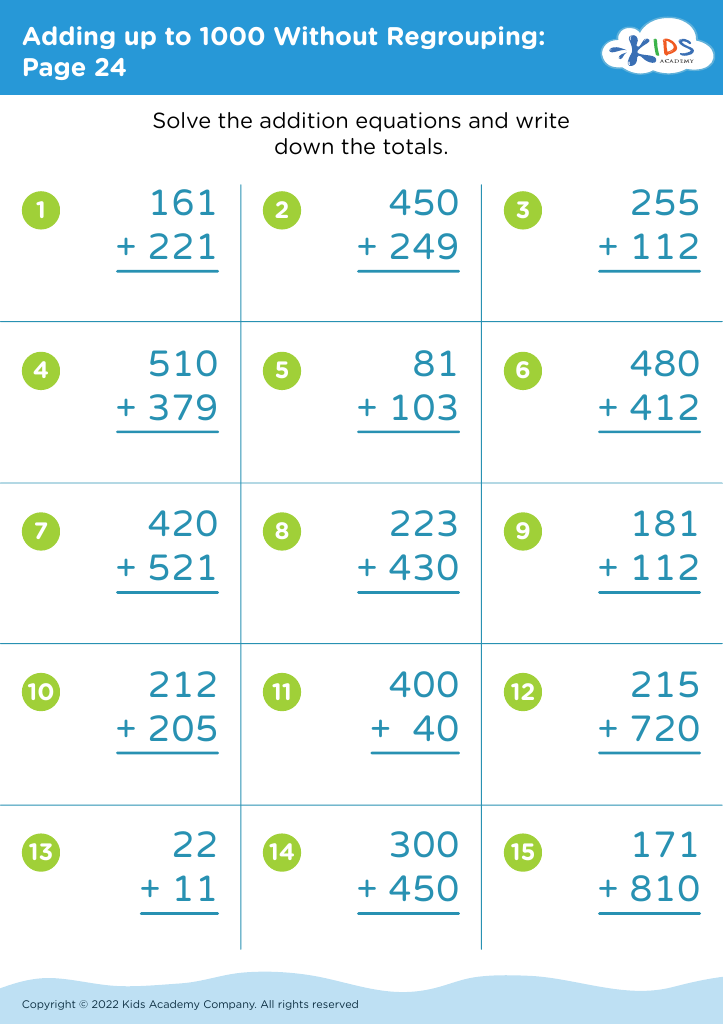
Adding up to 1000 Without Regrouping: Page 24
Worksheet


Understanding how to simplify fractions is an essential skill for young learners and plays a crucial role in their overall math education. Parents and teachers should care about this topic because simplifying fractions not only fosters mathematical fluency but also nurtures critical thinking and problem-solving skills.

When children learn to simplify fractions, they gain a better grasp of ratio and proportion, which are foundational concepts for higher math. This skill encourages them to look for patterns, understand equivalence, and enhance their estimation abilities, making their overall mathematical understanding more profound. Simplifying fractions also leads to greater confidence in dealing with more complex operations, allowing students to tackle math challenges with ease.

Moreover, fraction skills are prevalent in real-life scenarios, such as cooking, budgeting, and even in decisions involving time management. Equipping children with the ability to simplify fractions empowers them in everyday situations, enabling practical applications of their mathematical knowledge.

Ultimately, mastering simplifying fractions sets the stage for success in future mathematical endeavors, helping students develop a lifelong appreciation for mathematics. By prioritizing this skill, parents and teachers contribute to building a solid foundation, ensuring children are well-prepared for complex mathematical concepts in later grades.