Categorization skills Normal Matching Worksheets for Ages 3-4
6 filtered results
-
From - To
Enhance your child's early learning with our Categorization Skills Normal Matching Worksheets for ages 3-4. Designed to support the development of critical thinking and problem-solving abilities, these worksheets encourage children to group similar items and identify differences. Each engaging activity is crafted to reinforce essential cognitive skills through fun and interactive matching exercises. By exploring shapes, colors, animals, and everyday objects, young learners will boost their confidence in categorization while enjoying hands-on practice. Perfect for at-home learning or classroom settings, these worksheets provide a solid foundation in math fundamentals. Start your child's learning journey today with these delightful matching activities!
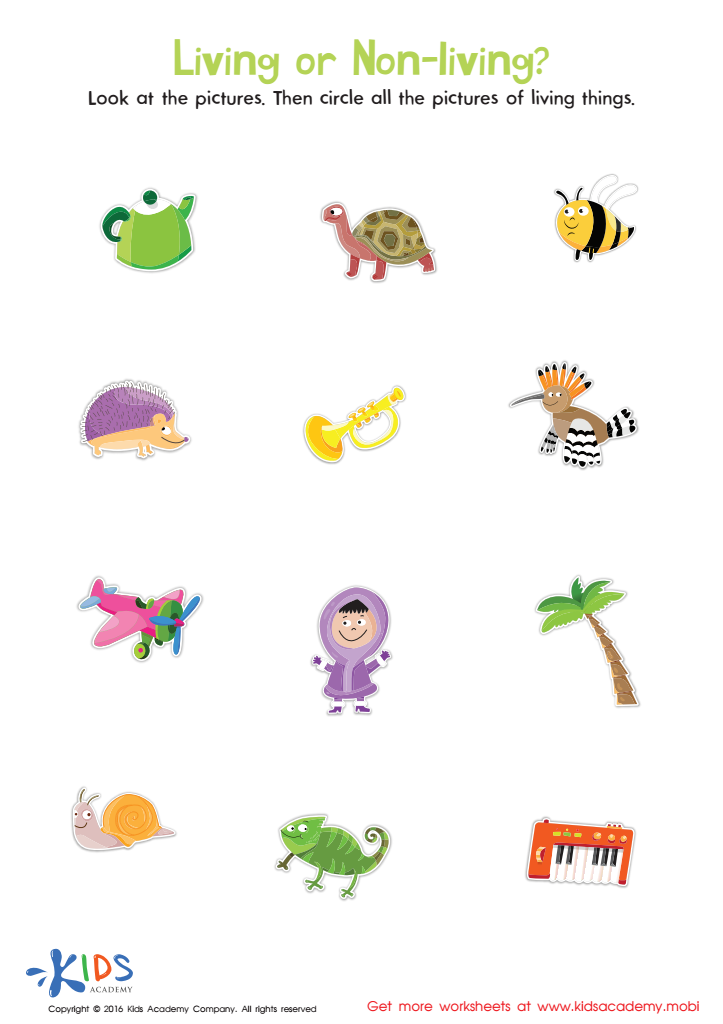
Identifying Living and Non–living Things Sorting Worksheet
 Assign to My Students
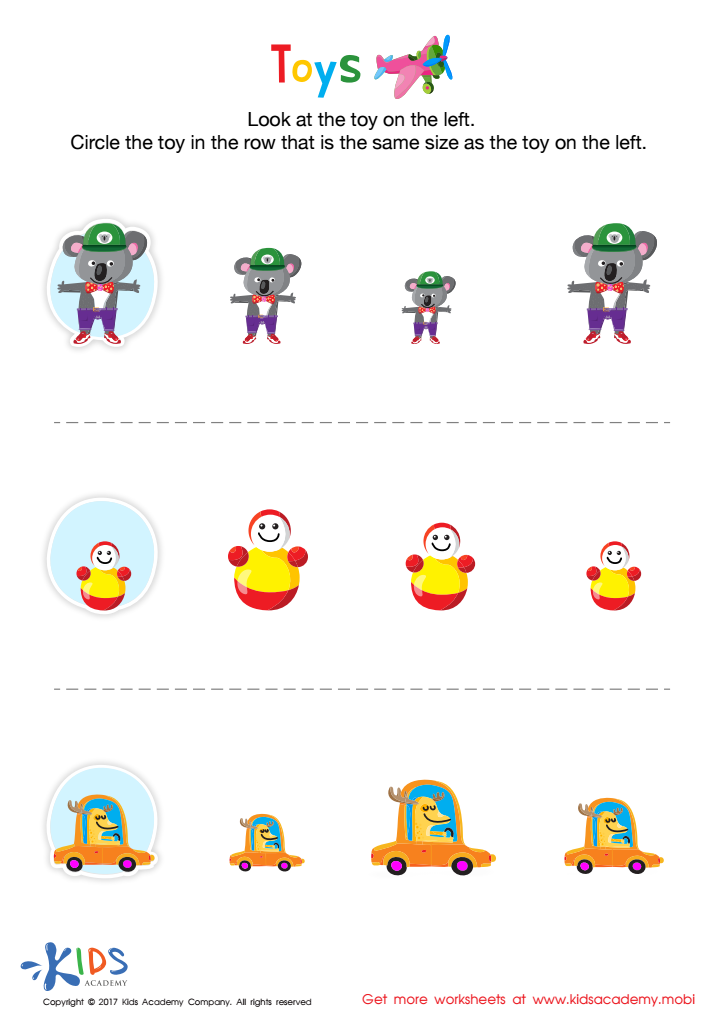
Matching: Classifying Toys by Size Worksheet
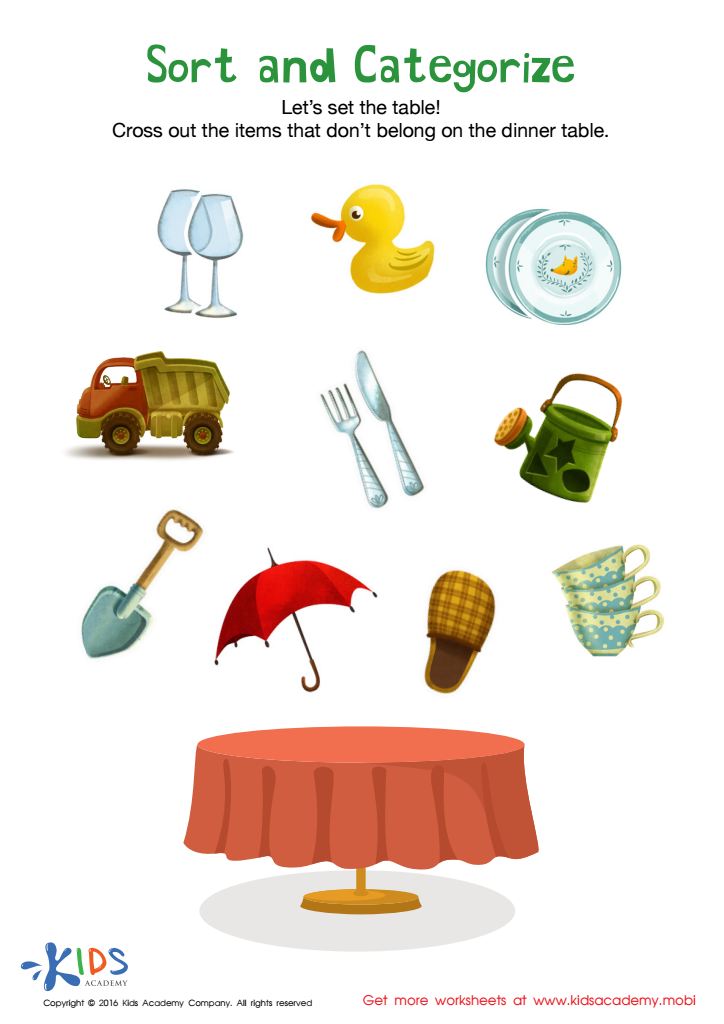
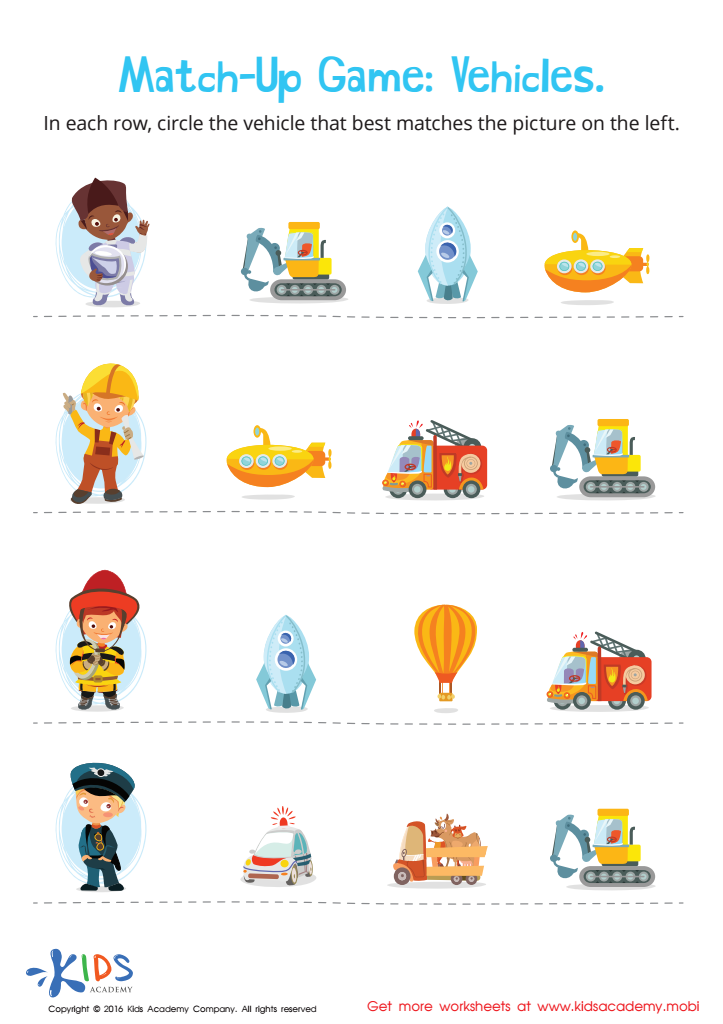
Vehicles Worksheet
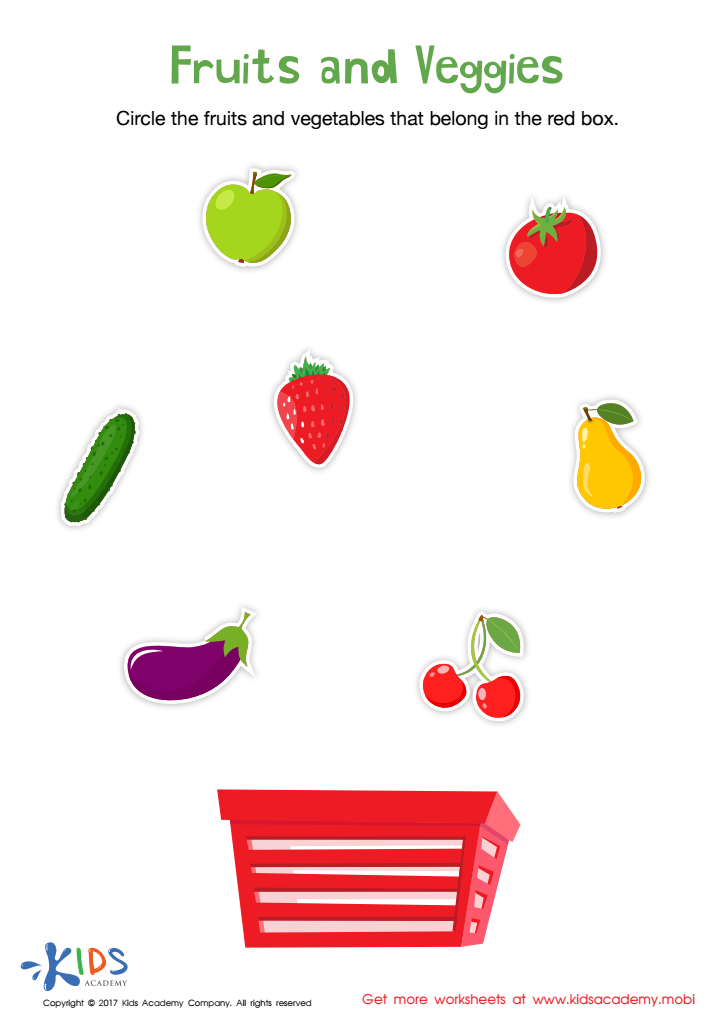
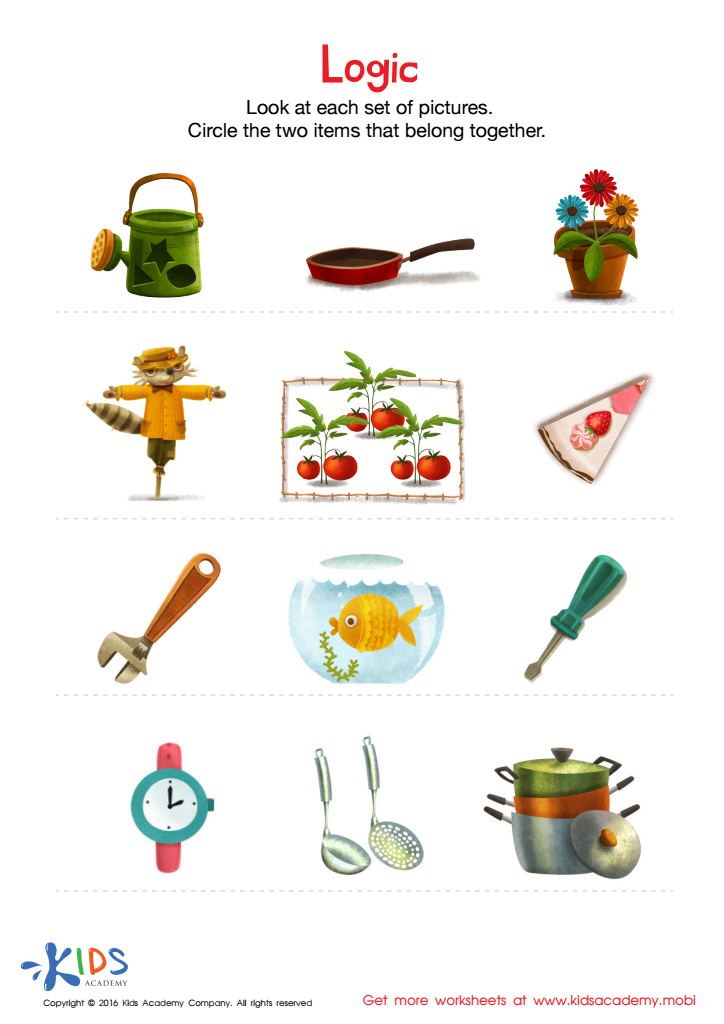
Logic Game Sorting Worksheet








Categorization skills, particularly normal matching, are vital for the cognitive and social development of children aged 3-4. During this stage, children start to make sense of the world around them by grouping objects based on shared characteristics, such as color, shape, or size. This process not only helps them organize their environment but also enhances their language development, as they learn to describe and classify items.
For parents and teachers, recognizing the importance of normal matching fosters an understanding of foundational learning concepts. It aids in the development of critical thinking and problem-solving skills, as children learn to discern relationships among different items. Moreover, categorization lays the groundwork for more advanced skills like comparison and contrasting, which are essential for later academic success in subjects like math and science.
Additionally, engaging in categorization activities can promote social interaction, encouraging children to work together, share ideas, and communicate. This nurtures their emotional development and collaboration skills. Overall, supporting the growth of categorization abilities in young children enriches their learning experience, making it crucial for caregivers and educators to prioritize these skills in play and educational settings.








