
Spelling practice Normal Alphabet Worksheets for Ages 3-7
45 filtered results
Difficulty Level
Grade
Age
-
From - To
Subject
Activity
Standards
Introducing our Spelling Practice Normal Alphabet Worksheets for Ages 3-7, designed to make learning fun and effective for young learners. These engaging, printable worksheets help children master their ABCs and develop essential spelling skills through playful activities and exercises. Tailored to suit early childhood learning stages, our worksheets cover letter recognition, word formation, and phonics. Perfect for educators and parents alike, these resources support children's reading and writing journeys, enhancing their confidence and boosting their academic progress. Download the Spelling Practice Normal Alphabet Worksheets today and set your child on the path to literacy success!
Favorites
With answer key
Interactive
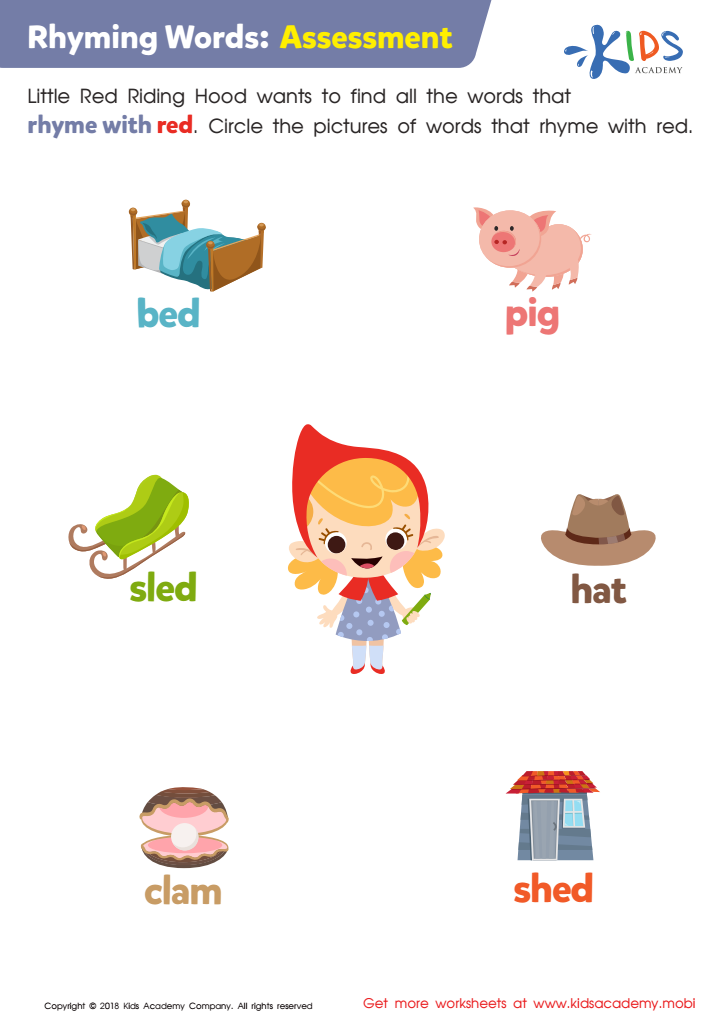
Rhyming Words: Assessment Worksheet
Help Little Red Riding Hood find rhyming words with "red". Download and print this worksheet. Have your child circle the rhyming words and pictures. Get them to say each word out loud and compare it to the word "red". When they're done, review the answers and talk about any words that don't rhyme.
 Assign to My Students
Rhyming Words: Assessment Worksheet
Worksheet
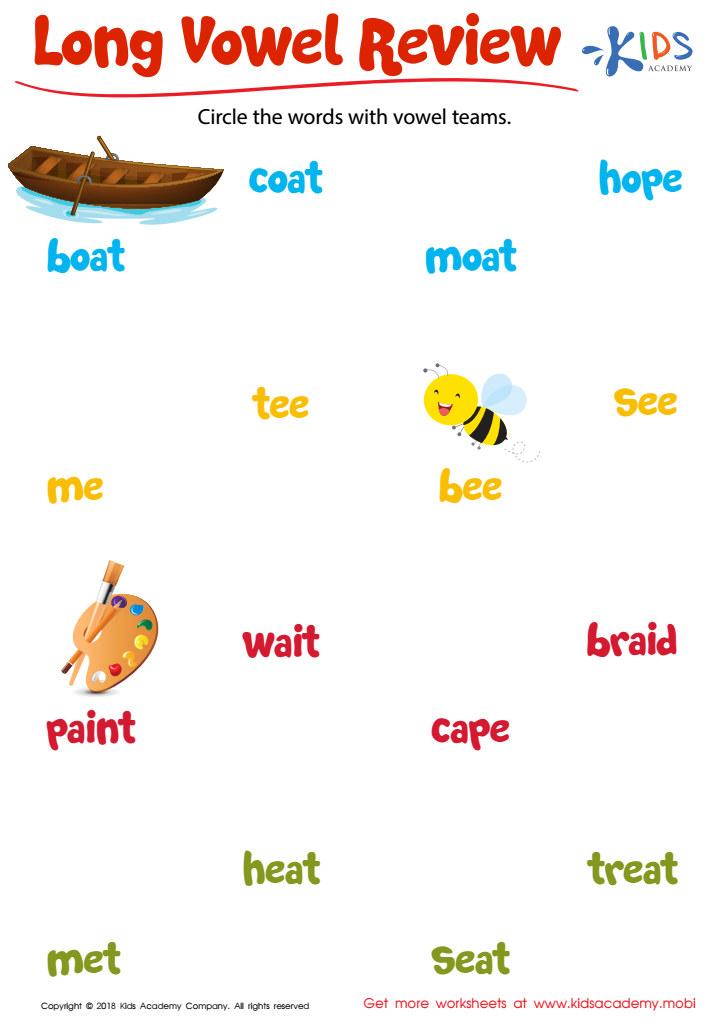
Long Vowel Review Worksheet
Vowel teams like "ea" and "ai" help us make words, and understanding these patterns aids emerging readers in becoming more fluent. This review worksheet has students finding words with vowel teams that make the long vowel sound, and helps them recognize high-frequency words.
Long Vowel Review Worksheet
Worksheet
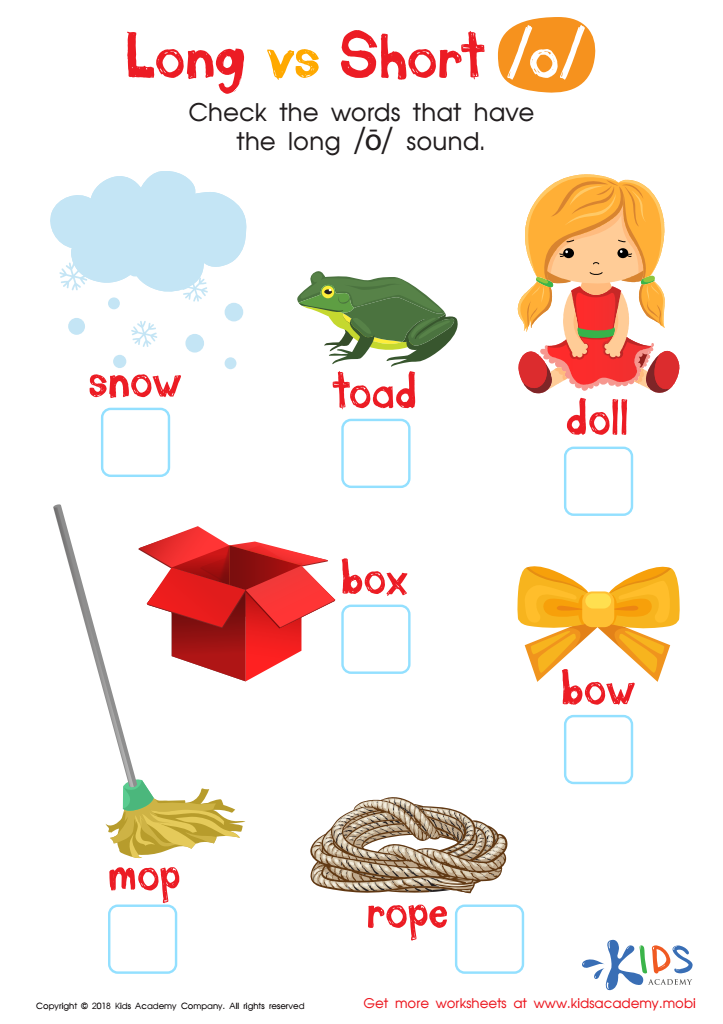
Long vs Short O Reading Worksheet
Help your child learn to identify the long and short «o» sound with this colourful worksheet. Guide them as they spot words with the long or short «o» sound. With practice, your child will find it easier to tell the difference between the two.
Long vs Short O Reading Worksheet
Worksheet
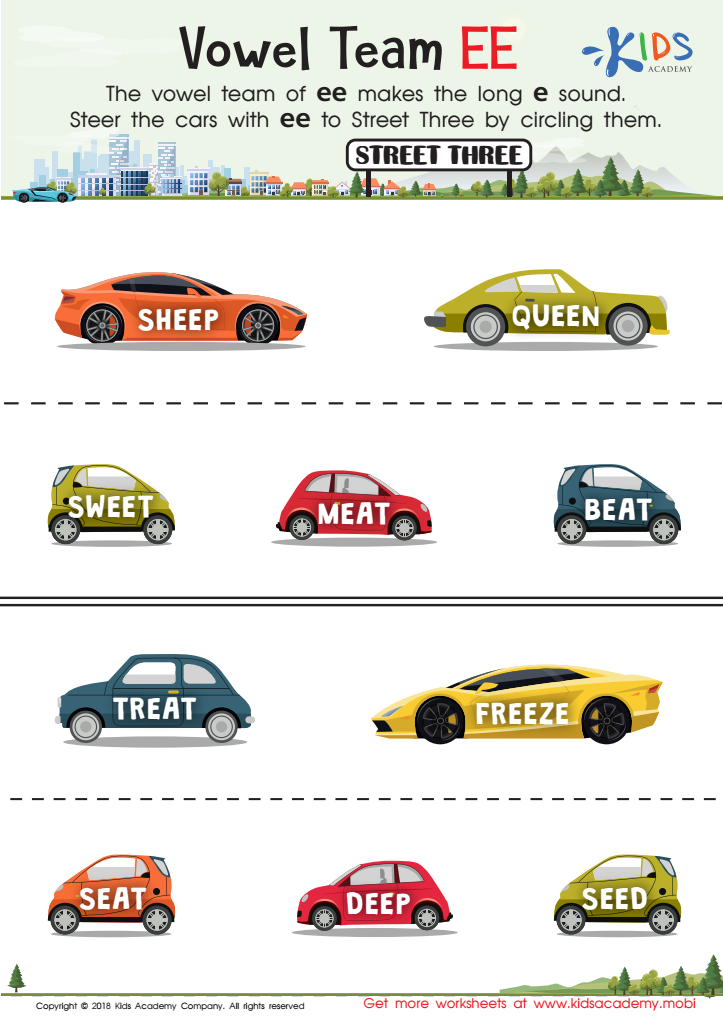
Vowel team ee Worksheet
Revised:
Kids will have a blast steering cars with the -ee digraph towards Street Three! This fast-paced worksheet reinforces that -ee makes the long -e sound while boosting fine motor skills. Kids will love the bright colors and stay engaged with this fun printable. Get ready for hours of off-road excitement!
Vowel team ee Worksheet
Worksheet
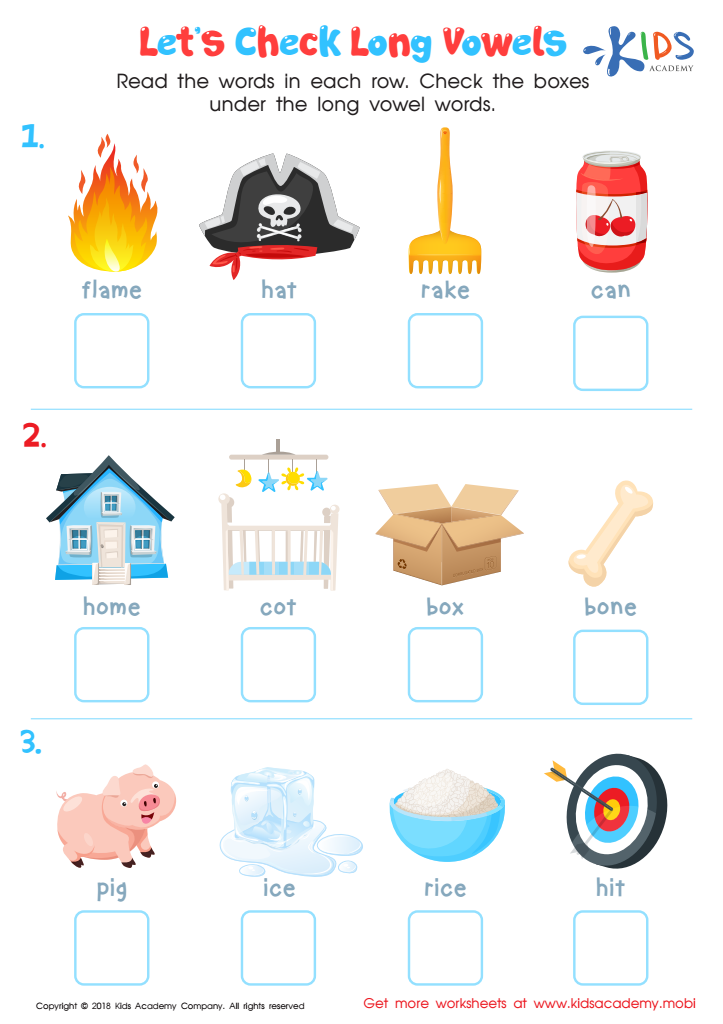
Let's Check Long Vowels: Assessment Worksheet
This worksheet helps your child identify objects and learn long vowel sounds. Ask them to say the names of the four objects in each row. Then, help them check the boxes to confirm they know the long vowel sounds. This will help them develop their reading skills.
Let's Check Long Vowels: Assessment Worksheet
Worksheet
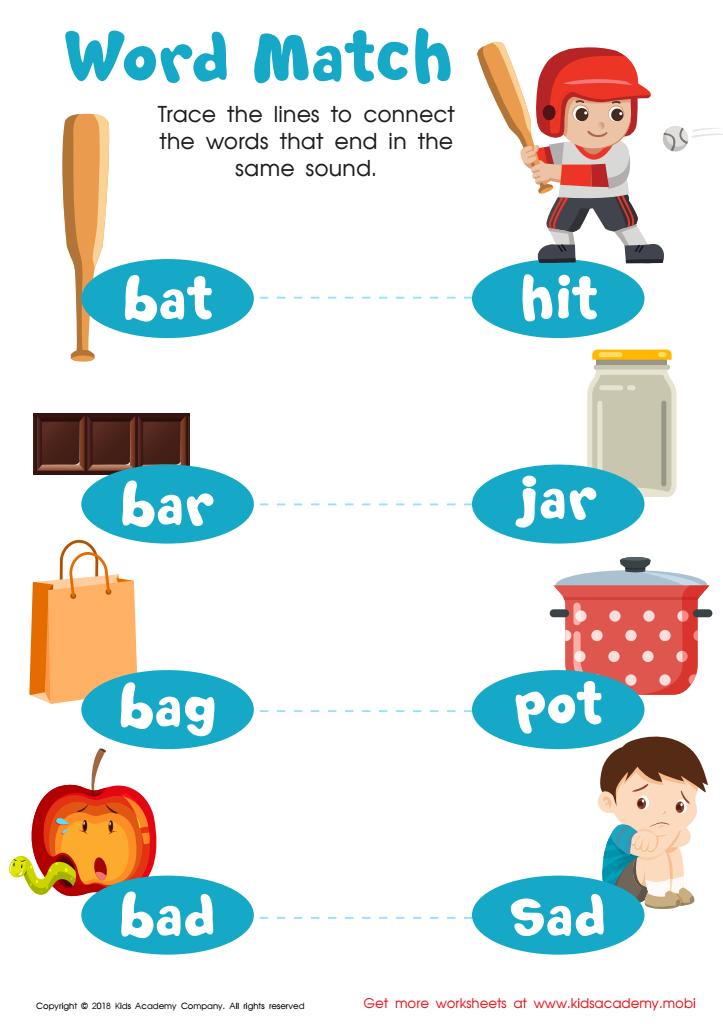
Word Match Reading Worksheet
This printout helps children learn to read fluently by connecting words with the same sound. Colorful pictures aid understanding and context for kindergarten-level students. Tracing lines, they learn to identify the sounds made by letters of the alphabet and deepen their knowledge of phonics.
Word Match Reading Worksheet
Worksheet
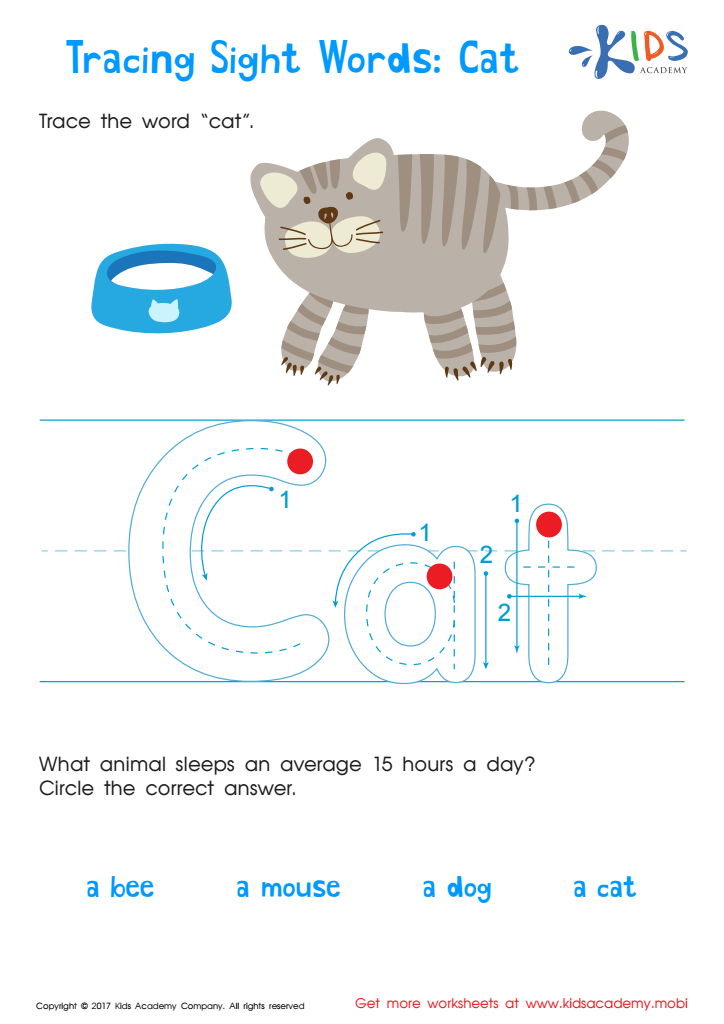
Cat Printable Sight Words Worksheet
Encourage your child's literacy with this fun sight words worksheet: cat PDF! It helps build a solid foundation for reading, featuring activities such as reading and tracing the word cat, and finding it amongst other sight words. With its cute cat, Kids Academy makes learning to read a delight!
Cat Printable Sight Words Worksheet
Worksheet
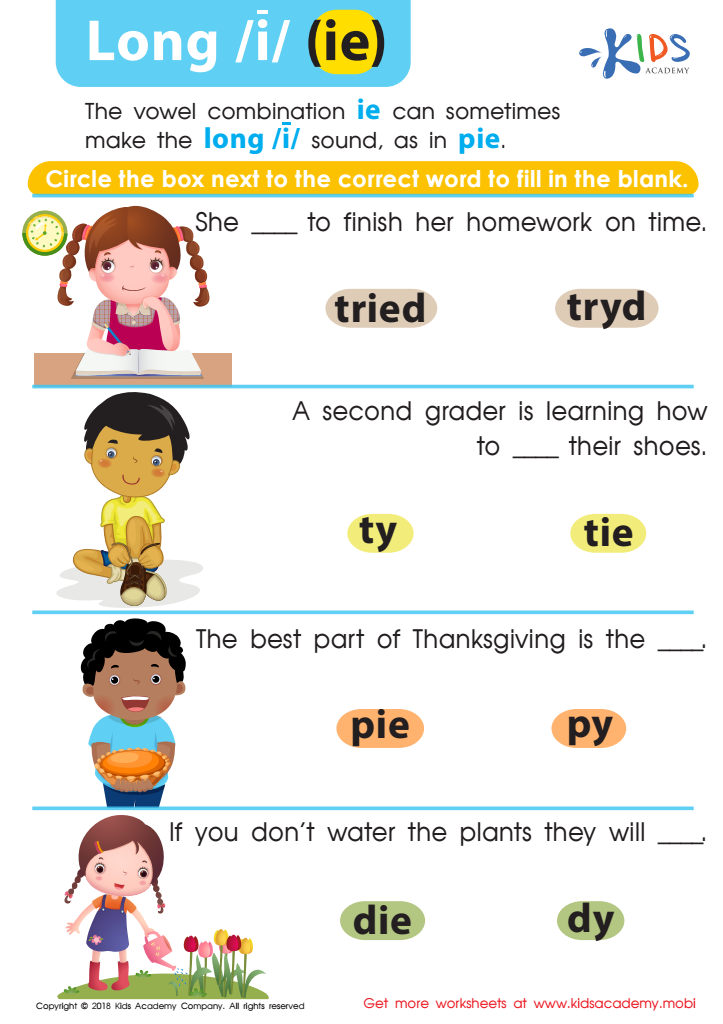
Reading: Long I and IE Worksheet
Have your child list words with the long /i/ sound (eg. 'pie'), and if needed, help them out with some examples. Read each word in the worksheet together and check their answer by having them circle the correct word.
Reading: Long I and IE Worksheet
Worksheet
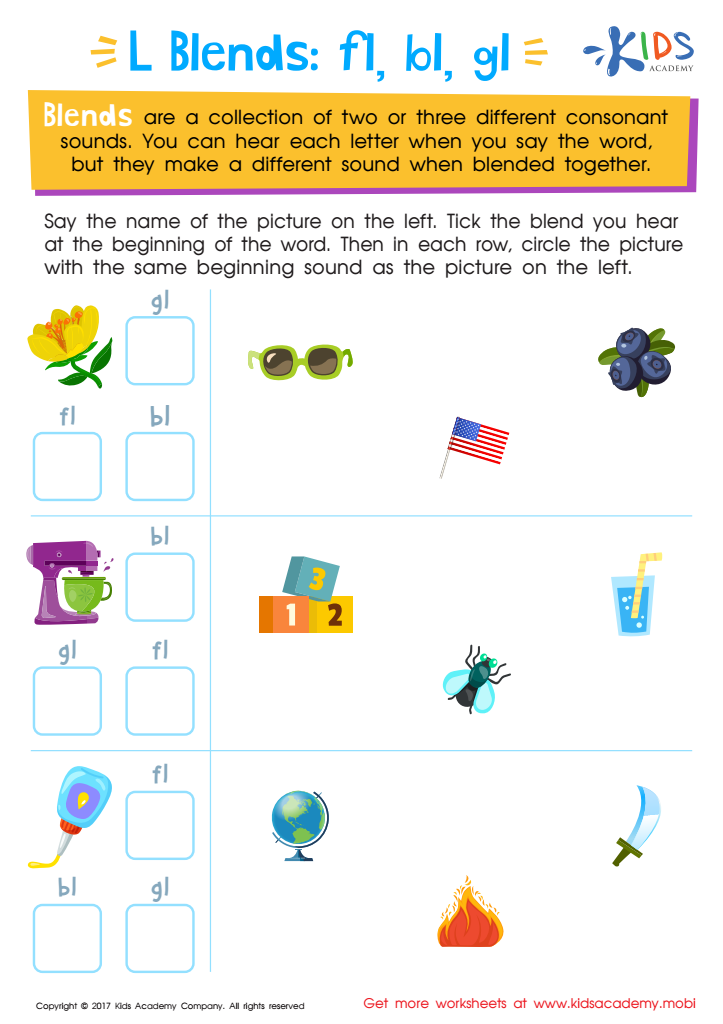
Blending Consonants: "Fl", "Bl" and "Gl" Printable
Help your child master consonant blends Fl, Bl, and Gl with this printable worksheet. Find words associated with the pictures and learn to better understand the difference between consonant blends. Vibrant images motivate and aid in learning. Download now for improved phonics success!
Blending Consonants: "Fl", "Bl" and "Gl" Printable
Worksheet
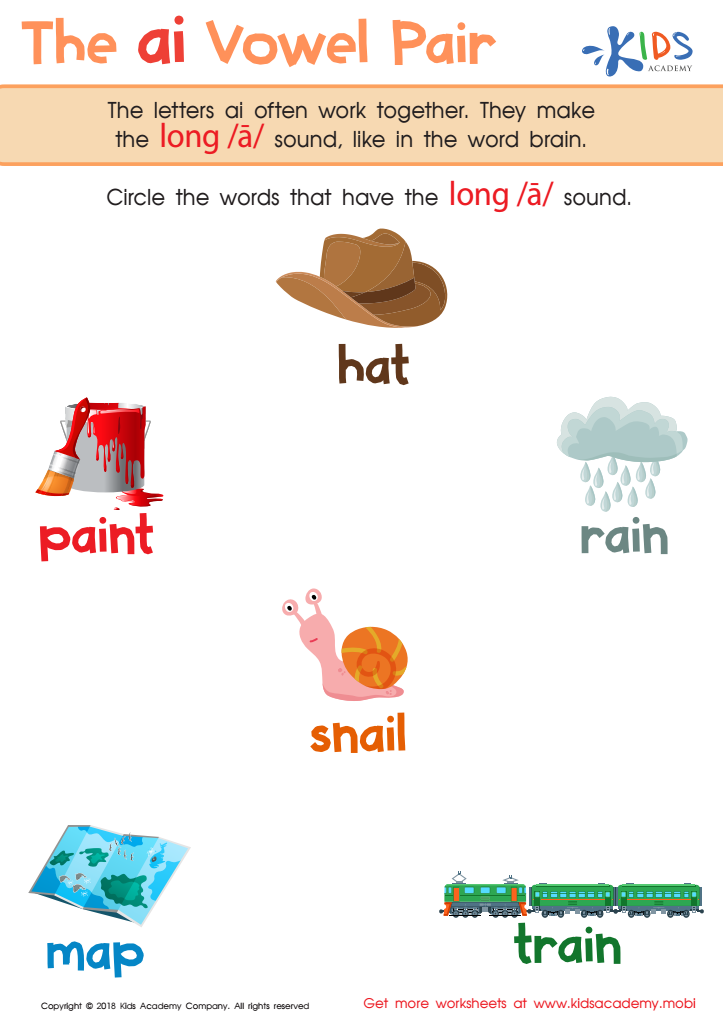
The AI Vowel Pair Worksheet
Vowel pairs make different sounds than individual letters. The 'ai' combination often forms the long /a/ sound, like in 'brain' and 'strain'. Get your kids to look at the pictures in the worksheet, identify each and say the name aloud. Help them circle the words with the long /a/ sound.
The AI Vowel Pair Worksheet
Worksheet
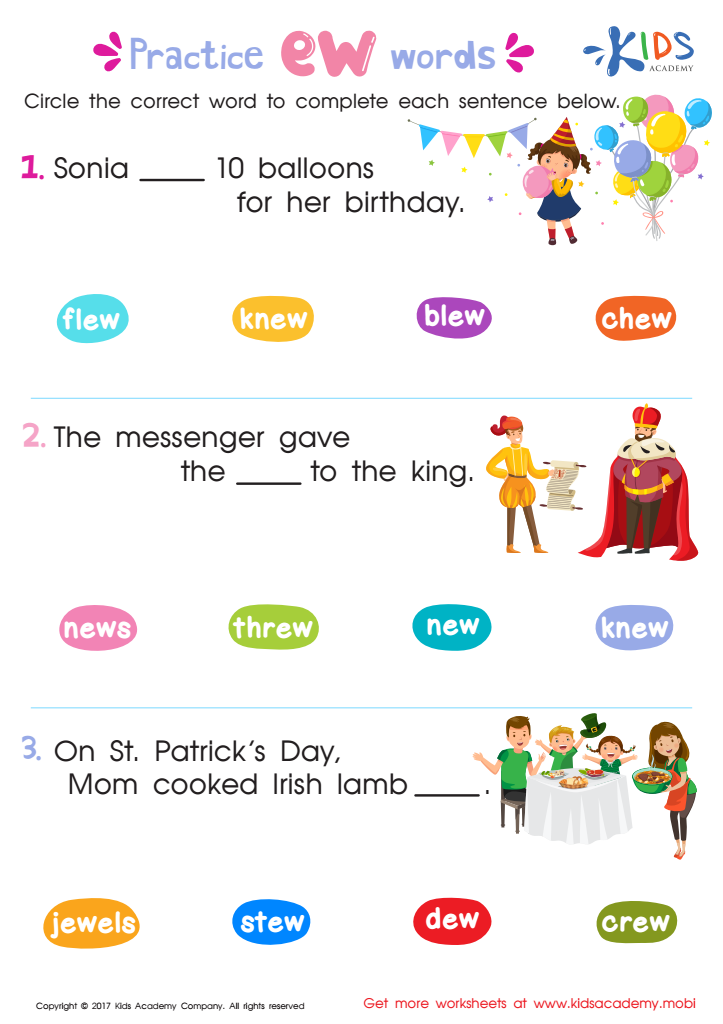
EW Words Worksheet
Practice the diphthong ew and boost your child's vocabulary with this fun ew words worksheet! Filled with illustrations, it will help your child hone their reading and spelling skills. Plus, the tricky words will make it both enjoyable and rewarding!
EW Words Worksheet
Worksheet
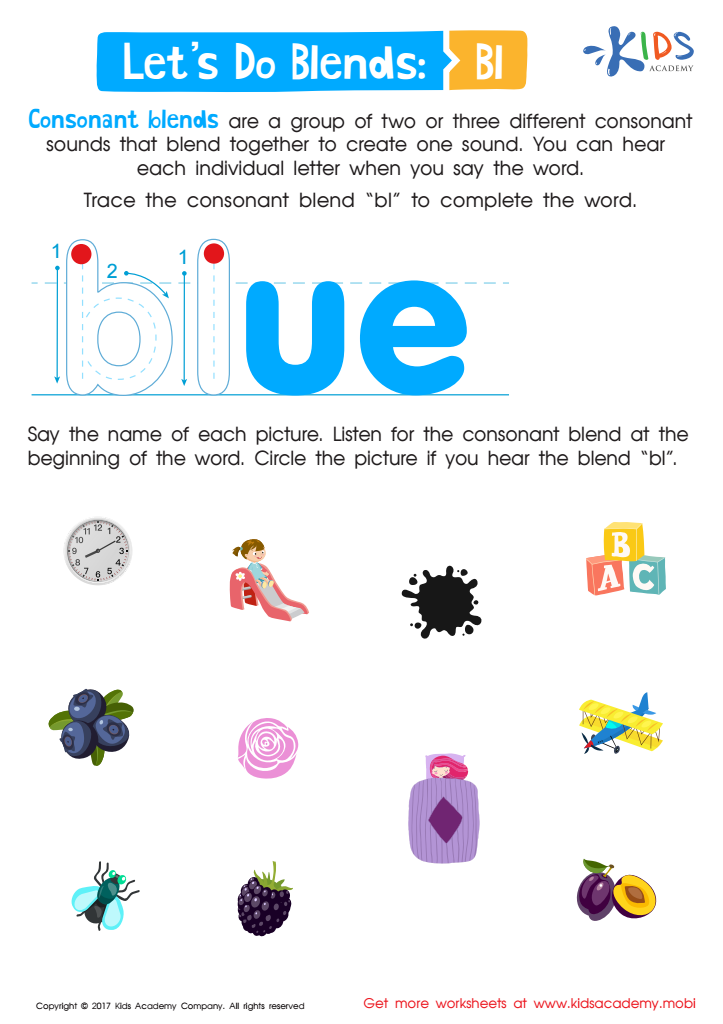
Beginning Blends: "Bl" Words Worksheet
Help your child master their phonics skills with this fun, focused consonant blend worksheet! They'll practice spelling, reading, and sounding out the words, which will help their speech and other skills. The worksheet focuses on "Bl" but extend your child's learning by finding other blends on the page. After completion, they'll be closer to phonics mastery!
Beginning Blends: "Bl" Words Worksheet
Worksheet
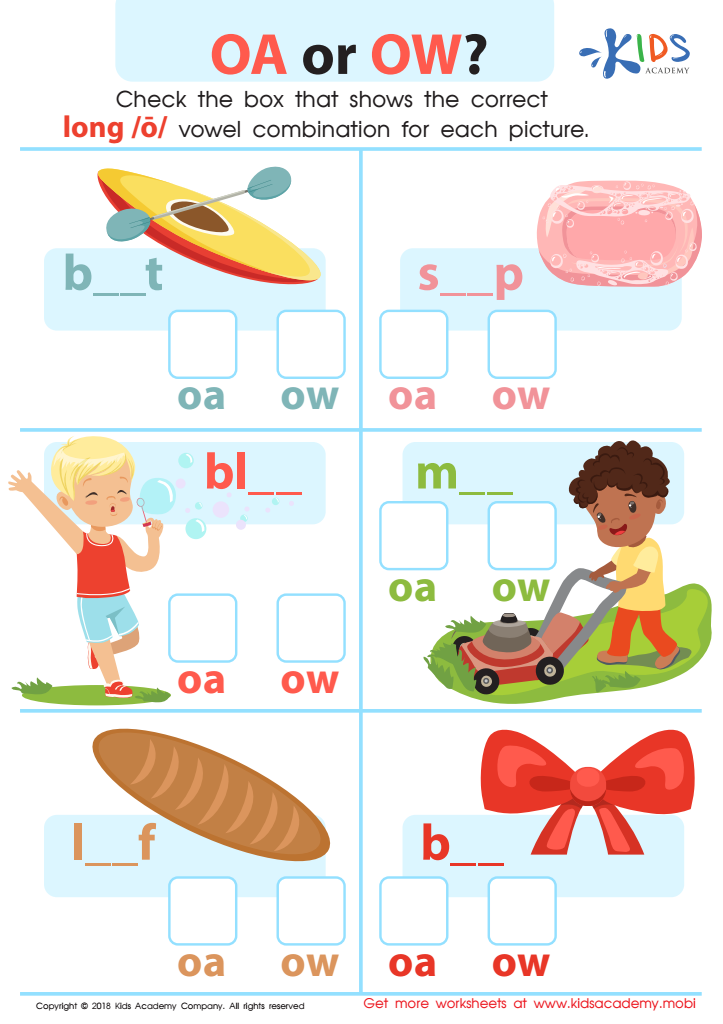
Reading: OA or OW Worksheet
This printable worksheet helps young and emergent readers with decoding words and understanding digraphs (two letters with one sound). It requires students to complete the spelling for each word based on the picture, focusing on /oa/ and /ow/ spellings. It's ideal for a reading classroom and for spelling practice.
Reading: OA or OW Worksheet
Worksheet
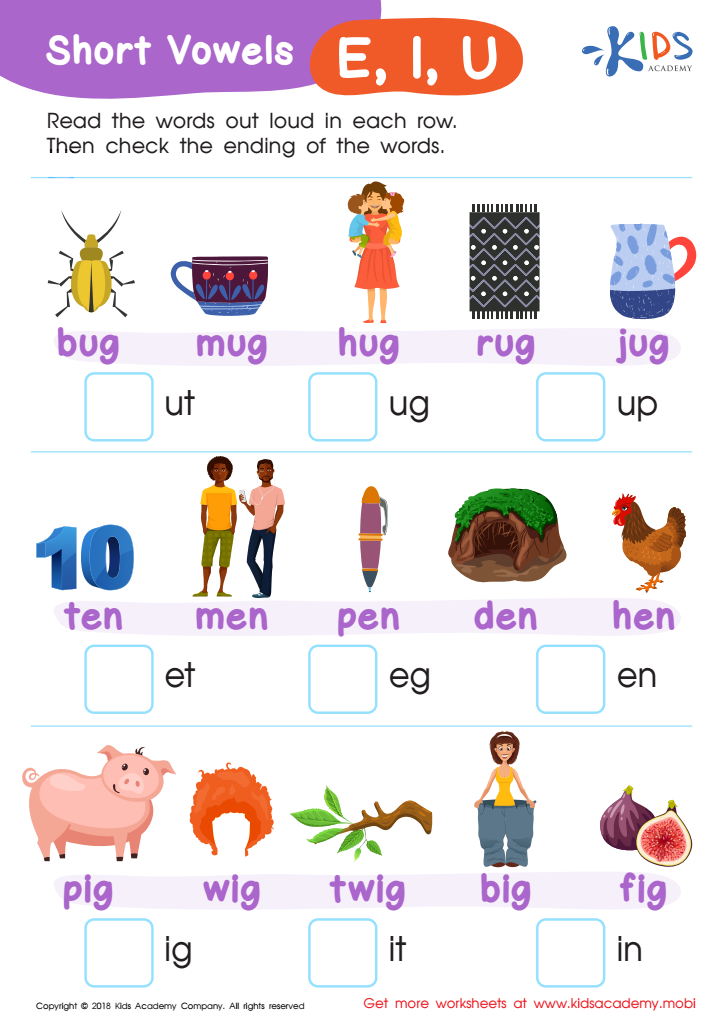
Short Vowels /e/, /i/, and /u/ Worksheet
Your emergent reader can have fun while practicing their short vowel sounds with this free, brightly colored worksheet. They'll identify one-syllable words by their pictures, then match the correct ending for each. They'll gain an understanding of how short vowel sounds vary in closed syllables with different endings, without even realizing it!
Short Vowels /e/, /i/, and /u/ Worksheet
Worksheet
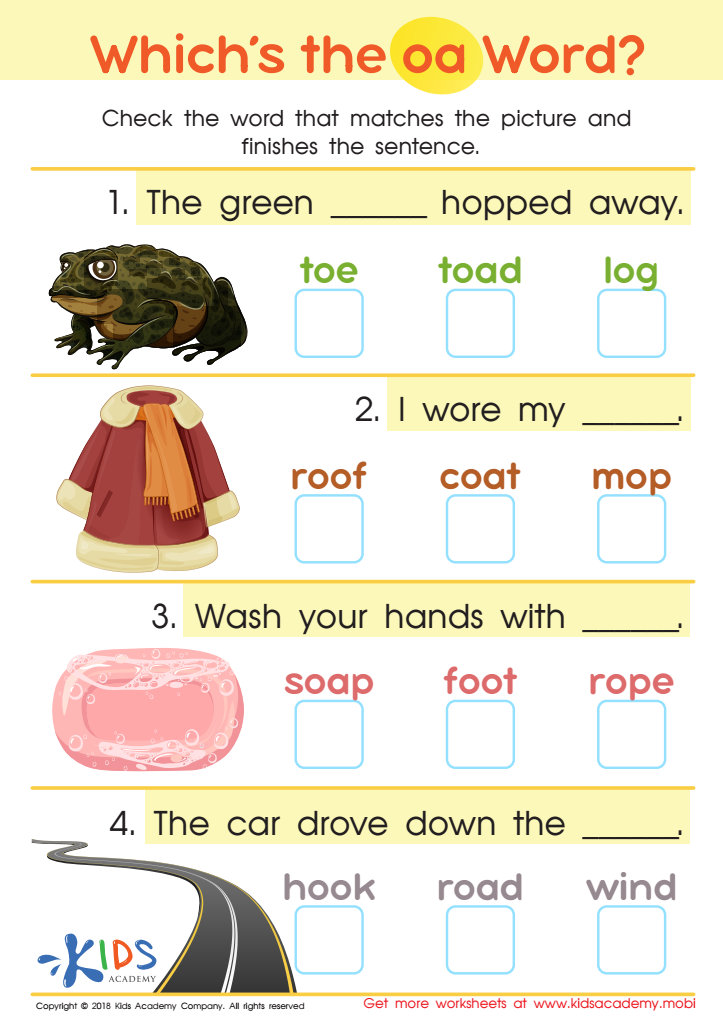
Which's the OA Word? Worksheet
Encourage your kids to complete this fun worksheet. Ask them to identify the animals and objects in the pictures. Read the incomplete sentences aloud, and then find the correct word to finish the sentence. Check their work.
Which's the OA Word? Worksheet
Worksheet
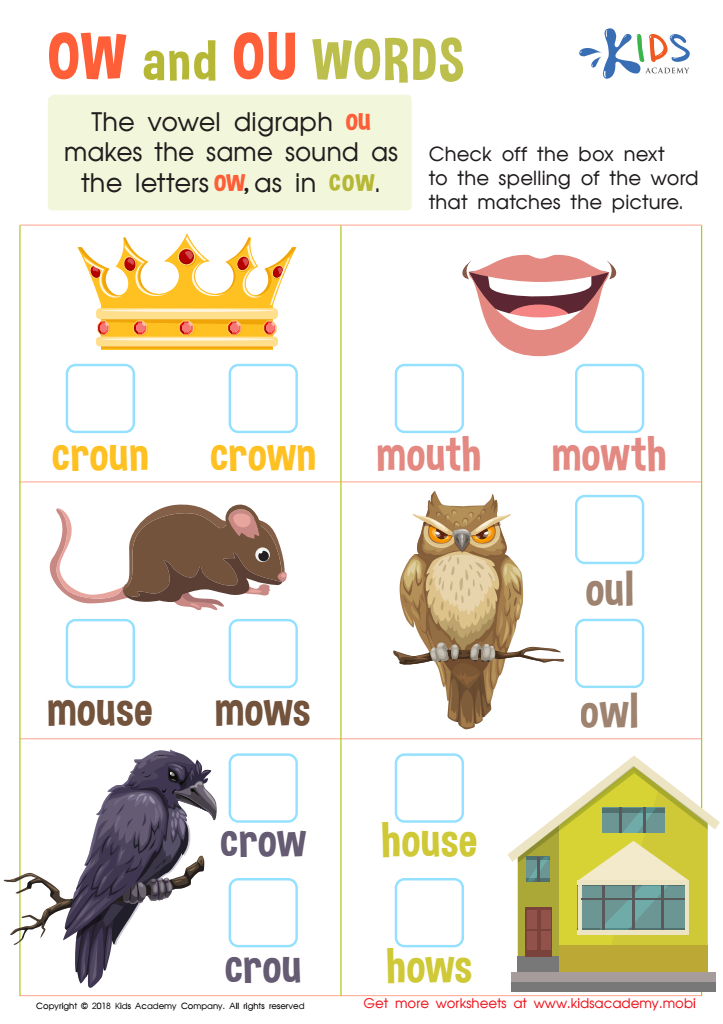
Reading: OW and OU Words Worksheet
Help your kids learn phonetics! Explain the different sounds and long/short variations. Emphasize that some vowel sounds are the same, e.g. ou = ow in cow. For practice, have them read aloud the words in the worksheet and check the box next to the spelling that matches the picture.
Reading: OW and OU Words Worksheet
Worksheet
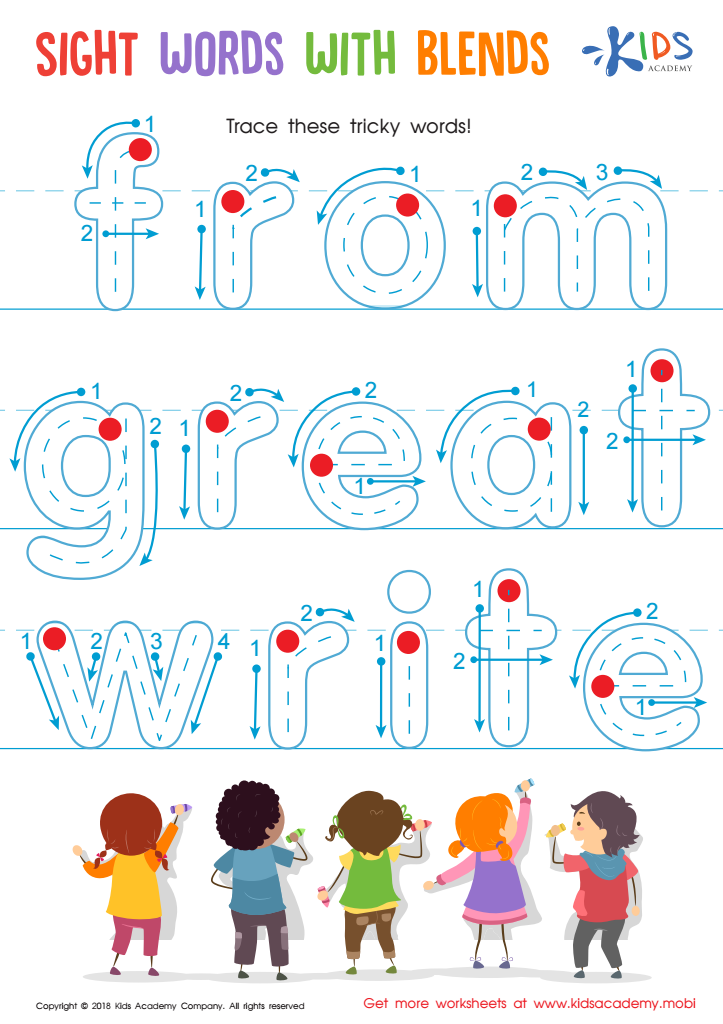
Sight Words with Blends Worksheet
This free PDF lets your children trace and write sight words with tricky blends. The guide numbers help them start from the top, building fine motor skills and enhancing sight word vocab. It's a great way to give your kids a solid foundation for reading!
Sight Words with Blends Worksheet
Worksheet
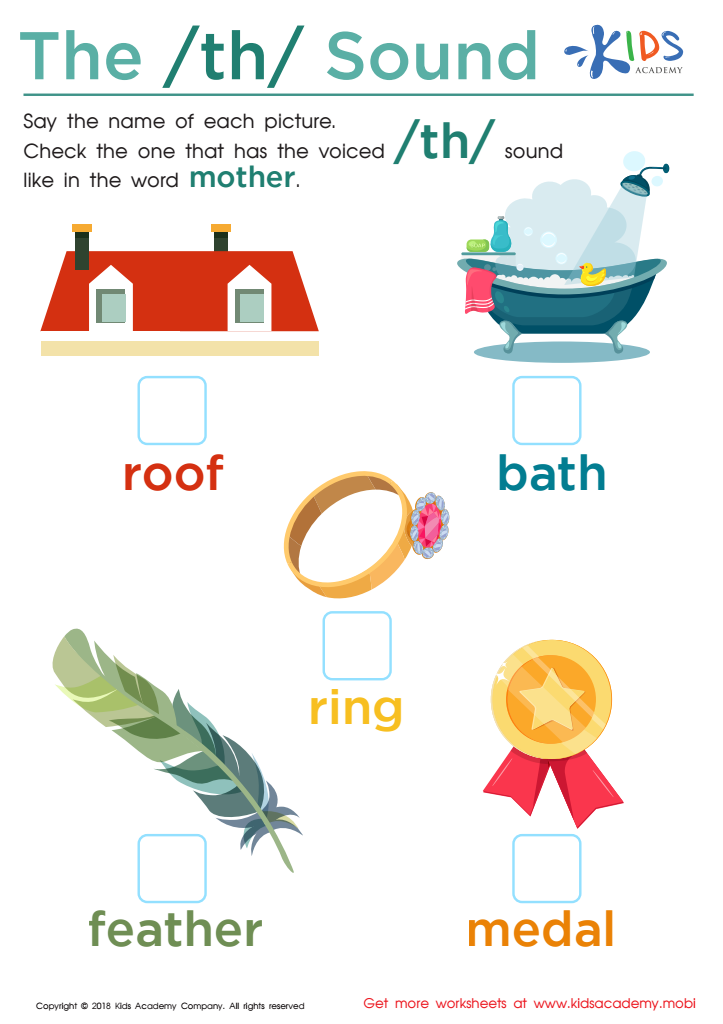
The /th/ Sound Worksheet
Confuse your students no more: have them use this worksheet to understand the /th/ sound and its two variants. With pictures, ask them to say the name of each one. Help them identify the voiced /th/ sound, like in 'mother', by having them say it aloud. Download the pdf to get started.
The /th/ Sound Worksheet
Worksheet
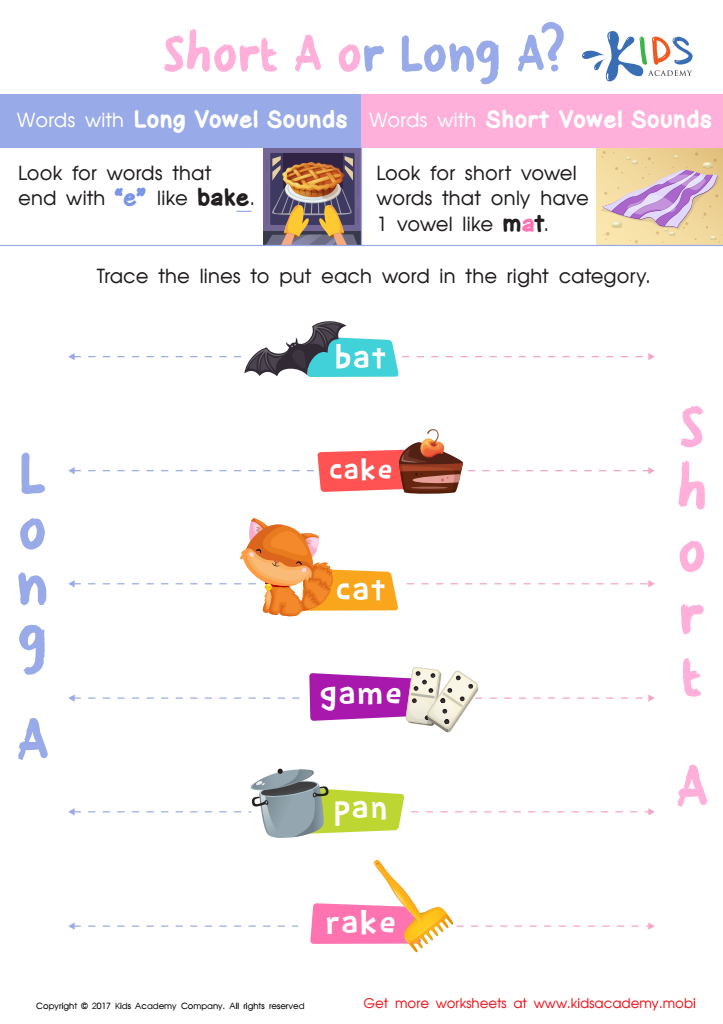
Short /a/ or Long /a/? Worksheet
Phonetics and its sounds can be tricky for kids. They can read and spell, but long and short vowels might be difficult. Use this phonetic worksheet to teach them to identify words with the short /a/ or long /a/ sound. Kids have to find the words ending with 'e' (long sound) and words with one vowel (short sound, e.g. 'mat'). Colourful printout makes it fun and easy to learn!
Short /a/ or Long /a/? Worksheet
Worksheet
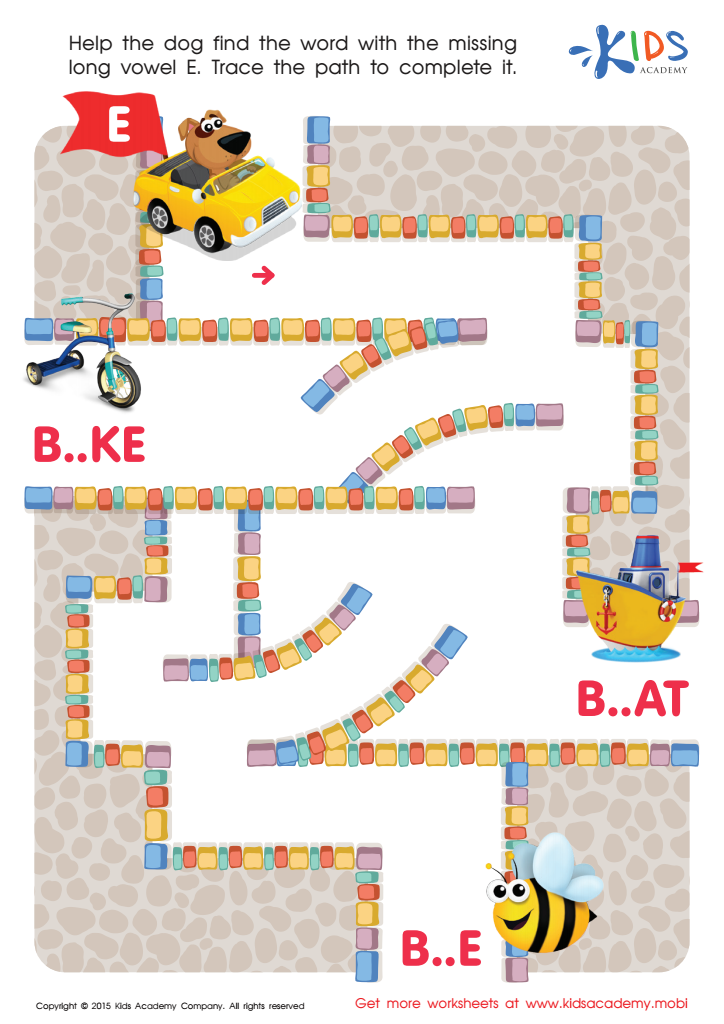
Long Vowel Sound E Worksheet
Practice distinguishing long and short vowel sound E with this free printable! Kids must complete the word “bee” by tracing the maze and adding the missing letter E. Remind them to say the word aloud to help sharpen their phonics ear. Get more phonics fun with the vowel sound E here.
Long Vowel Sound E Worksheet
Worksheet
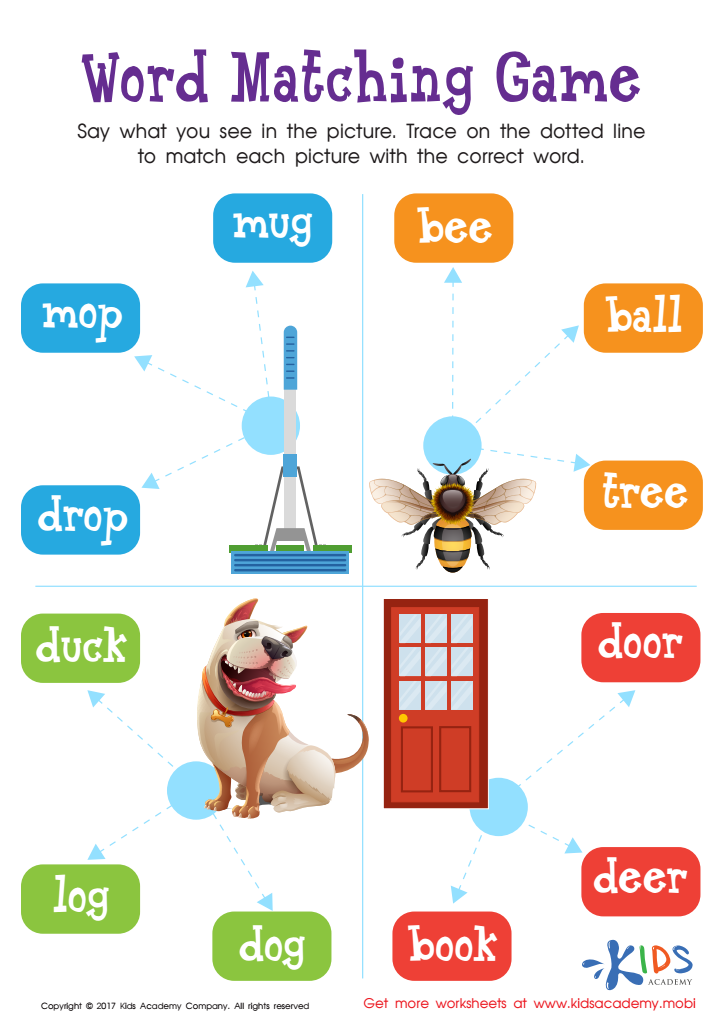
Word Matching Game Worksheet
Help your early reader develop prereading skills with this fun matching worksheet! Visual cues help them learn sight words, decode words in word families, and identify phonetic patterns. They'll practice discerning sounds past initial consonants while saying the name of the picture and finding the matching word - and reading at the same time!
Word Matching Game Worksheet
Worksheet
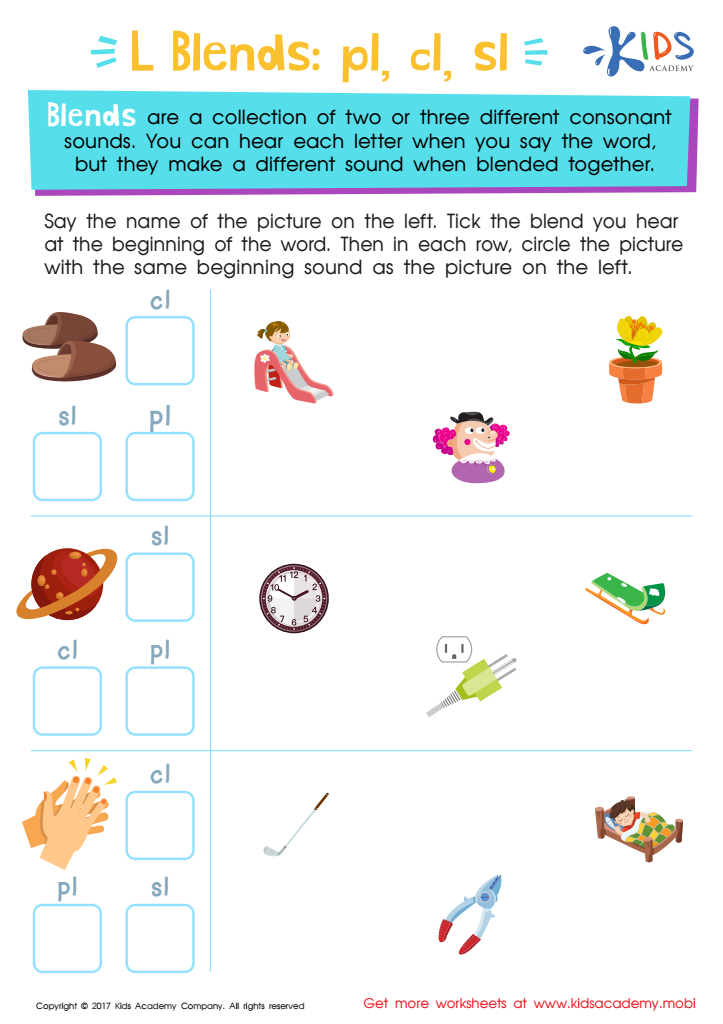
L Blends: "Pl", "Cl" and "Sl" Printable
This printable worksheet will help your child recognize and identify the Pl, Cl, and Sl consonant blends, sound them out, and identify them in print. Improve your child's reading and writing skills with fun and colorful phonics practice!
L Blends: "Pl", "Cl" and "Sl" Printable
Worksheet
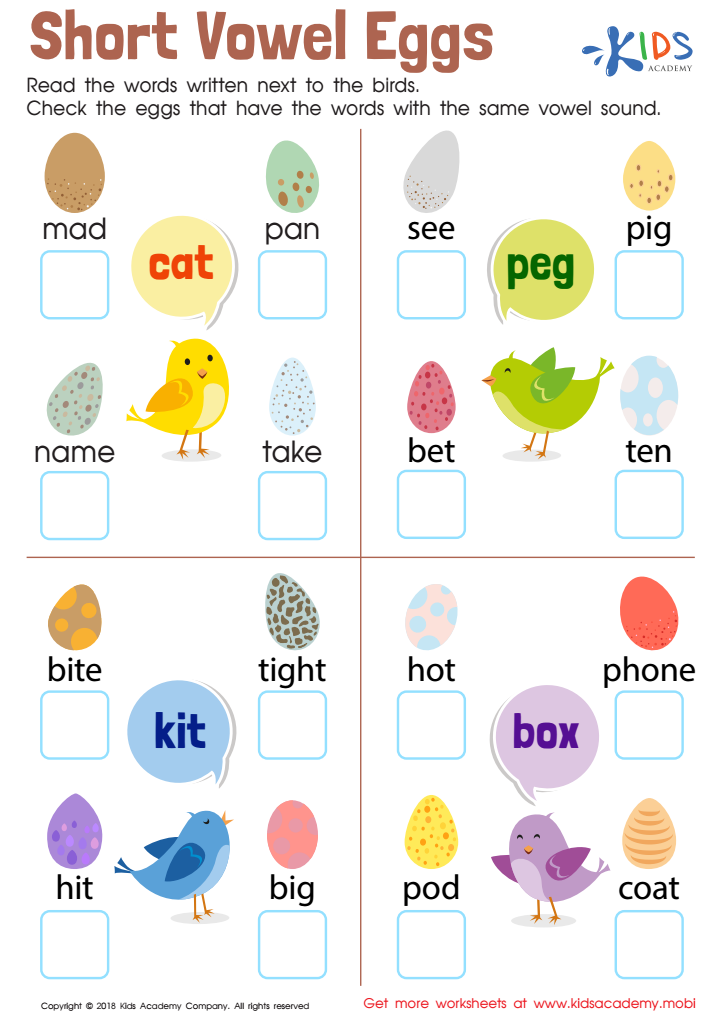
Short Vowel Eggs Worksheet
Your students will love helping these birdies pick the short vowel eggs! Have them read the words in the thought bubbles, then check off the boxes with the same short vowel sounds. The bright colors of this free Worksheet will draw them in and get them practicing their vowels!
Short Vowel Eggs Worksheet
Worksheet
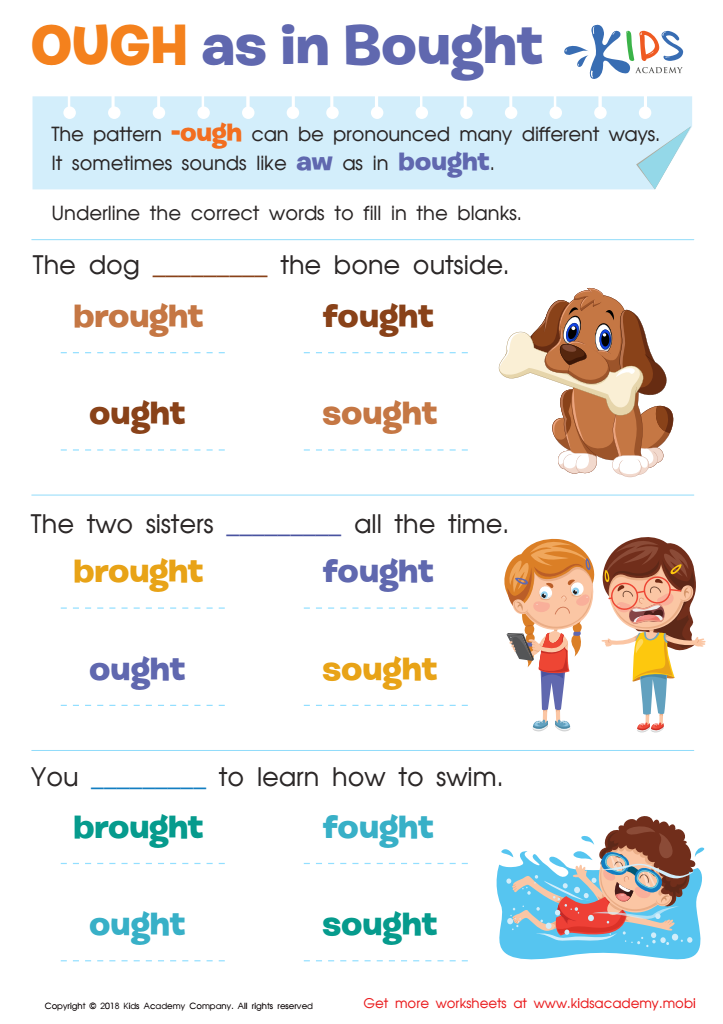
OUGH as in Bought Worksheet
Use this worksheet to teach your child the different pronunciations of -ough. For example, -ough can sound like ‘aw’ in ‘bought’. Ask your child to give more examples and help them underline the correct answers to fill in the blanks.
OUGH as in Bought Worksheet
Worksheet
Join Kids Academy for Free
Who is primarily going to use this learning content?








Spelling practice with a normal alphabet for children ages 3-7 is foundational to their future learning and communication skills. At this age, children's brains are highly receptive to language acquisition. Providing young learners with consistent spelling practice helps to solidify their understanding of letter-sound relationships, which is crucial for both reading and writing. Mastering the basics of the alphabet and how letters form words lays the groundwork for their literacy development.
Furthermore, spelling practice enhances a child's phonemic awareness, the ability to hear and manipulate individual sounds in words. This skill is a critical component of effective reading instruction. As children begin to decode words accurately, their confidence grows, forging a positive relationship with learning.
Spelling practice also promotes cognitive development by encouraging children to recognize patterns and sequences in language. It sharpens memory, attention to detail, and problem-solving skills. Moreover, correctly learned spelling reduces confusion and miscommunication, boosting children's ability to express their ideas clearly in both verbal and written forms.
Through fun and engaging activities, both parents and teachers can make spelling practice an enjoyable experience, fostering a lifelong love of learning. Early intervention and consistent practice prepare young minds for more advanced literacy concepts, ensuring academic success across all subjects.







