Comparing sizes Normal Worksheets for Ages 3-7
3 filtered results
-
From - To
Enhance your child's understanding of sizes with our engaging "Comparing Sizes Normal Worksheets" designed for ages 3-7. Perfectly tailored for early learners, these worksheets help kids distinguish between big and small, tall and short, through fun and interactive activities. Featuring vibrant illustrations and clear instructions, our printable worksheets foster critical cognitive skills and boost observational abilities. Teachers and parents can seamlessly integrate these activities into their lesson plans to make learning both enjoyable and educational. Boost your child's confidence in size comparison and watch them master this foundational skill with ease, setting the stage for successful learning journeys ahead.
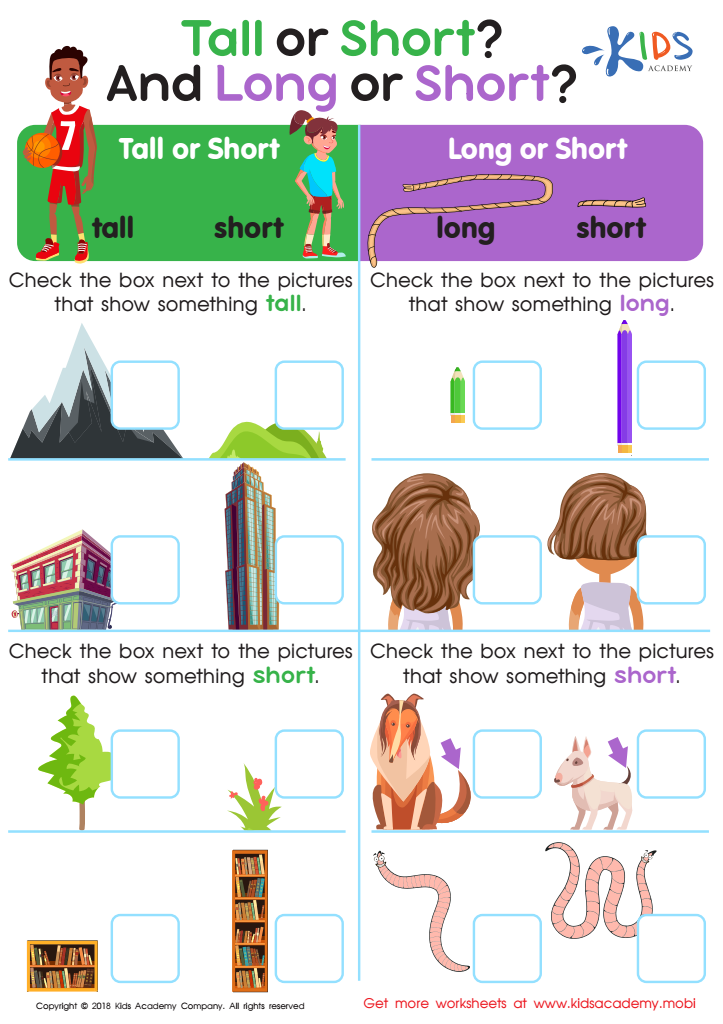
Tall or Short and Long or Short? Worksheet
 Assign to My Students
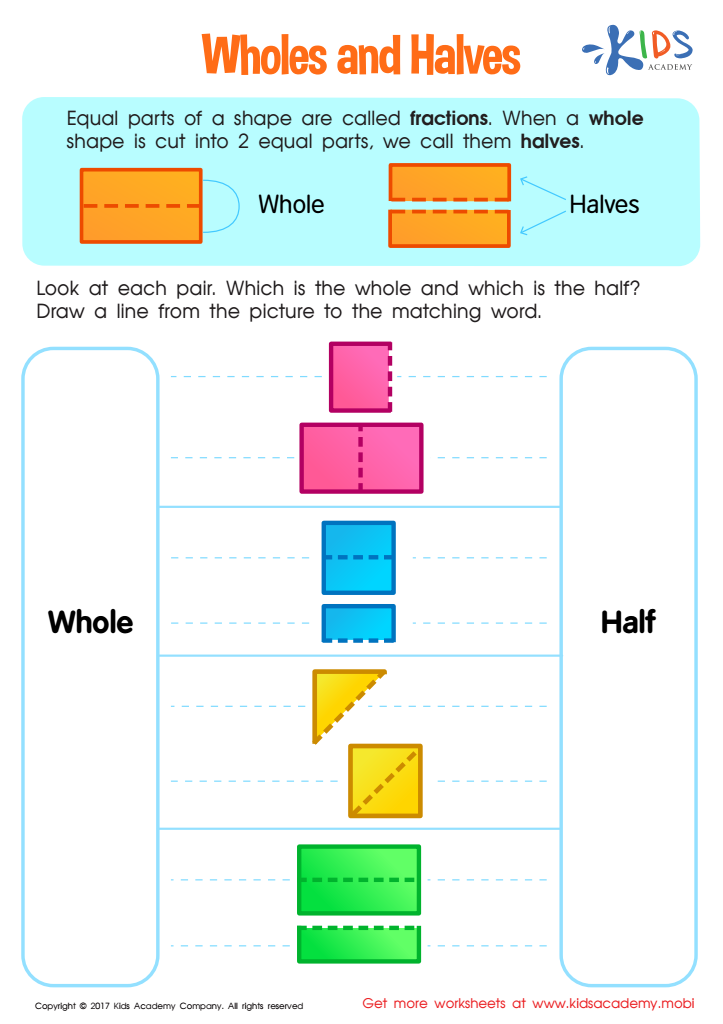
Wholes and Halves Worksheet
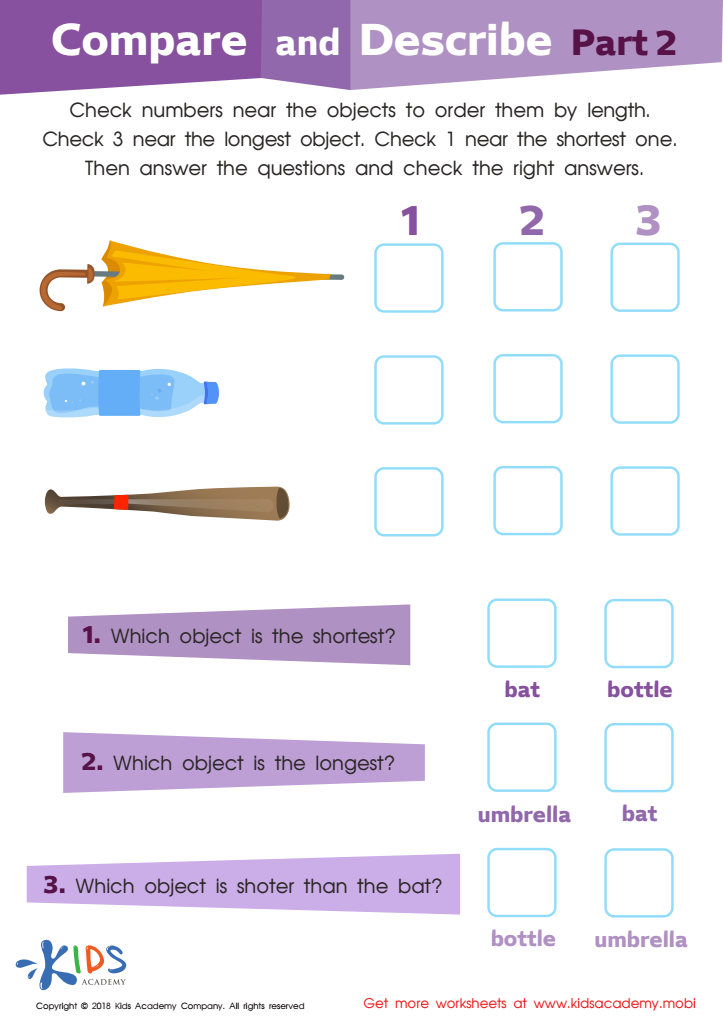
Compare and Describe: Part 2 Worksheet







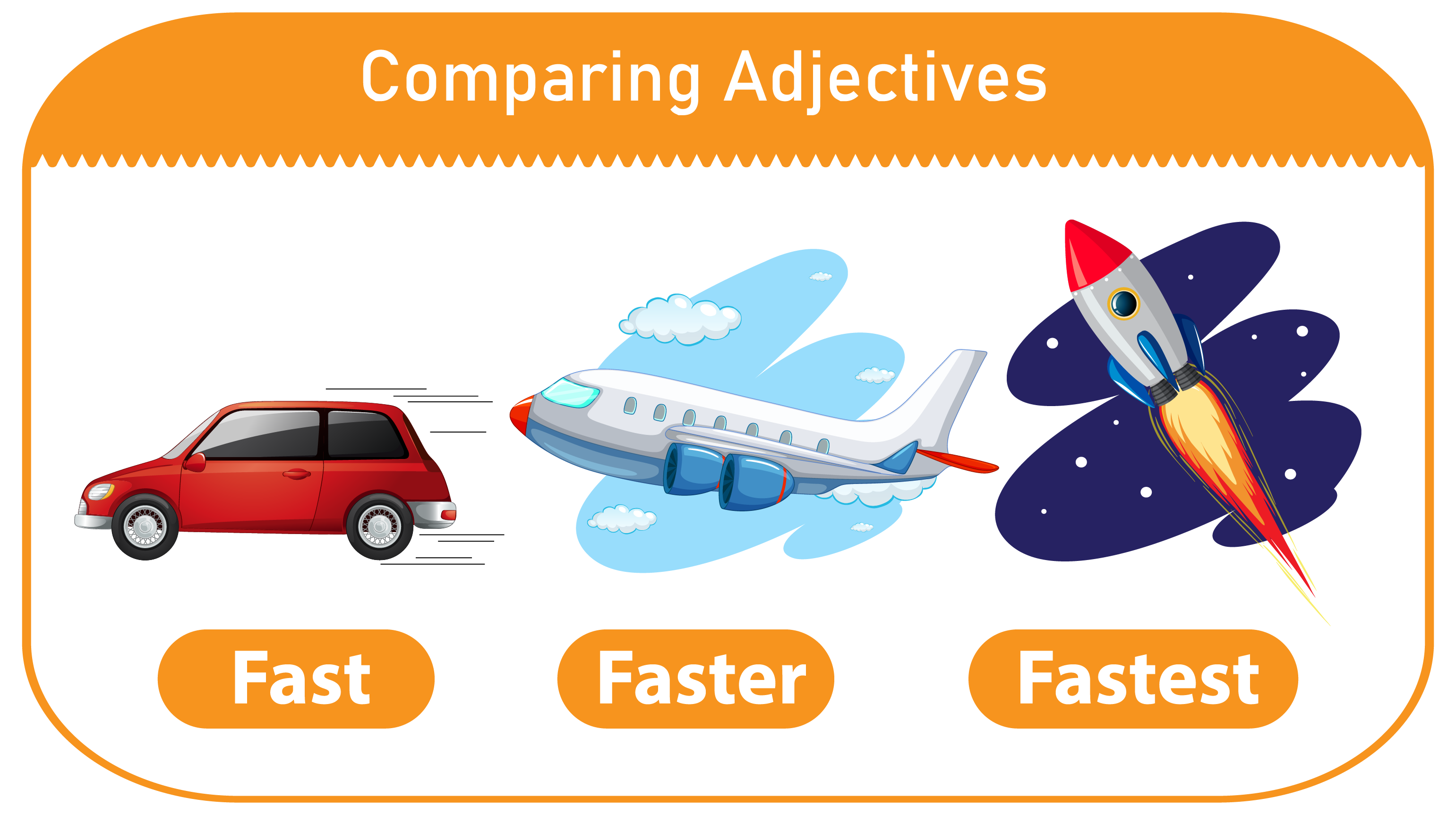
Comparing sizes is a foundational skill that is vital for young children's cognitive development, particularly for those aged 3-7. At this stage, children are naturally curious and constantly learning about the world around them. Engaging in size comparisons helps them develop critical thinking and observational skills, which are crucial for problem-solving and understanding relationships between objects.
This activity also lays the groundwork for mathematical concepts. Recognizing differences in size leads to the mastery of measurement, an essential math skill. Children learn to quantify and describe their observations, which helps them when they start tackling more complex mathematical operations like addition and subtraction.
Furthermore, comparing sizes enhances language development. As children use descriptive words such as "bigger," "smaller," "taller," and "shorter," they expand their vocabulary and improve their communication skills. These descriptors are important not only for everyday conversations but also for success in academic settings where precise language is required.
Socially, these activities promote interactive learning. When children compare sizes with peers or adults, they practice cooperative play, sharing, and turn-taking, which are key social skills. Therefore, parents and teachers should prioritize size comparison activities as they contribute to the holistic development of young children, preparing them for future academic and life challenges.








