Improving spelling skills Normal Worksheets for Ages 3-7
3 filtered results
-
From - To
Boost your child’s spelling skills with our engaging normal worksheets designed specifically for ages 3-7. Tailored to foster early literacy, these worksheets incorporate fun exercises that promote effective spelling practice. With a variety of activities such as letter matching, word completion, and visual aids, young learners can build confidence in their spelling abilities. Perfect for home or classroom use, our colorful and interactive resources encourage creativity and make learning enjoyable. Help your child master spelling fundamentals while having fun! Explore our collection and watch your little one develop essential literacy skills that set a strong foundation for their academic journey.
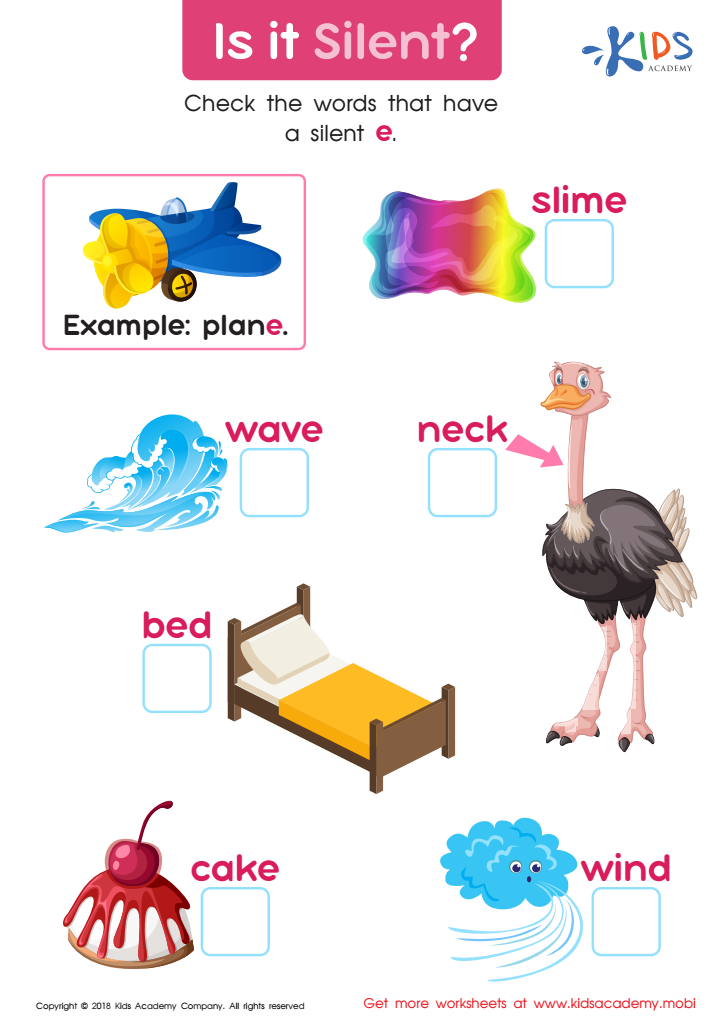
Is It Silent? Worksheet
 Assign to My Students
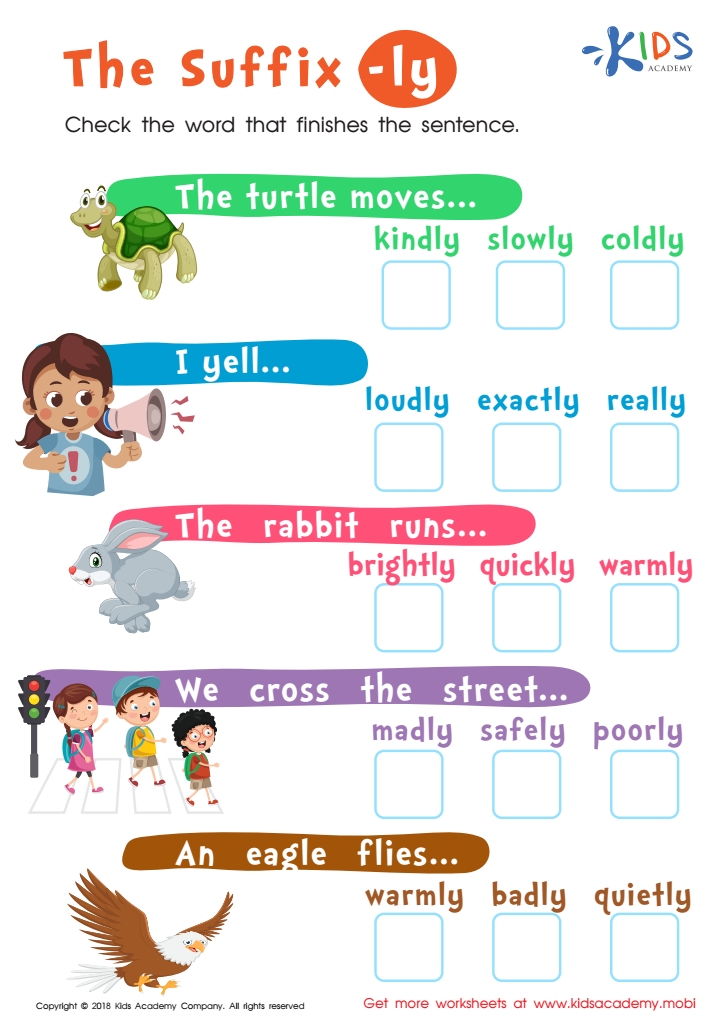
The Suffix -Ly Worksheet
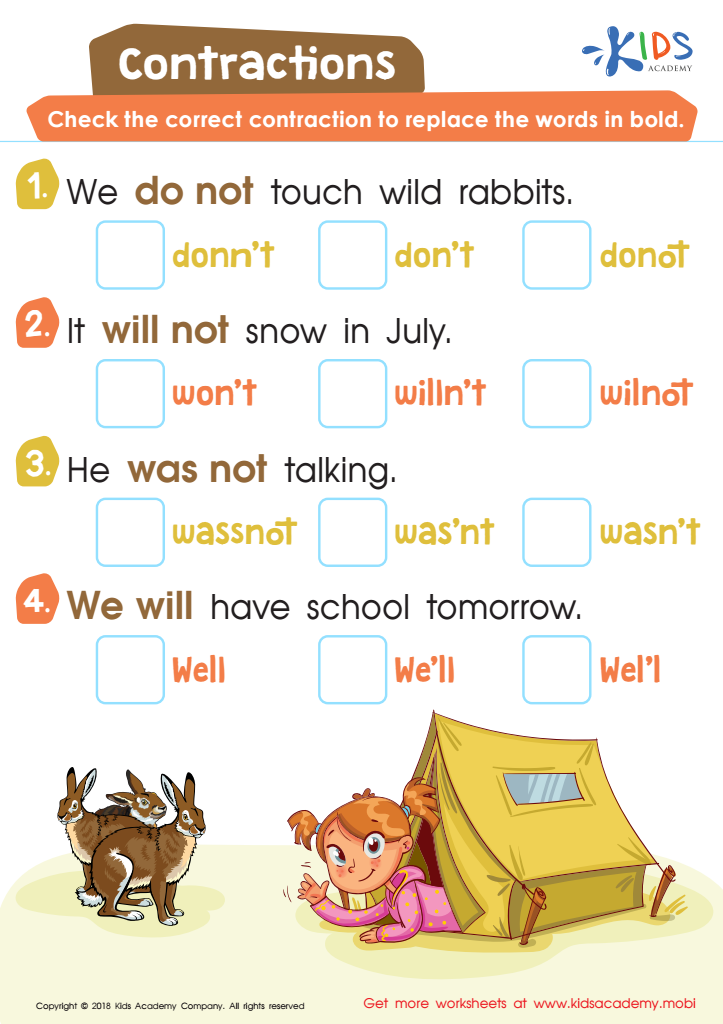
Contractions Worksheet







Improving spelling skills for children aged 3-7 is crucial, as it lays the foundation for their overall literacy and academic success. During these formative years, children develop linguistic abilities that directly influence their reading and writing capabilities. Effective spelling skills enhance vocabulary development, enabling children to express themselves more clearly and confidently.
Moreover, strong spelling competence aids in building phonemic awareness—the ability to recognize and manipulate sounds in words—an essential skill for reading. As children learn to decode words, improved spelling reinforces their understanding of phonics, boosting their reading fluency.
Additionally, in a world increasingly dominated by written communication, mastering spelling equips children for future educational scenarios and life interactions. Children who struggle with spelling may experience increased frustration and lower self-esteem, which can hinder their motivation to engage with language-related activities. By improving spelling skills early on, parents and teachers foster a love of language, encouraging creativity and effective communication.
In summary, cultivating these skills not only benefits immediate literacy development but also instills a positive outlook toward learning, helps shape confident communicators, and ultimately prepares children for academic achievements and social interactions in their everyday lives.








