Recognition skills Normal Worksheets for Ages 3-7
3 filtered results
-
From - To
Our "Recognition Skills Normal Worksheets for Ages 3-7" are designed to build essential early learning skills in young children. These printable activities help kids recognize letters, numbers, shapes, colors, and patterns through engaging and interactive exercises. Each worksheet is thoughtfully crafted to enhance children's cognitive development, attention to detail, and fine motor skills. Perfect for home or classroom use, our resources cater to both guided instruction and independent learning. Boost your child's confidence and academic readiness with these fun, educational worksheets endorsed by early childhood educators. Discover a world of learning at Kids Academy!
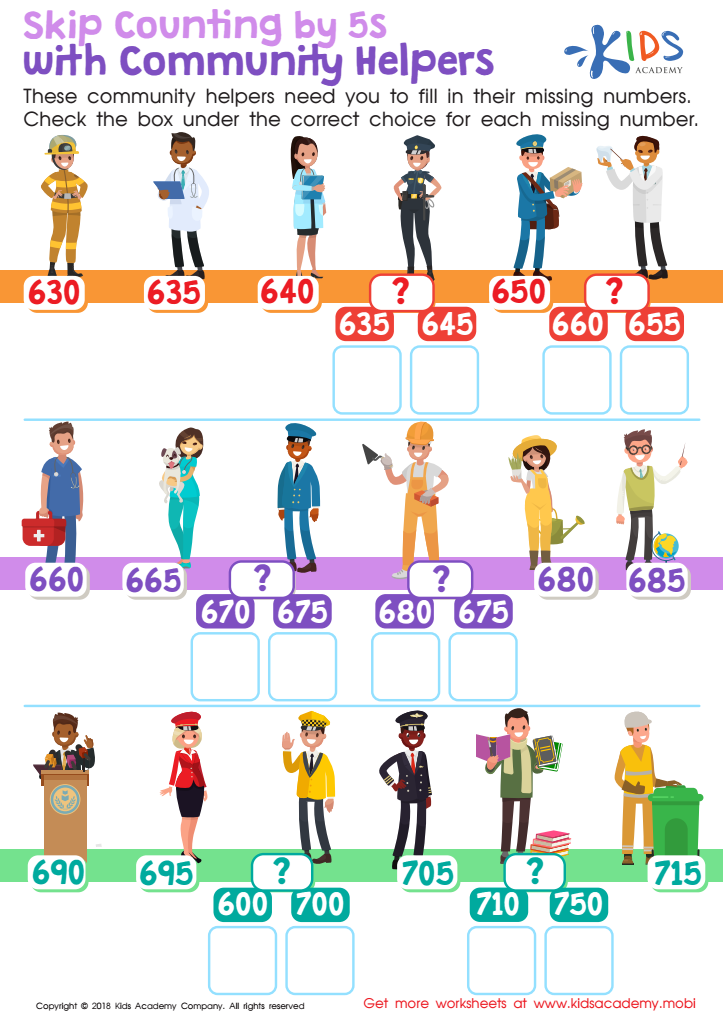
Skip Counting by 5s With Community Helpers Worksheet
 Assign to My Students
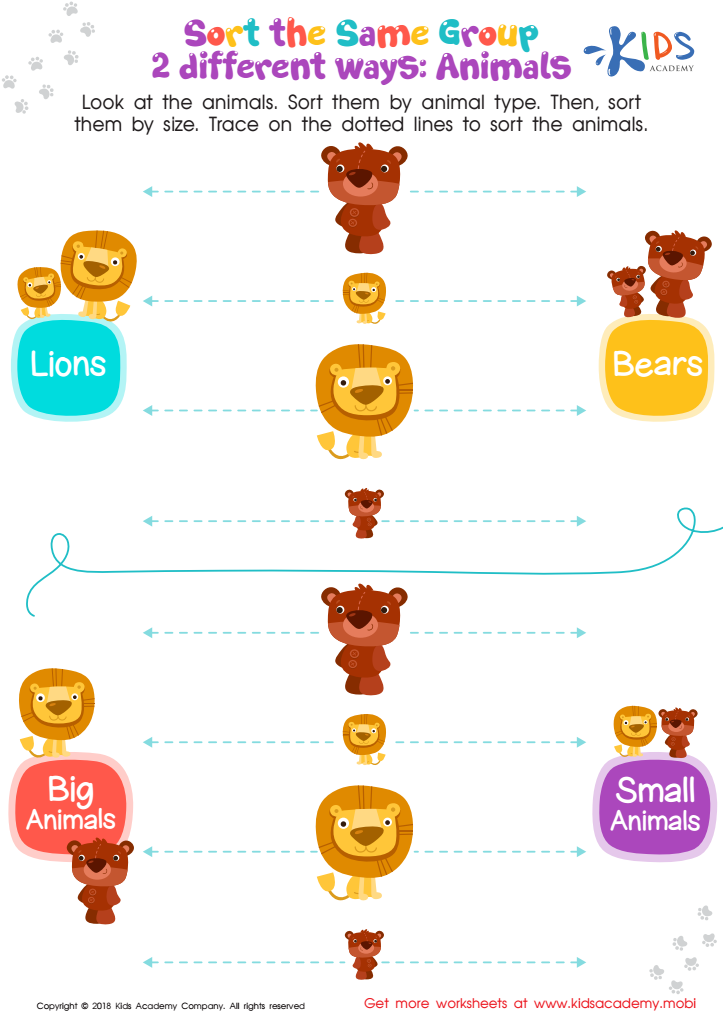
Sort the Same Group 2 Different Ways: Animals Worksheet









Recognition skills are foundational cognitive abilities that play a critical role in a child's early development, particularly during the ages of 3-7. During these formative years, children form the groundwork for future academic and social success. For parents and teachers, investing effort into fostering these skills yields several long-term benefits.
First, recognition skills are essential for academic learning. They enable children to identify letters, numbers, shapes, and patterns, which are fundamental for reading and math readiness. For instance, recognizing alphabets leads to early literacy, forming the building blocks for reading and writing proficiency.
Secondly, these skills also enhance social-emotional development. Recognizing emotions in themselves and others helps children navigate social interactions and develop empathy, cooperation, and appropriate responses to various social situations.
Improving recognition skills also boosts children's confidence and encourages a love for learning. When children feel competent in identifying and understanding their environment, they are more likely to engage in self-directed learning and exhibit curiosity.
Furthermore, enhancing these skills early on can help in identifying any developmental delays or learning disabilities, allowing for timely interventions that can significantly ease future learning difficulties.
Overall, attentiveness from parents and teachers to nurture recognition skills in early childhood is not just beneficial but essential for holistic growth, aiding children in navigating both academic challenges and social landscapes effectively.








