Normal 2D Shapes Worksheets for Ages 3-7 - Page 2
32 filtered results
-
From - To
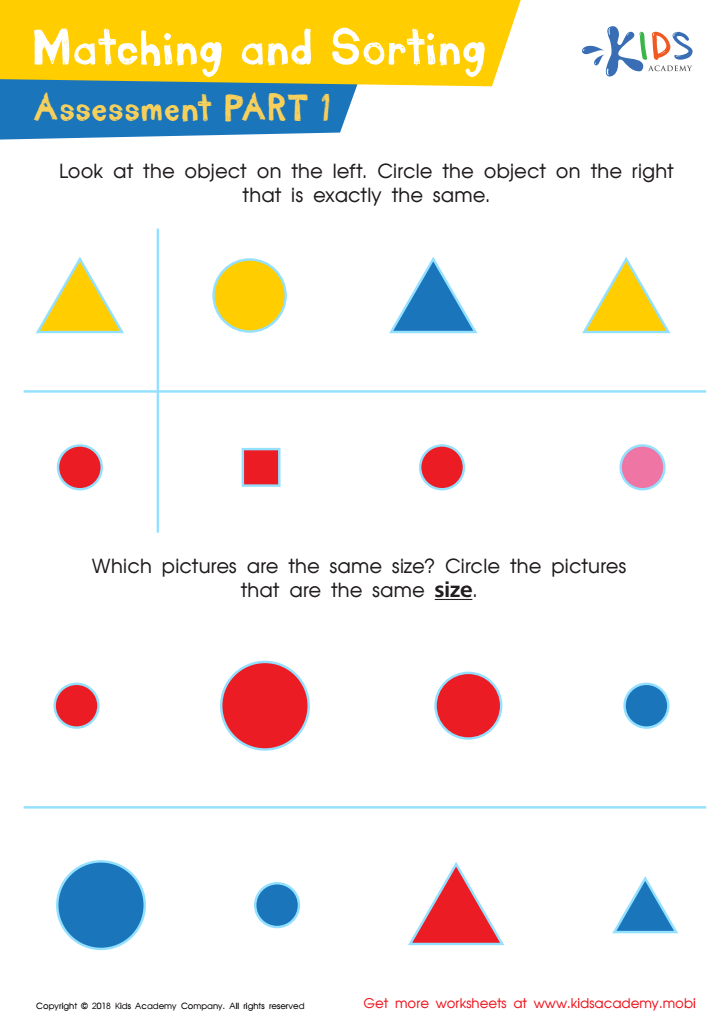
Matching and Sorting for Kindergarten: Assessment 1 Worksheet
 Assign to My Students











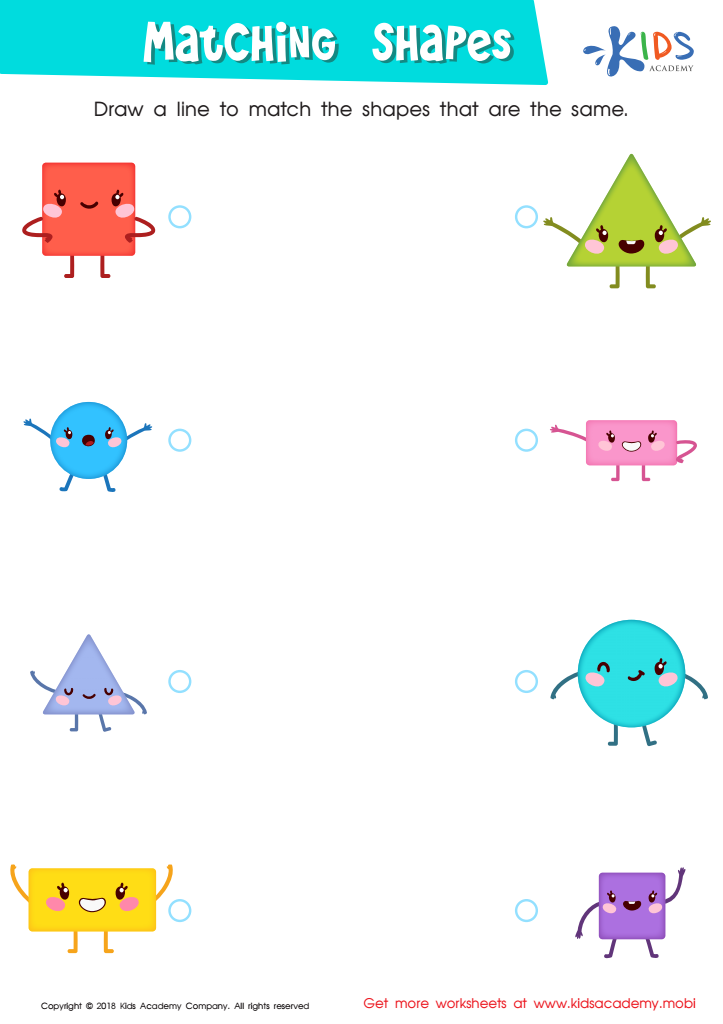
Matching Shapes Worksheet
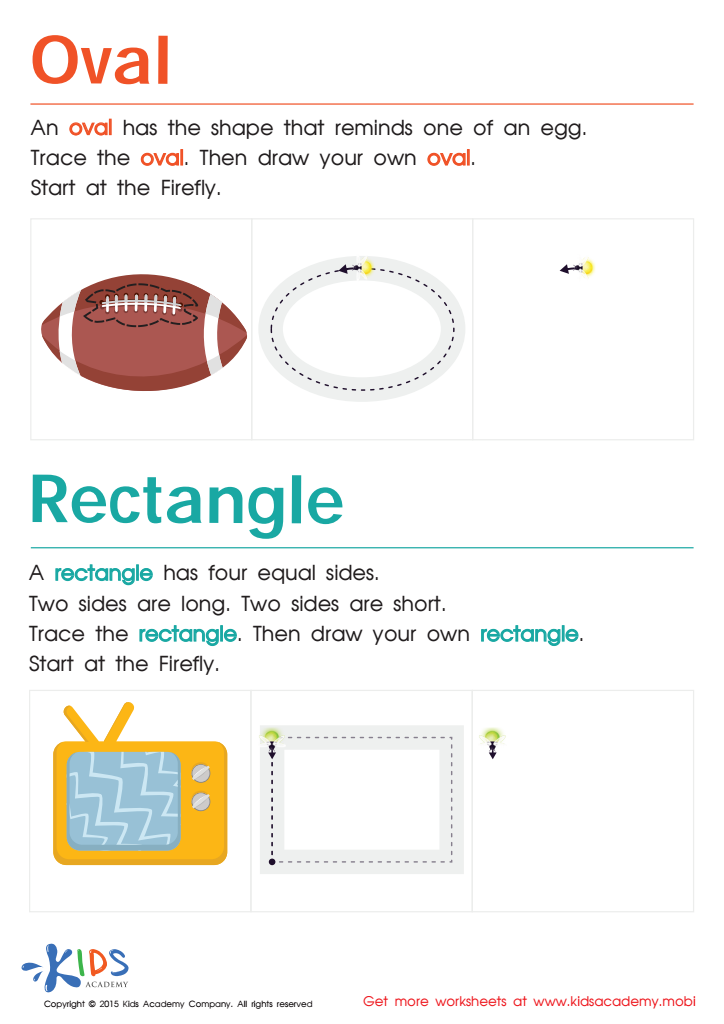
Easy Drawing of Ovals And Rectangles Worksheet
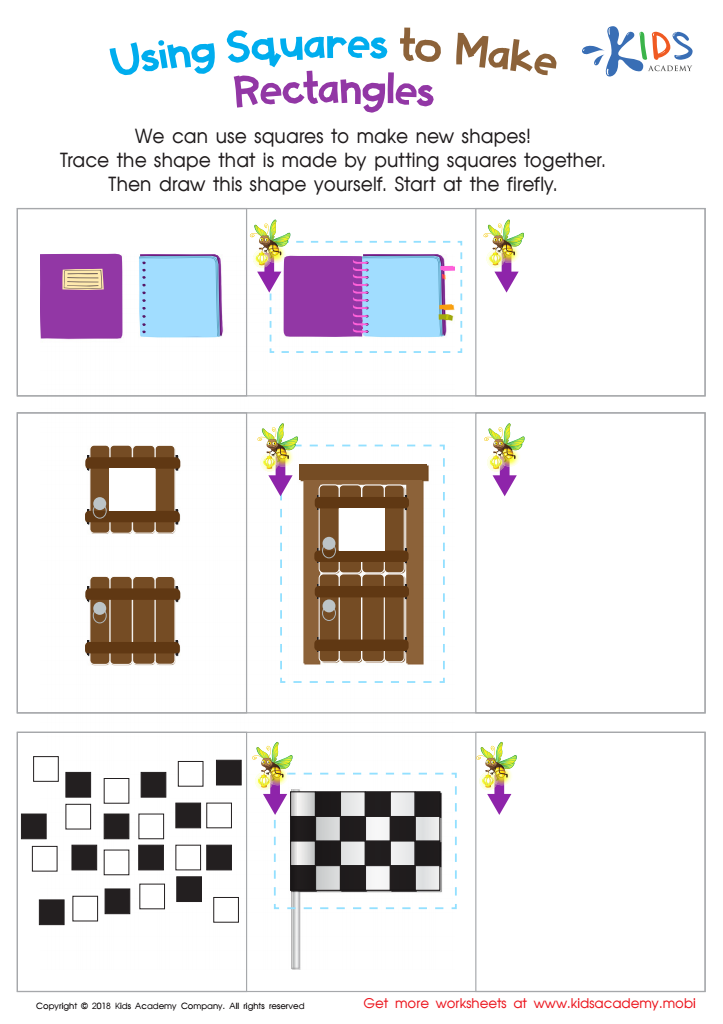
Using Squares to Make Rectangles Worksheet
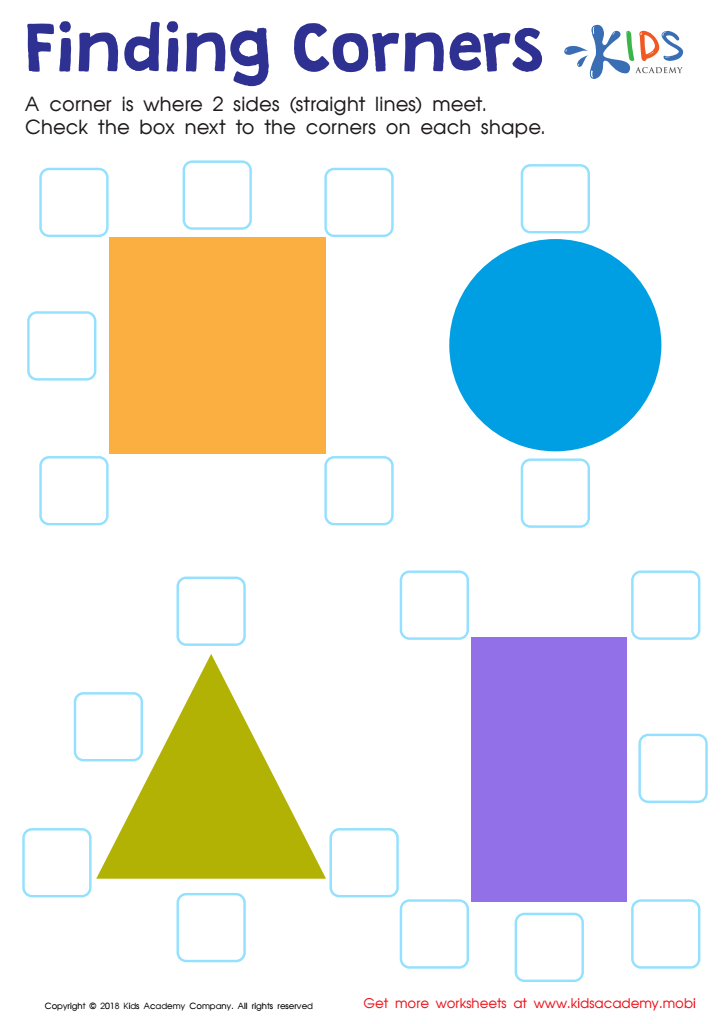
Finding Corners Worksheet
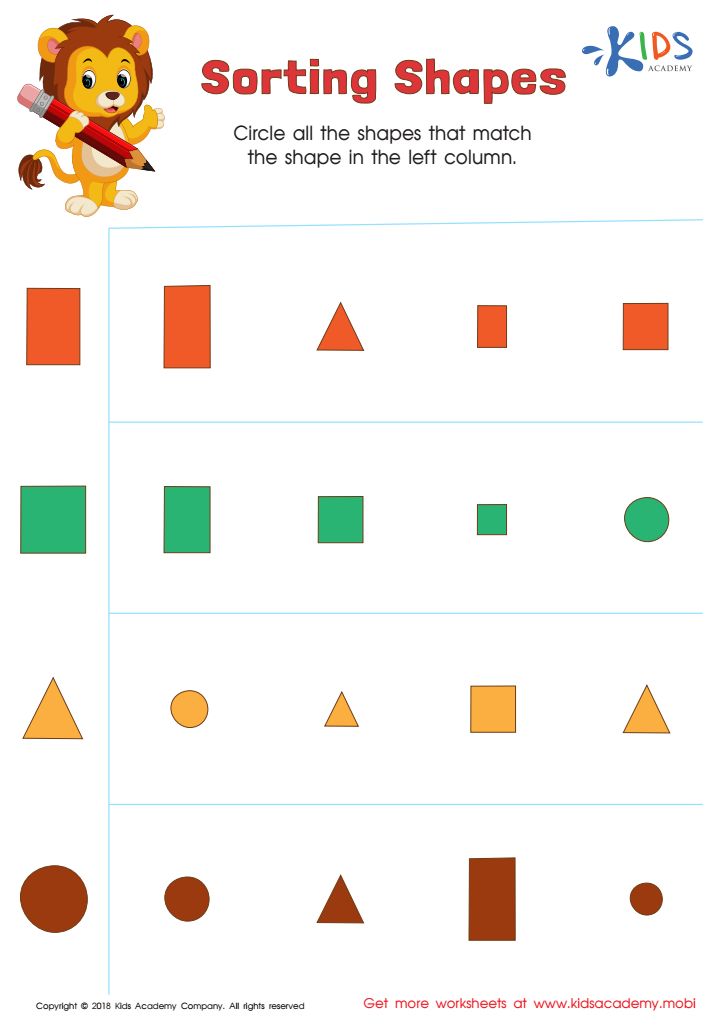
Sorting Shapes - Part 2 Worksheet
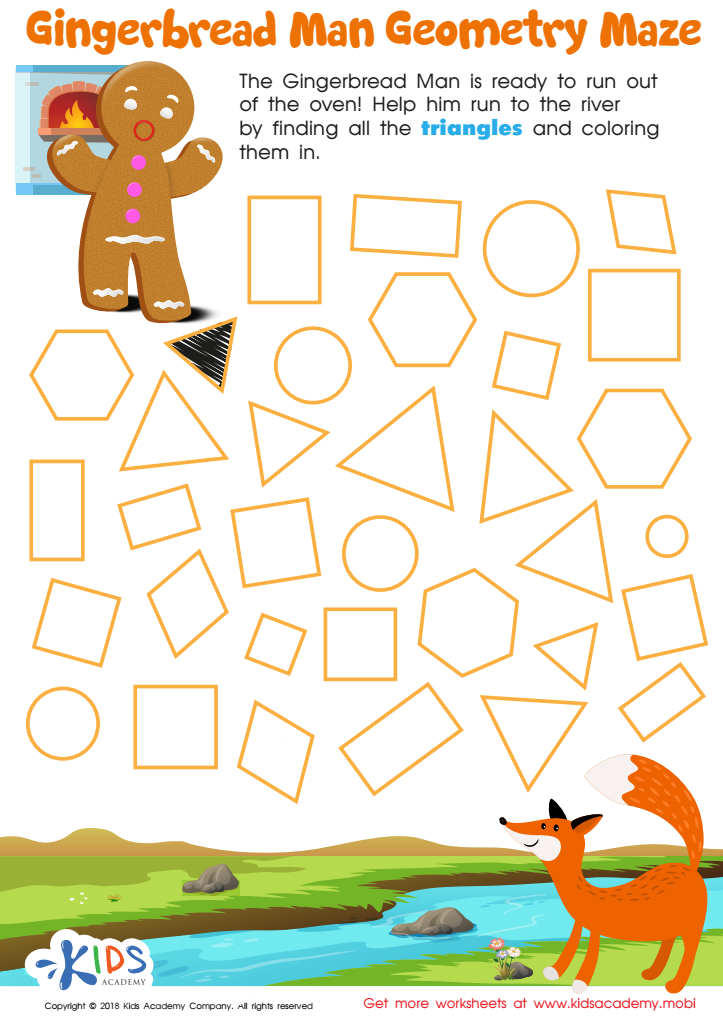
Gingerbread Man Geometry Maze Worksheet
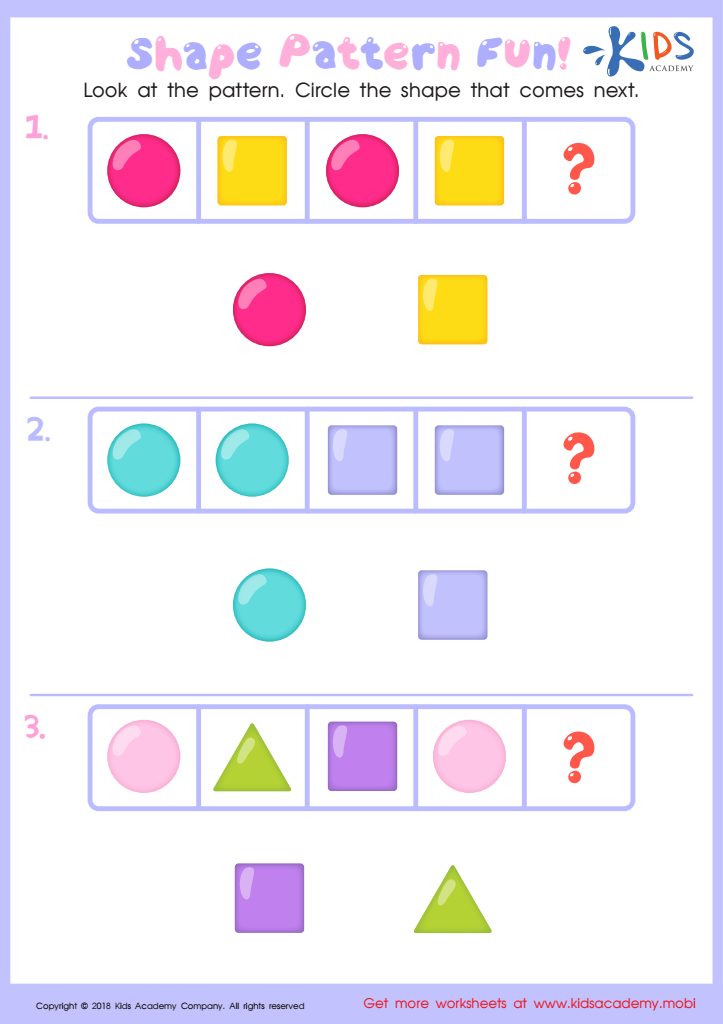
Shape Pattern Fun Worksheet








Introducing normal 2D shapes (such as squares, circles, triangles, and rectangles) to children ages 3-7 is crucial for their cognitive and academic development. At this formative stage, cognitive skills such as pattern recognition, problem-solving, and spatial awareness are rapidly growing. Exposure to 2D shapes enhances these skills, providing a foundation for concepts encountered in mathematics and geometry later on.
Recognizing and understanding shapes helps children sort objects based on their characteristics, promoting classification skills foundational in scientific thinking. Moreover, identifying shapes in their environment boosts observational skills and fosters curiosity about the world around them.
Fine motor development is another significant benefit; activities involving tracing or constructing shapes refine hand-eye coordination and the precision of movements required for writing. Shapes also serve as basic literacy tools. Learning to distinguish different shapes supports language development, as children learn and articulate the associated vocabulary, which enriches their communication skills.
In art and creative activities, manipulating shapes encourages imaginative thinking and creativity. Beyond academics, engaging with shapes has practical implications for daily life, aiding children in recognizing and understanding various objects and symbols, leading to a more intuitive understanding of their surroundings.
Ultimately, integrating the exploration of shapes into early education fosters foundational skills that support broad developmental and academic growth.