
Basic geometry understanding Normal Geometry Worksheets for Ages 3-7
3 filtered results
Difficulty Level
Grade
Age
-
From - To
Subject
Activity
Standards
Discover the joy of learning with our Basic Geometry Understanding Worksheets, designed for children ages 3-7. These printable worksheets from Kids Academy focus on essential geometry skills, such as recognizing shapes, understanding spatial concepts, and identifying patterns. Engaging activities and colorful designs help young learners develop a strong foundation in geometry, building confidence and encouraging a love for math. Perfect for both classroom and home use, our worksheets make learning playful and effective, ensuring your child masters key early learning skills with ease. Start your child’s geometry journey today!
Favorites
With answer key
Interactive
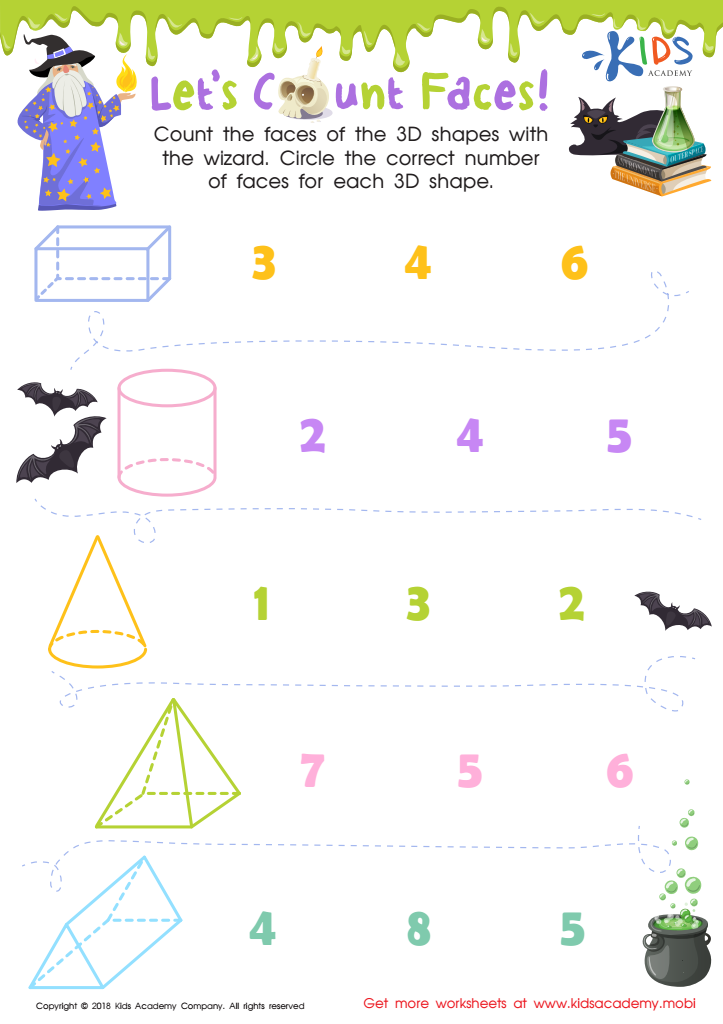
Let's Count Faces! Worksheet
Help the wizard count the faces of 3D shapes! Ask your kids to identify the shapes before beginning, then have them circle the correct number of faces. Enjoy this fun wizard-themed worksheet with your kids!
 Assign to My Students
Let's Count Faces! Worksheet
Worksheet











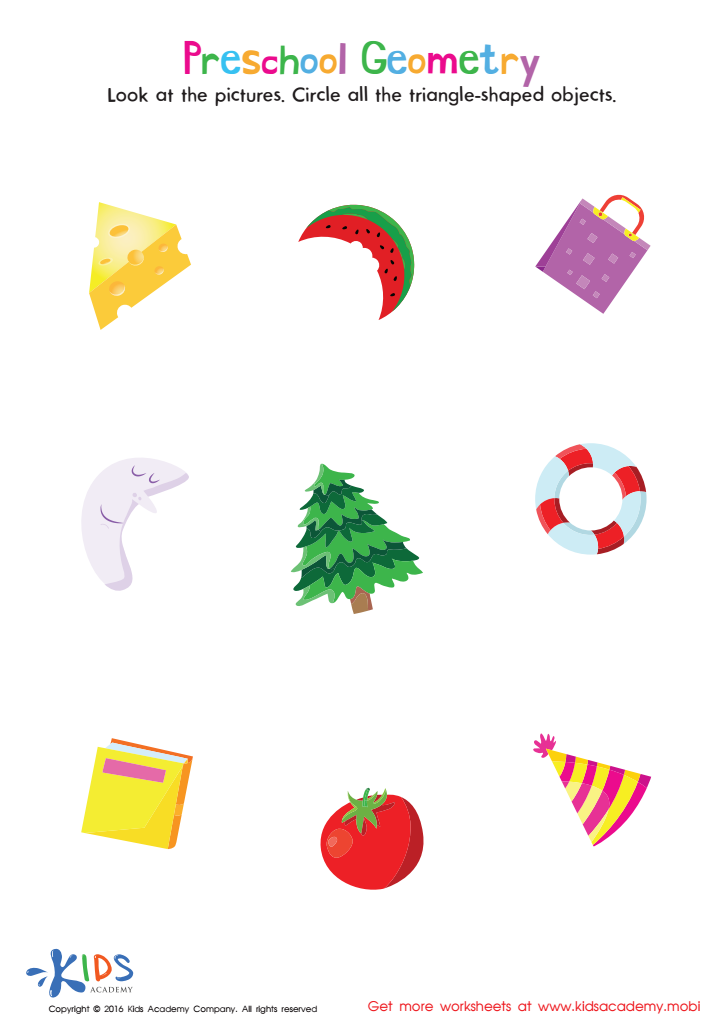
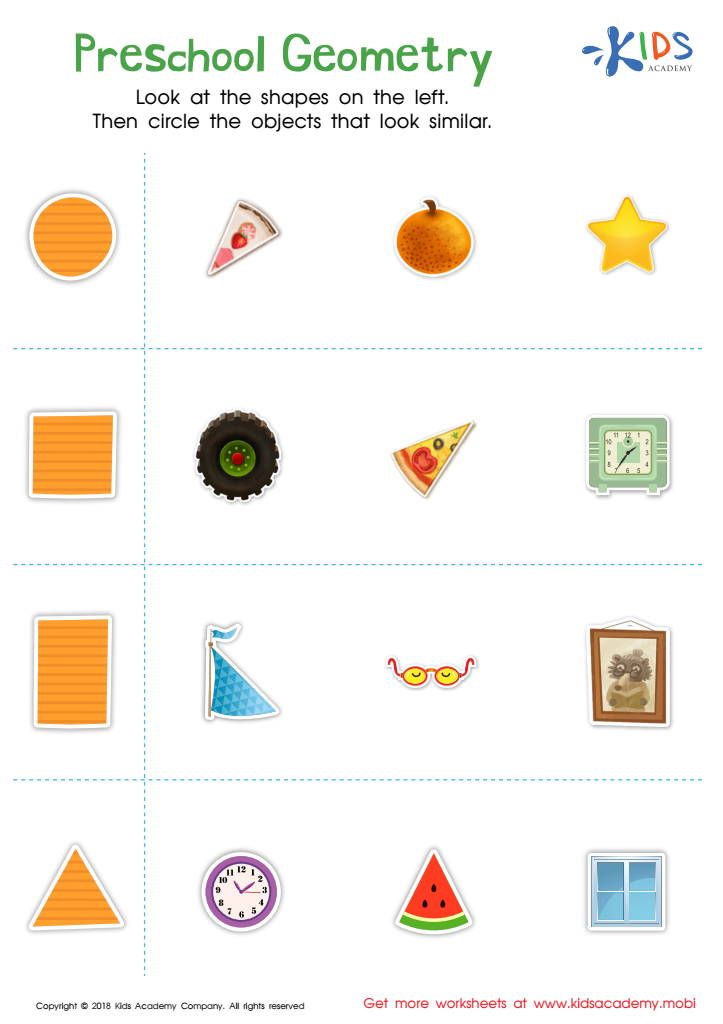
Preschool Geometry Worksheet
This worksheet gives 3rd graders the basics of geometry. Kids match everyday objects to shapes they know, e.g. an orange to a circle, a square to a slice of watermelon and a rectangle to a picture frame. It's a fun way to give them confidence to tackle more complex geometry in the future.
Preschool Geometry Worksheet
Worksheet
Join Kids Academy for Free
Who is primarily going to use this learning content?








Basic geometry is vital for young children's cognitive and developmental growth, offering foundational skills that support broader learning. For ages 3-7, understanding shapes, sizes, patterns, and spatial relationships contributes significantly to their math skills and overall academic success.
First, geometry introduces young learners to critical thinking and problem-solving skills. These skills are transferrable to other disciplines, including reading and science. When children explore basic geometric concepts, they learn to classify, compare, and contrast objects—a precursor to logical reasoning.
Second, geometry is integral to spatial awareness, which is essential for everyday tasks and more complex mathematical concepts. Through playful activities like block building and puzzles, kids develop a sense of position, direction, and movement, aiding activities like navigating space around them.
Lastly, familiarity with geometric concepts aligns with early numeracy. Recognizing and naming shapes not only builds vocabulary but also sets the groundwork for more advanced topics like fractions and symmetry. Engaging young minds with geometry through interaction and play fuels curiosity and excitement around learning.
In summary, geometry lays a pivotal learning scaffold for young children, connecting to their overall educational growth and life skills. Thus, encouraging early geometric exploration through fun, age-appropriate activities should be a priority for both parents and teachers.








