Critical Thinking Normal Geometry Worksheets for Ages 3-7
5 filtered results
-
From - To
Enhance your child's learning experience with our specially designed Critical Thinking Normal Geometry Worksheets for ages 3-7. These engaging worksheets help young learners develop essential geometry skills while promoting critical thinking prowess. Perfect for early education, our resources encourage problem-solving and strategic reasoning through fun and interactive exercises. With colorful illustrations and age-appropriate challenges, children will explore shapes, measurements, and spatial reasoning in an enjoyable way. These worksheets are ideal for both classroom use and homeschooling, fostering independence and a love for learning. Equip your little ones with foundational skills for their educational journey today!
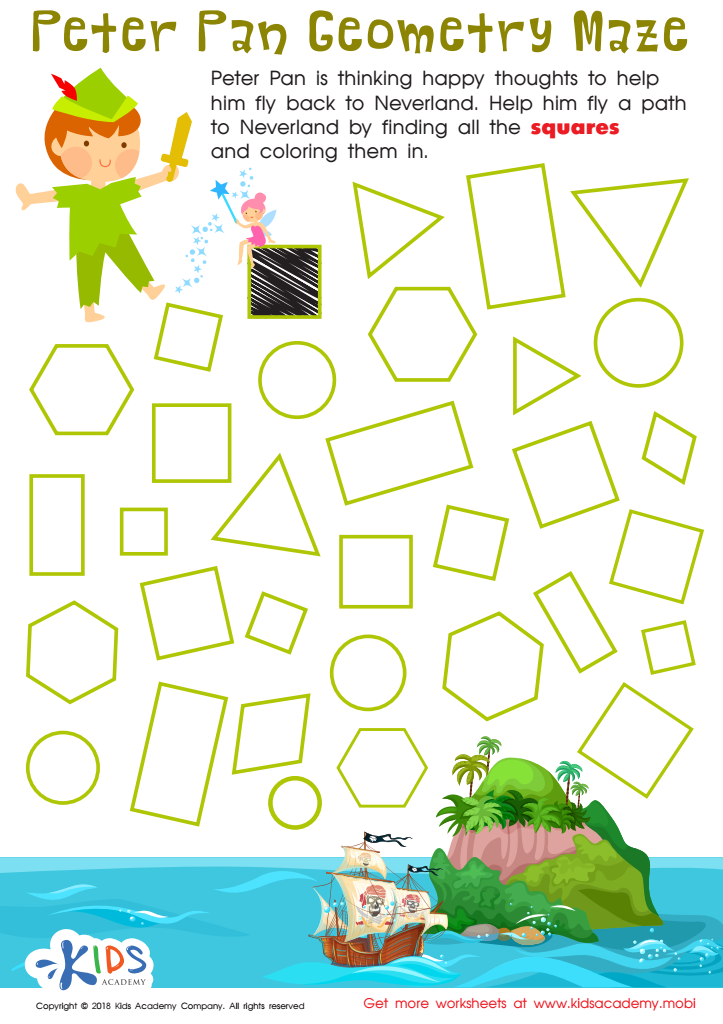
Peter Pan Worksheet
 Assign to My Students











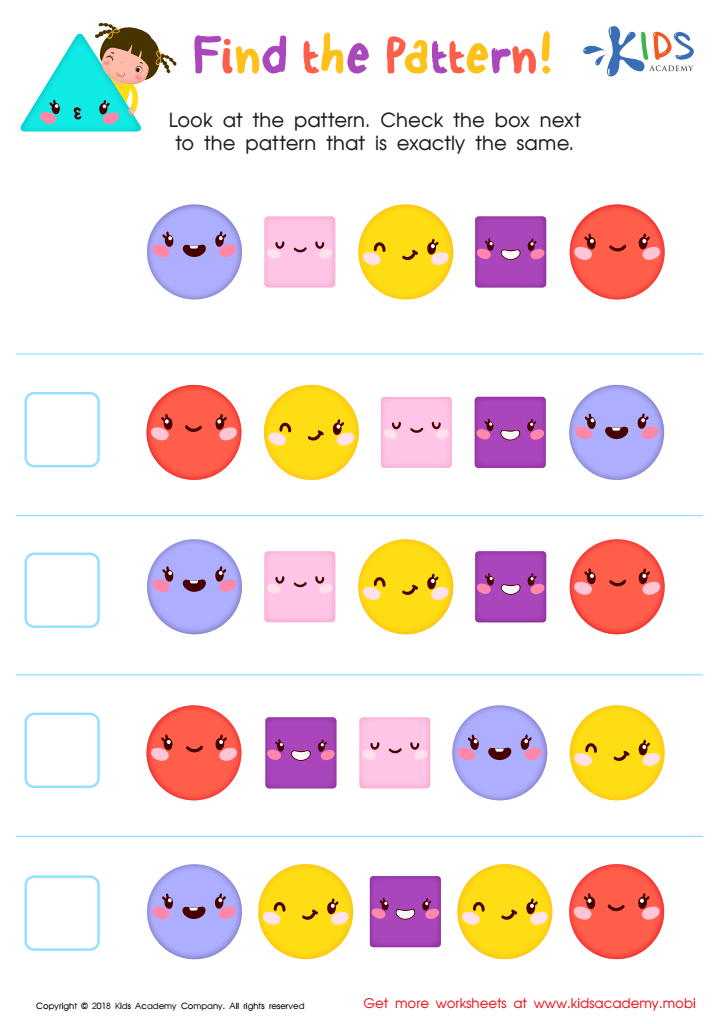
Find the Pattern Worksheet
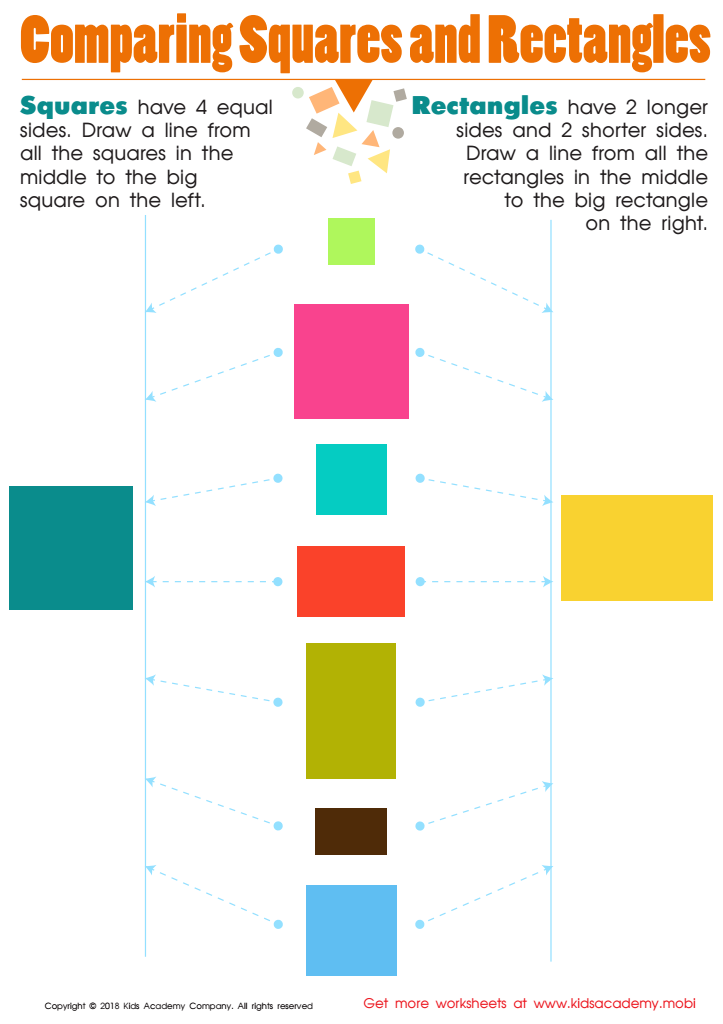
Comparing Squares Rectangles Worksheet
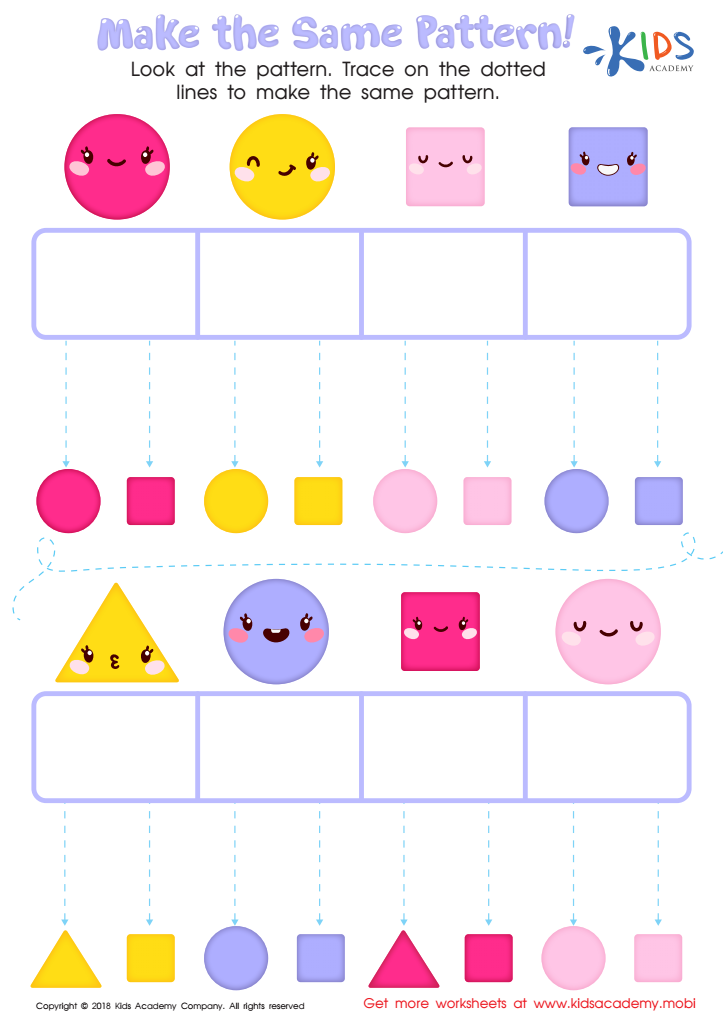
Make the Same Pattern Worksheet
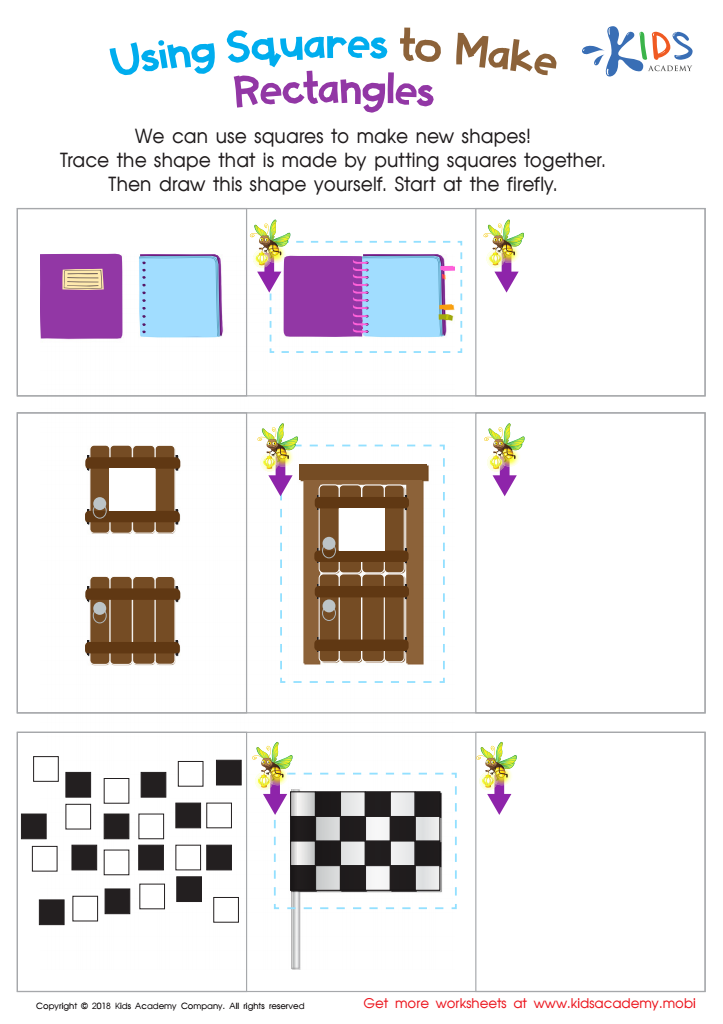
Using Squares to Make Rectangles Worksheet








Critical Thinking Normal Geometry for Ages 3-7 is vital for laying a strong foundation in children's cognitive development. During these formative years, children not only absorb knowledge but also learn how to think, reason, and solve problems. Engaging with geometry, through shapes, spatial reasoning, and basic concepts, enhances their ability to think critically.
By introducing geometry in a critical thinking framework, children learn to analyze and evaluate information effectively. They start recognizing patterns, understanding relationships between objects, and grasping spatial awareness, which are essential skills not only in mathematics but across all areas of learning. This foundational knowledge fosters logical reasoning and nurtures creativity, providing them with tools they can use for life-long learning.
Moreover, early exposure to engaging geometry activities can boost children's confidence and interest in mathematics, combating math anxiety often seen in later years. Parents and teachers play a crucial role in facilitating this learning. Structured play, interactive activities, and collaborative problem-solving promote critical thinking while making learning enjoyable. Investing in early geometric education cultivates resilient learners who will thrive in their future academic endeavors and real-world challenges. Thus, prioritizing critical thinking in geometry is integral to developing well-rounded, capable individuals.








