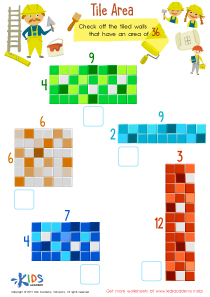
Problem Solving Normal Numbers Worksheets for Ages 3-7
5 filtered results
-
From - To
Discover engaging Problem Solving Normal Numbers Worksheets designed for children aged 3-7 at Kids Academy. These expertly crafted resources help young learners develop essential math skills, focusing on recognizing, understanding, and solving number-related problems. Each worksheet offers interactive and fun activities, building a strong foundation in numeracy while fostering critical thinking and problem-solving abilities. Perfect for early grade students, these worksheets make learning enjoyable and effective. Access our printable worksheets today to support your child's mathematical journey and boost their confidence in handling numbers. A world of learning and fun awaits at Kids Academy!
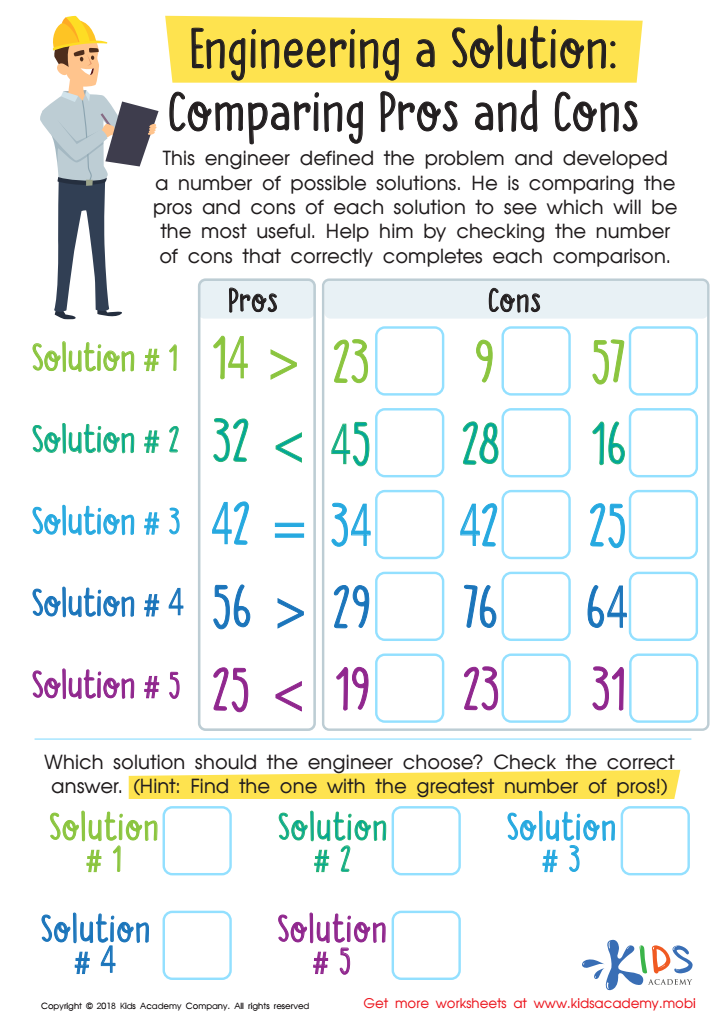
Engineering a Solution: Comparing Pros and Cons Worksheet
 Assign to My Students
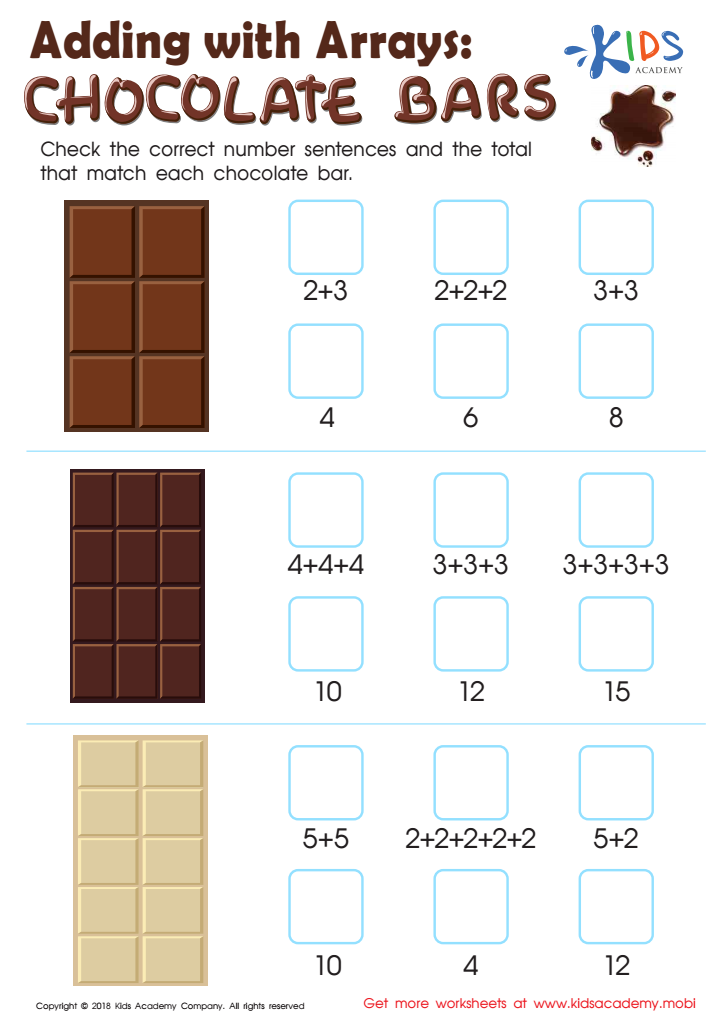
Adding with Arrays: Chocolate Bars Worksheet
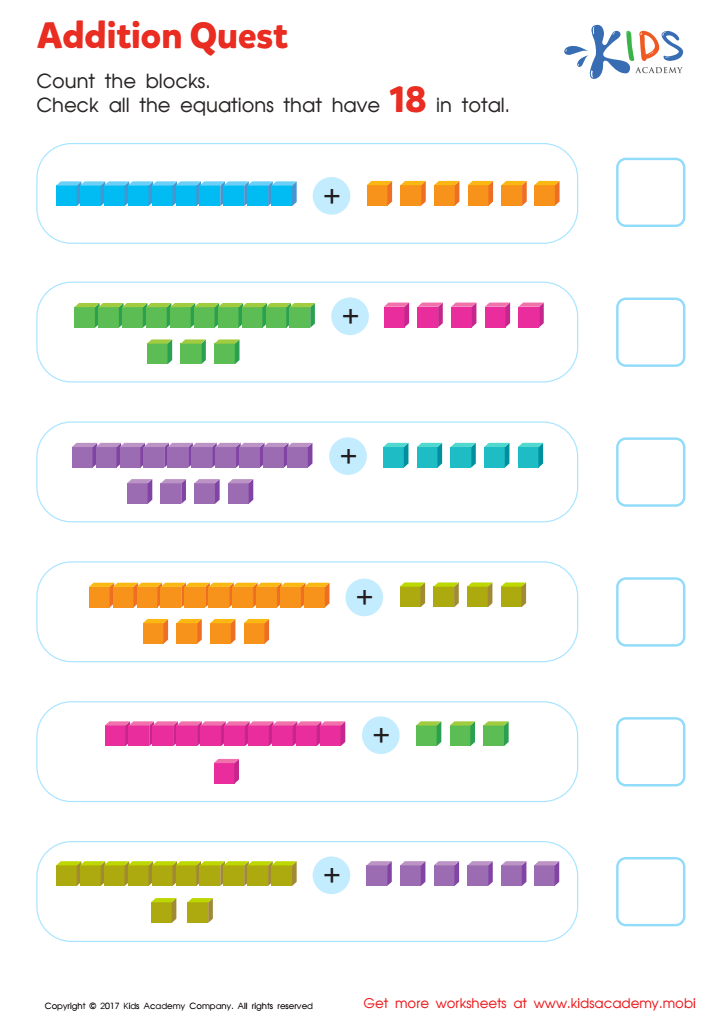
Addition Quest Worksheet: Part 2
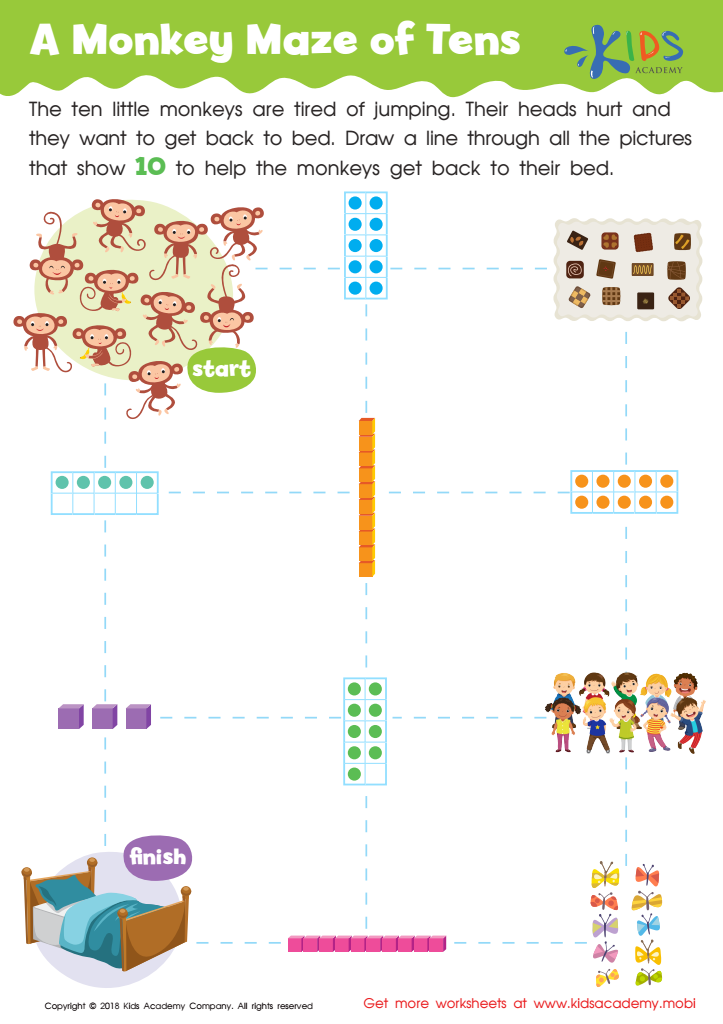
A Monkey Maze of Tens Worksheet
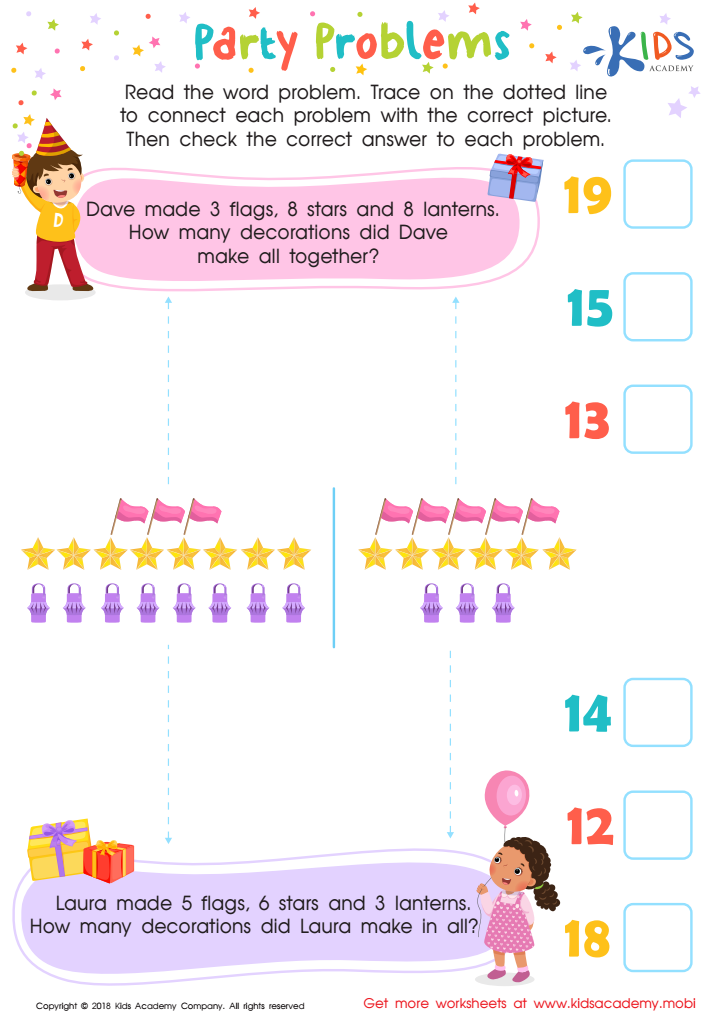
Party Problems Worksheet








Introducing young children aged 3-7 to problem-solving skills and normal numbers is critical for fostering their cognitive development and building a strong mathematical foundation. At this formative age, children are particularly receptive to new concepts, and engaging them in problem-solving activities stimulates their curiosity, enhances their logical thinking, and encourages a love for learning.
First, problem-solving activities help children develop essential life skills, such as critical thinking, creativity, and resilience. These skills are fundamental not only in academic settings but also in everyday situations, enabling children to approach challenges with confidence and persistence.
Second, understanding normal numbers, which typically refer to a sequence of digits that are uniformly distributed, lays the groundwork for basic arithmetic and more complex mathematical concepts. Familiarity with numbers promotes numerical literacy, which is crucial for future success in math-related subjects and many other academic fields.
Furthermore, early exposure to problem-solving and numbers fosters a positive attitude towards learning and mathematics. When children encounter numbers and solve problems through interactive and engaging activities, they are more likely to develop a curiosity and excitement about math, reducing anxiety and building a positive mindset towards future education.
In sum, by caring about problem-solving skills and normal numbers for young children, parents and teachers are investing in their cognitive development, laying the groundwork for strong mathematical skills, and fostering lifelong learning habits.