
Time recognition Normal Math Worksheets for Ages 3-7
5 filtered results
Difficulty Level
Grade
Age
-
From - To
Subject
Activity
Standards
Explore our engaging Time Recognition Normal Math Worksheets designed specifically for children aged 3 to 7. These interactive activities help young learners grasp the concept of time through fun, age-appropriate exercises. Kids will work on identifying clocks, reading time, and understanding daily routines, promoting essential mathematical skills while enhancing their spatial-temporal awareness. Our worksheets encourage hands-on learning, giving children practical experience with both analog and digital clocks. Perfect for home or classroom use, these resources make learning about time enjoyable and effective. Download printable worksheets now and support your child's early math journey with stimulating and educational activities!
Favorites
With answer key
Interactive
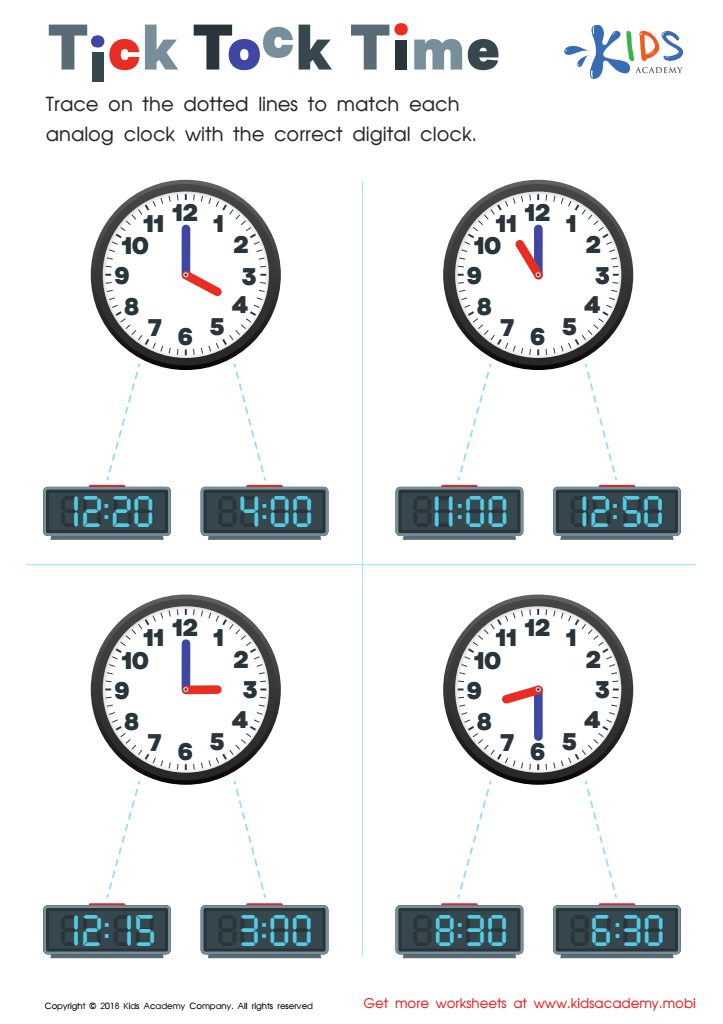
Tick Tock Time Worksheet
Trace the dotted lines on this worksheet to match analog and digital clocks! It's a great way to help your kids learn time-telling. They'll get better at converting analog to digital, and vice versa. Get your children to try it - it's a fun way to practice!
 Assign to My Students
Tick Tock Time Worksheet
Worksheet
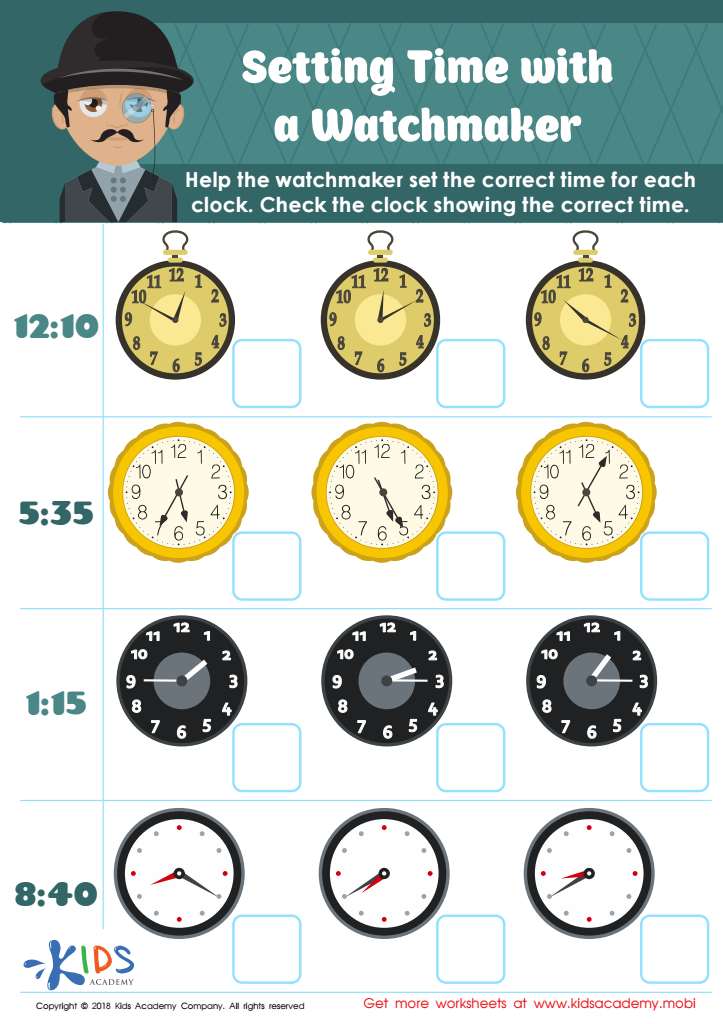
Setting Time with Watchmaker Worksheet
Can your kids tell the time? If so, this worksheet should be easy. Help them set the time for each clock: look at the time written on the left side and find the clock on the right side that matches.
Setting Time with Watchmaker Worksheet
Worksheet
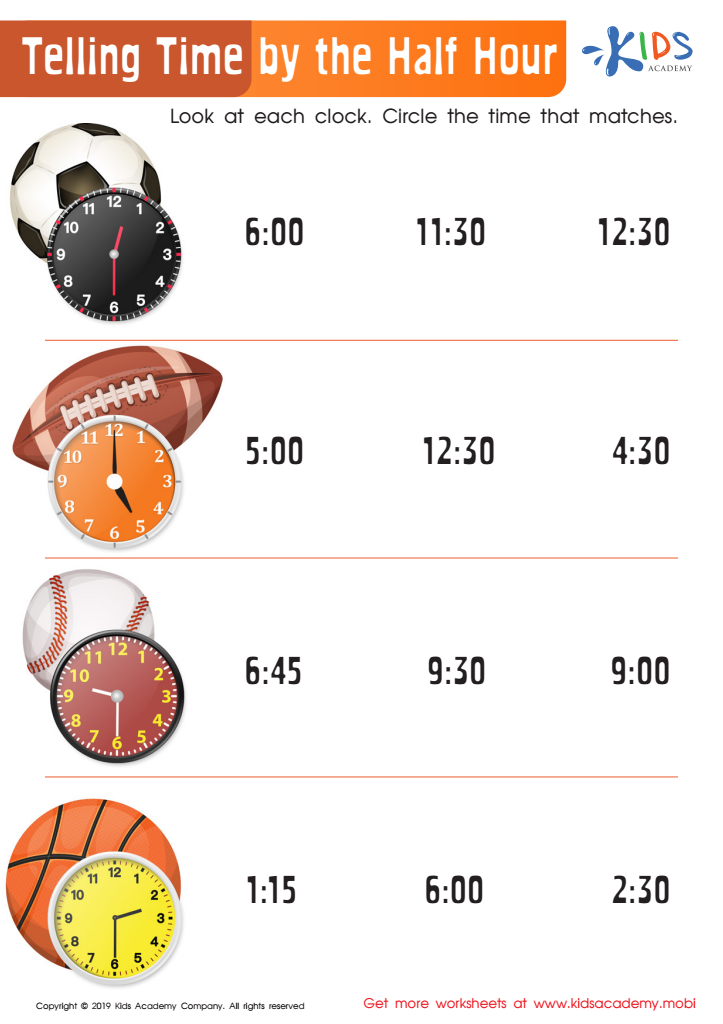
Telling Time by the Half Hour Worksheet
Teach kids to tell time with this worksheet! Four clocks are labeled with different times; help your child circle the right one. It's a great way to teach them to read analog and digital clocks, watches, and written times. Easy and fun learning!
Telling Time by the Half Hour Worksheet
Worksheet
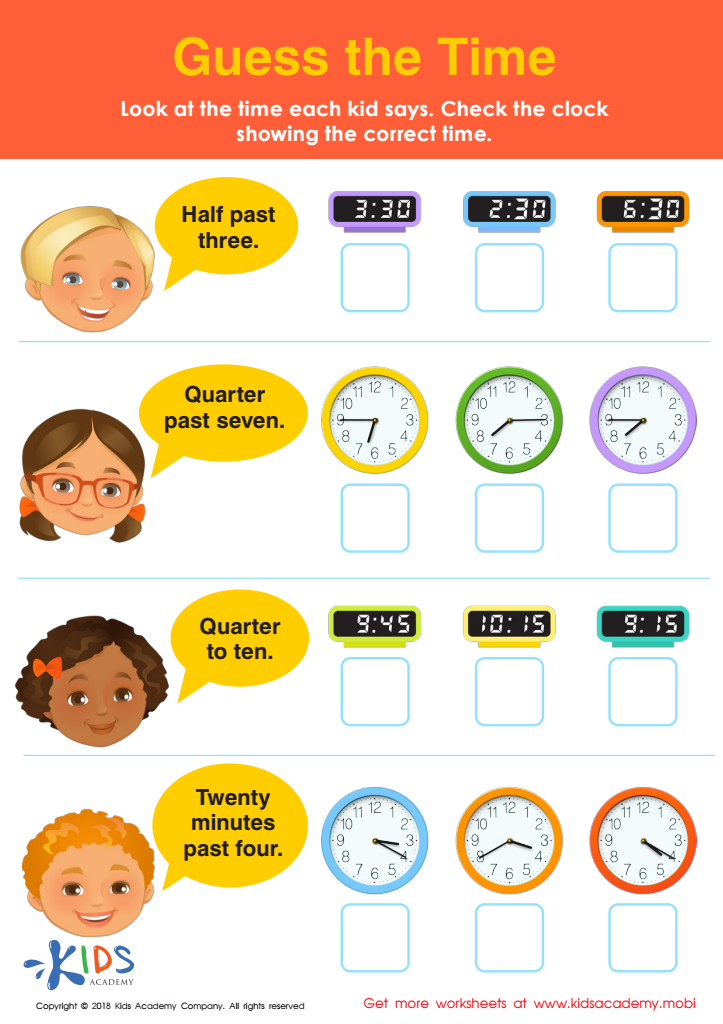
Guess the Time Worksheet
Help students tell the time accurately with this fun exercise. Read the time each person says and find the corresponding clock. Check the options on the left and have students guess the right time. This worksheet is sure to sharpen their time-telling skills.
Guess the Time Worksheet
Worksheet
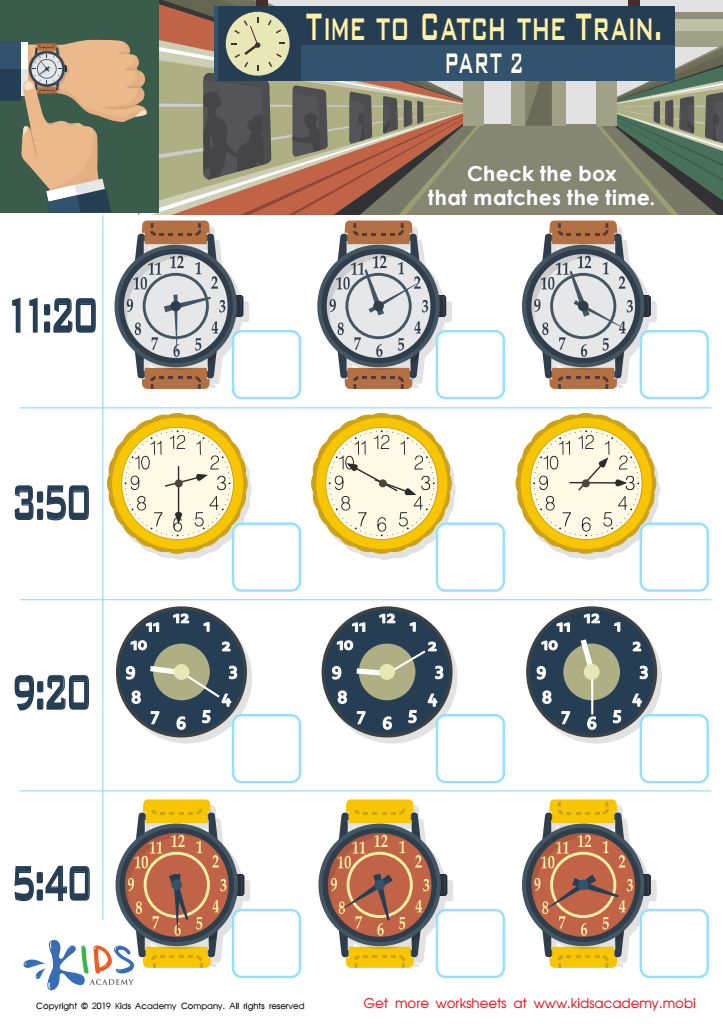
Time to Catch the Train Part 2 Worksheet
Teach your kids the importance of telling time and how to do it. Explain that there are multiple ways to show the time, such as written on the left side or watches in the picture. Guide them to check the box that matches the time. Knowing the time is essential to get things done and create order. Ensure your kids understand this and they will reap the benefits.
Time to Catch the Train Part 2 Worksheet
Worksheet
Join Kids Academy for Free
Who is primarily going to use this learning content?








Time recognition is an essential skill for children aged 3-7, as it lays the foundation for their understanding of schedules, routines, and the passage of time, which are crucial for both their academic and everyday lives. Teaching time recognition within the context of normal math not only enhances a child's numeracy but also fosters logical thinking and an understanding of sequence and patterns.
For parents and teachers, caring about this skill translates into preparing children for future success. Learning how to tell time can help children grasp concepts related to planning and time management, fostering independence as they become aware of their daily routines, such as mealtimes, school schedules, and bedtime.
Moreover, early time recognition encourages curiosity and engagement with math concepts through practical applications, such as counting down to events or understanding a timer during games. This hands-on approach makes learning more relatable and enjoyable, which can lead to a lifelong interest in math and problem-solving.
By prioritizing time recognition, caregivers can help children navigate their world with greater confidence, ensuring they are better equipped to face future academic challenges while also nurturing their emotional and social development.








