
Understanding measurements Normal Math Worksheets for Ages 3-7
8 filtered results
Difficulty Level
Grade
Age
-
From - To
Subject
Activity
Standards
Welcome to our "Understanding Measurements" Math Worksheets designed specifically for children aged 3 to 7! These engaging worksheets aim to introduce young learners to basic measurement concepts such as length, weight, and volume through fun activities. Children will develop essential skills as they compare, discuss, and measure objects using hands-on techniques. Our resources are crafted to make learning exciting, encouraging curiosity and critical thinking. With colorful illustrations and varying difficulty levels, these worksheets are perfect for parents and teachers looking to enhance foundational math skills in a playful manner. Dive into our collection and watch your child's confidence in math grow!
Favorites
With answer key
Interactive
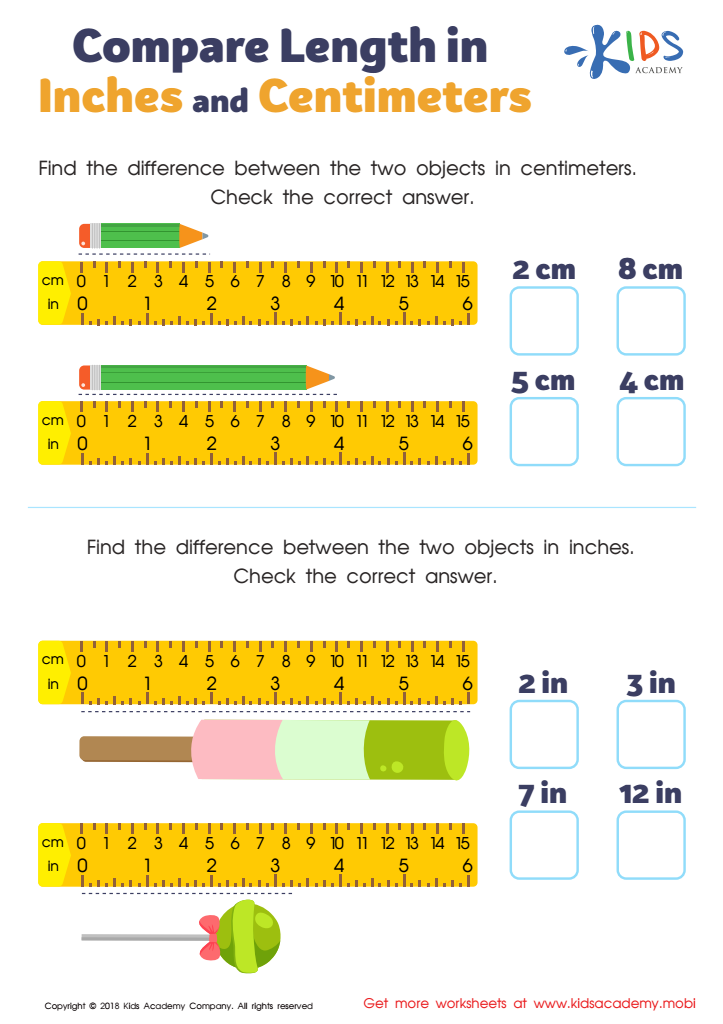
Compare Length in Inches and Centimeters Worksheet
This worksheet has your child measuring objects in both centimeters and inches. The first task requires measuring both objects in centimeters, then finding their difference. The second task is the same but in inches.
 Assign to My Students
Compare Length in Inches and Centimeters Worksheet
Worksheet
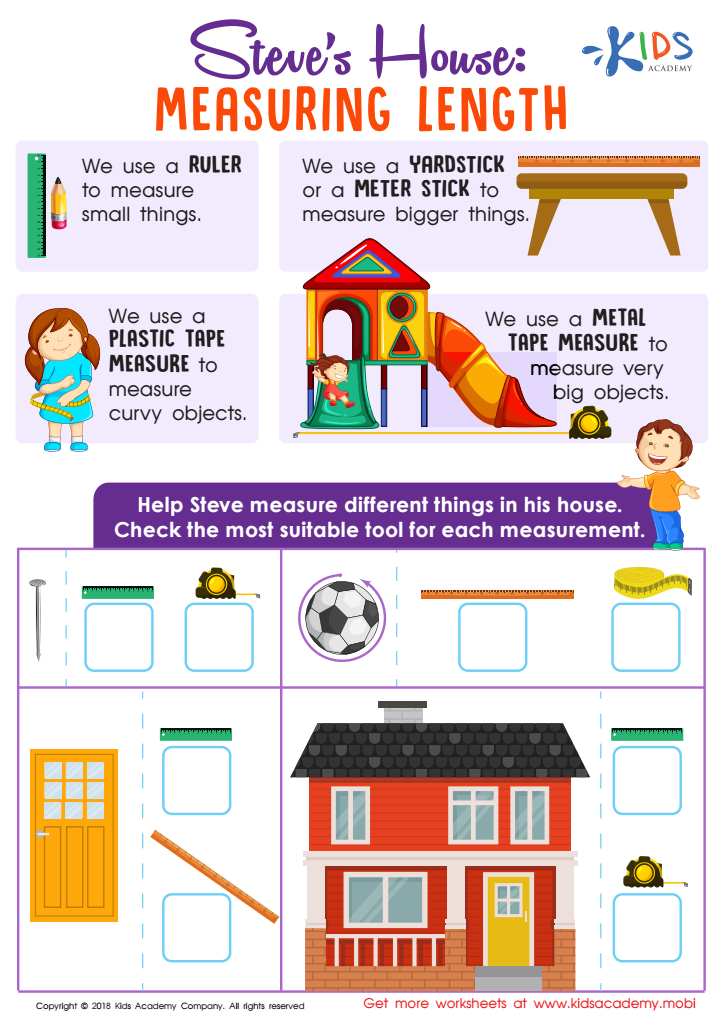
Steve's House: Measuring Length Worksheet
Introduce your kids to the various measuring tools and their uses. Explain how a ruler, plastic tape, yard stick, and metal tape measure are used to measure different objects. Guide them as they help Steve measure things in his home with the correct tool.
Steve's House: Measuring Length Worksheet
Worksheet
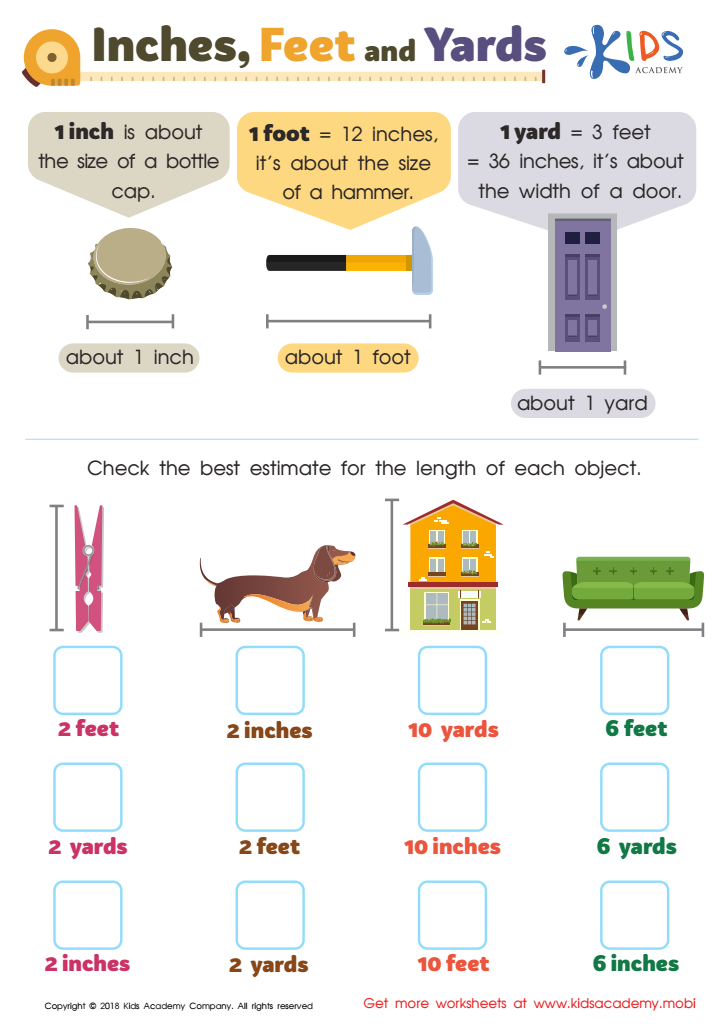
Inches, Feet and Yards Worksheet
Explain the size of measurements to your child by comparing them to objects they can visualize. For example, one inch is a bottle cap and one foot is the size of a hammer. Then, explain that one yard is the width of a door. Then, go through worksheets, circling the best estimates for each object's length.
Inches, Feet and Yards Worksheet
Worksheet
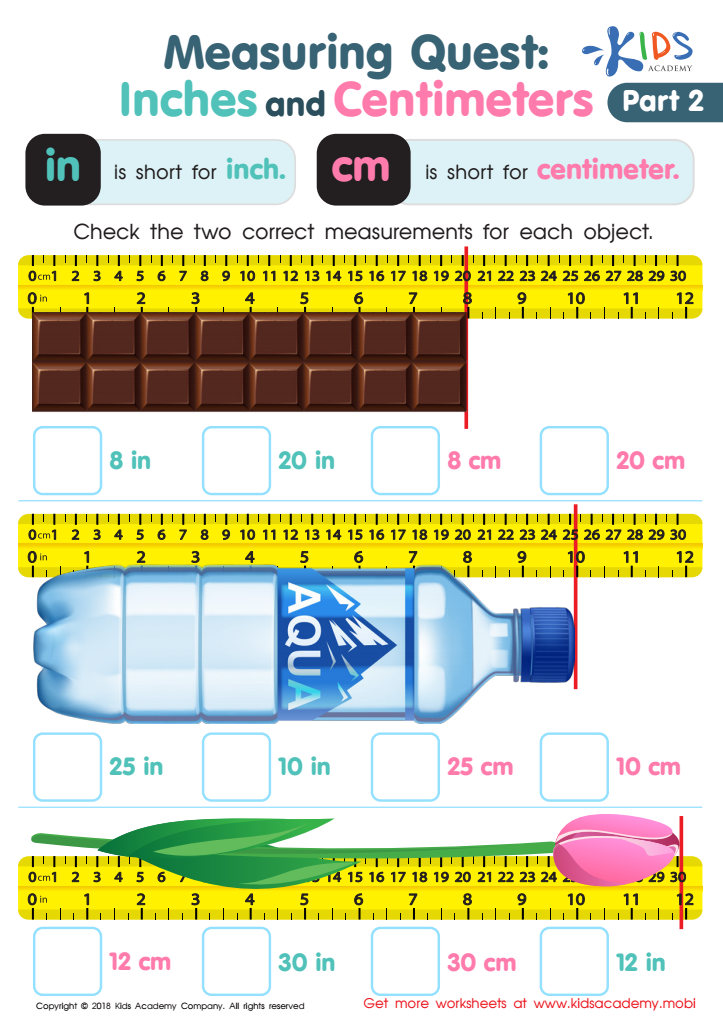
Measuring Quest: Inches and Centimeters - Part 2 Worksheet
This worksheet teaches kids how inches and centimeters measure up. It features rulers with centimeter measurements at the top, and inches at the bottom. Kids must choose the correct measurement for each object among the options provided.
Measuring Quest: Inches and Centimeters - Part 2 Worksheet
Worksheet
Compare Length in Centimeters Worksheet
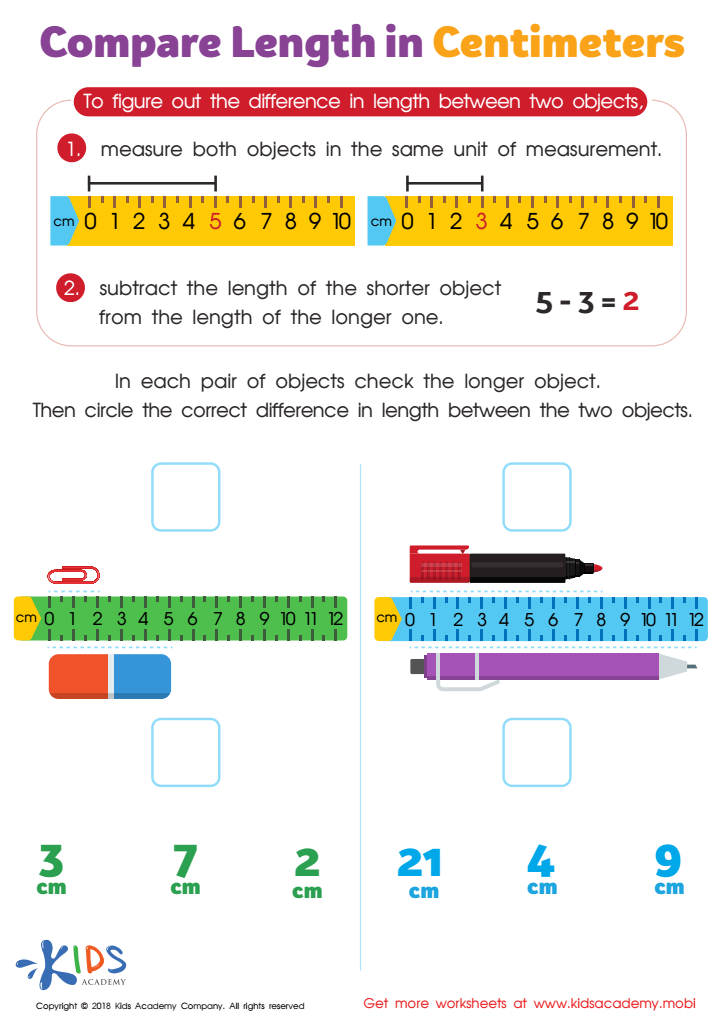
To do this worksheet, your child needs to be able to measure accurately, add and subtract. They must measure both items and subtract the shorter from the longer to work out the difference in length.
Compare Length in Centimeters Worksheet
Worksheet
Measuring Musical Instruments Worksheet
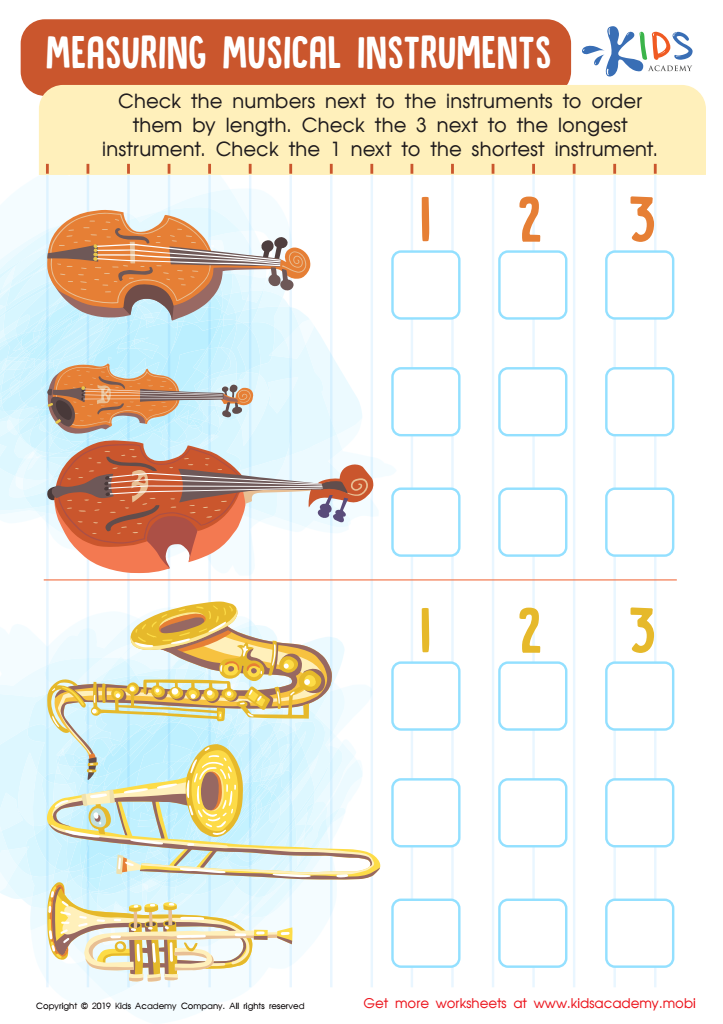
Learning measurements can be tricky, but this worksheet makes it easy. Ask your child to identify the instruments in the pictures. Then, order them by length using the numbers. 3 is the longest, 1 is the shortest. Simple exercises like this will help them understand the different metric systems.
Measuring Musical Instruments Worksheet
Worksheet
Measure It Twice: Feet and Yards Worksheet
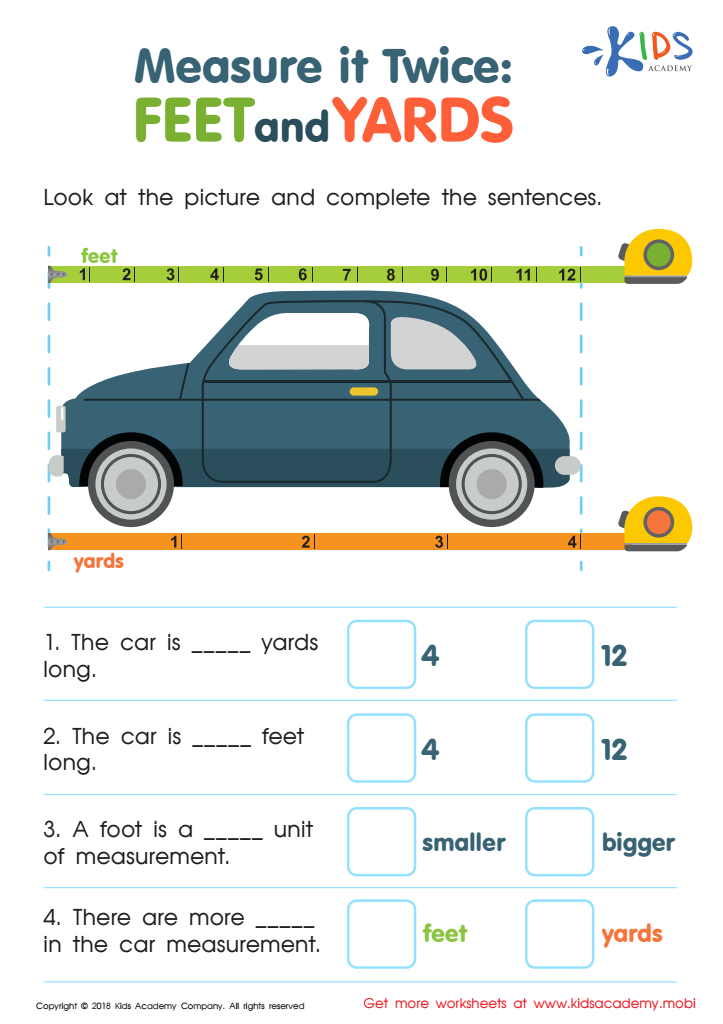
A car is pictured with a metric ruler in feet at the top and a yard ruler at the bottom. Get your child to look at the picture and complete sentences about it; for example, how many yards long is the car? Is a foot a bigger or smaller unit of measurement? It'll teach them that 1 yard is equal to 3 feet.
Measure It Twice: Feet and Yards Worksheet
Worksheet
Cups, Pints and Quarts 2 Worksheet
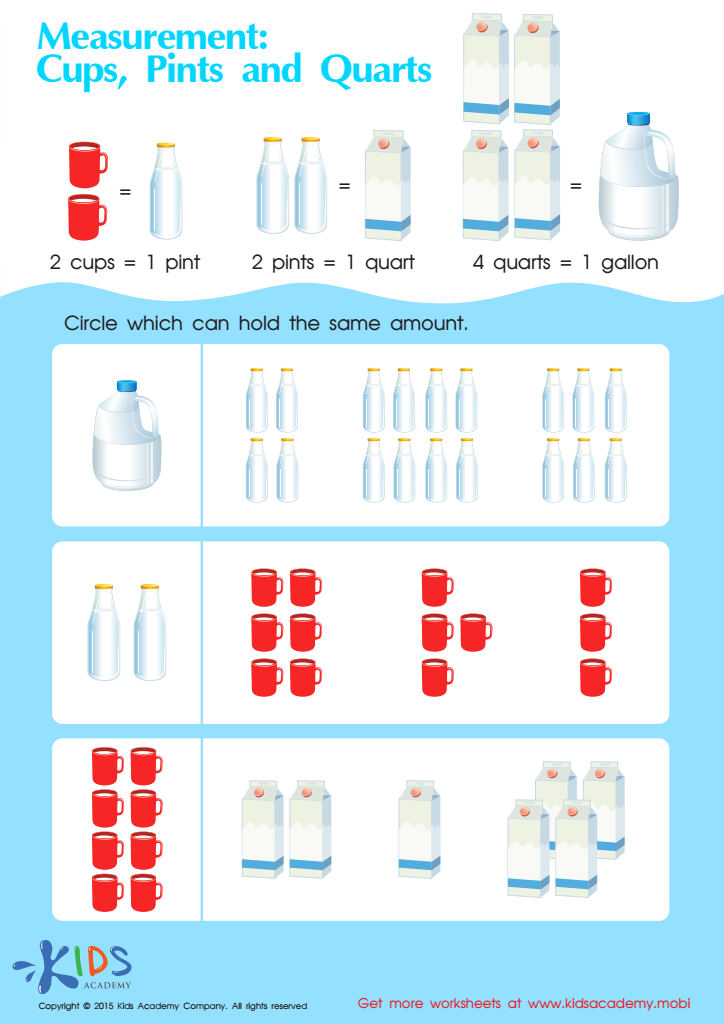
Practice measuring liquids with our free math worksheets. Learn how many cups are in a quart and how many quarts are in a gallon. Accurately calculate the answers and write them in the provided spaces. Visit Kids Academy for a collection of free worksheets and make math fun!
Cups, Pints and Quarts 2 Worksheet
Worksheet
Join Kids Academy for Free
Who is primarily going to use this learning content?






Understanding measurements is a foundational skill for children ages 3-7, and parents or teachers should prioritize it for several reasons. First, measurement concepts introduce children to essential math skills, such as counting, comparing, and understanding quantities. When children learn to measure length, weight, or volume, they develop a strong mathematical foundation that will support them as they progress through their education.
Secondly, measurement activities encourage critical thinking and problem-solving. By engaging in hands-on activities, such as measuring objects around the house or in the classroom, children learn to make observations, hypothesize outcomes, and draw conclusions – skills that are transferable to various subjects in school.
Moreover, understanding measurements enriches children's everyday experiences. It helps them grasp the world around them, whether it's baking with a parent and learning about cups and tablespoons or measuring ingredients for a science experiment. This experiential learning makes math more relevant and engaging.
Finally, fostering these skills early supports children's confidence in math. Building a strong conceptual understanding of measurements from a young age ensures that students approach math with a positive attitude, diminishing math anxiety in later years. Investing time in teaching measurement concepts lays the groundwork for lifelong learning and success in the STEM fields.








