Categorization skills Normal Matching Worksheets for Ages 3-7
6 filtered results
-
From - To
Enhance your child's learning with Categorization Skills Normal Matching Worksheets for ages 3-7. These fun and engaging worksheets from Kids Academy are designed to help young learners develop critical thinking and organizational skills. Perfect for preschool and early elementary children, these activities focus on sorting and grouping objects based on various attributes such as shape, color, and size. By practicing categorization, kids will strengthen their cognitive abilities and gain a deeper understanding of relationships and patterns, laying a solid foundation for future learning. Download these printable worksheets today and watch your child's skills flourish!
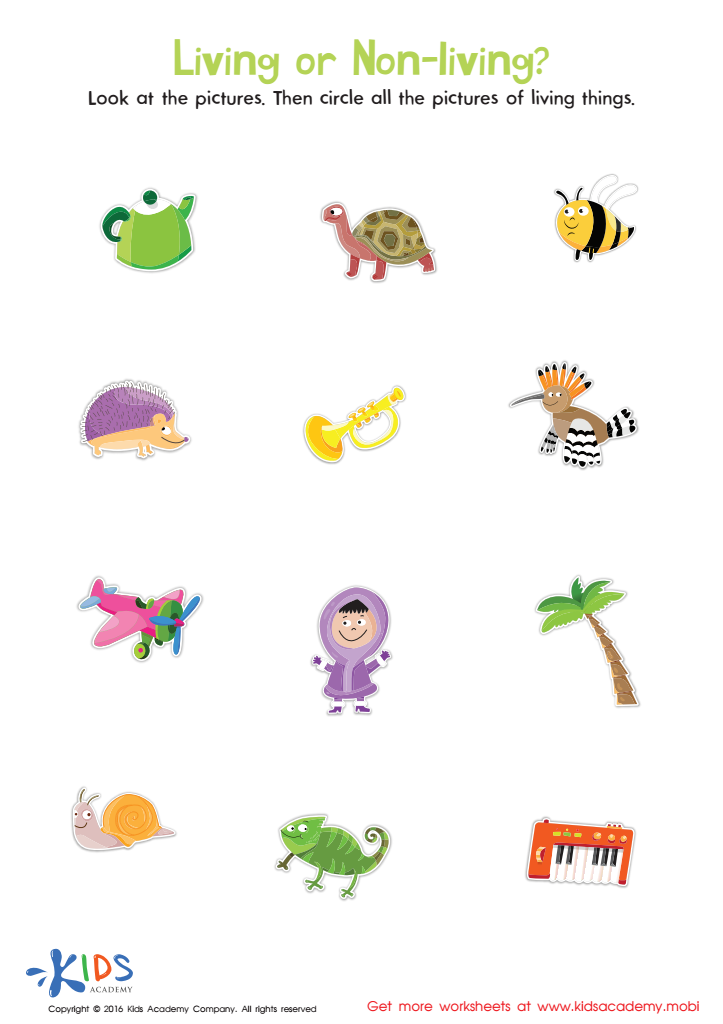
Identifying Living and Non–living Things Sorting Worksheet
 Assign to My Students
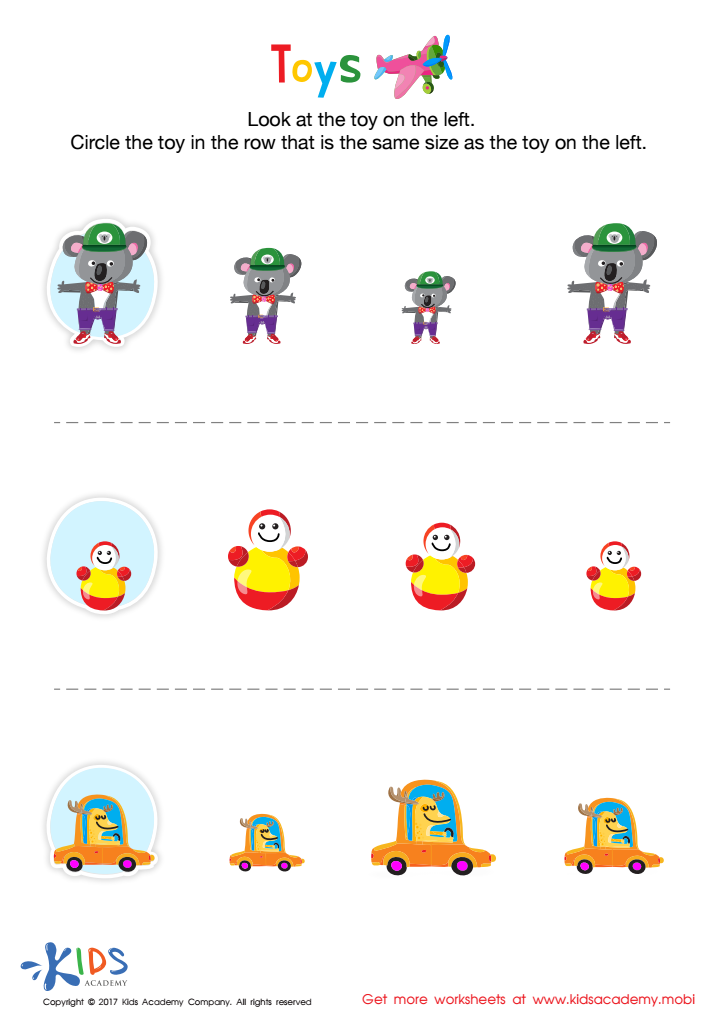
Matching: Classifying Toys by Size Worksheet
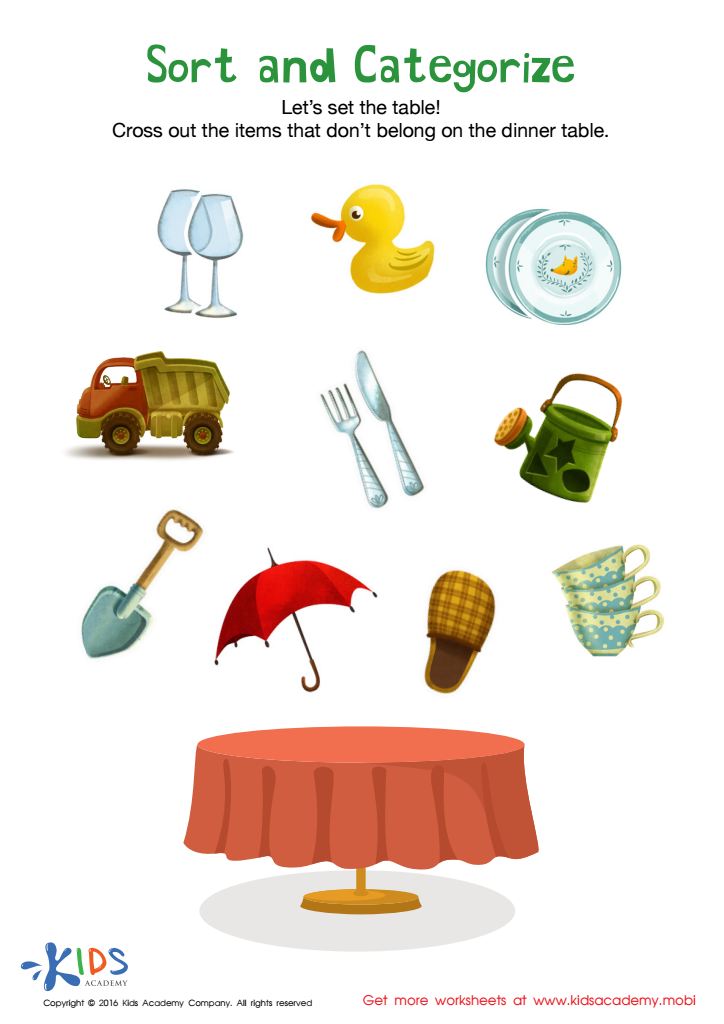
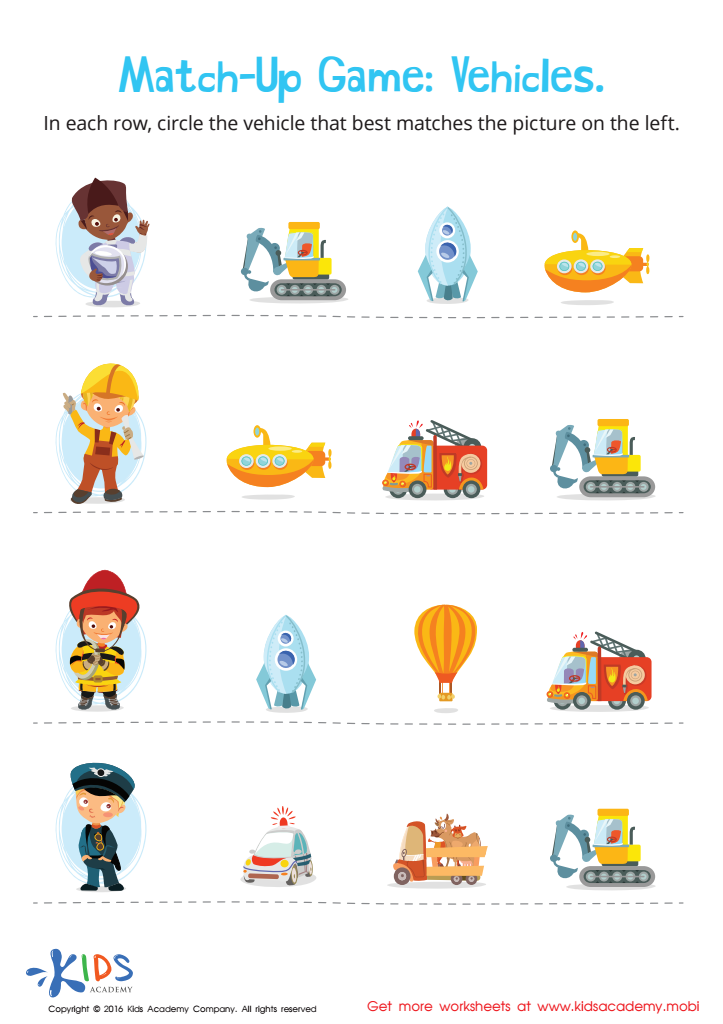
Vehicles Worksheet
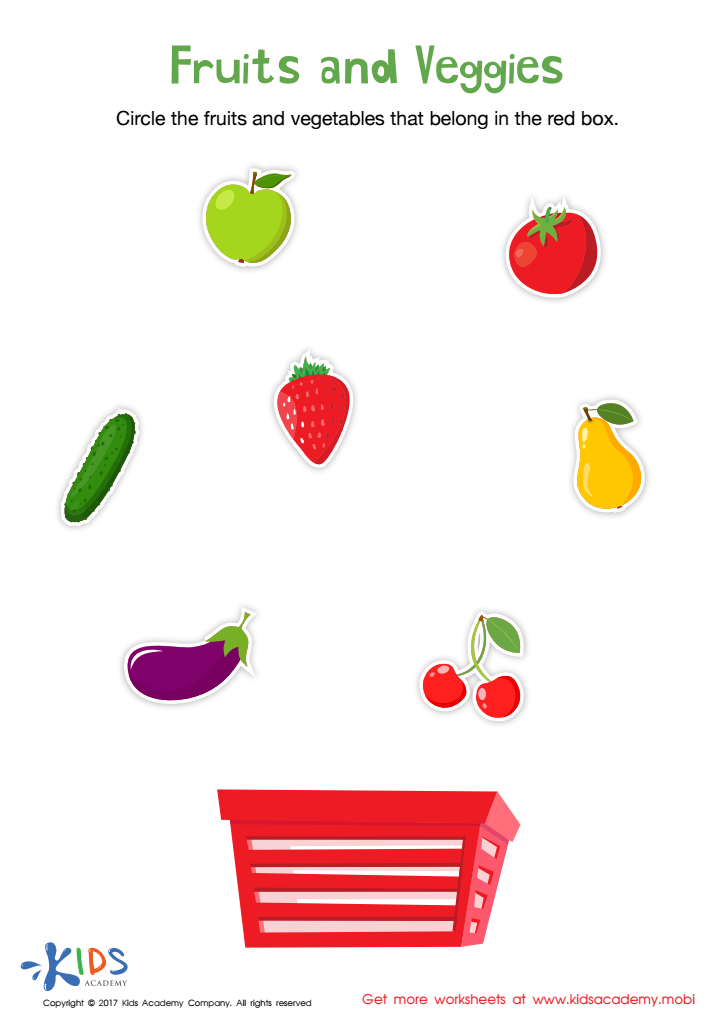
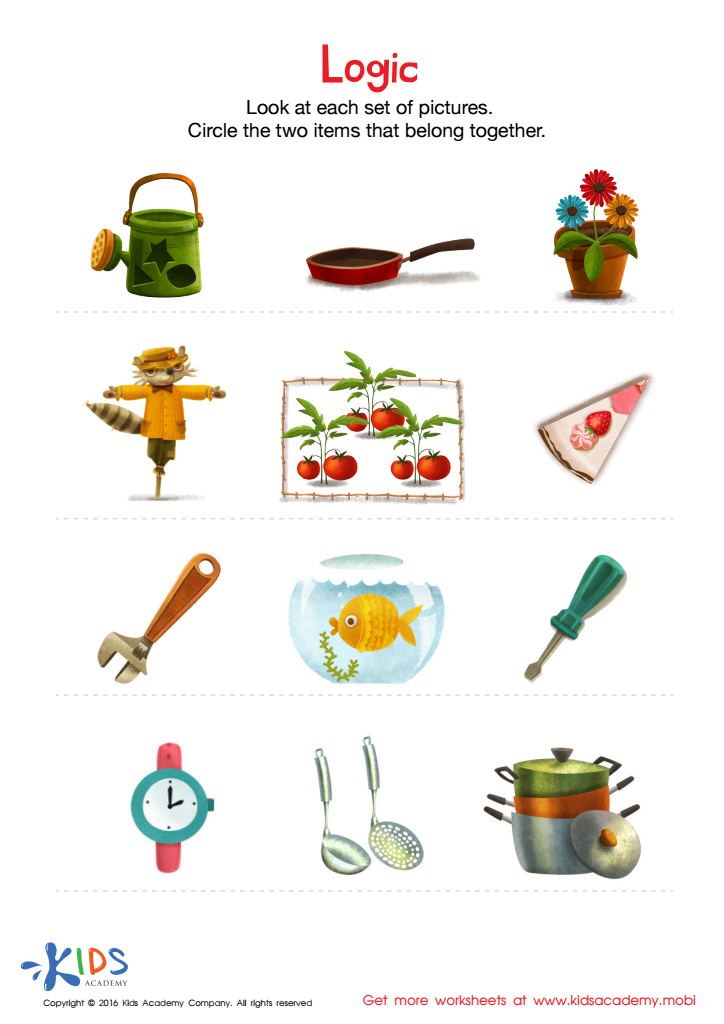
Logic Game Sorting Worksheet




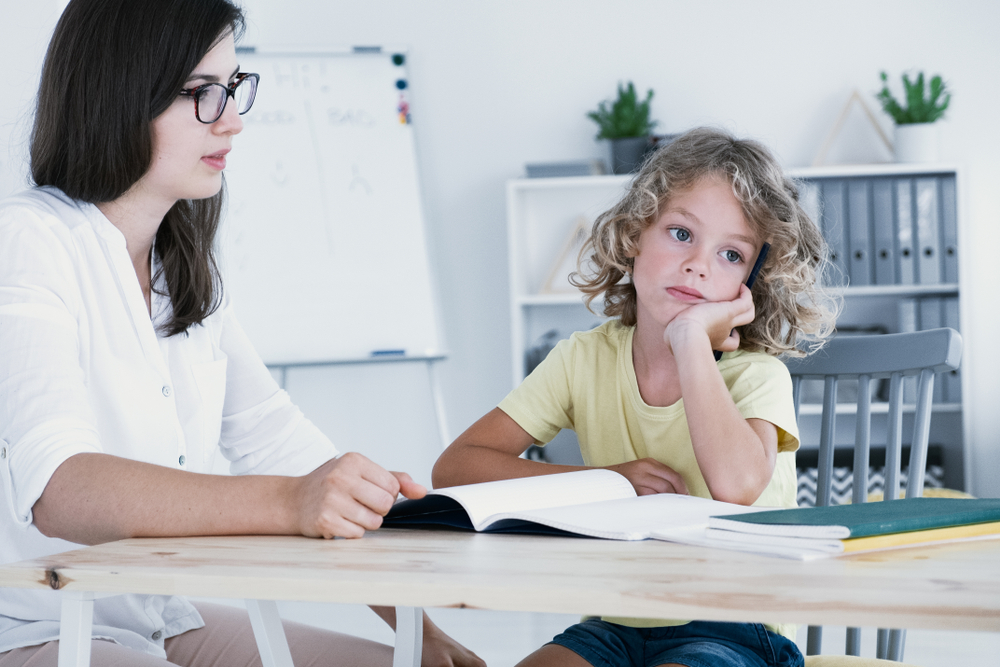



Categorization skills are fundamental cognitive abilities that play a crucial role in early childhood development, especially for ages 3-7. At this stage, children are naturally curious and rapidly expanding their understanding of the world. Categorization helps children make sense of their environment by grouping objects, people, and events into meaningful categories. This process supports higher-level thinking and learning.
Normal matching, or the ability to recognize and group similar items, is a foundational categorization skill that aids in several key developmental areas. For instance, it enhances language development by helping children understand and use vocabulary more effectively. Words are essentially labels for categories, so proficiency in matching objects and ideas directly translates to better communication skills.
Additionally, categorization enhances cognitive development by promoting logical thinking and problem-solving. When children sort objects by color, shape, or size, they learn to identify patterns and make predictions, fostering early mathematical and scientific reasoning.
Socially, these skills enable children to navigate social situations better by understanding categories of behavior, roles, and social norms. Recognizing that teachers usually provide instructions while peers might share toys helps children interact appropriately in various settings.
Therefore, parents and teachers should prioritize improving classification abilities in young children to support their overall intellectual, social, and emotional development, creating a strong foundation for future academic and life success.