
Letter recognition Normal Worksheets for Ages 3-8
67 filtered results
Difficulty Level
Grade
Age
-
From - To
Subject
Activity
Standards
Welcome to our Letter Recognition Normal Worksheets for ages 3-8! Our engaging and interactive worksheets are designed to help young learners develop their foundational literacy skills. These worksheets feature colorful illustrations and various activities that make letter recognition fun and effective. Children will practice identifying, tracing, and writing letters, enhancing their understanding of the alphabet. Perfect for homeschooling, classroom activities, or additional practice at home, our resources cater to all learning styles. With easy-to-follow instructions and dynamic content, you can boost your child's confidence in reading and writing. Discover the joy of learning with our letter recognition worksheets today!
Favorites
With answer key
Interactive
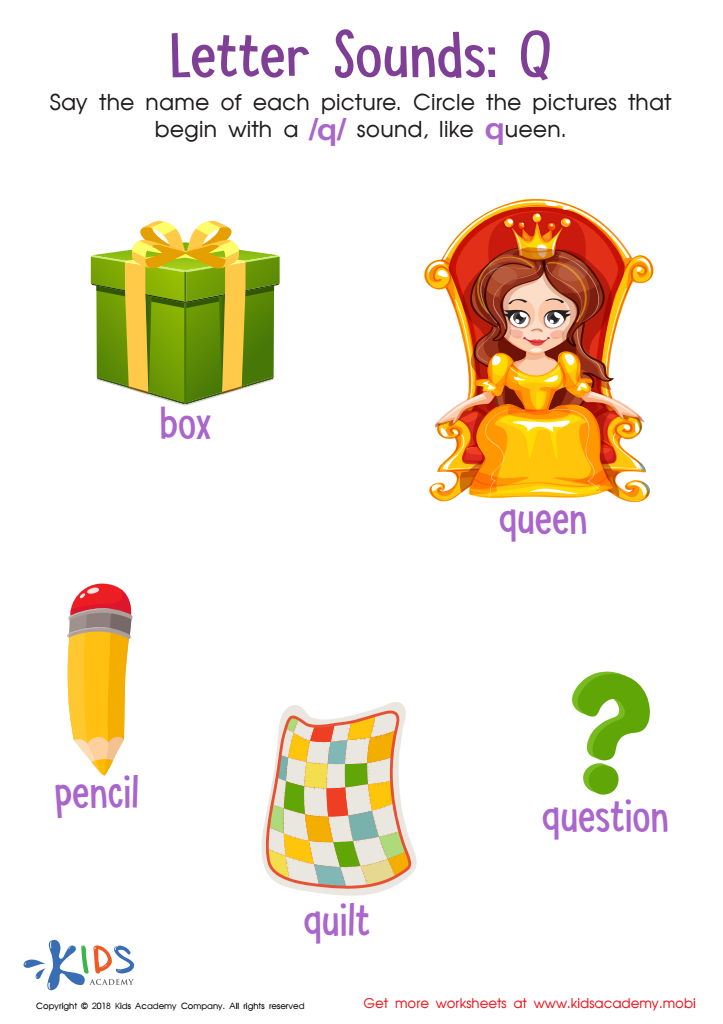
Letter Q Sounds Worksheet
Kids can get confused between "K" and "Q" sounds. Help them learn with this phonics worksheet. They'll name each image and read the word underneath. Point out that words with "Q" also have a "U" which affects how it sounds. Have them circle the matching pictures and watch as they learn this unique letter sound.
Letter Q Sounds Worksheet
Worksheet
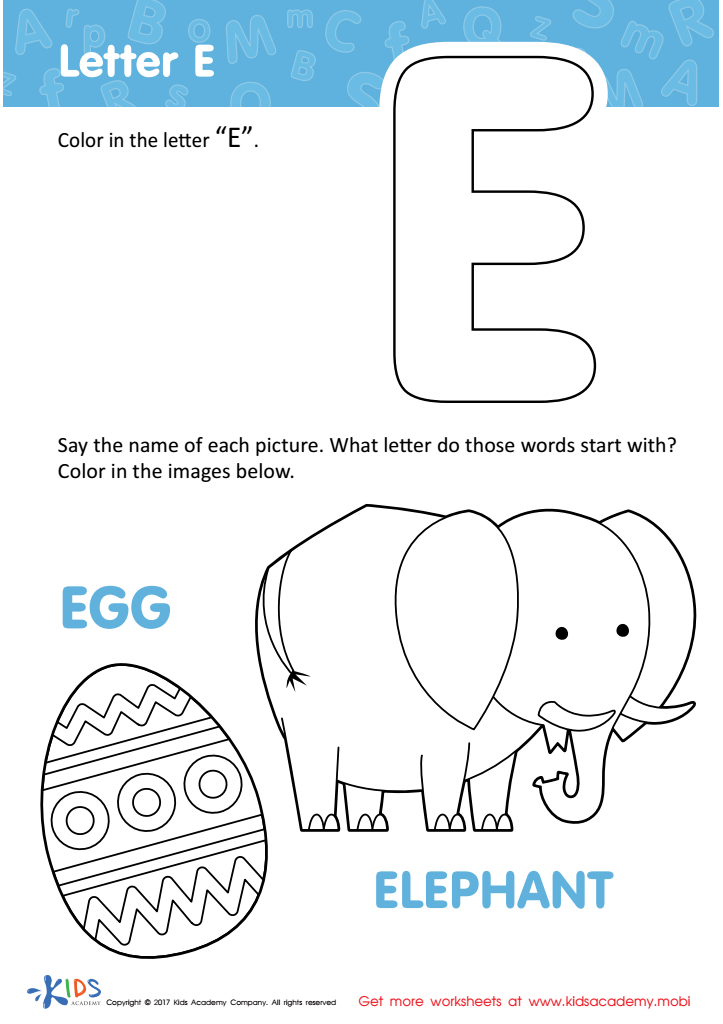
Letter E Coloring Sheet
Coloring pages are great for teaching kids the alphabet and words! This "E" page features a cute elephant and Easter egg. Kids will love it and learn the letter "E" at the same time. 80 words
Download (PDF)
 Assign to My Students
Assign to My Students
Letter E Coloring Sheet
Worksheet
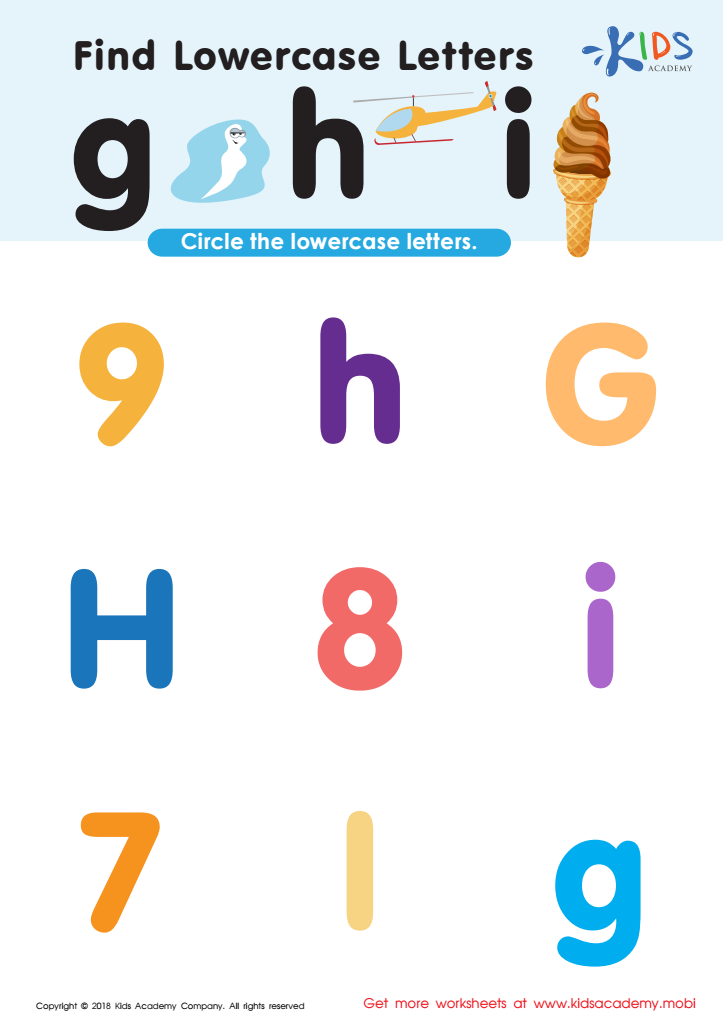
Find Lowercase Letters g h i Worksheet
Turn learning into a fun journey with your child! Use this free worksheet to find and circle the lowercase letters hidden amongst uppercase letters and numbers. Your child will understand what you're teaching them as they enjoy the search.
Find Lowercase Letters g h i Worksheet
Worksheet
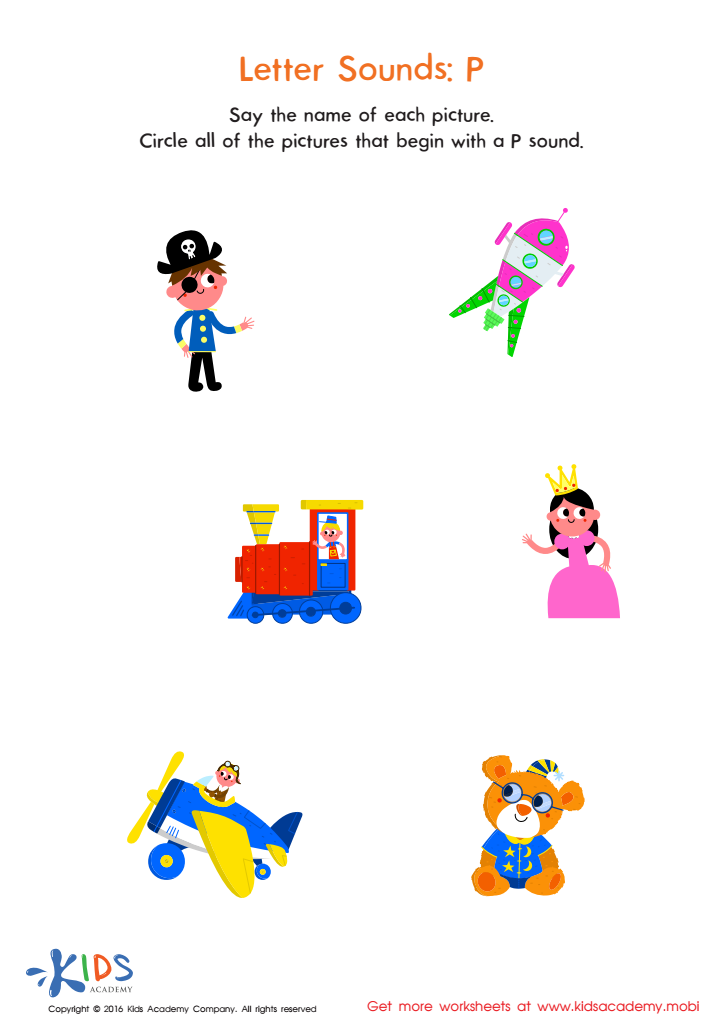
Letter P Sound Worksheet
Think P! Kids practice phonics with this fun letter P worksheet. With delightful illustrations, they'll sound out simple words and get closer to reading.
Letter P Sound Worksheet
Worksheet
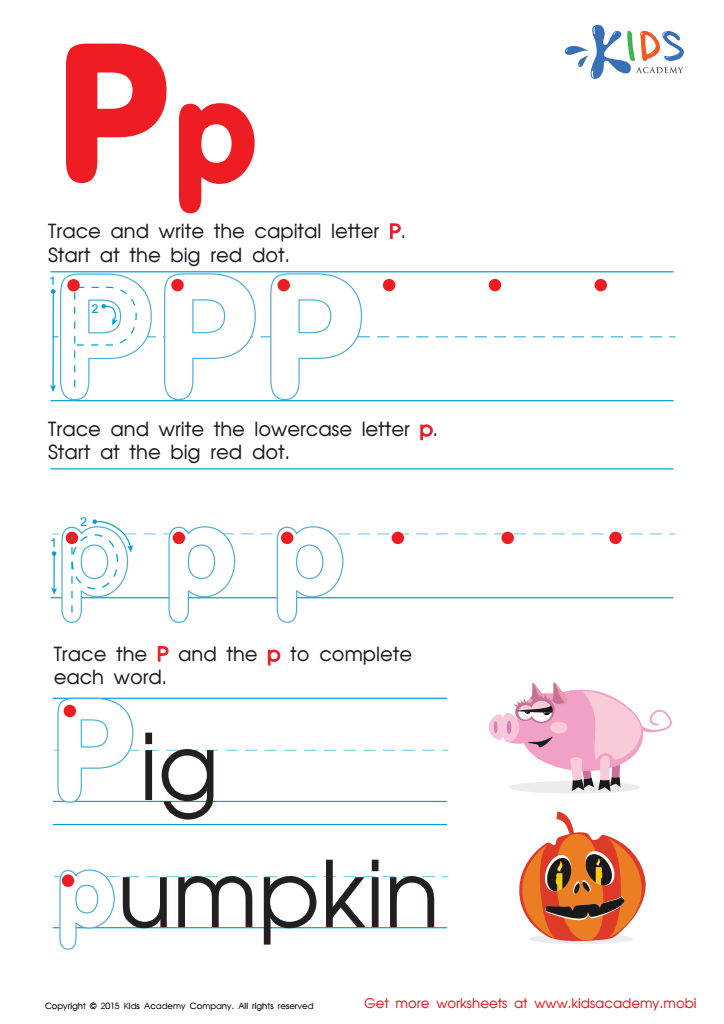
Letter P Tracing Page
Trace the lines from the red dot to learn to write "P"! Then practice this letter with the fun activities: complete the word "Pig" and "Pumpkin". Check out Kids Academy to get more free ABC worksheets.
Letter P Tracing Page
Worksheet
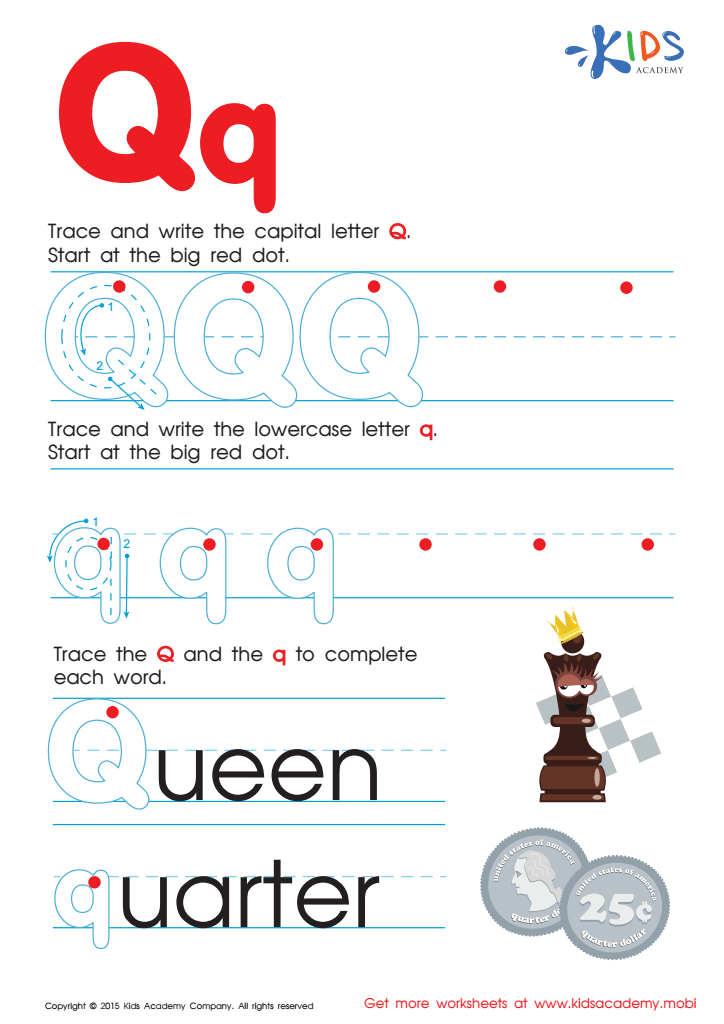
Letter Q Tracing Page
Learn the letter "Q"! Trace and write it a few times in upper and lowercase. Then help the Queen by writing her initial letter. Finally, write "quarters" and practice with more alphabet worksheets.
Letter Q Tracing Page
Worksheet
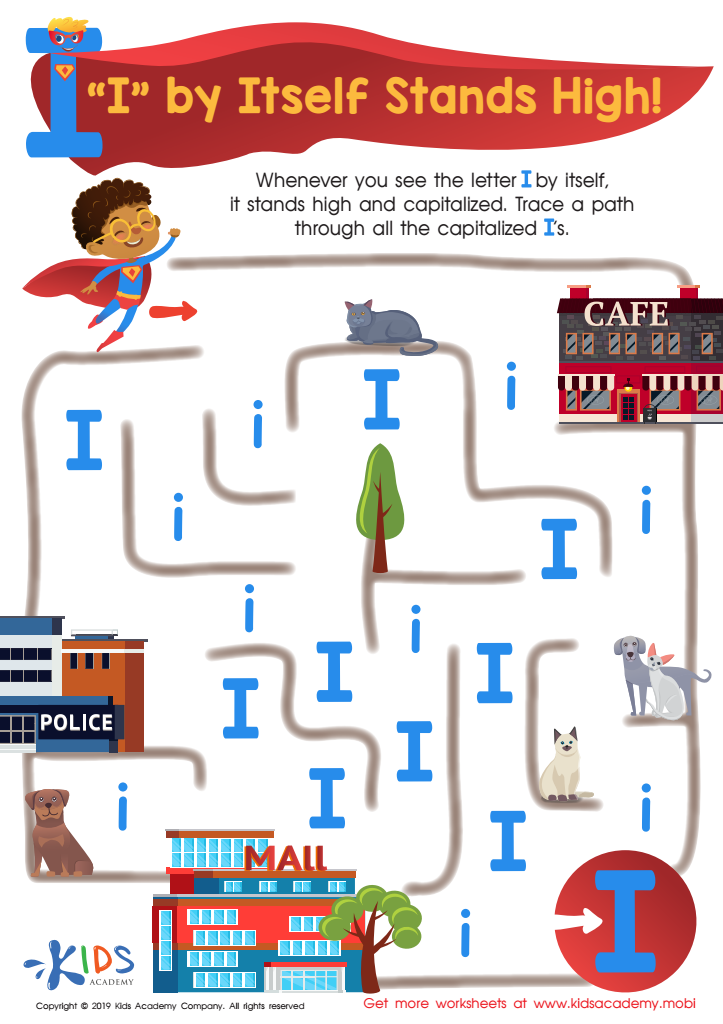
I Stands High Worksheet
Kids can use their imagination to help a superhero find the uppercase 'I's on the 'I By Itself Stands High' worksheet. This helps children learn capitalization, and they can join the superhero in flying over a city of cats, dogs and buildings to locate the needed letters.
I Stands High Worksheet
Worksheet
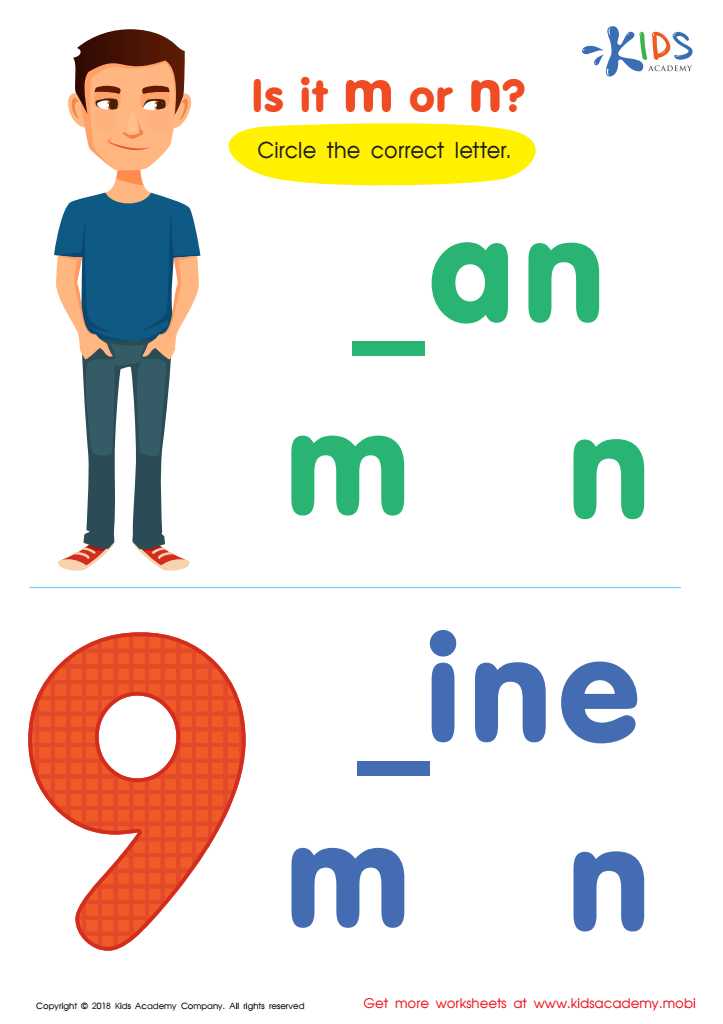
Is It m or n? Worksheet
Help your child circle the letter that begins the words "man" and "nine" in the picture. This is a great way for them to learn the alphabet.
Is It m or n? Worksheet
Worksheet
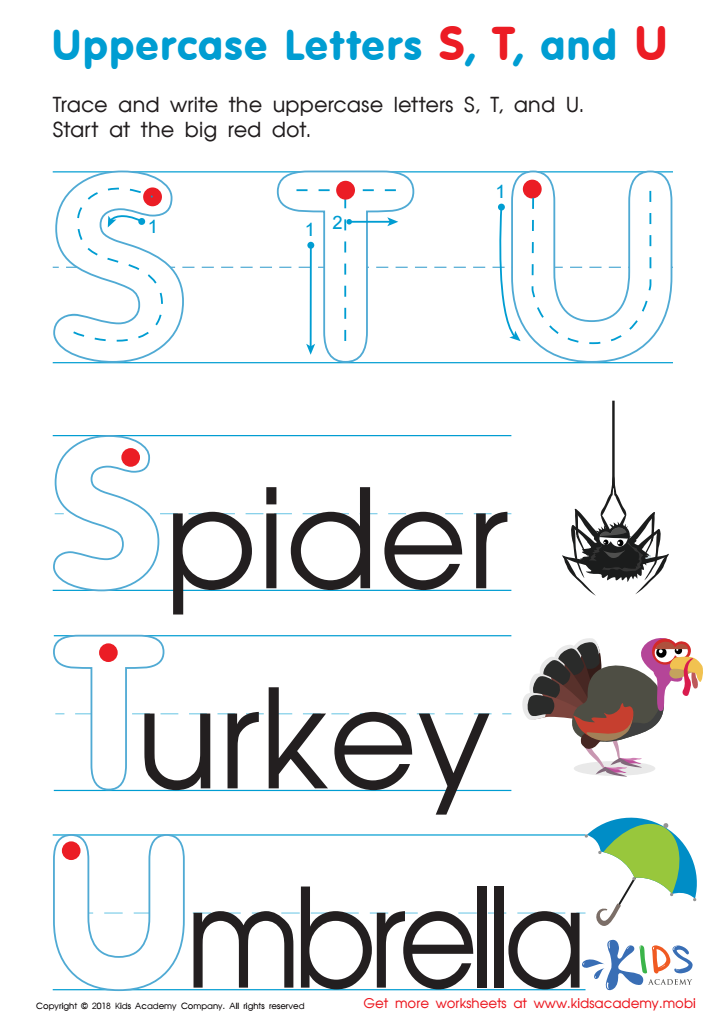
Uppercase Letters S, T, and U Worksheet
Help your kids learn to write upper-case letters with this fun tracing sheet. Start at the big red dot for each letter: S, T, and U. Show them the pictures and ask what letter each word starts with. Guide their hand and watch them learn!
Uppercase Letters S, T, and U Worksheet
Worksheet
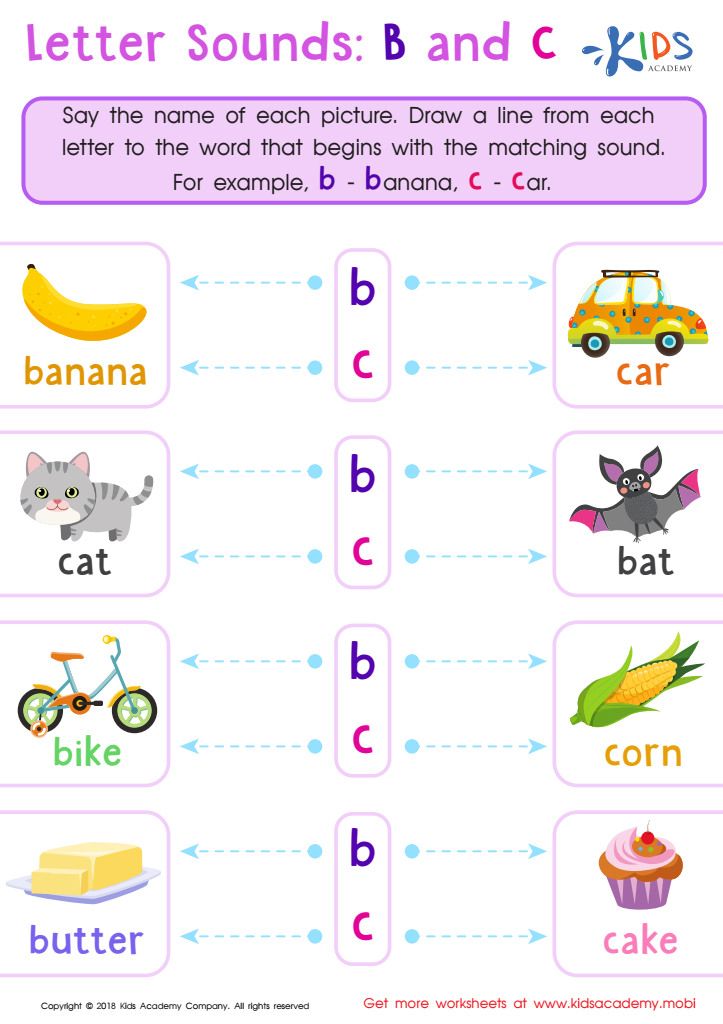
Letter B and C Sounds Worksheet
This fun worksheet offers bright, engaging pictures and helps kids learn to distinguish between the sounds of "B" and "C". With the use of pictures and familiar items, kids will trace lines to the correct initial consonant sound, while also developing fine-motor skills. It's a great way to build decoding ability!
Letter B and C Sounds Worksheet
Worksheet
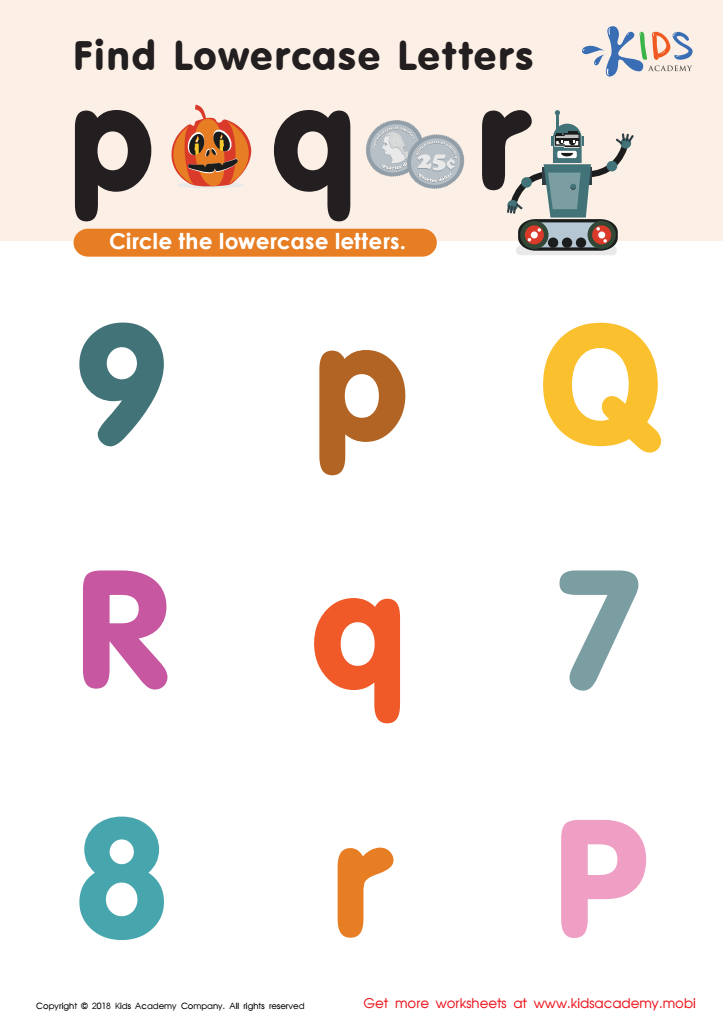
Find lowercase Letters p q r Worksheet
Help your child spot the lowercase letters among the numbers and uppercase letters in this worksheet. It's a great way to teach them to identify and write the lowercase and uppercase letters. Assist them in completing the exercise to give them a better understanding of the alphabets.
Find lowercase Letters p q r Worksheet
Worksheet
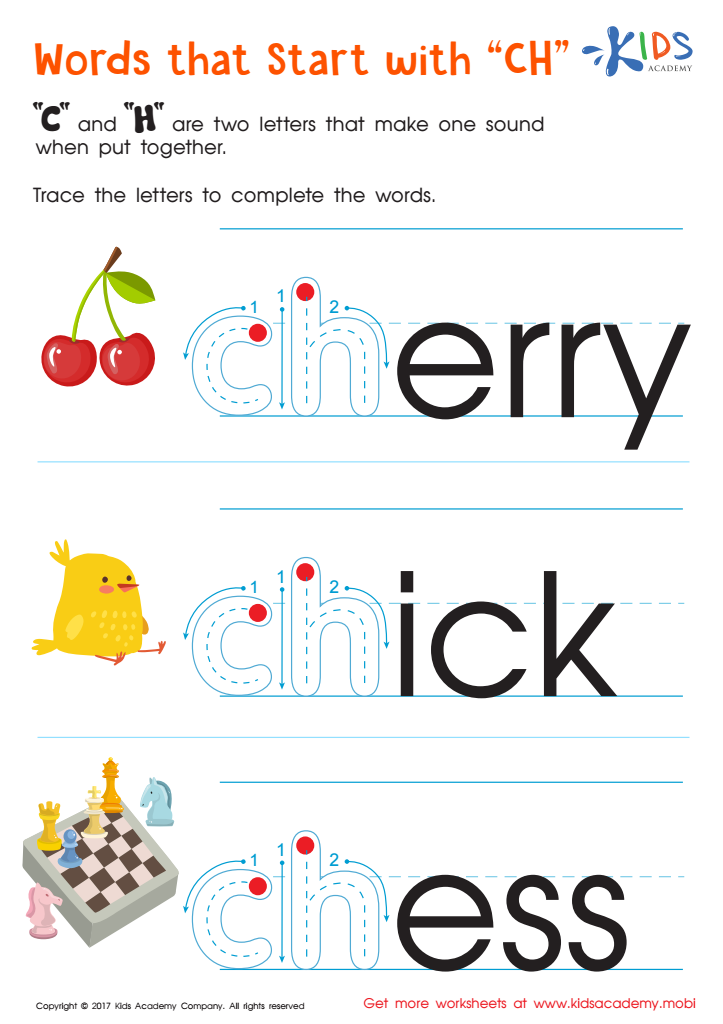
Words That Start with "ch" Spelling Worksheet
With Kids Academy, learning phonics and spelling has never been easier.
Kids Academy's "ch" tracing worksheet makes it easy for your little one to learn phonics and spelling. It features cute, brightly colored images to help them trace familiar words, making learning fun and enjoyable.
Words That Start with "ch" Spelling Worksheet
Worksheet
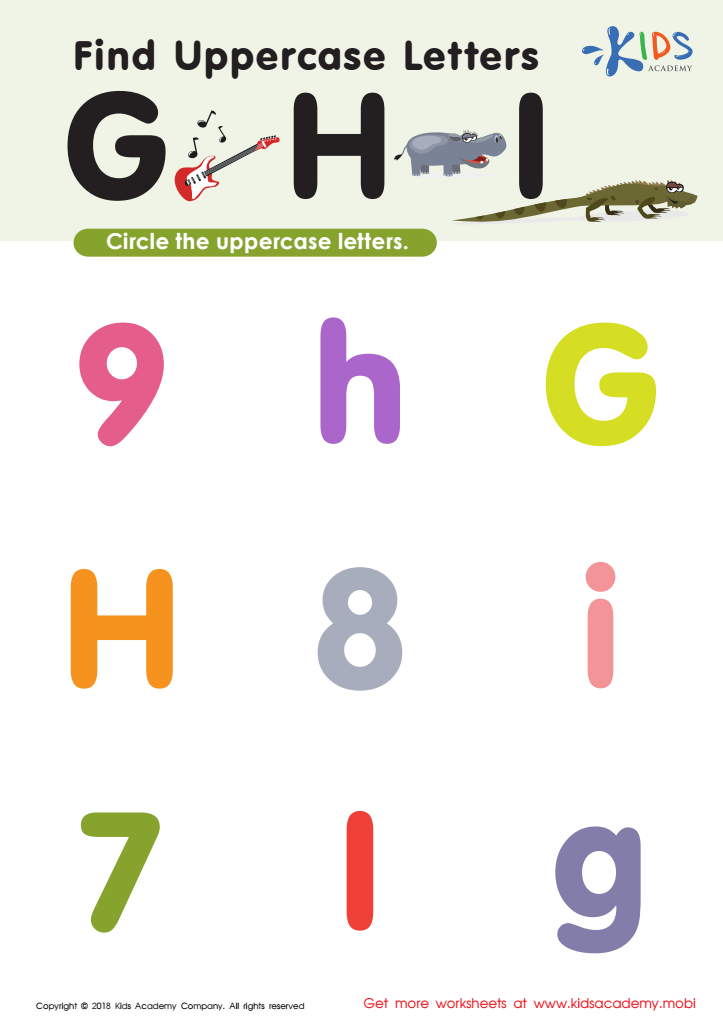
Find Uppercase Letters G, H, and I Worksheet
Find G, H, and I in uppercase with this downloadable worksheet! Numbers are included to challenge your kindergartener's letter recognition skills. Plus, practice G, H, and I sounds using the cute graphics. Perfect for learning letter case recognition!
Find Uppercase Letters G, H, and I Worksheet
Worksheet
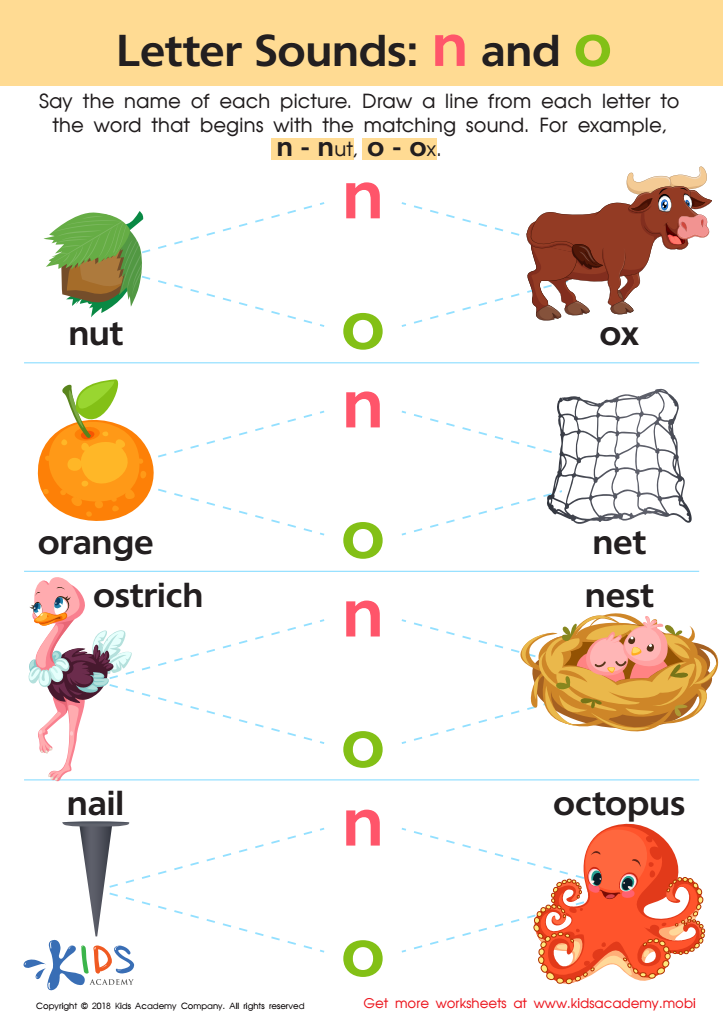
Letter N and O Sounds Worksheet
Help your preschooler learn to recognize the N and O letter sounds with this vibrant worksheet from Kids Academy! Have them say the name of each picture and listen for N or O. Trace the dotted line from letter to its match to complete the phonics review. It's a fun way to help them master the difference between the two sounds!
Letter N and O Sounds Worksheet
Worksheet
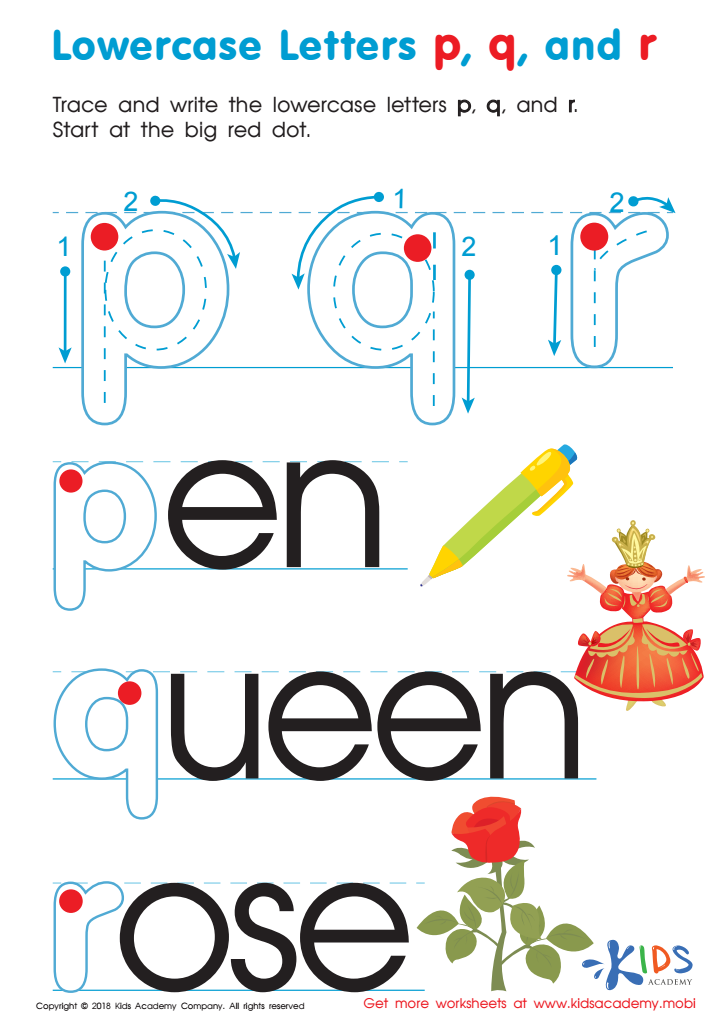
Lowercase Letters p q r Worksheet
Trace and write lowercase letters p, q and r with this fun worksheet. Each letter has a large red dot to mark the start, and dotted lines to follow with a pencil. Colorful images and text make it an enjoyable way to learn.
Lowercase Letters p q r Worksheet
Worksheet
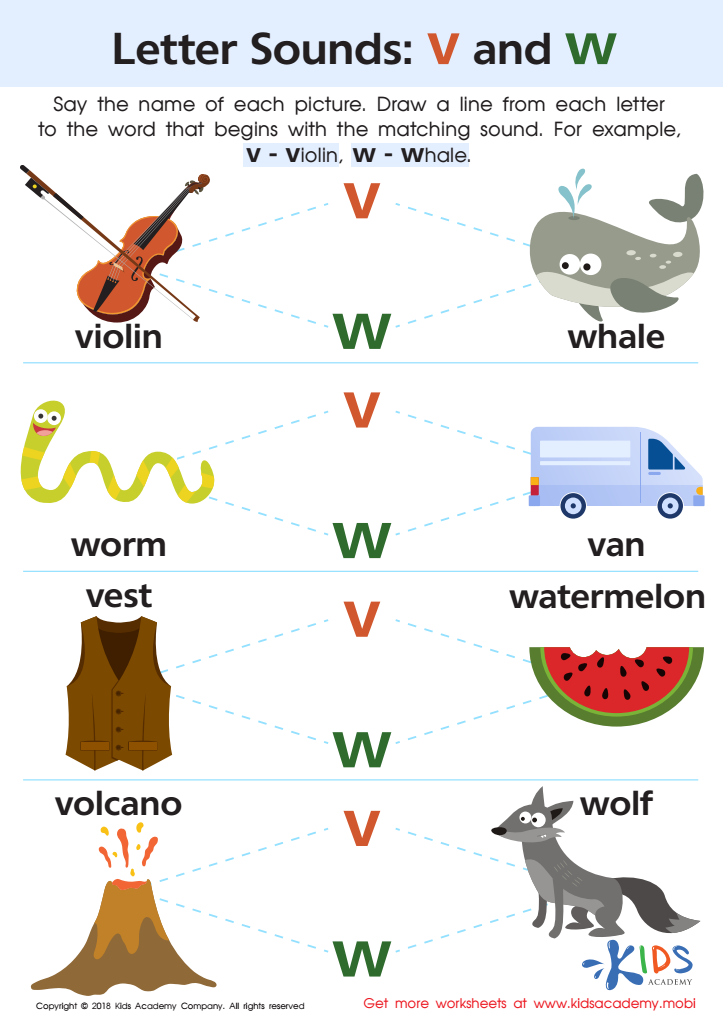
Letter V and W Sounds Worksheet
Help your child master the sounds of W & V while completing this fun phonics worksheet. Have them trace the dotted line from letter to picture while saying words like "worm", "violin" and "van" aloud to notice how each word begins with either W or V. Listen and pay attention to the pronunciation to complete the practice.
Letter V and W Sounds Worksheet
Worksheet
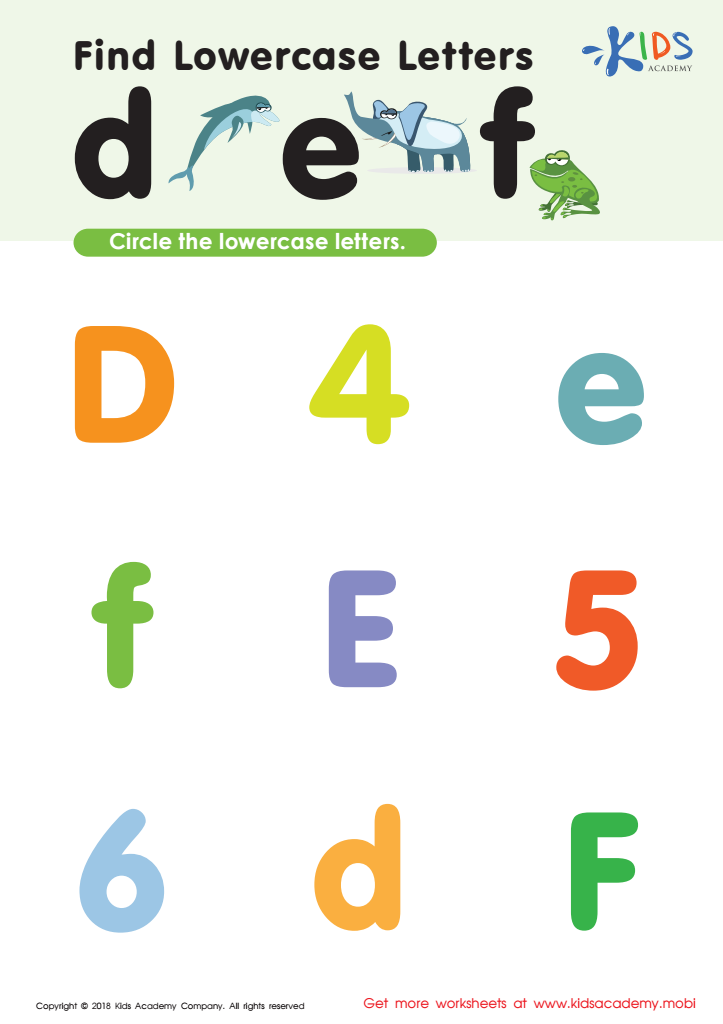
Find Lowercase Letters d e f Worksheet
Engage your child's brain with this fun, colorful worksheet. They'll identify and circle lowercase letters among other numbers and uppercase letters in bright colors. This will keep their attention as they learn, and can be downloaded in PDF form!
Find Lowercase Letters d e f Worksheet
Worksheet

Letter H Tracing Page
Trace the letter "H", then practice writing its lowercase form. Finally, choose your favorite form of transport and ride away! Get our worksheets to make learning fun and easy.
Letter H Tracing Page
Worksheet
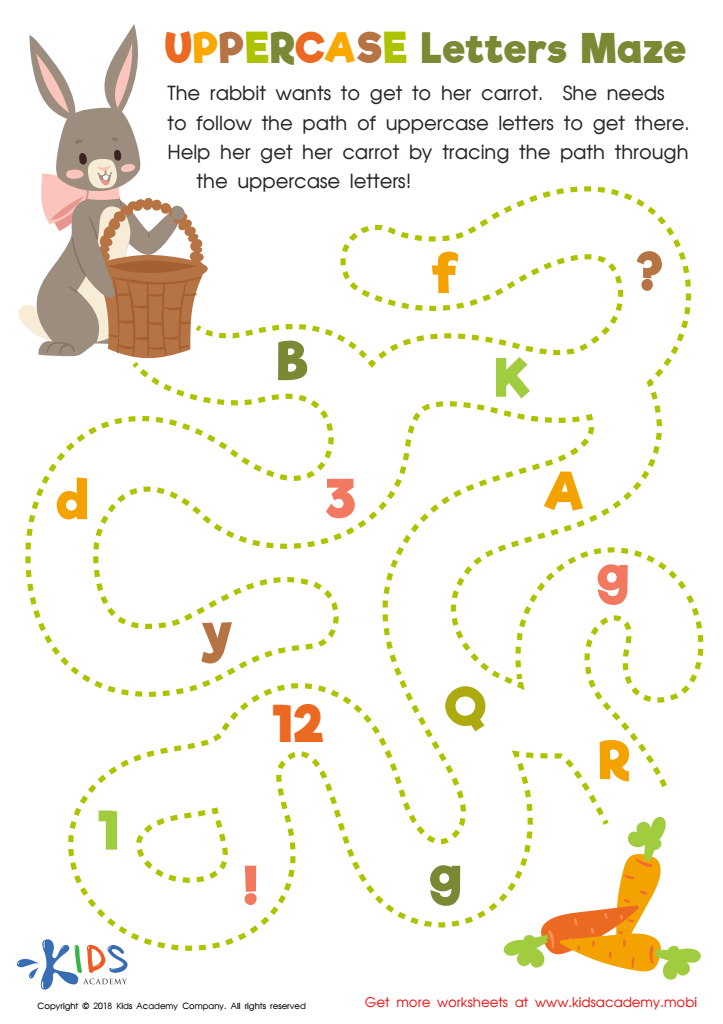
Uppercase Letters Maze Worksheet
Kids can have fun helping a rabbit find her carrot by picking the path with uppercase letters. This worksheet teaches letter differentiation while building confidence. Kids will have a great time while getting an essential skill!
Uppercase Letters Maze Worksheet
Worksheet
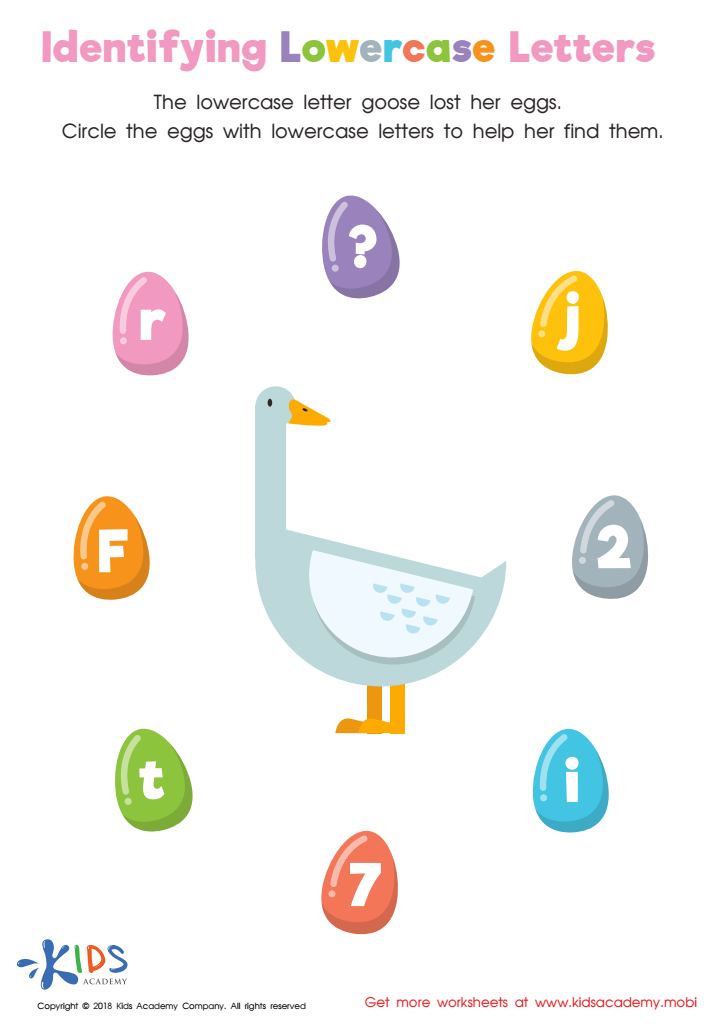
Identifying Lowercase Letters Worksheet
Help your child learn to recognize lowercase and uppercase letters by having them complete this fun worksheet. It has them help a goose find her eggs, which all feature lowercase letters. This is a great way to start the fundamentals of writing letters. Download the PDF and get started!
Identifying Lowercase Letters Worksheet
Worksheet
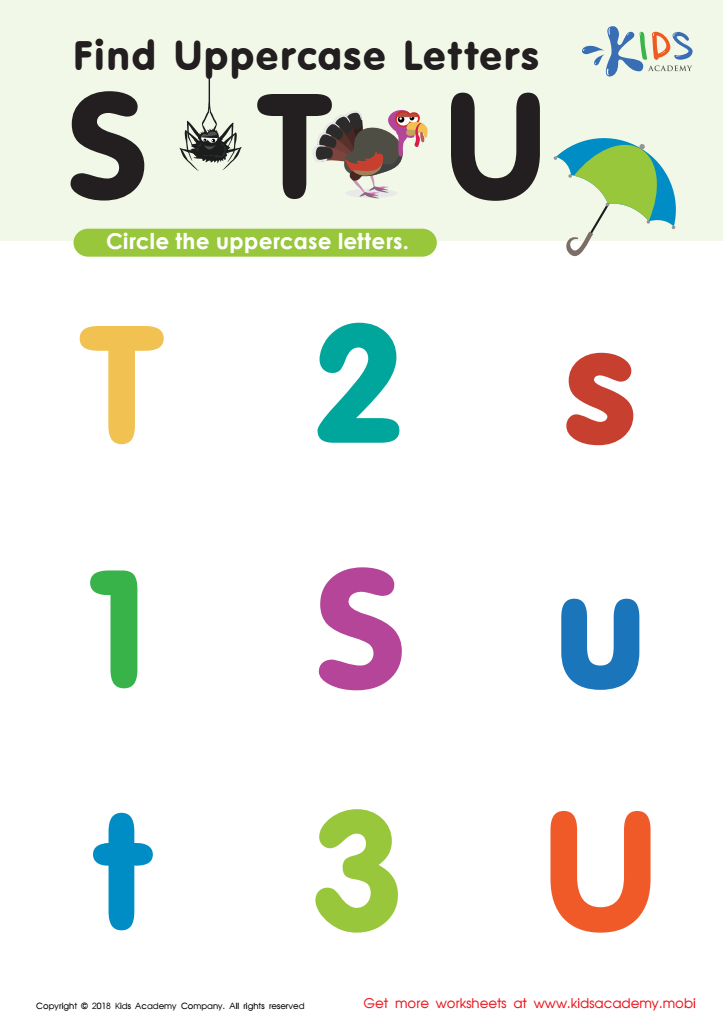
Find Uppercase Letters Worksheet
What level is your kid at now? Can they tell the difference between small and uppercase letters? Ask them to name words beginning with S, T and U, then help them find and circle the uppercase letters S, T and U in a mix of small letters, numbers and uppercase letters.
Find Uppercase Letters Worksheet
Worksheet
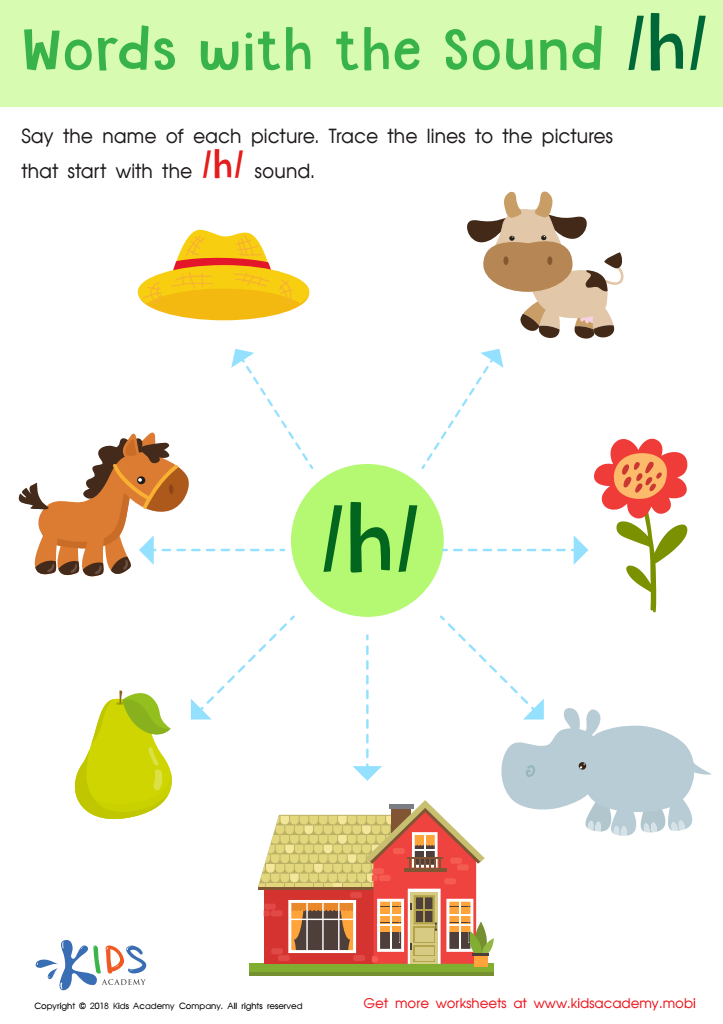
Words with sound h Reading Worksheet
The letter H can often be heard in words! Check your child's knowledge with an engaging worksheet from Kids Academy. Ask them to go around a circle and name each image aloud. Listen for the starting sound and trace the line from the middle letter to the images with the sound. This is a great way to practice phonics!
Words with sound h Reading Worksheet
Worksheet
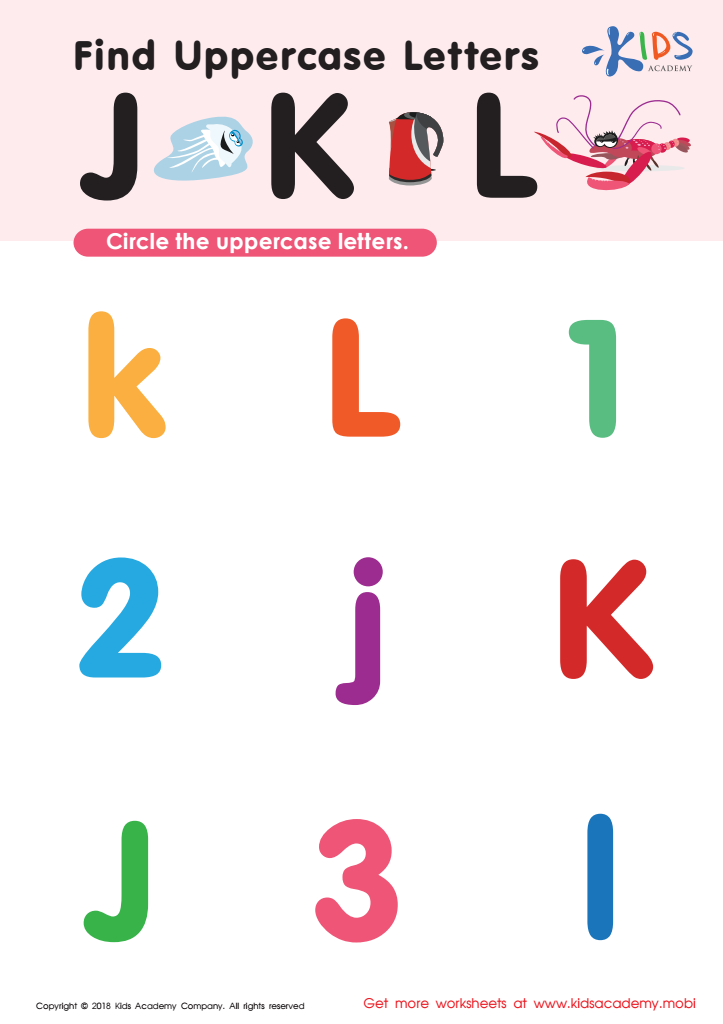
Find Uppercase Letters J, K, and L Worksheet
Search for the uppercase letters J, K, and L in this fun worksheet! Help your child identify the starting sound of each picture, then look for the letters. Keep an eye out for numbers that look like letters. Swim with the jellyfish and solve this delightful puzzle!
Find Uppercase Letters J, K, and L Worksheet
Worksheet
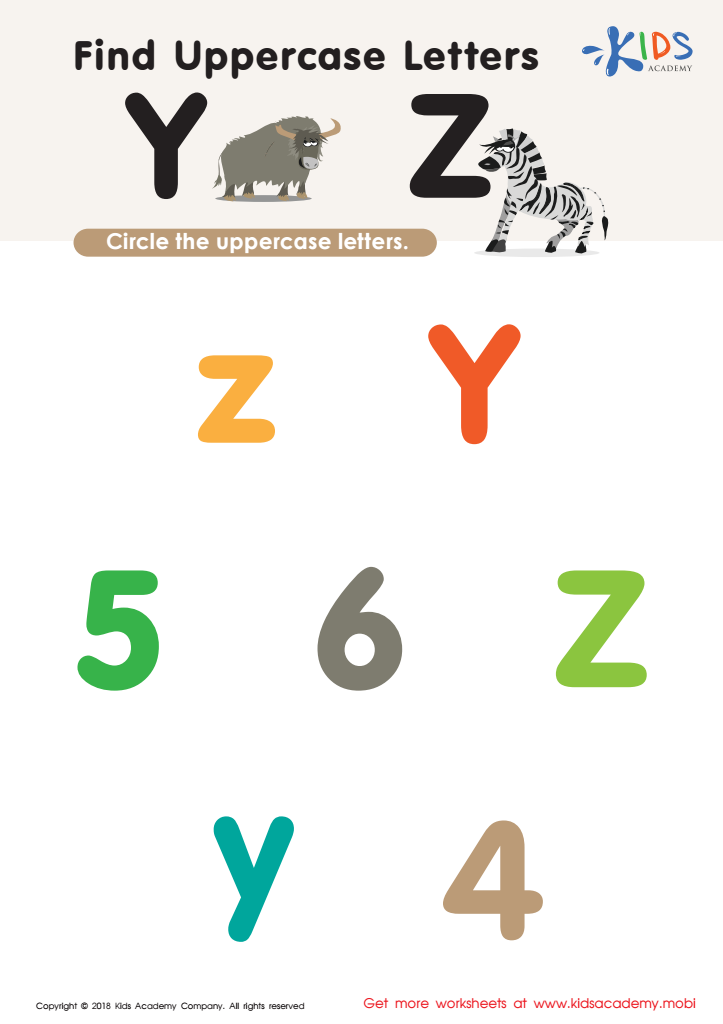
Find Uppercase Letters Y Z Worksheet
Download the worksheet! Help your youngster to learn the alphabet and distinguish uppercase from lowercase letters by having them circle the uppercase ones. It's an important first step towards reading and writing success!
Find Uppercase Letters Y Z Worksheet
Worksheet
Join Kids Academy for Free
Who is primarily going to use this learning content?






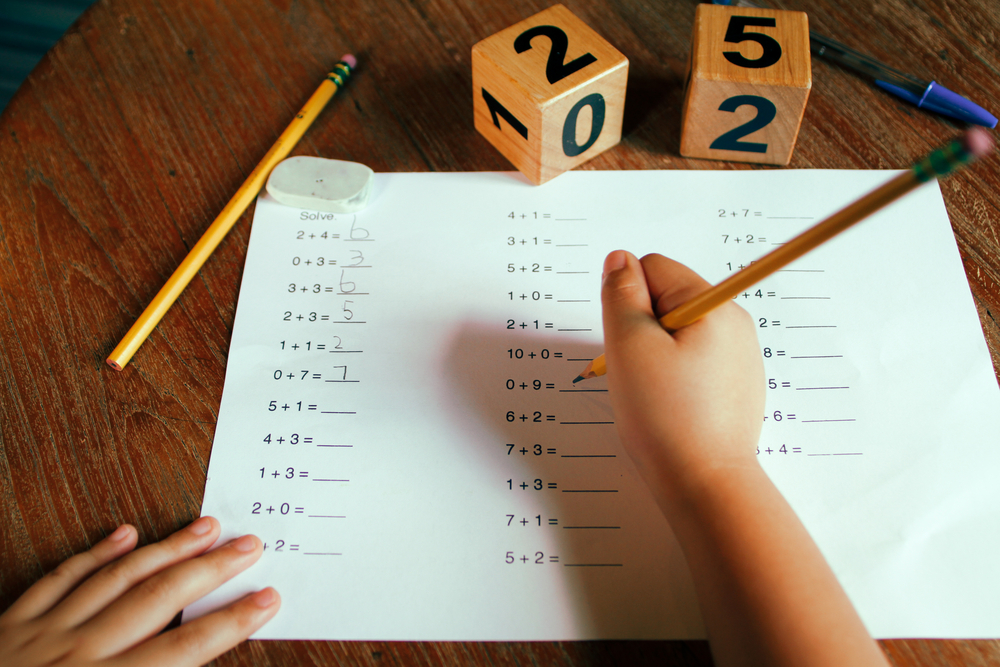

Letter recognition is a crucial developmental milestone for children aged 3-8, serving as the foundational skill for literacy and overall academic success. Parents and teachers should prioritize this skill because it significantly influences a child’s ability to read and write.
Understanding letter shapes, names, and sounds enhances phonemic awareness, which is vital for decoding words. Children who master letter recognition early tend to have a smoother transition into reading and often develop a lifelong love for books and learning. Moreover, recognizing letters also helps improve fine motor skills, as young learners engage in related activities such as writing or drawing.
Additionally, fostering letter recognition nurtures a positive self-image. Children gain confidence as they become proficient in identifying letters, encouraging their curiosity and willingness to explore language further. This confidence can extend to other areas of learning and social interactions.
In a digital era where literacy is increasingly important, engaging children in letter recognition activities can prepare them for future educational challenges. Overall, prioritizing this skill between ages 3 and 8 lays the groundwork for effective communication, critical thinking, and success in various future endeavors. Hence, both parents and teachers play vital roles in cultivating this foundational ability.








