Interpreting data Normal Numbers Worksheets for Ages 3-8
3 filtered results
-
From - To
Unlock the world of data for your child with our "Interpreting Data Normal Numbers Worksheets for Ages 3-8"! Perfect for young learners, these engaging worksheets help kids build essential math skills while exploring numbers and patterns. Fun and interactive, each sheet offers activities designed to teach counting, comparing, and understanding data. Bright illustrations and playful exercises make learning enjoyable, allowing children to develop confidence in their numeric abilities. Ideal for home or classroom use, our worksheets provide a solid foundation for future success in math. Start your child’s journey to mastering numbers with our expertly crafted resources!
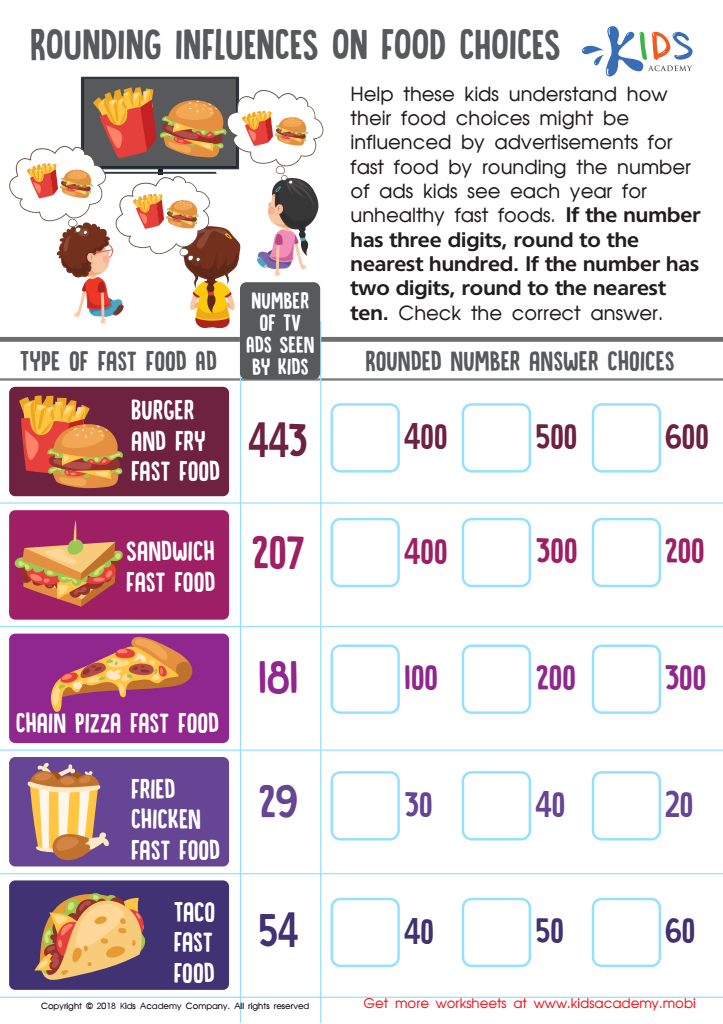
Rounding Influences Food Choices Worksheet
 Assign to My Students
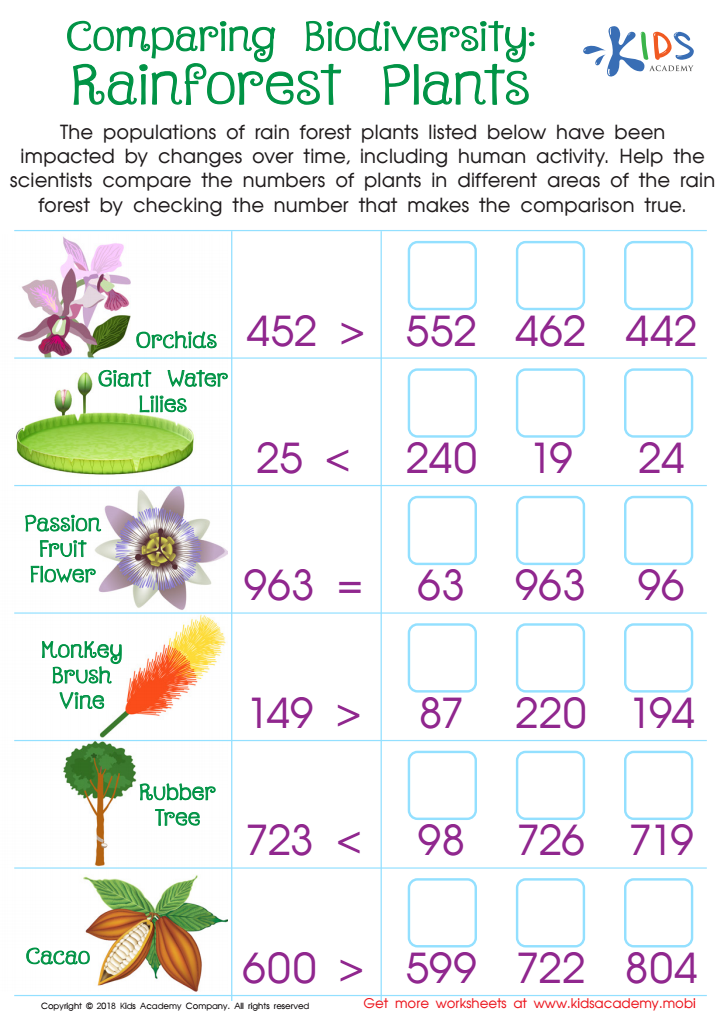
Comparing Biodiversity: Rainforest Plants Worksheet
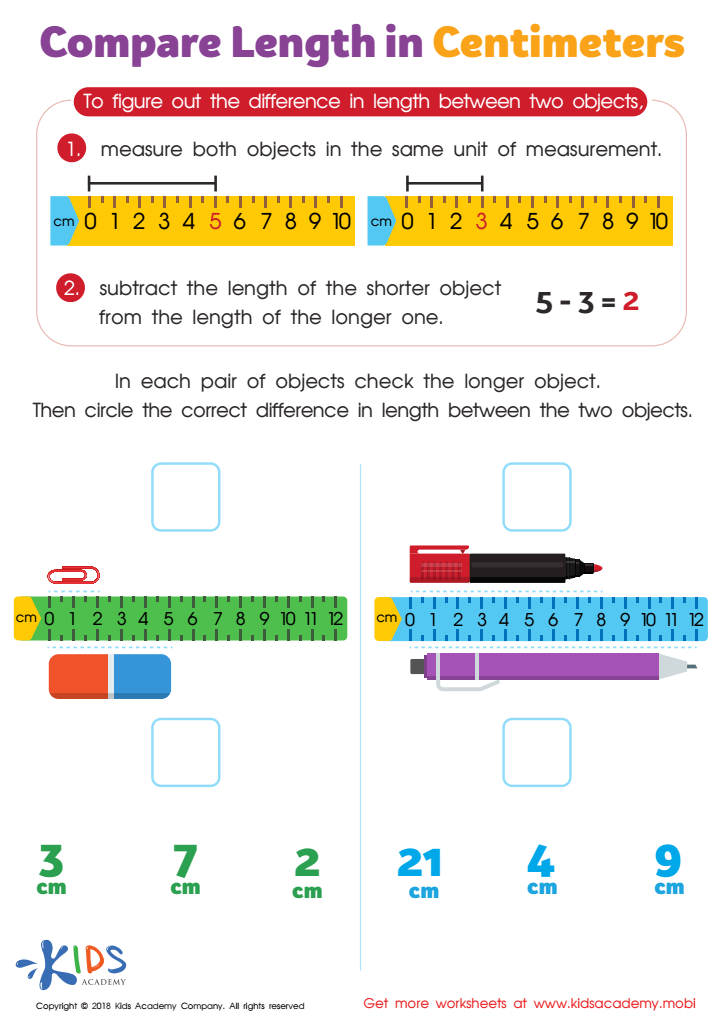
Compare Length in Centimeters Worksheet








Interpreting data and understanding normal numerical concepts are vital skills for children ages 3-8 as they lay the foundational blocks for future mathematical learning and critical thinking abilities. Parents and teachers play a crucial role in nurturing these skills during this developmental stage. By helping children interpret data, such as learning to recognize patterns, count objects, and sort items by different attributes, adults promote cognitive development crucial for problem-solving and decision-making.
Furthermore, establishing a strong numerical base aids children in grasping more complex mathematical concepts in later grades. Teaching simple statistics, like learning what "more" or "less" means, and introducing basic data representation through graphs and charts, can make these abstract concepts more tangible for young minds. These experiences not only enhance numerical literacy but also boost confidence in handling math-related tasks.
Additionally, data interpretation skills foster inquiry-based learning. Kids become keen observers and critical thinkers, asking insightful questions about their world, further linking various subjects, such as science and geography, to daily life. Early engagement with numerical and data comprehension nurtures logical reasoning and analytical skills, equipping children with tools to succeed both academically and in everyday activities. Thus, parents and teachers should prioritize these competencies to ensure a strong start in their child’s educational journey.








