Geography knowledge Normal Math Worksheets for Ages 3-8
6 filtered results
-
From - To
Discover our engaging Geography Knowledge Normal Math Worksheets, specially designed for children aged 3 to 8! These captivating worksheets integrate essential geography concepts with fundamental math skills, making learning fun and effective. Young learners will explore maps, identify continents and countries, and develop a sense of spatial awareness while practicing counting, addition, and subtraction. Our user-friendly format encourages interactive learning, fostering curiosity and a love for both math and geography. Perfect for homeschooling, classroom activities, or supplemental practice, these resources provide a valuable foundation for young minds. Equip your child with essential skills through enjoyable and educational activities today!
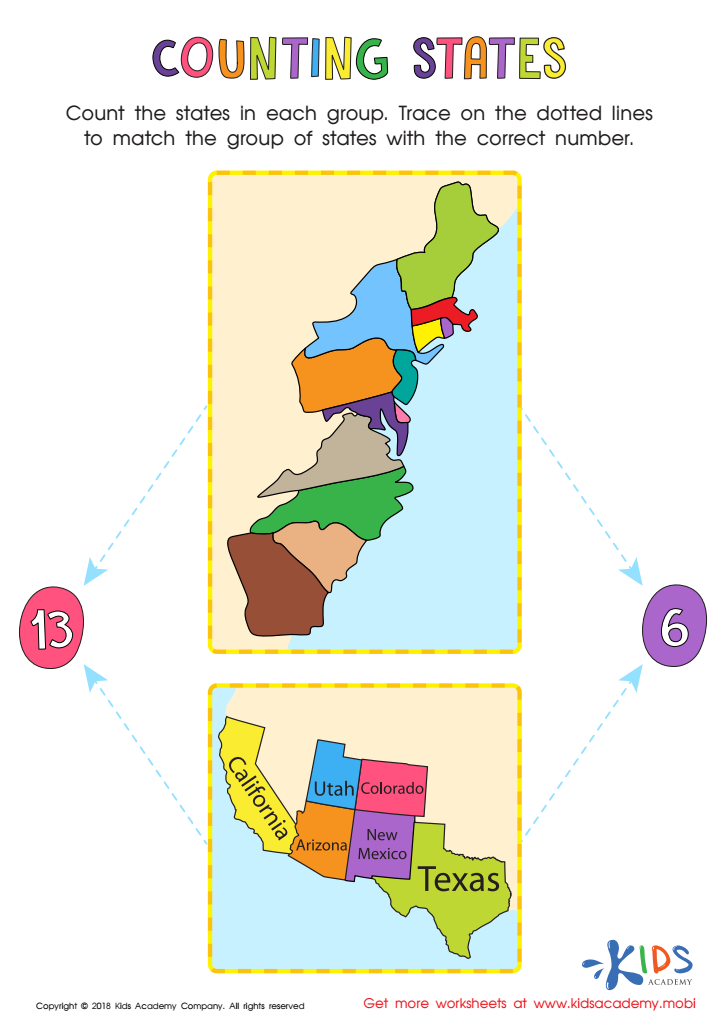
Counting States Worksheet
 Assign to My Students
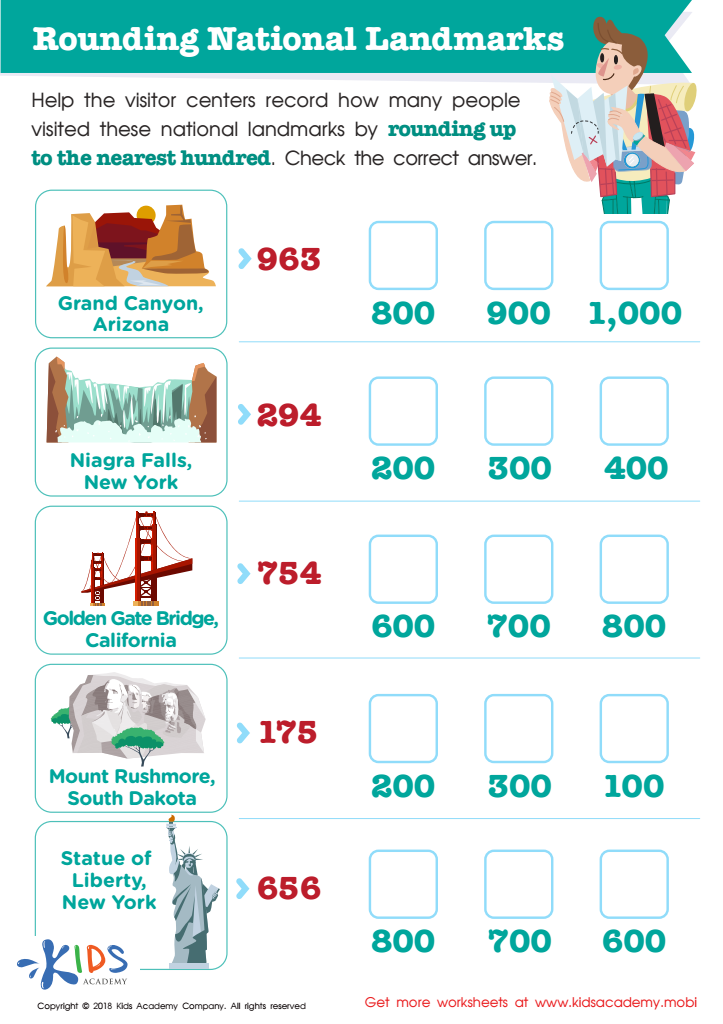
Rounding National Landmarks Worksheet
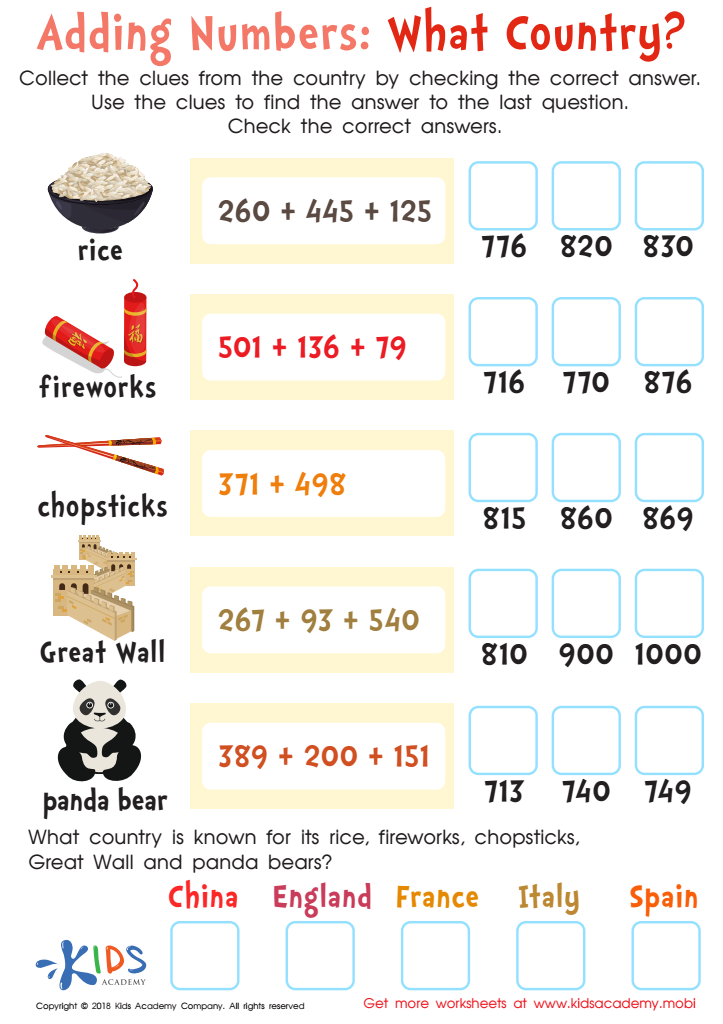
Adding Numbers: What Country Worksheet
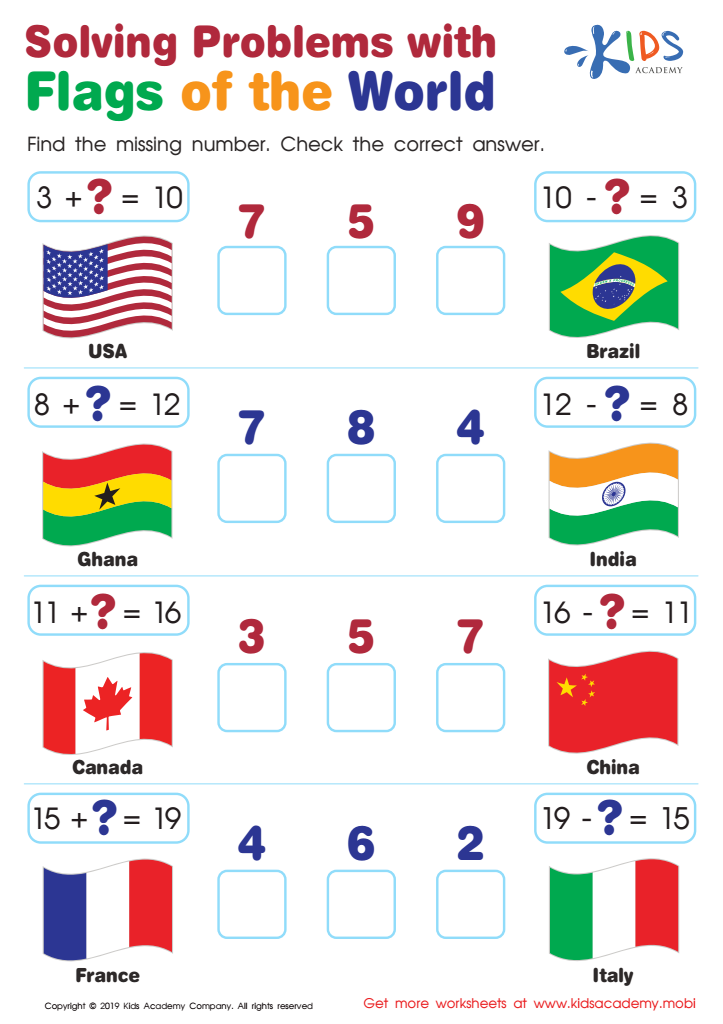
Solving Problems with Flags of the World Worksheet
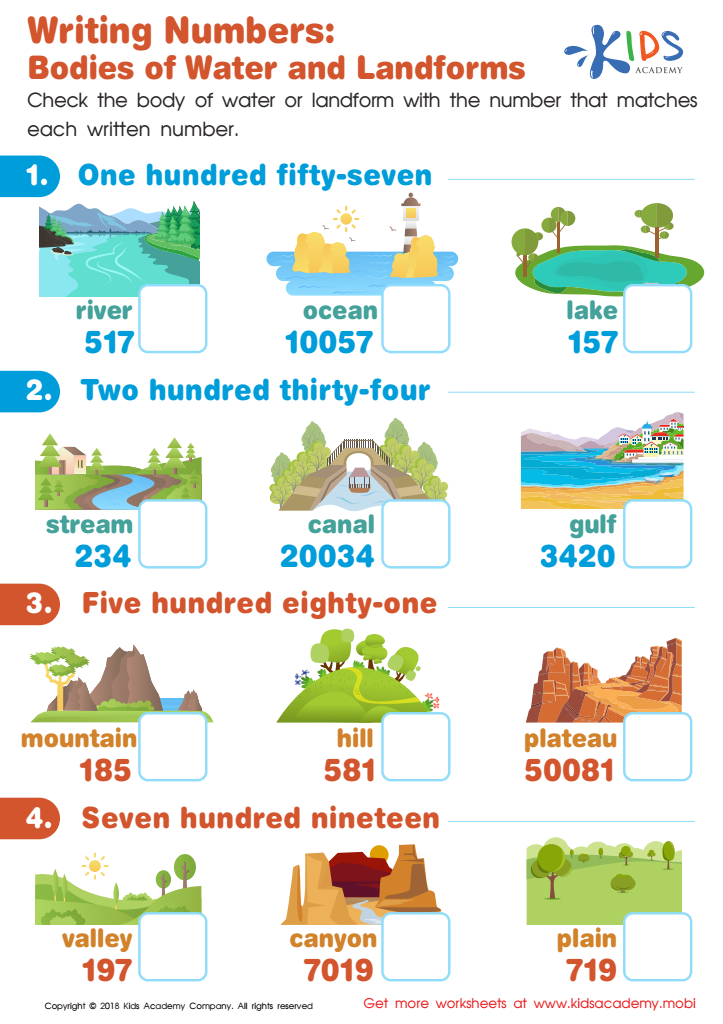
Bodies of Water and Landforms Writing Numbers Worksheet
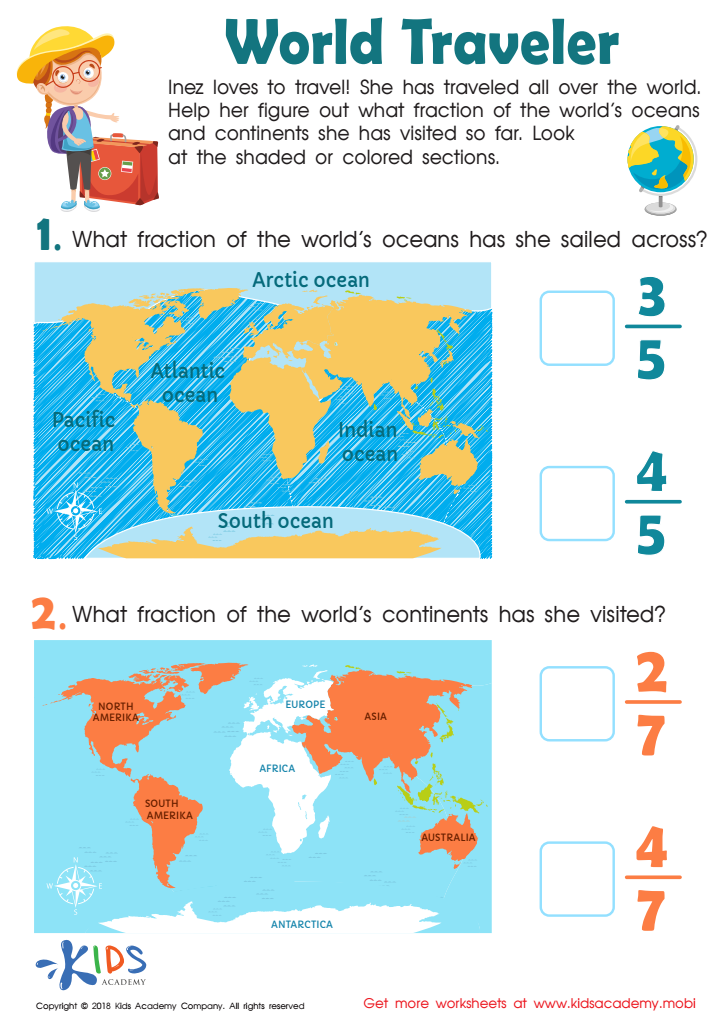
World Traveler Worksheet








Geography knowledge for children aged 3-8 is essential for several reasons. Firstly, it provides a foundational understanding of the world around them. As young learners explore concepts like maps, continents, and cultural diversity, they become more aware of their place within the global community. This awareness fosters curiosity, encouraging them to ask questions and seek out new information.
Additionally, geography promotes critical thinking skills. Children learn to make connections between places, people, and events, helping to develop their analytical and problem-solving abilities. Understanding geography also nurtures empathy, as children discover different customs, traditions, and lifestyles, paving the way for respect and appreciation of diversity.
Furthermore, incorporating geography into early education sets the stage for their future academic growth. Without a basic knowledge of geography, children may struggle with various subjects, including history and social studies, later on. It can also enrich their language development as they learn relevant vocabulary.
In summary, geography knowledge is not just about maps—it plays a crucial role in young children's cognitive, social, and emotional development. As parents and teachers, fostering this knowledge equips kids with essential life skills, promoting informed and engaged citizens in a global society.








