Visual learning enhancement Normal Math Worksheets for Ages 3-8
4 filtered results
-
From - To
Discover our engaging visual learning enhancement math worksheets designed specifically for children aged 3-8. Perfect for early learners, these worksheets incorporate vibrant visuals and interactive elements to help make math concepts more accessible and enjoyable. Our resources focus on developing essential skills, including counting, number recognition, and basic arithmetic in a fun and engaging way. With a range of activities perfect for classroom and home use, these worksheets provide a hands-on approach to learning that boosts confidence and retention. Enhance your child’s educational journey and watch them thrive in their mathematical abilities with our carefully crafted worksheets today!
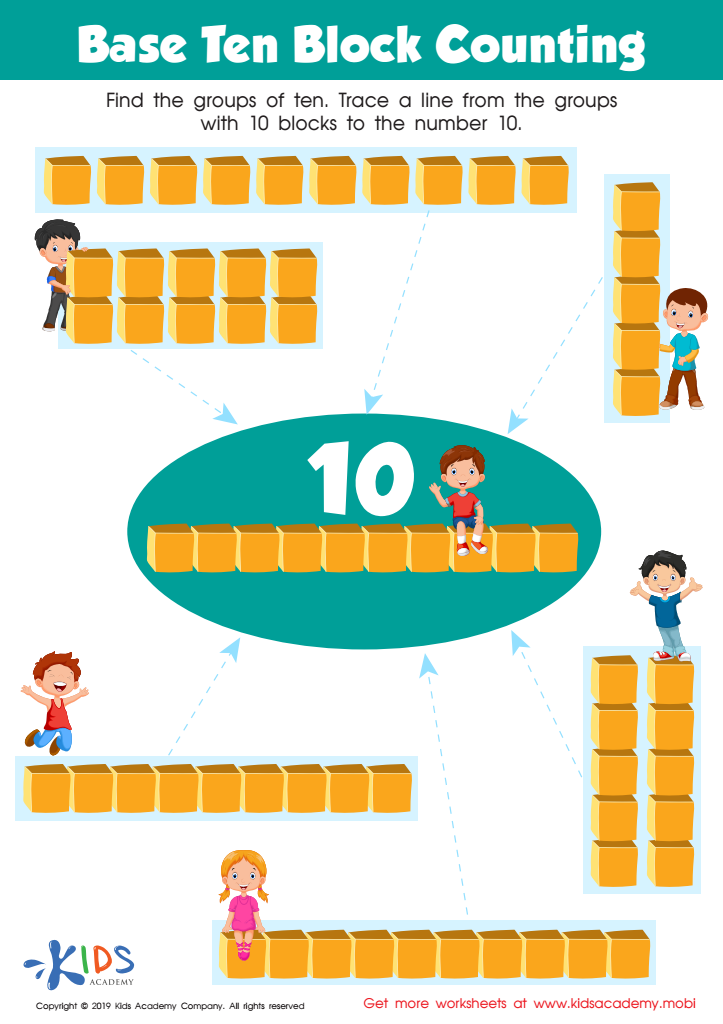
Base Ten Block Counting Worksheet
 Assign to My Students
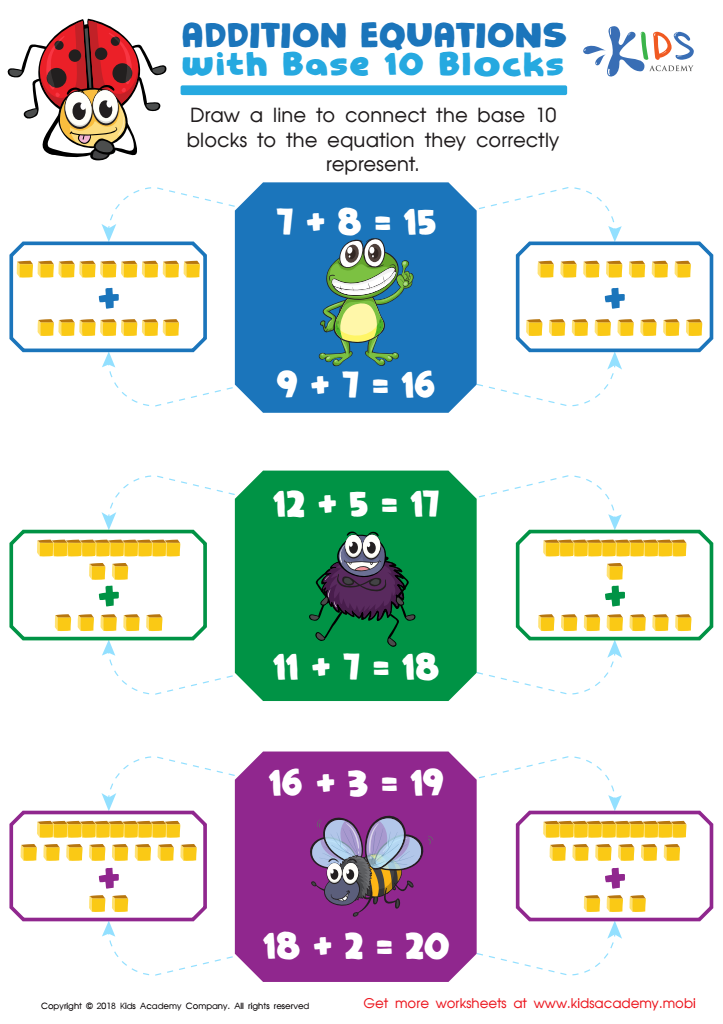
Addition Equations With Base 10 Blocks Worksheet
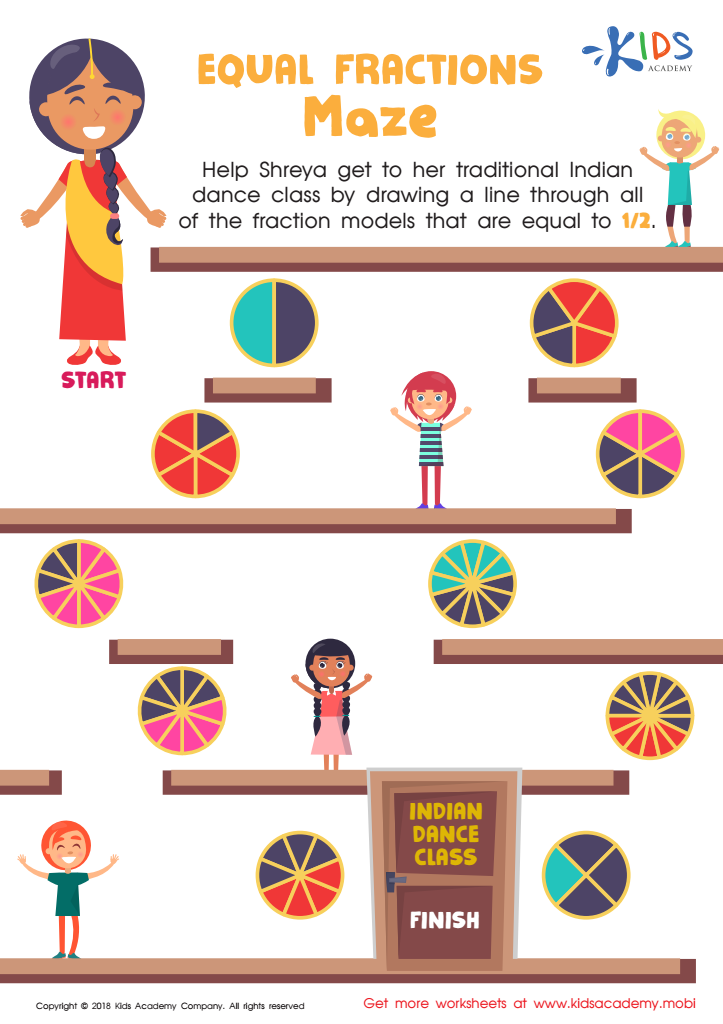
Equal Fractions Maze Worksheet
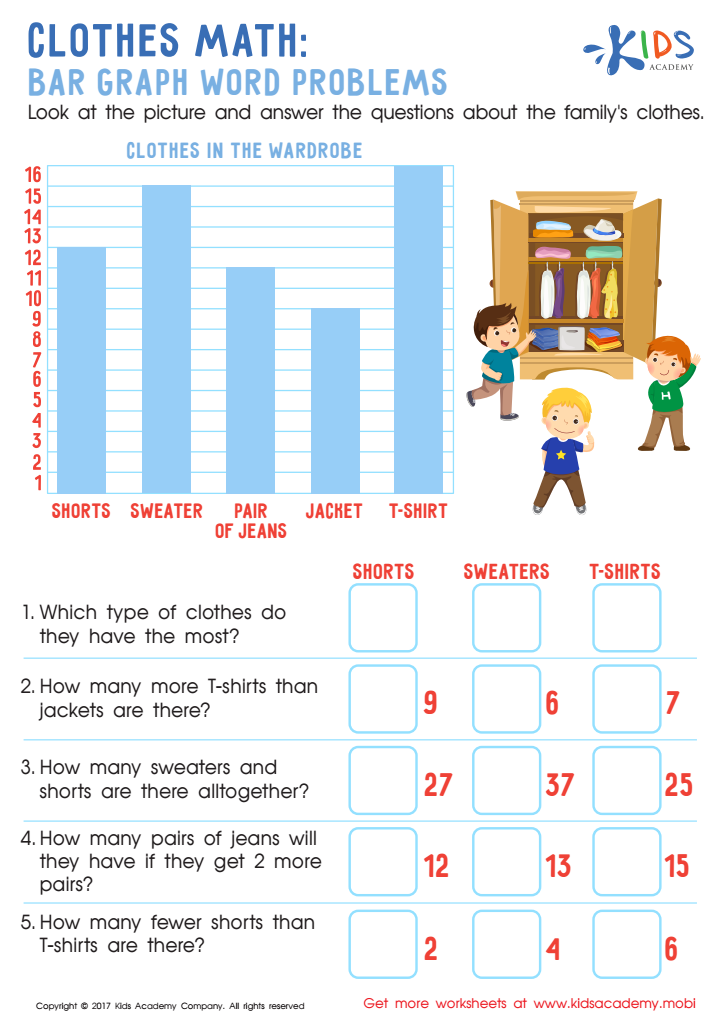
Clothes Math: Bar Graph Word Problems Worksheet







Parents and teachers should care about Visual Learning Enhancement Normal Math for children ages 3-8 because early mathematical understanding is crucial for future academic success. At this developmental stage, children learn best through engaging and interactive visual aids. Visual tools help simplify complex concepts like number recognition, addition, and subtraction, making math relatable and enjoyable. This cognitive approach caters to various learning styles, especially for visual learners who benefit from seeing information represented graphically.
Fostering a strong foundation in math during these formative years can enhance problem-solving skills and critical thinking. When children grasp mathematical concepts visually, they're more likely to retain information, boosting their confidence and willingness to tackle challenging topics later on. Furthermore, integrating visual elements into math instruction fosters creativity and innovation, stimulating a love for learning.
Building these skills early prepares children for more rigorous academic challenges ahead and lays the groundwork for success in STEM (Science, Technology, Engineering, and Mathematics) fields. Consequently, investing in visual learning methods for math not only supports current educational outcomes but also promotes a lifelong appreciation and understanding of mathematics. By prioritizing these techniques, parents and teachers can significantly enrich children's educational experiences and promote positive attitudes toward math.








