Fine Motor Skills Normal Tracing Numbers Worksheets for Ages 3-8
6 filtered results
-
From - To
Enhance your child's fine motor skills with our engaging normal tracing numbers worksheets, specifically designed for ages 3-8. These worksheets provide a fun and interactive way for young learners to practice writing numbers 0-9 while developing crucial hand-eye coordination and dexterity. Each printable worksheet features clear, bold numbers and tracing lines, making learning enjoyable and accessible for children. Our resources are perfect for homeschooling, classroom activities, or supplemental practice at home. Encourage your child's budding math skills and boost their confidence as they master number formation through playful, hands-on learning experiences! Explore our collection today to support your child's educational journey.
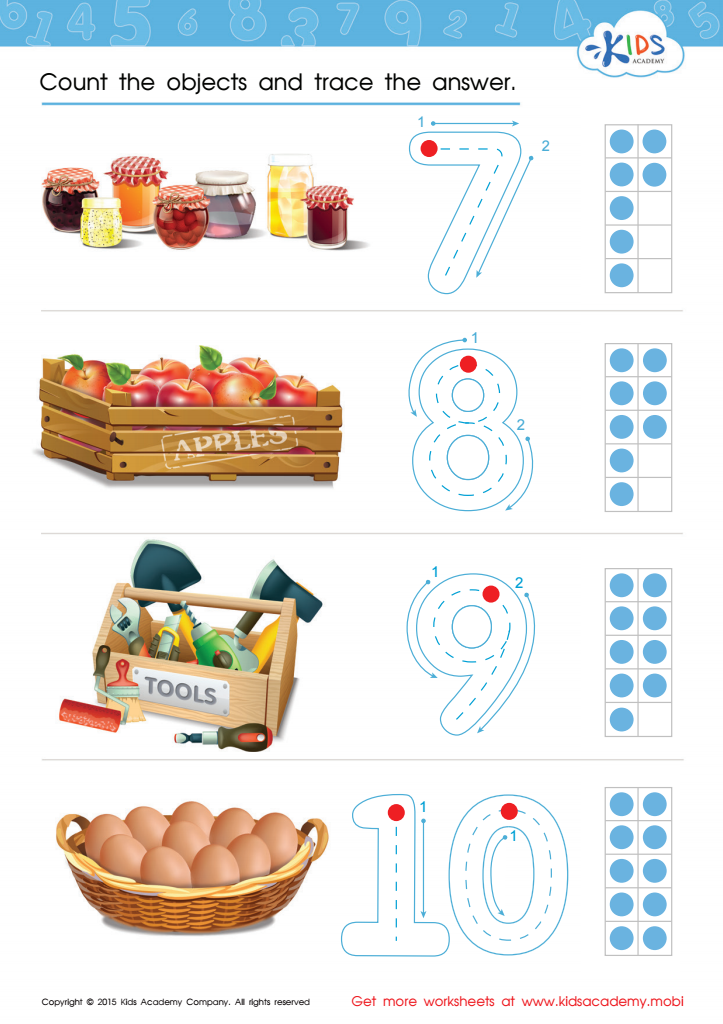
Count and Trace 7 – 10 Worksheet
 Assign to My Students
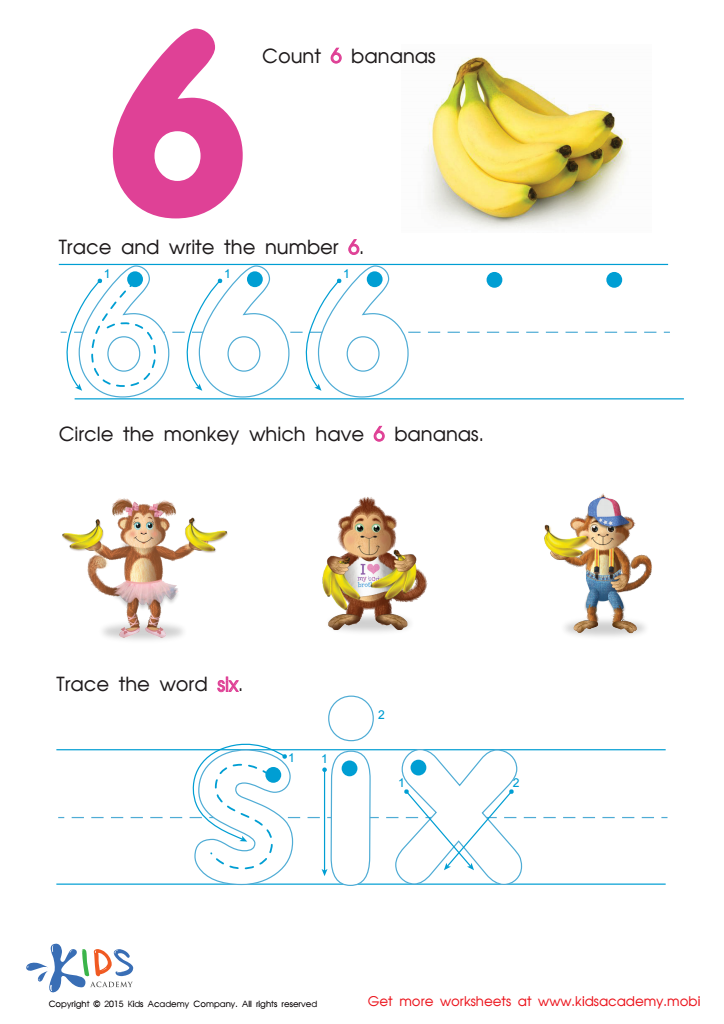
Tracing And Writing Number 6 Worksheet
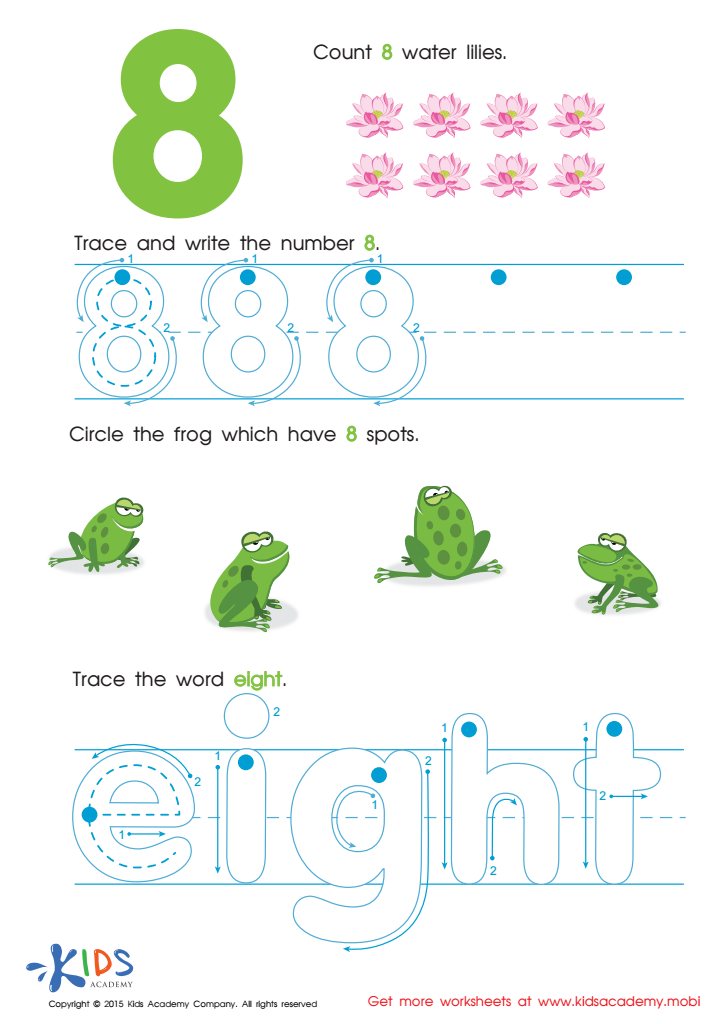
Learn Number 8 Easily Worksheet
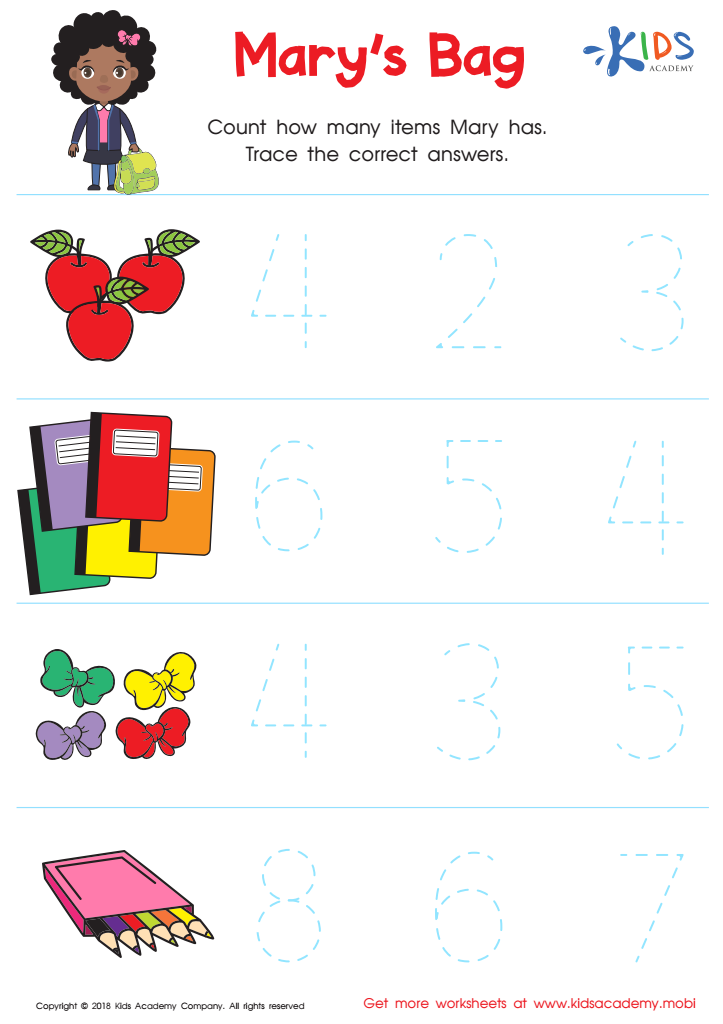
Kindergarten Number Tracing: Mary's Bag Worksheet
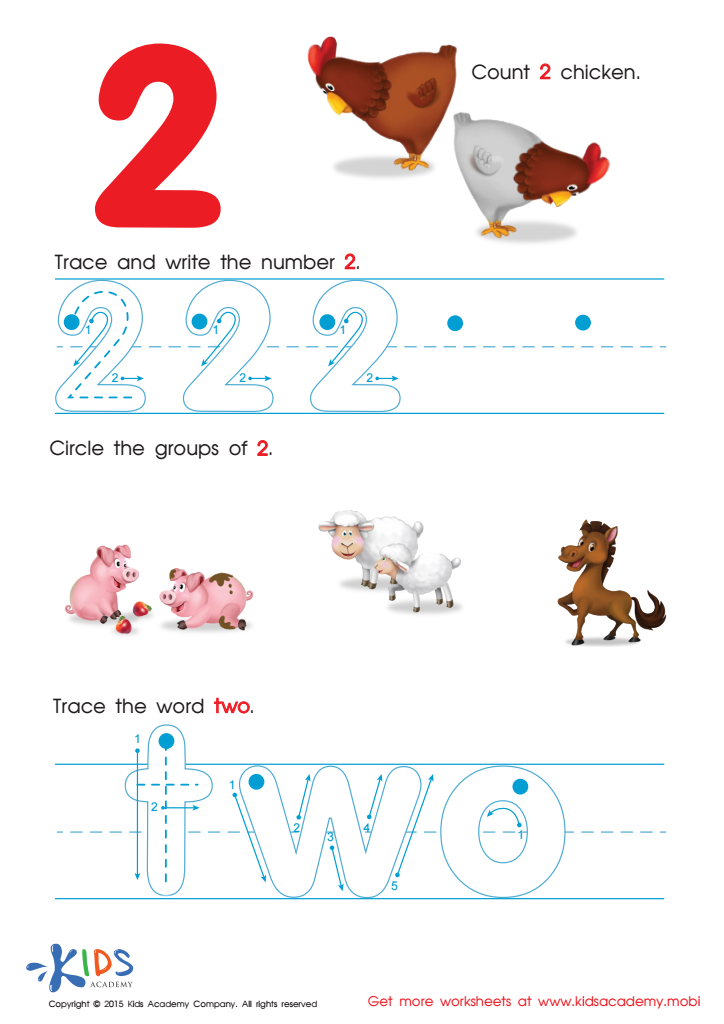
Learn to Write the Number 2 Worksheet








Fine motor skills are crucial for young children's overall development, particularly between the ages of 3 and 8. Tracing numbers is an effective way to enhance these skills, as it helps children improve their hand-eye coordination, dexterity, and control over writing tools. This foundational practice not only prepares them for future academic tasks, such as writing and mathematics, but also supports their ability to complete everyday activities, from buttoning shirts to using utensils.
Parents and teachers should care about fine motor skills development because they fundamentally influence a child's learning potential and confidence. Proficient fine motor skills are linked to better performance in school, allowing children to express themselves more freely in writing and art. Tracing numbers also introduces early mathematical concepts, fostering numerical recognition and understanding through a fun, interactive approach.
Moreover, developing these skills in a supportive environment cultivates patience and perseverance in children. As they improve, they gain self-esteem and a sense of accomplishment. By investing time in activities that enhance fine motor skills, parents and teachers lay a strong foundation for lifelong learning and physical coordination, ultimately contributing to a child’s holistic development.