Critical Thinking Normal Animals Worksheets for Ages 3-8
4 filtered results
-
From - To
Discover engaging "Critical Thinking Normal Animals Worksheets for Ages 3-8" designed to foster young minds' analytical skills through fun and interactive activities. These expertly crafted worksheets encourage children to observe, compare, and think critically about various animals and their characteristics. Perfect for early learners, this resource supports cognitive development and scientific inquiry. Tailored for ages 3-8, each worksheet is carefully designed to align with educational standards, making learning enjoyable and effective. Whether at home or in the classroom, these tools are ideal for nurturing curious minds and helping them understand the wonder of the animal kingdom.
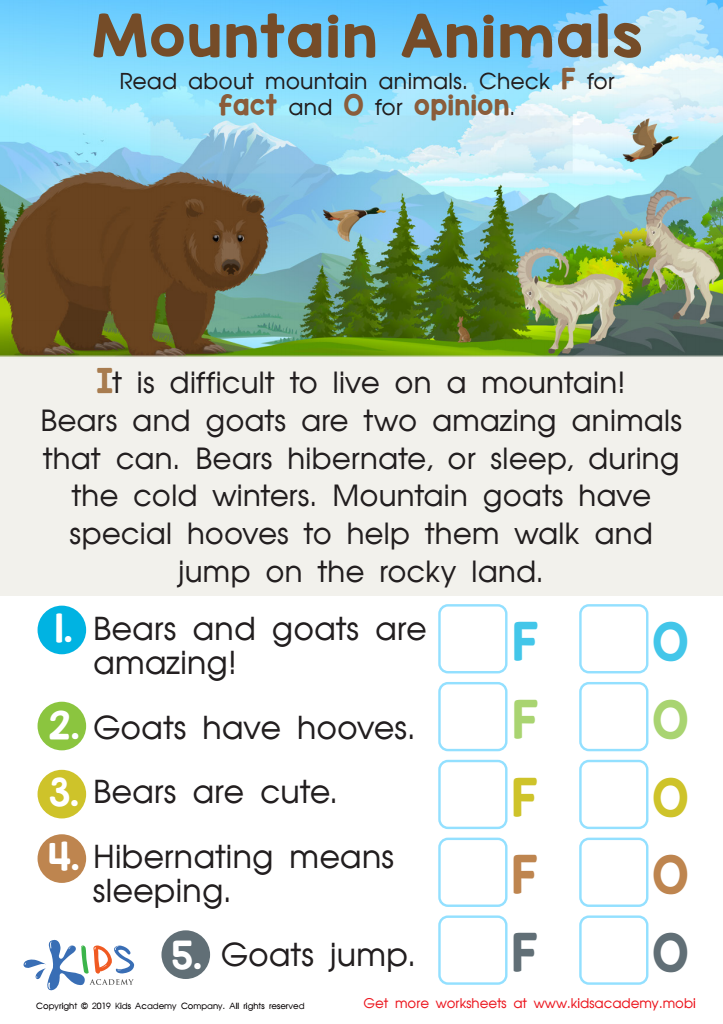
Mountain Animals Worksheet
 Assign to My Students
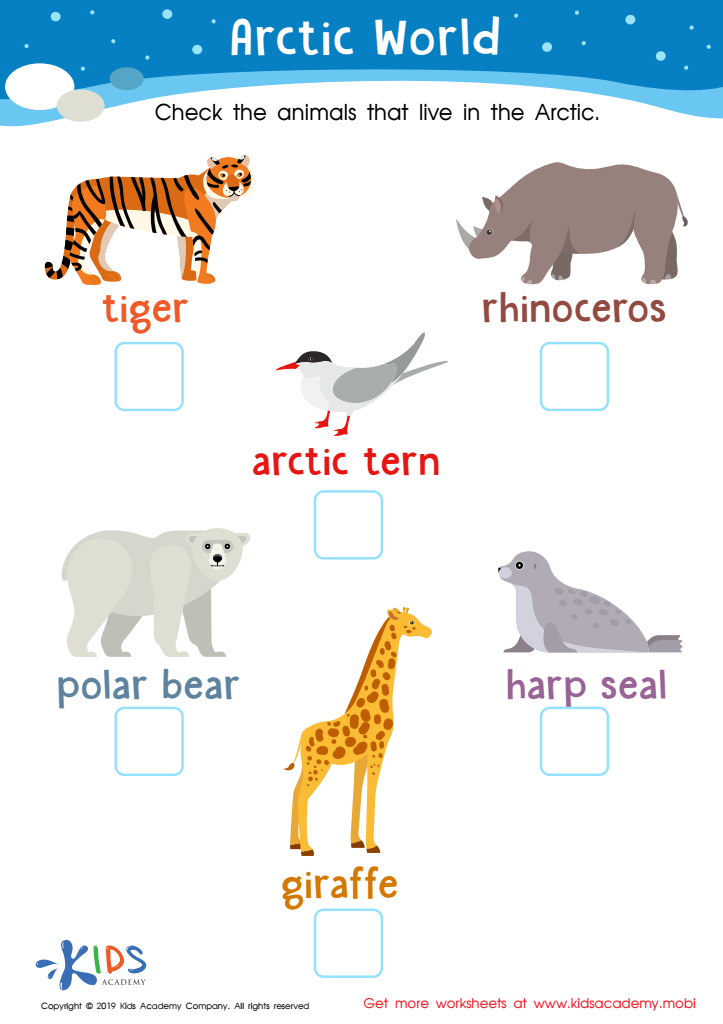
Arctic World Worksheet
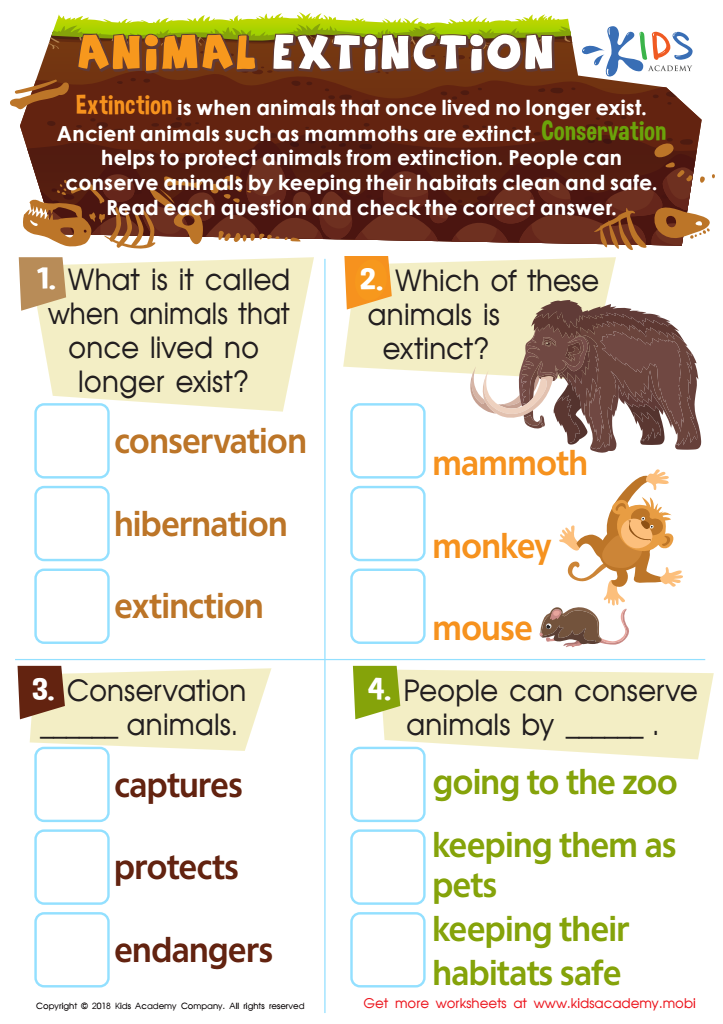
Animal Extinction Worksheet
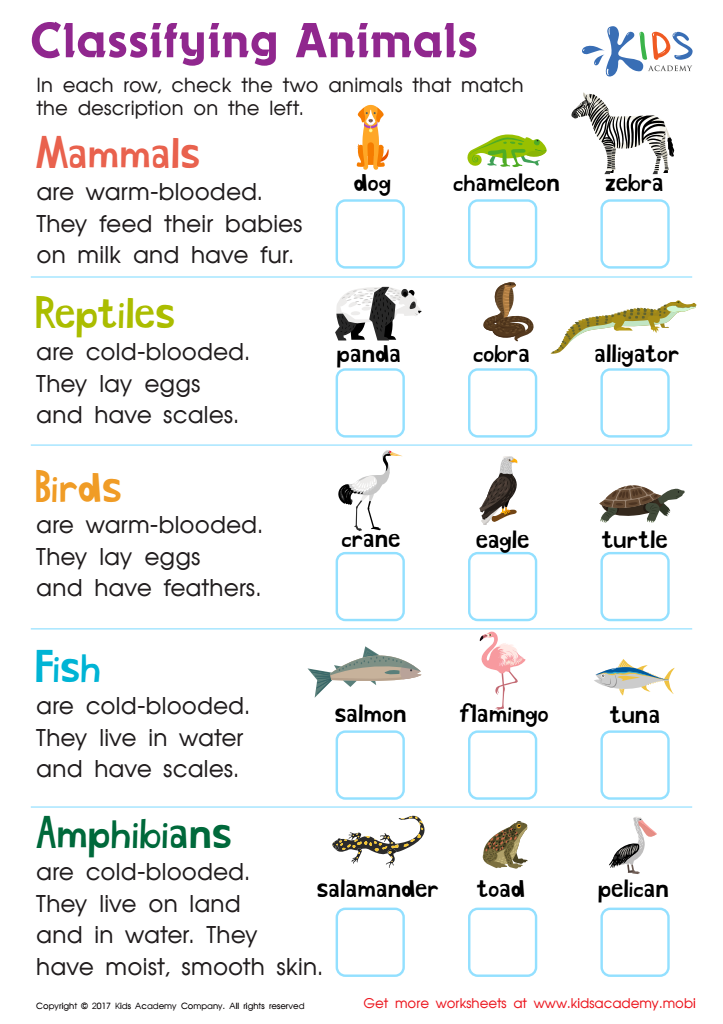
Classifying Animals Worksheet








Critical thinking is an essential skill for children, even at a young age. For children aged 3-8, engaging with normal animal behaviors through activities or educational content can foster these skills effectively. Here’s why parents and teachers should care:
-
Enhances Curiosity and Inquiry: Learning about animals taps into children’s natural curiosity. Asking questions like, "Why does a cat purr?" encourages kids to think deeply and seek answers, thereby nurturing their inquisitive nature.
-
Promotes Observational Skills: Observing animals closely helps children notice details and make distinctions. For instance, they might compare a bird’s feathers or a dog’s fur, sharpening their ability to pay attention and notice subtle differences.
-
Builds Problem-Solving Abilities: Understanding animal behaviors can present problem-solving scenarios. Questions such as, "How do beavers build dams?" encourage children to think through processes and understand cause and effect relationships.
-
Encourages Empathy and Perspective: Learning about how different animals live and adapt helps children develop empathy and an understanding that other beings have their own perspectives and needs.
-
Foundation for Scientific Thinking: Early engagement with animal science lays a foundation for more complex scientific thinking. It builds a platform from which they will better grasp biology, ecology, and general scientific methodology in later years.
By fostering critical thinking through normal animal behaviors, we equip children not only with improved cognitive abilities but also with a richer understanding of the natural world. This holistic approach aids overall intellectual and emotional development.








