Critical Thinking Normal Animals Worksheets for Ages 3-9
4 filtered results
-
From - To
Foster your child's natural curiosity and analytical skills with our "Critical Thinking Normal Animals Worksheets for Ages 3-9"! Designed to engage young learners, these worksheets explore the fascinating world of animals through fun and thought-provoking activities. Children will enhance their understanding of animal behavior, habitats, and characteristics while practicing problem-solving and logical reasoning. Our collection is the perfect blend of education and entertainment, ensuring that learning is always a delightful adventure. Through diverse exercises tailored to different age groups, these worksheets are a valuable tool for parents and educators striving to nurture inquisitive minds. Download today and spark a love for learning!
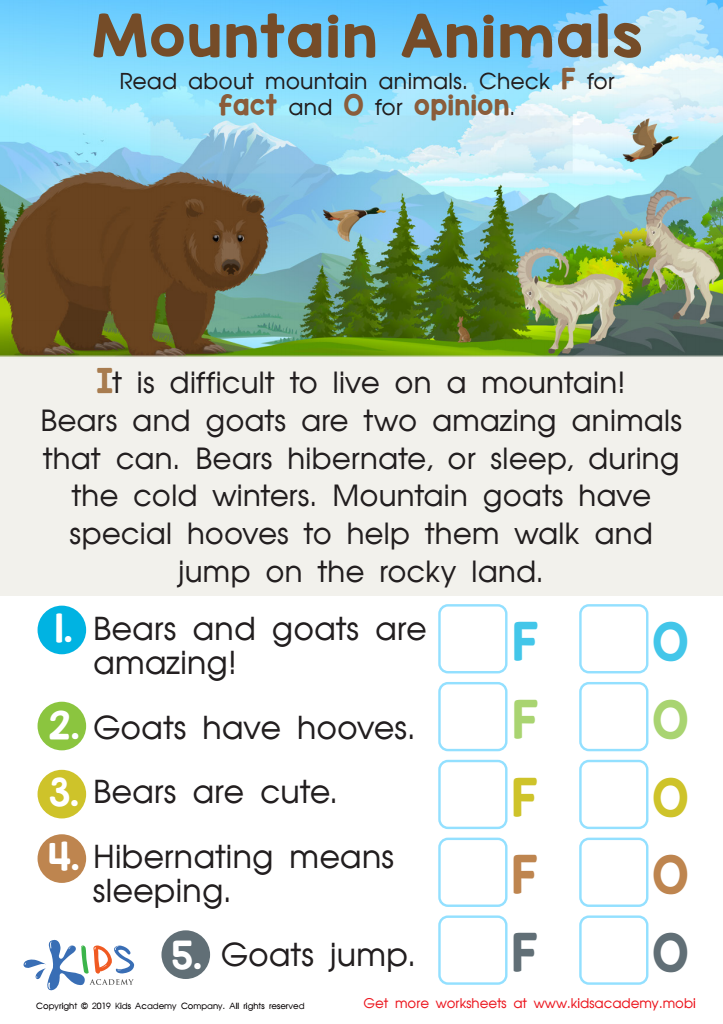
Mountain Animals Worksheet
 Assign to My Students
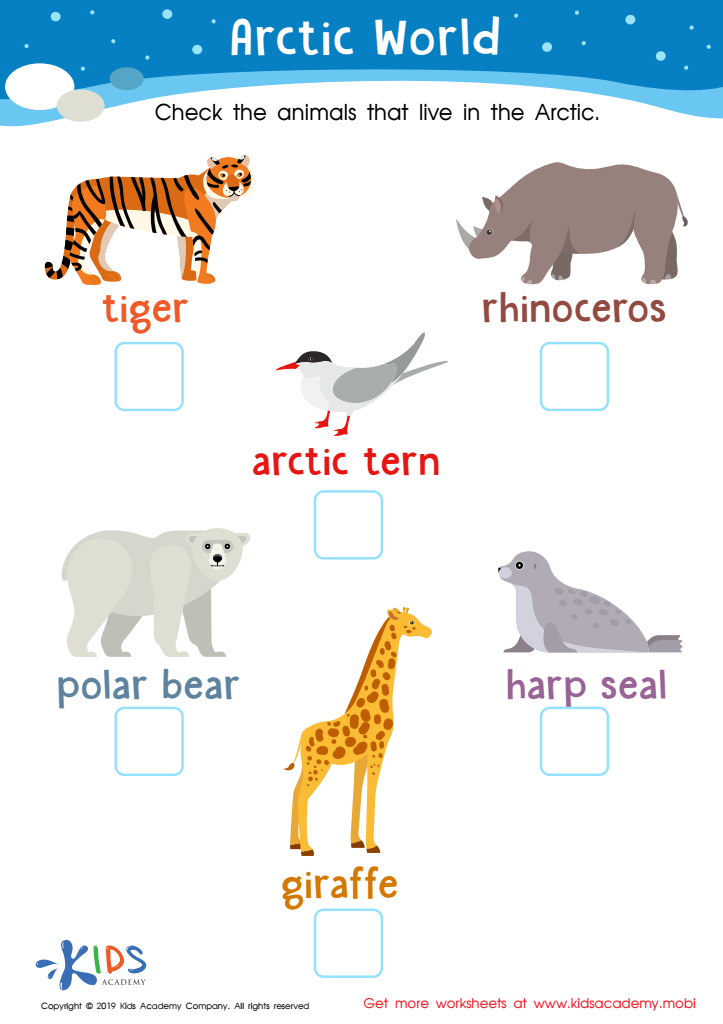
Arctic World Worksheet
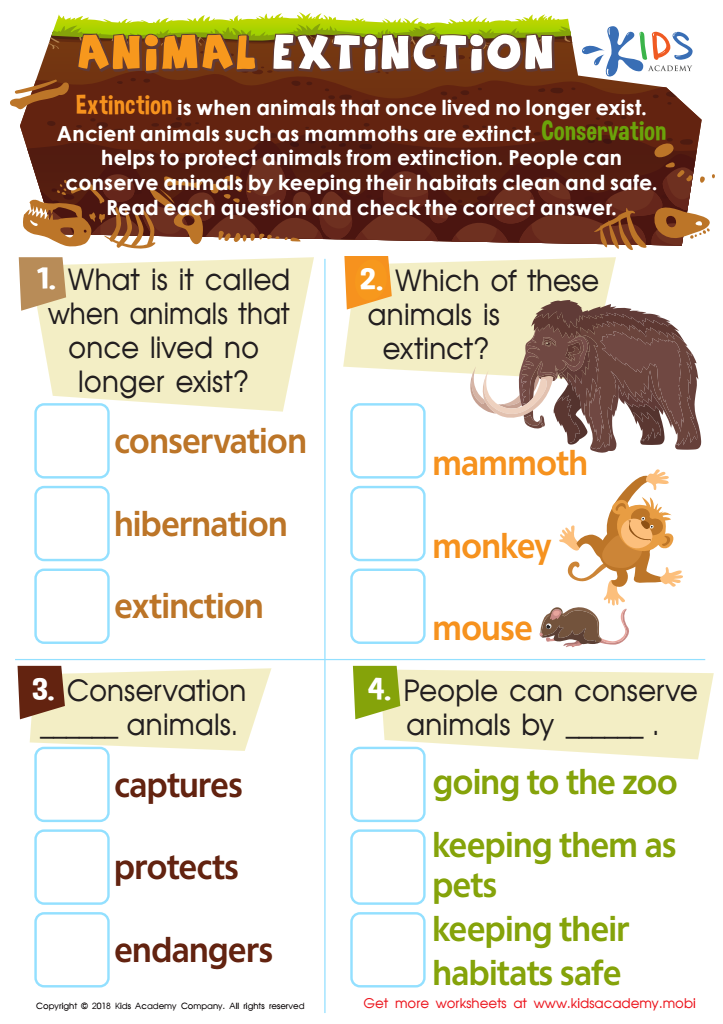
Animal Extinction Worksheet
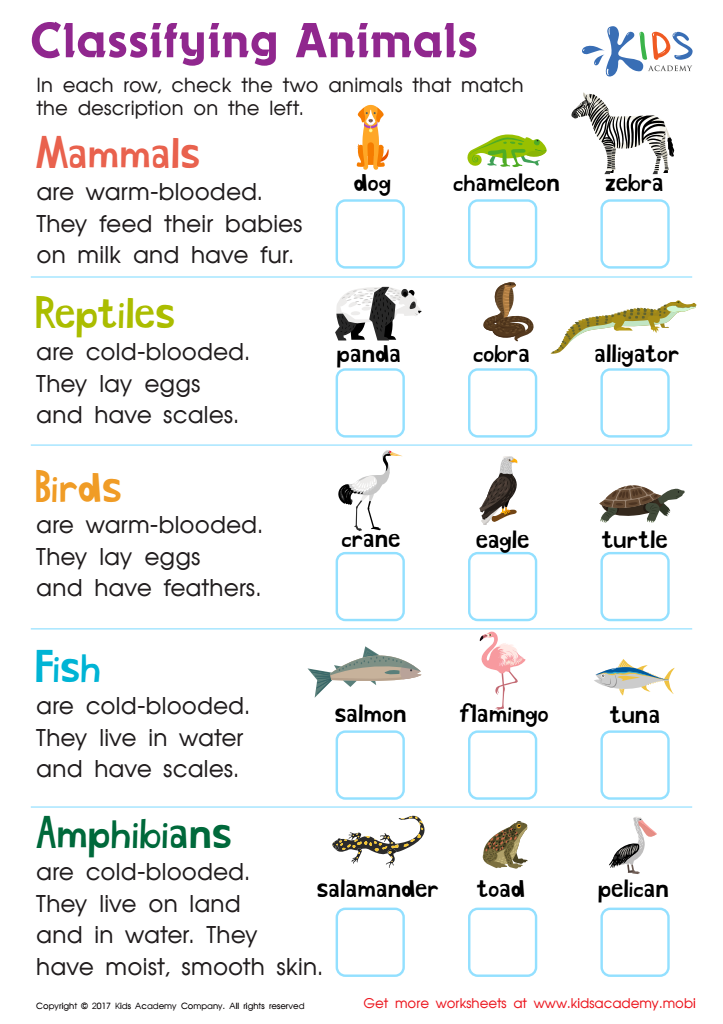
Classifying Animals Worksheet








Critical thinking for children aged 3-9 underpins their cognitive development, and parents and teachers should recognize its importance. When taught through engaging subjects like normal animals, critical thinking skills become both accessible and enjoyable for young learners. Animals are tangible, familiar, and captivating to children, making them perfect for nurturing curiosity.
Developing critical thinking at this age, using animals as a case study, teaches observation, comparison, and classification—fundamental skills for problem-solving. As kids compare animals, examining their habitats, diets, and behaviors, they learn to distinguish similarities and differences, fostering classification skills and awareness of biodiversity. This process translates into other areas of learning, including mathematics, science, and language arts.
Furthermore, discussions about animals promote ethical thinking and empathy. When children consider why an animal behaves a certain way or needs a specific habitat, they practice taking perspectives other than their own. This early ethical foundation supports social and emotional learning, making children more empathetic peers and responsible citizens.
By integrating critical thinking exercises focusing on animals, educators and parents set the groundwork for lifelong intellectual curiosity and inductive reasoning, essential for all future learning. This approach doesn’t just enhance academic skills but also builds well-rounded individuals capable of thoughtful analysis and empathetic understanding of the world around them.








