Problem-Solving Skills Normal Matching Worksheets for 3-Year-Olds
5 filtered results
-
From - To
Enhance your child's learning journey with our "Problem-Solving Skills Normal Matching Worksheets" designed specifically for 3-year-olds! These engaging worksheets promote critical thinking and cognitive development as little ones match images and solve simple puzzles. Perfect for early learners, they encourage curiosity and creativity while making learning fun. Each worksheet features colorful illustrations that captivate children’s attention and stimulate their imagination. By practicing these skills, children not only refine their ability to recognize patterns and relationships but also gain foundational confidence in problem-solving. Explore our collection of worksheets today and empower your child to think critically as they learn through play!
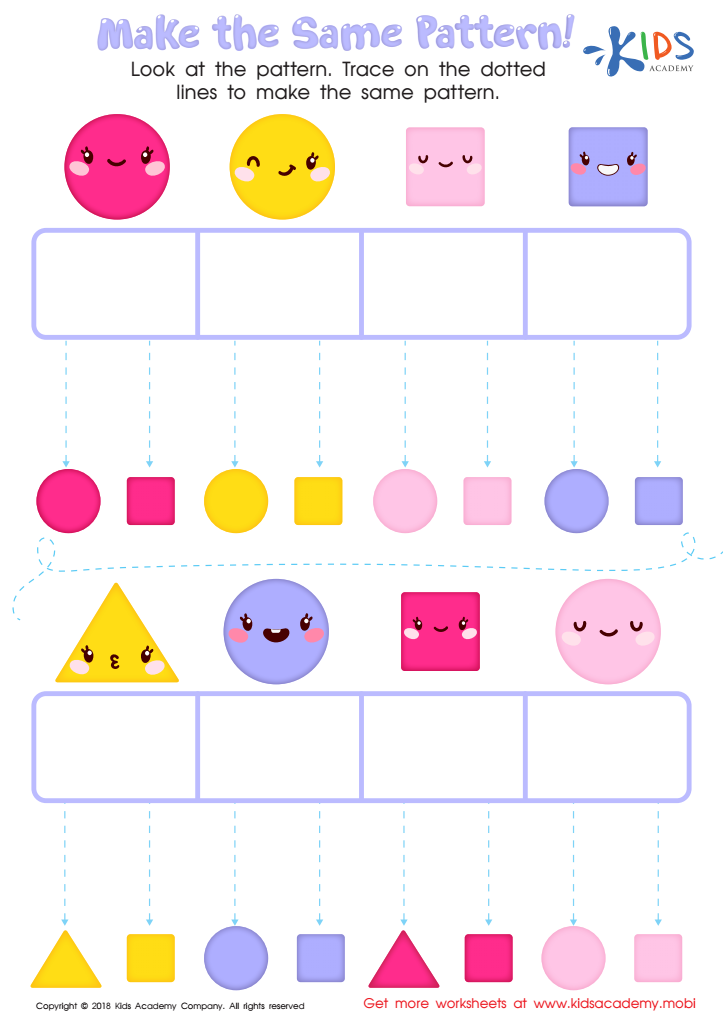
Make the Same Pattern Worksheet
 Assign to My Students
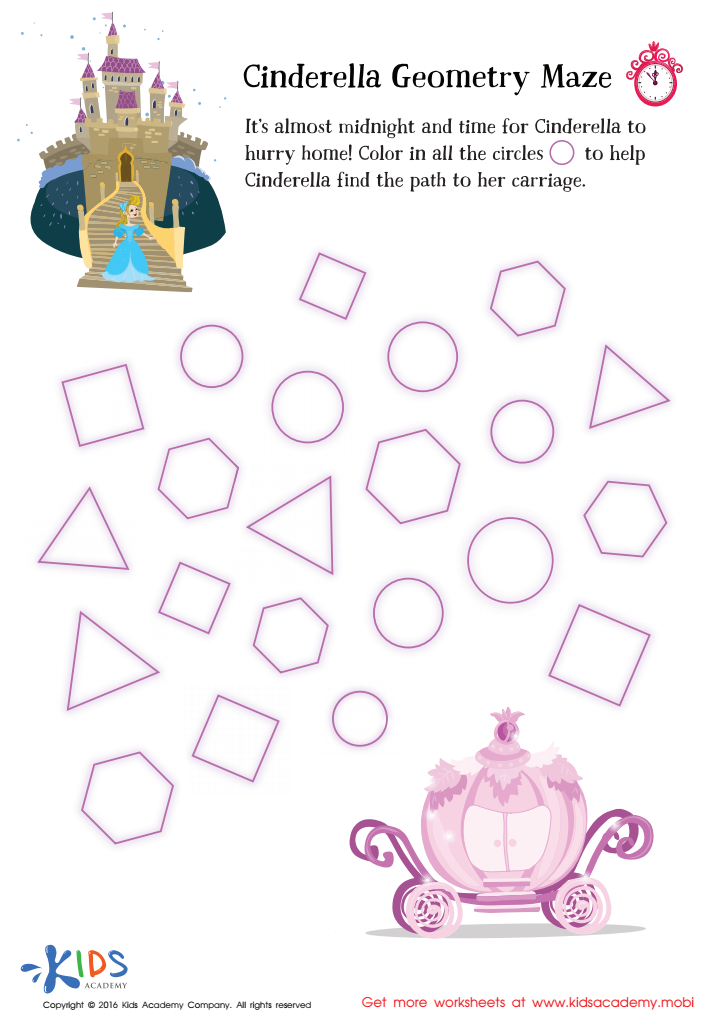
Cinderella Geometry Maze Worksheet
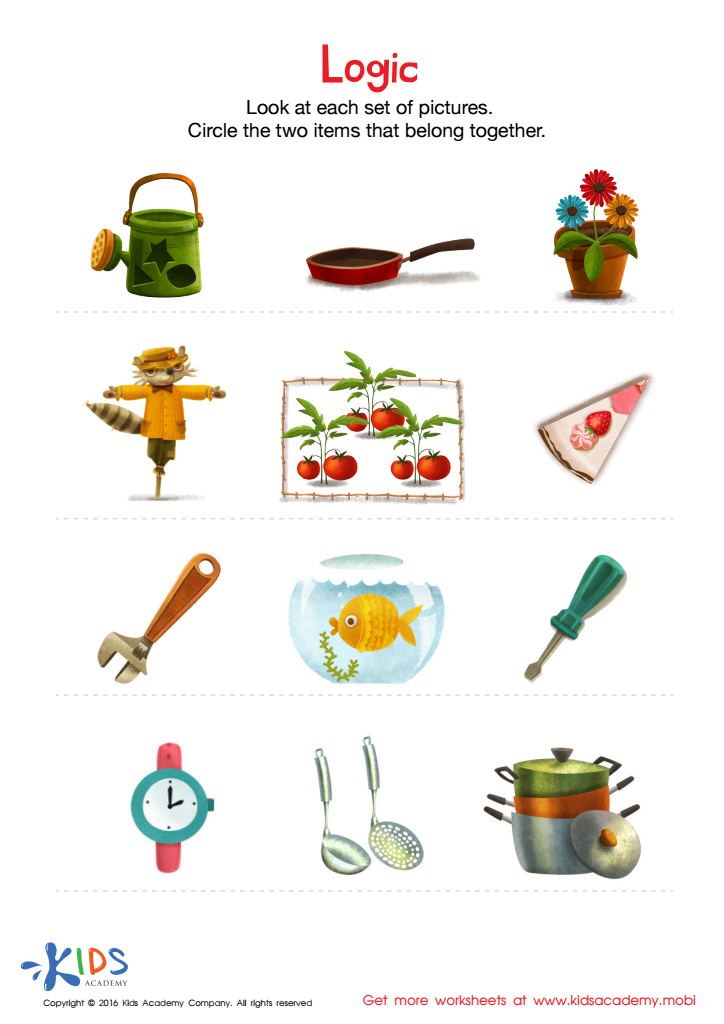
Logic Game Sorting Worksheet
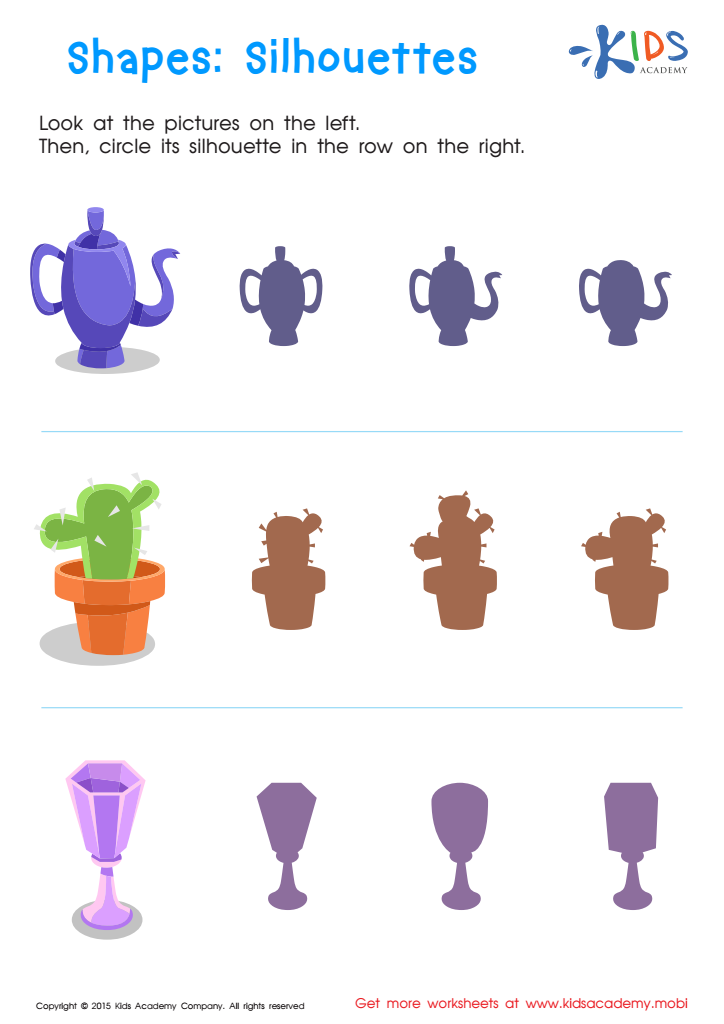
Silhouettes – Shapes Worksheet
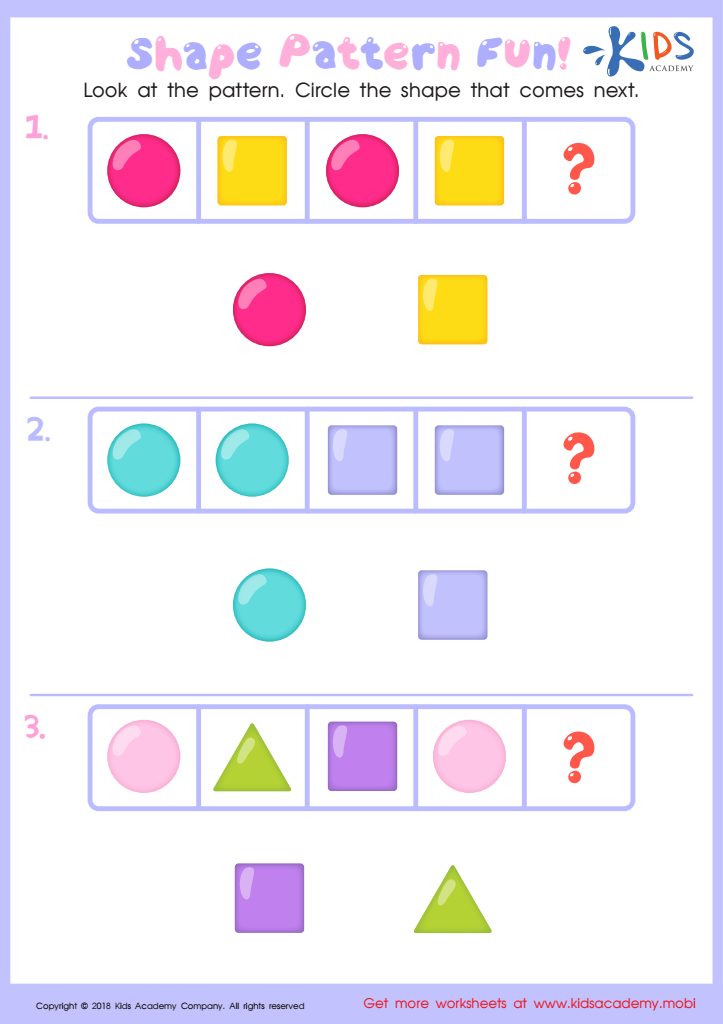
Shape Pattern Fun Worksheet








Problem-solving skills are essential for the development of young children, particularly at the age of three. At this stage, children are naturally curious and eager to explore their environment. Normal Matching activities—simplistic tasks where children identify and match objects or patterns—play a critical role in enhancing these skills. These activities foster cognitive development, helping children learn to recognize similarities and differences, develop memory, and improve attention span.
Parents and teachers should advocate for such activities because they lay the foundation for more complex cognitive processes. When children engage in Normal Matching tasks, they learn to hypothesize, test solutions, and think independently. This builds resilience and adaptability, as they learn that there are often multiple solutions to a problem.
Additionally, these skills translate into social development, as children learn to collaborate, negotiate, and share ideas while working in groups. Mastery of problem-solving also boosts self-esteem and confidence, empowering young learners to tackle challenges throughout their educational journey. By promoting Normal Matching and other problem-solving activities, parents and teachers are not only aiding academic achievement but also nurturing essential life skills, ensuring that children are better prepared for future challenges.








