Vocabulary Building Normal Matching Worksheets for 3-Year-Olds
5 filtered results
-
From - To
Enhance your 3-year-old's vocabulary with our engaging Vocabulary Building Normal Matching Worksheets! Designed specifically for young learners, these worksheets feature fun images and simple words that help children connect visuals to vocabulary. Each worksheet encourages children to match related words and pictures, promoting language development and critical thinking skills. Perfect for at-home learning or classroom use, our resources support early literacy in a playful and effective manner. Cultivate a love for words while improving comprehension and retention. Download and inspire your child’s language journey today with these delightful matching activities!
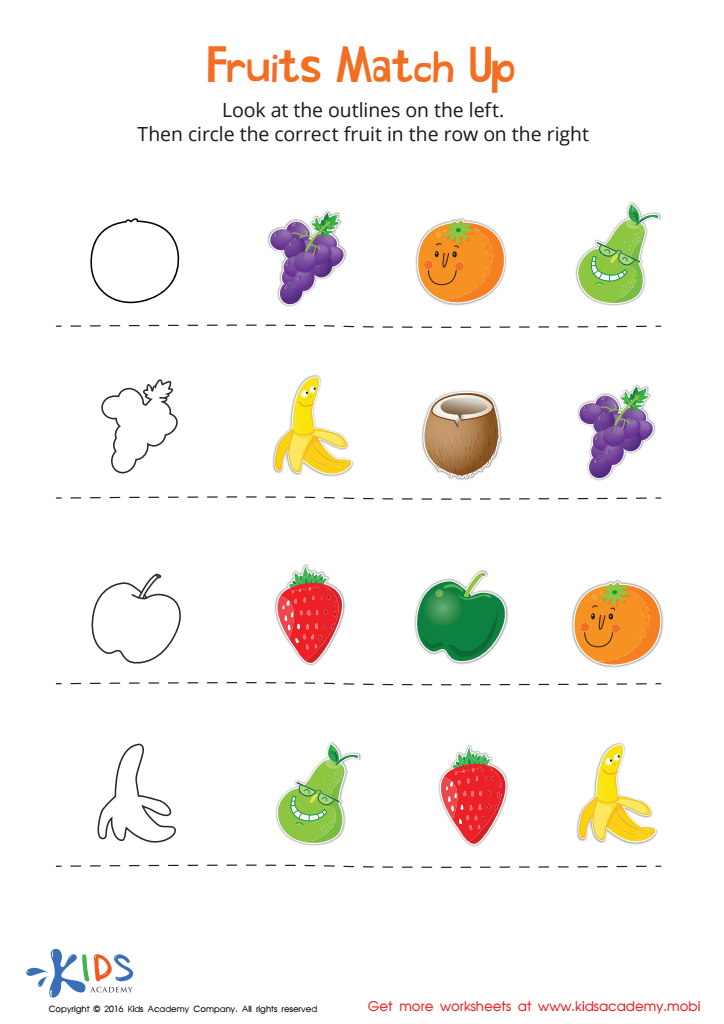
Fruits Match Up Worksheet
 Assign to My Students
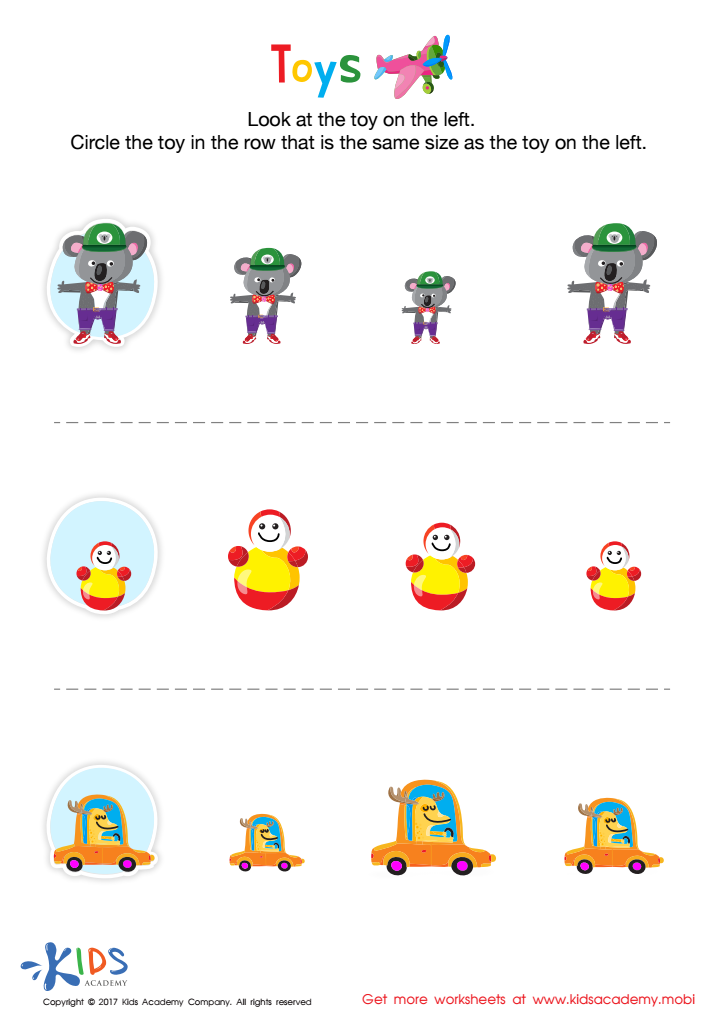
Matching: Classifying Toys by Size Worksheet
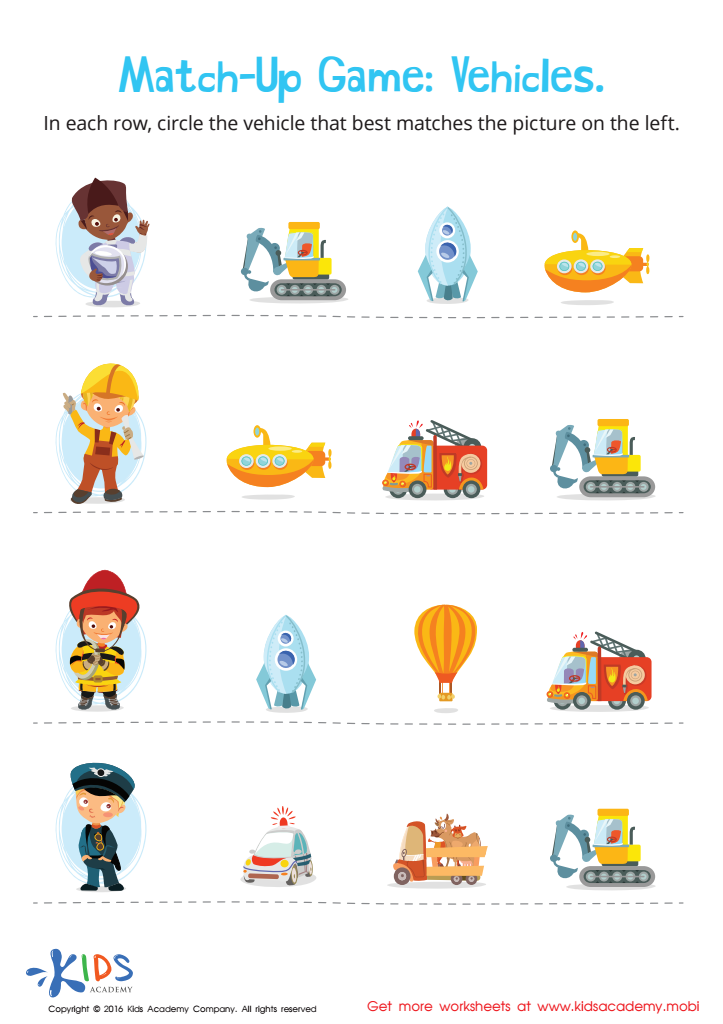
Vehicles Worksheet
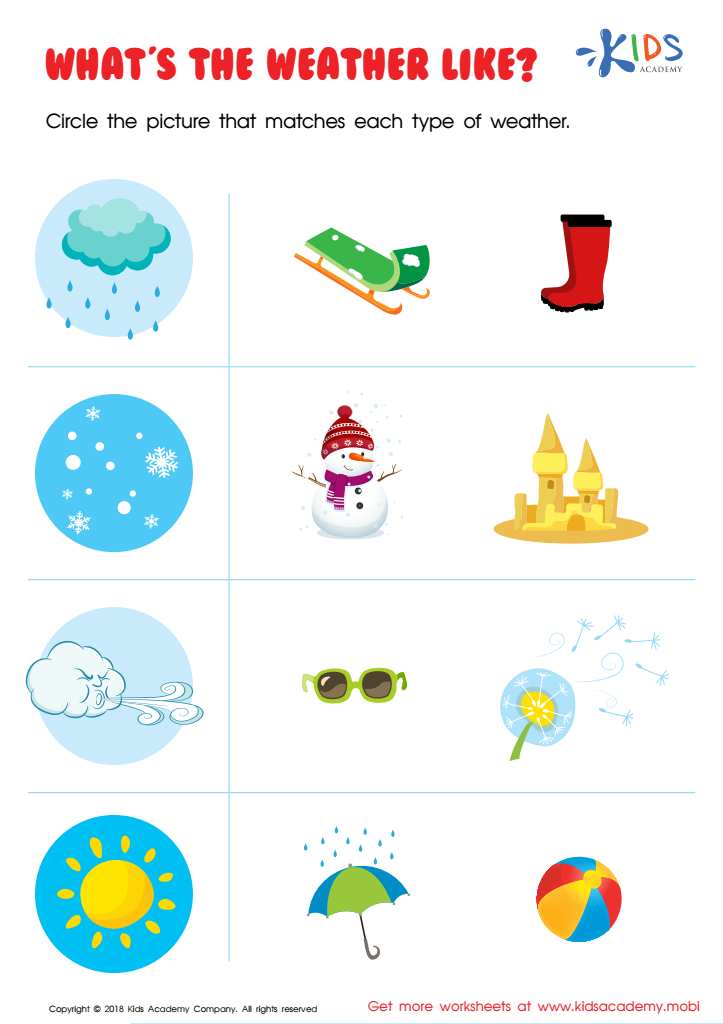
What's the Weather Like? Worksheet







Vocabulary building through activities like Normal Matching is crucial for 3-year-olds, as it lays the foundation for their future communication skills and overall cognitive development. At this age, children's brains are rapidly developing, making them particularly receptive to language acquisition. Engaging them in vocabulary-rich games helps expand their understanding of words, enhances their expressive abilities, and fosters critical thinking skills.
Parents and teachers should care because a strong vocabulary is linked to later success in reading and academic achievement. By introducing engaging and interactive vocabulary-building activities, like Normal Matching, caregivers can create a love for language and learning. This specific game encourages children to match words with corresponding images, reinforcing word recognition and comprehension in a fun and stimulating manner.
Moreover, vocabulary development is essential for social skills; children with a robust vocabulary are better equipped to express their feelings, interact with peers, and understand social nuances. Ultimately, investing time in vocabulary building at this age encourages lifelong literacy skills, supports emotional articulation, and nurtures effective communication, forming a solid groundwork for a child's future educational journey and interpersonal relationships. Thus, early vocabulary development should be a shared priority for both parents and educators.








