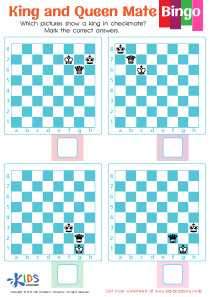
Normal Chess Worksheets for Ages 4-7 - Page 2
54 filtered results
-
From - To
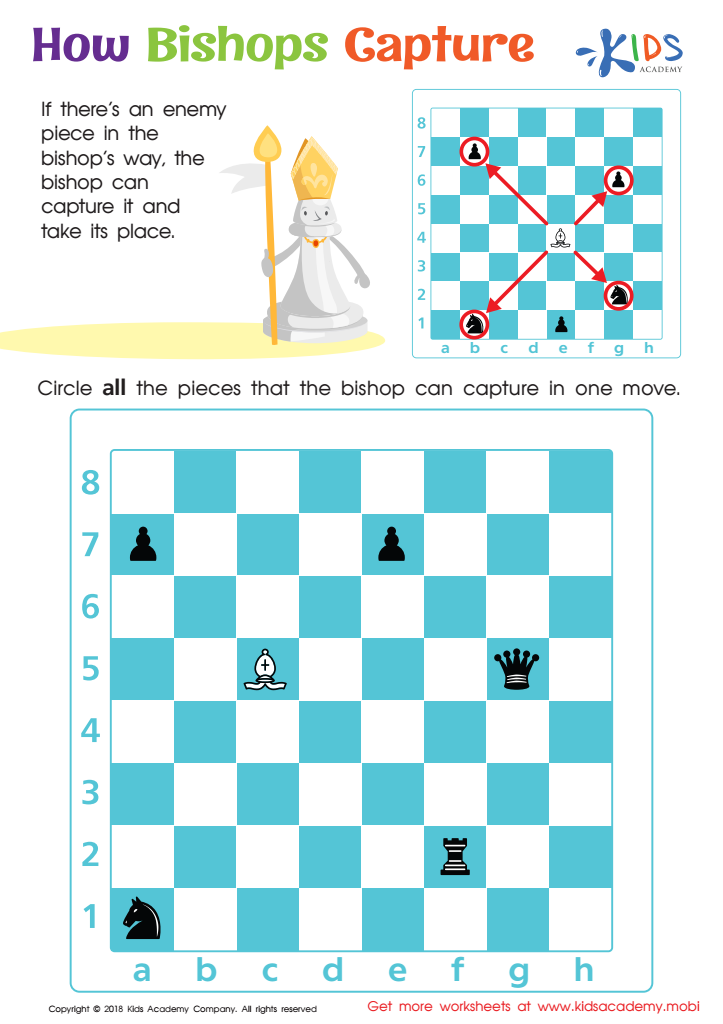
How Bishops Capture Worksheet
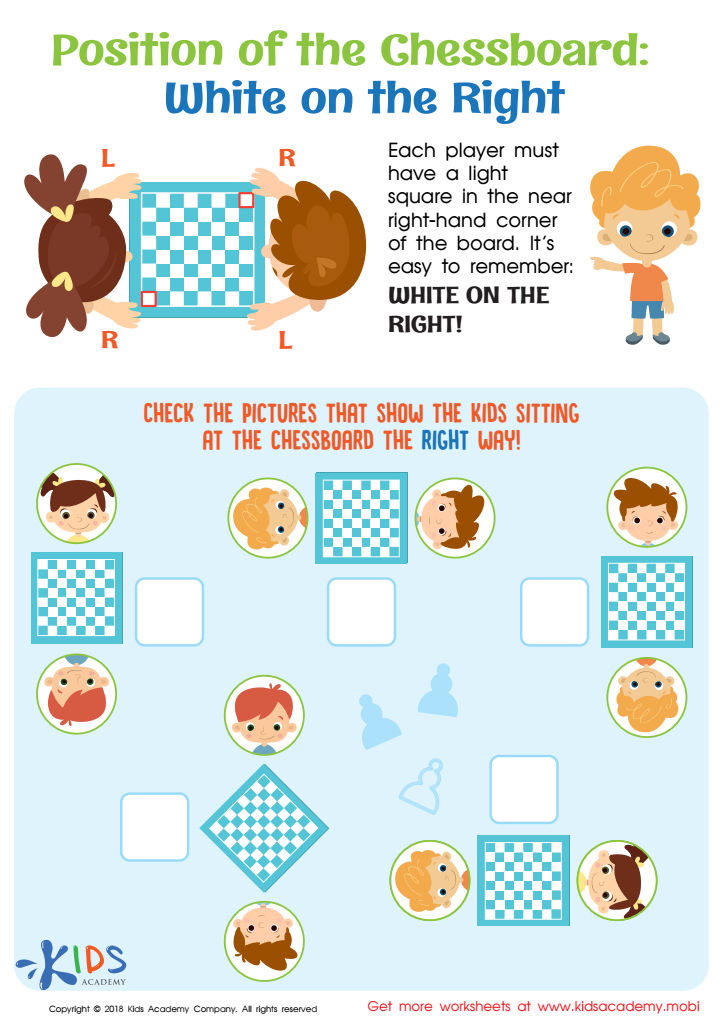
Position of the Chessboard: White on the Right Worksheet
 Assign to My Students
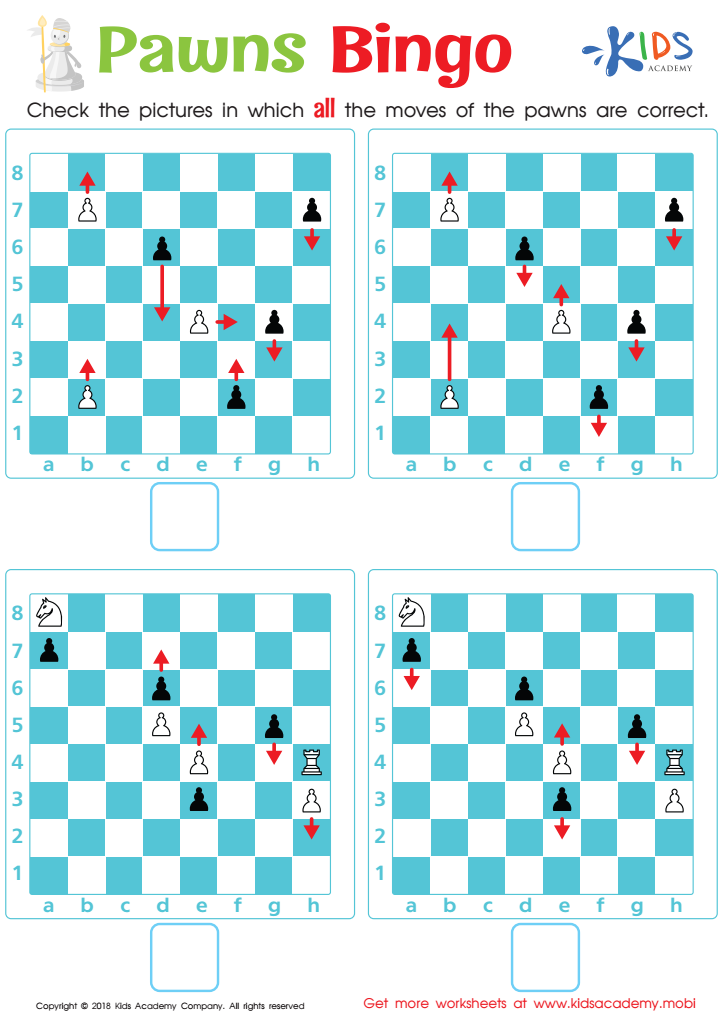
Pawns Bingo Worksheet
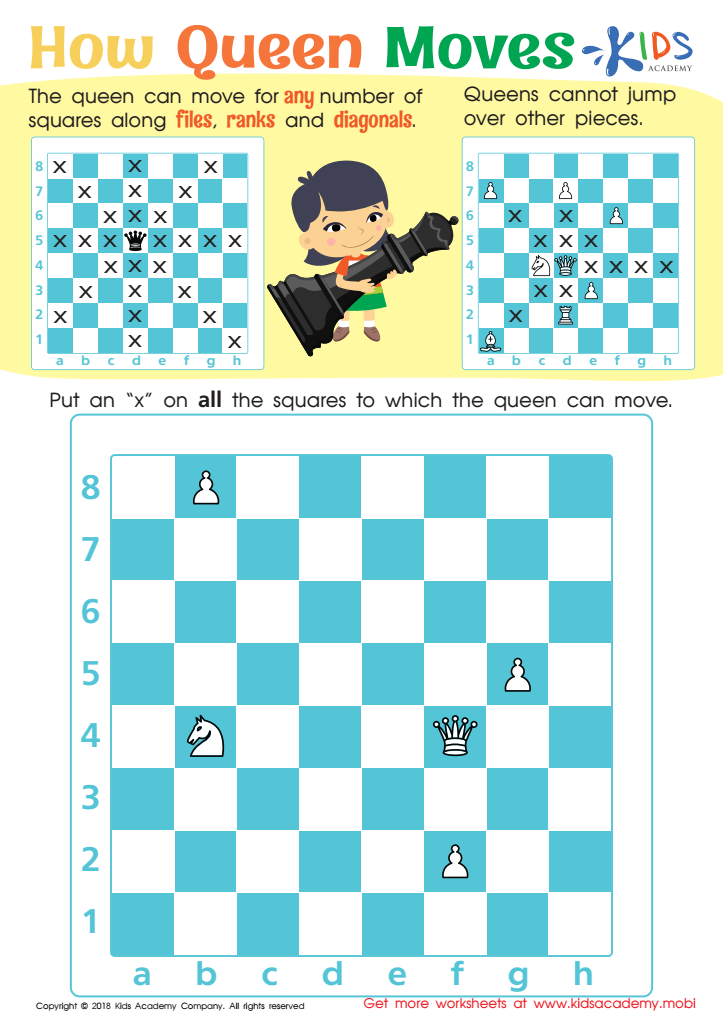
How Queen Moves Worksheet
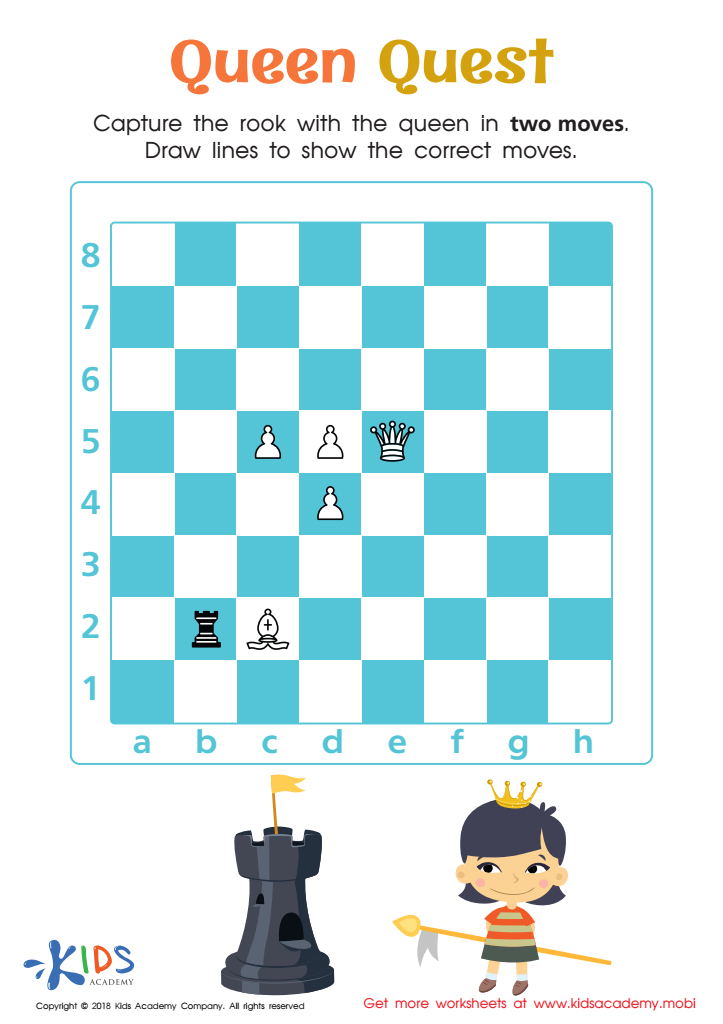
Queen Quest Worksheet
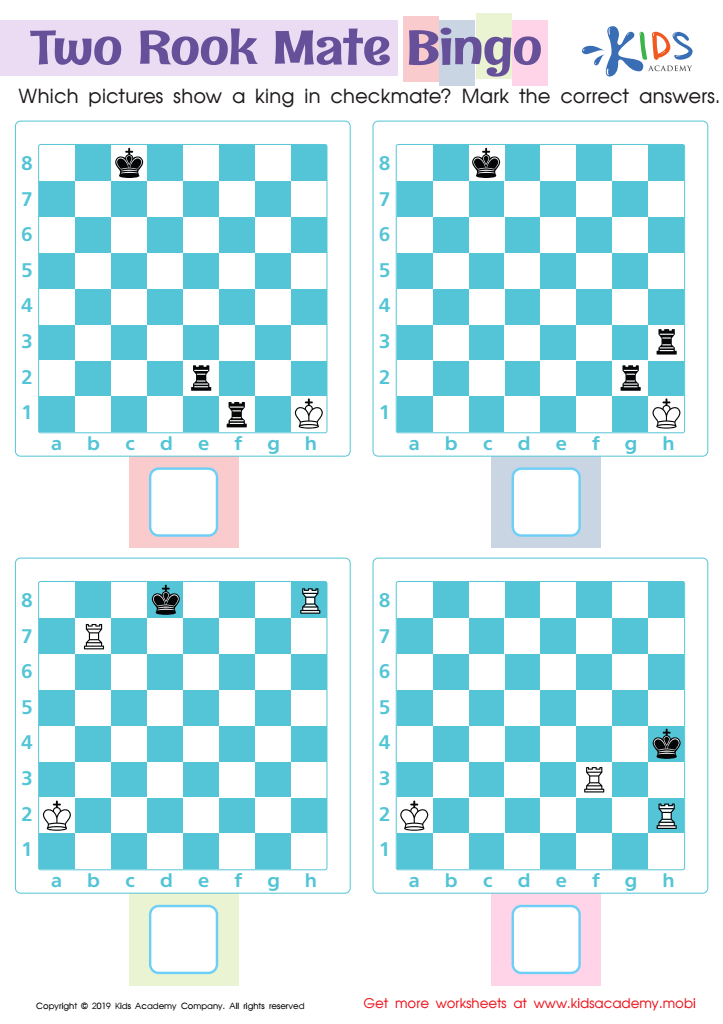
Two Rook Bingo Worksheet
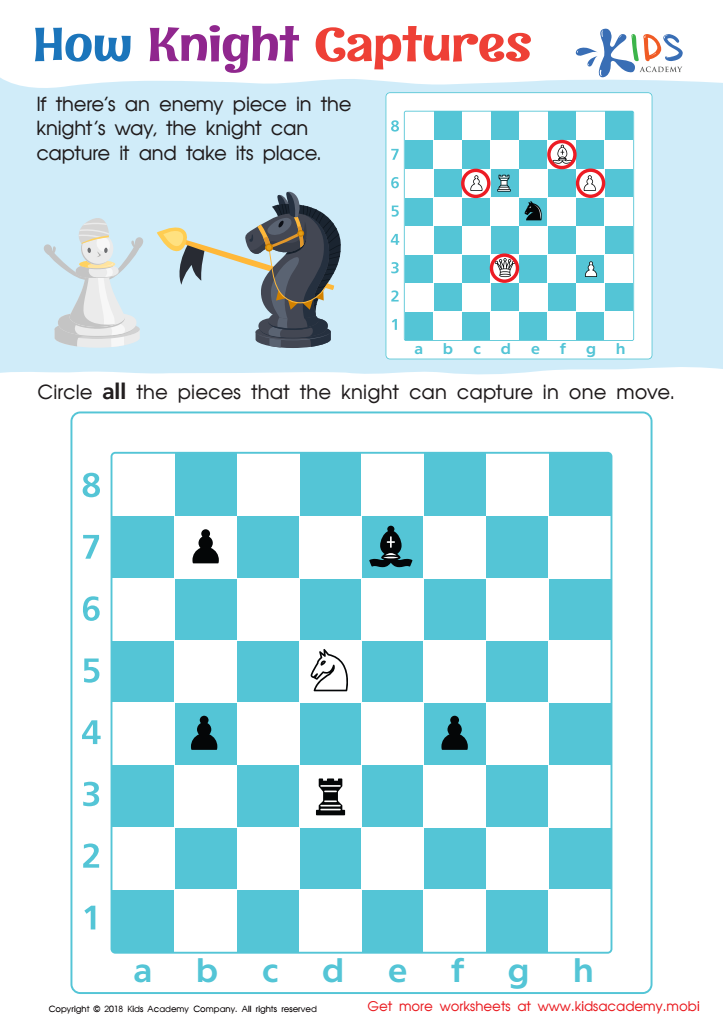
How Knight Captures Worksheet
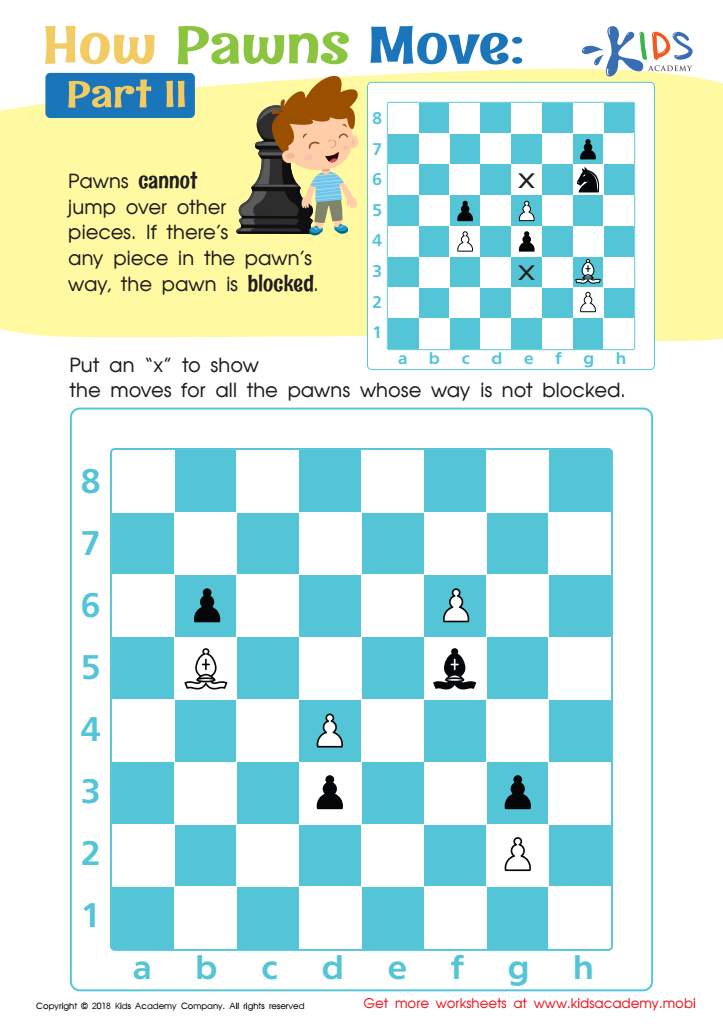
How Pawns Move: Part II Worksheet
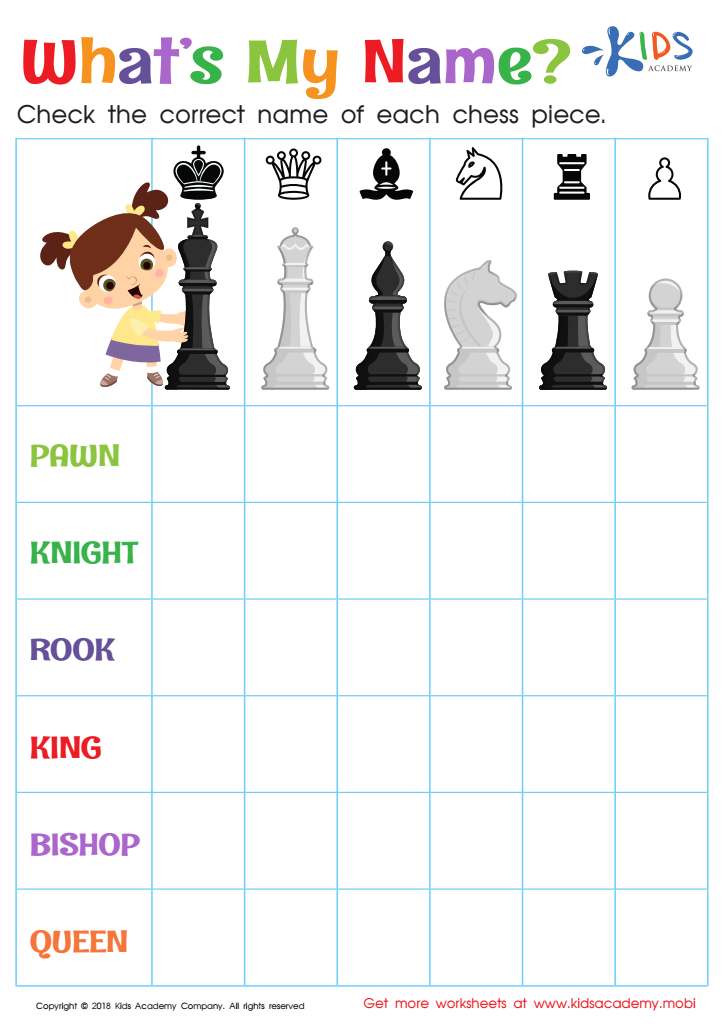
What's My Name? Worksheet
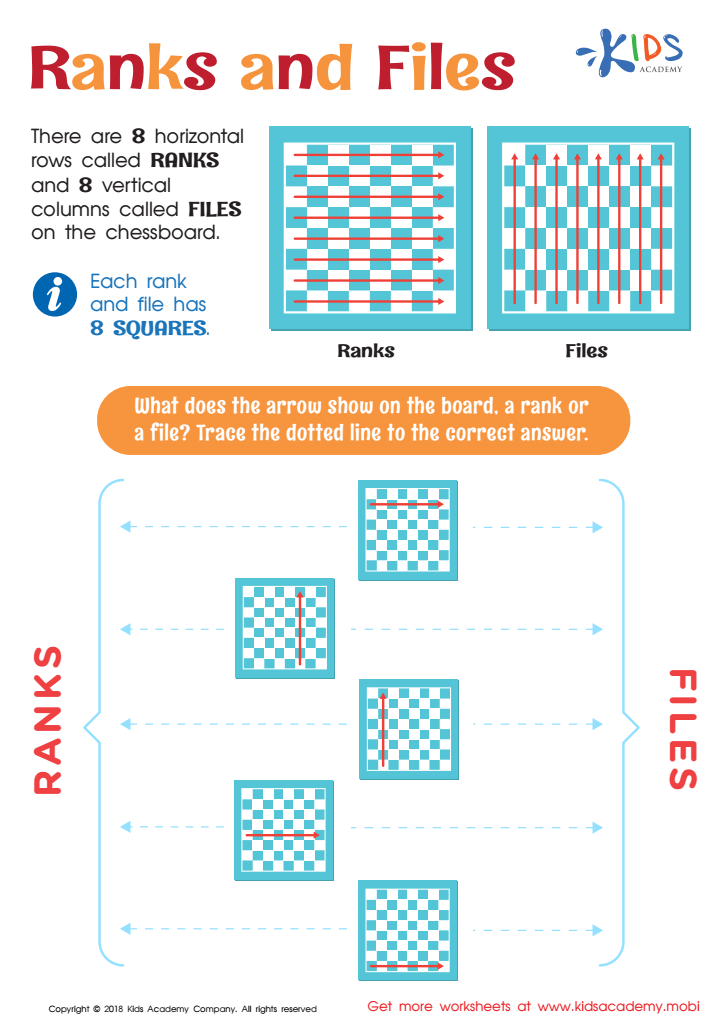
Ranks and Files Worksheet
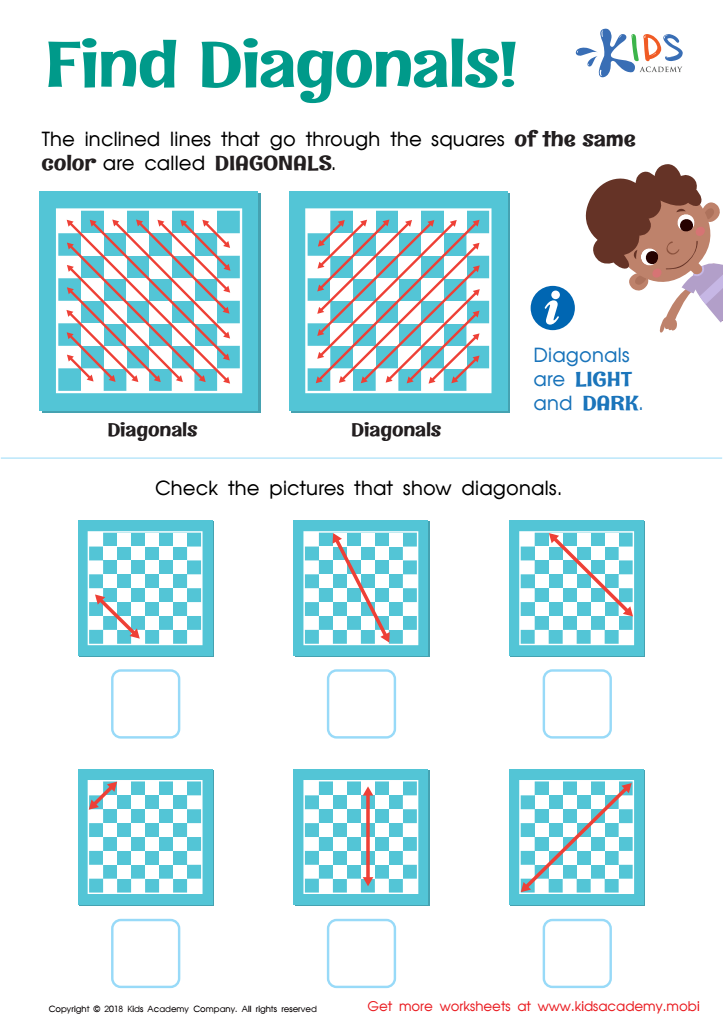
Find Diagonals Worksheet
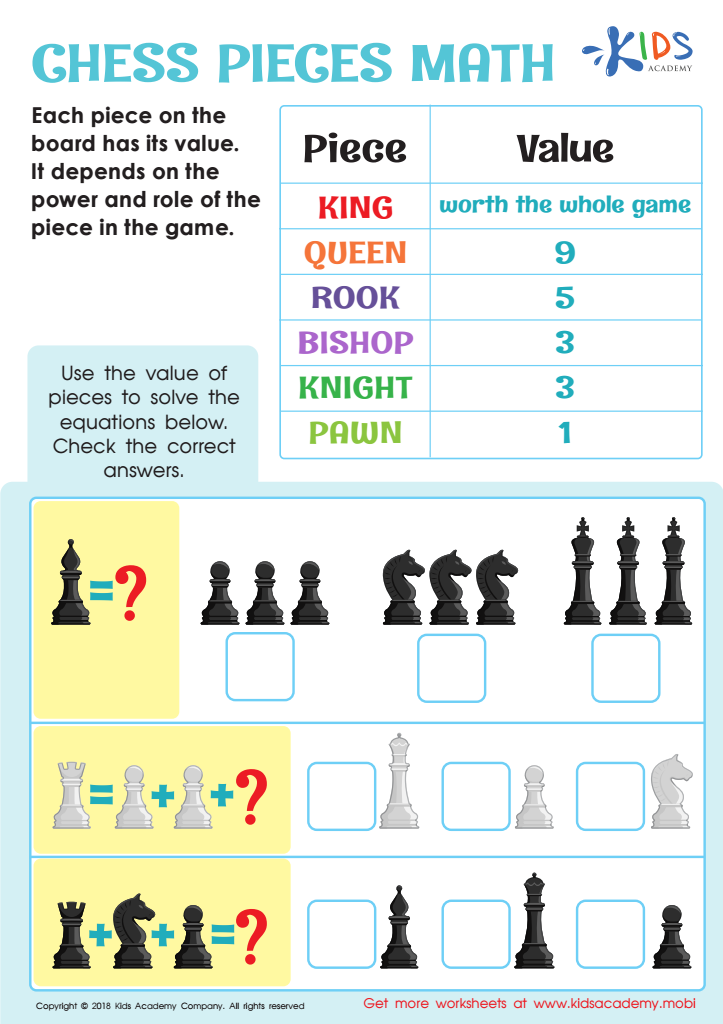
Chess Pieces Math Worksheet
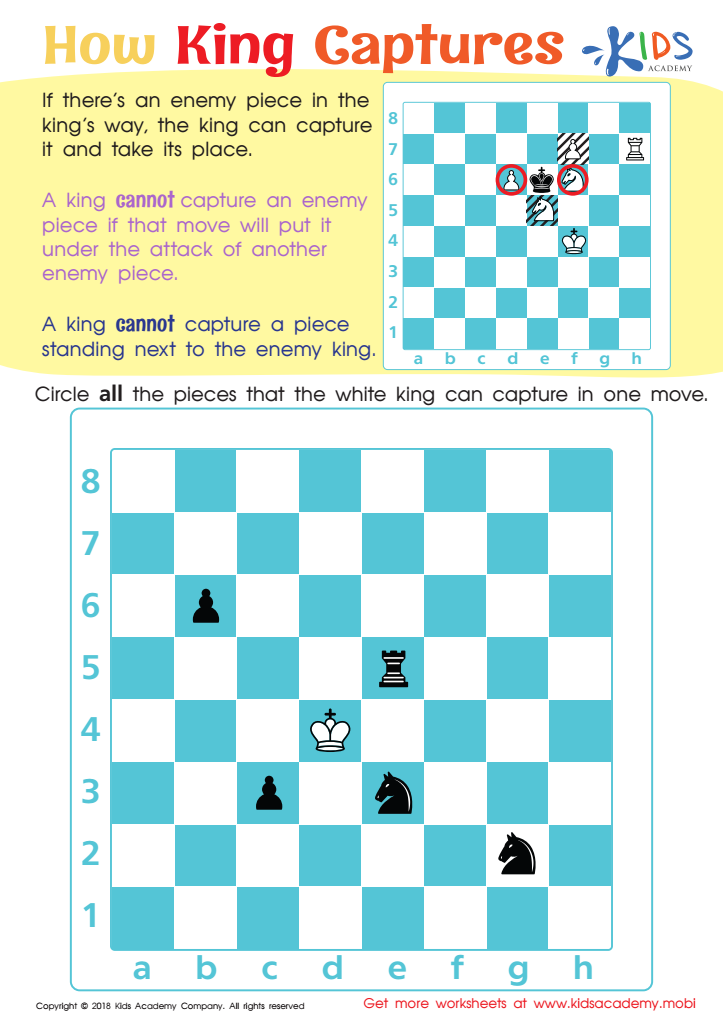
How King Captures Worksheet
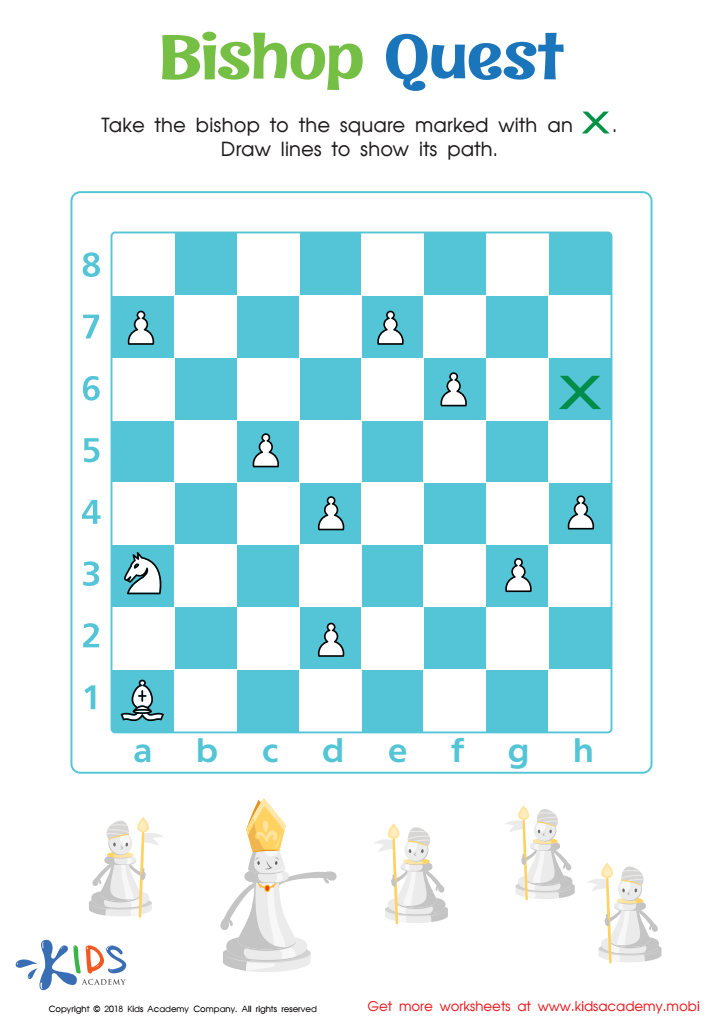
Bishop Quest Worksheet
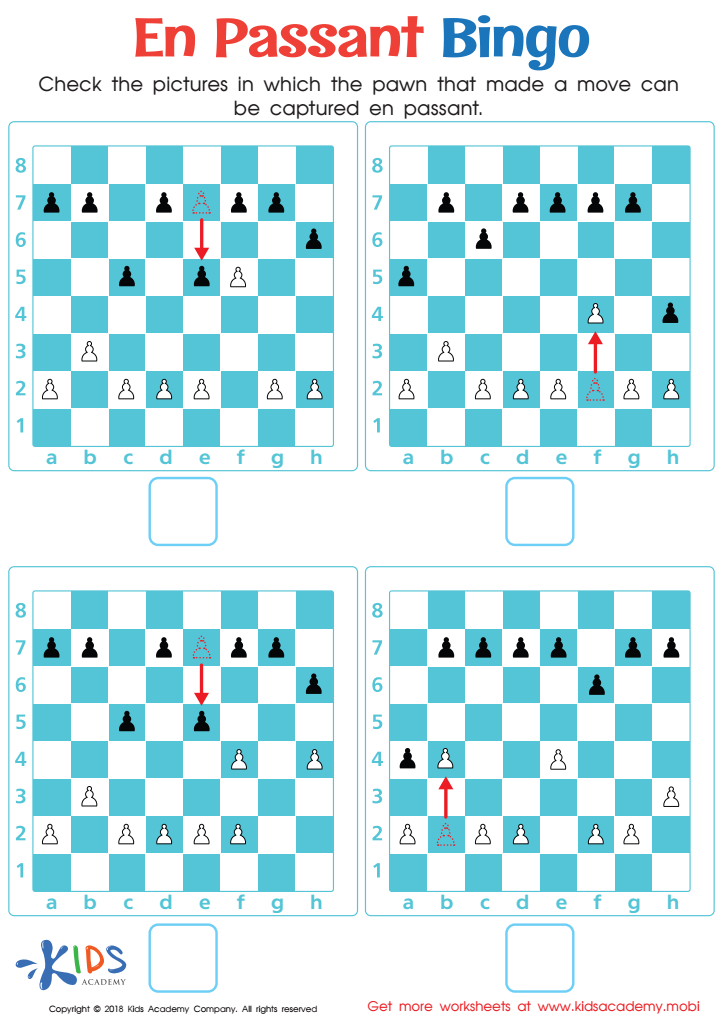
En Passant Bingo Worksheet
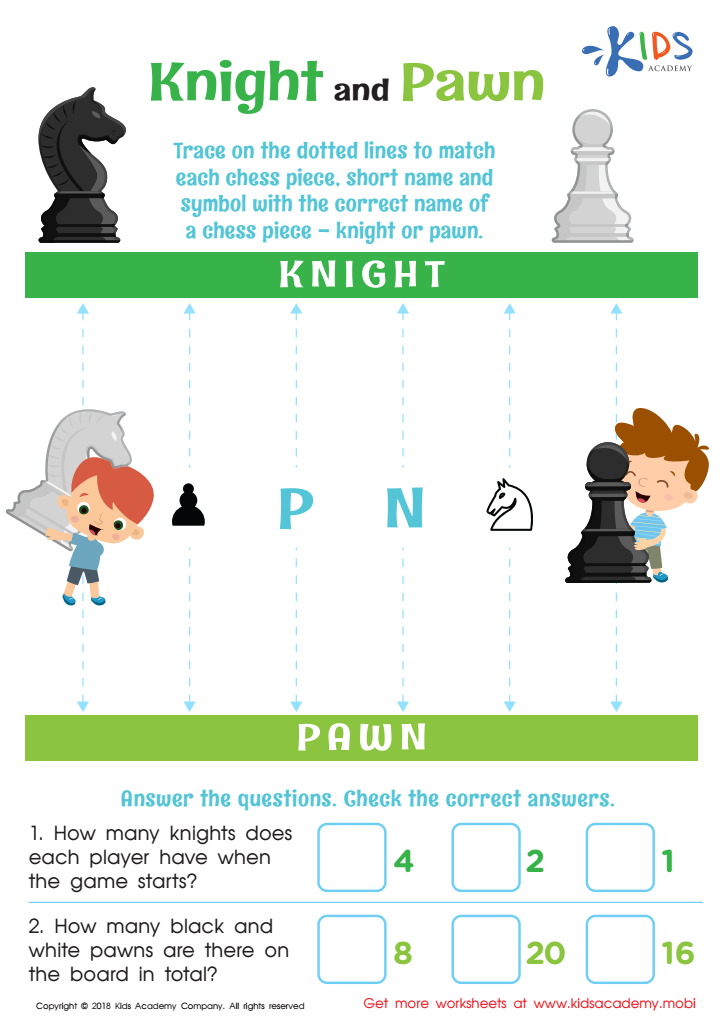
Knight and Pawn Worksheet
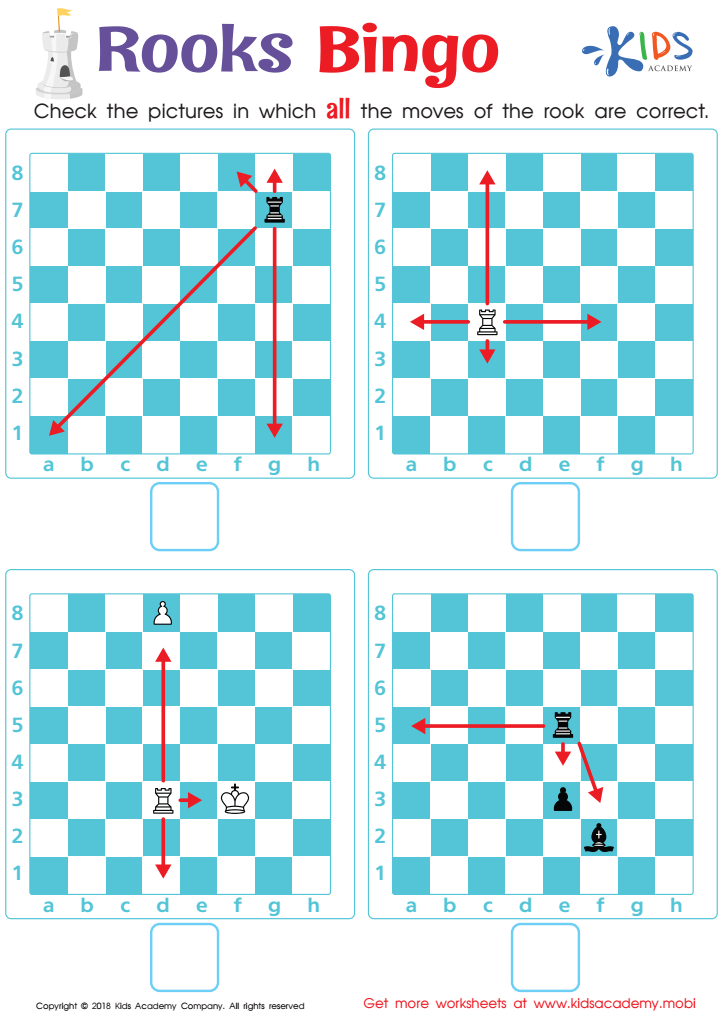
Rooks Bingo Worksheet
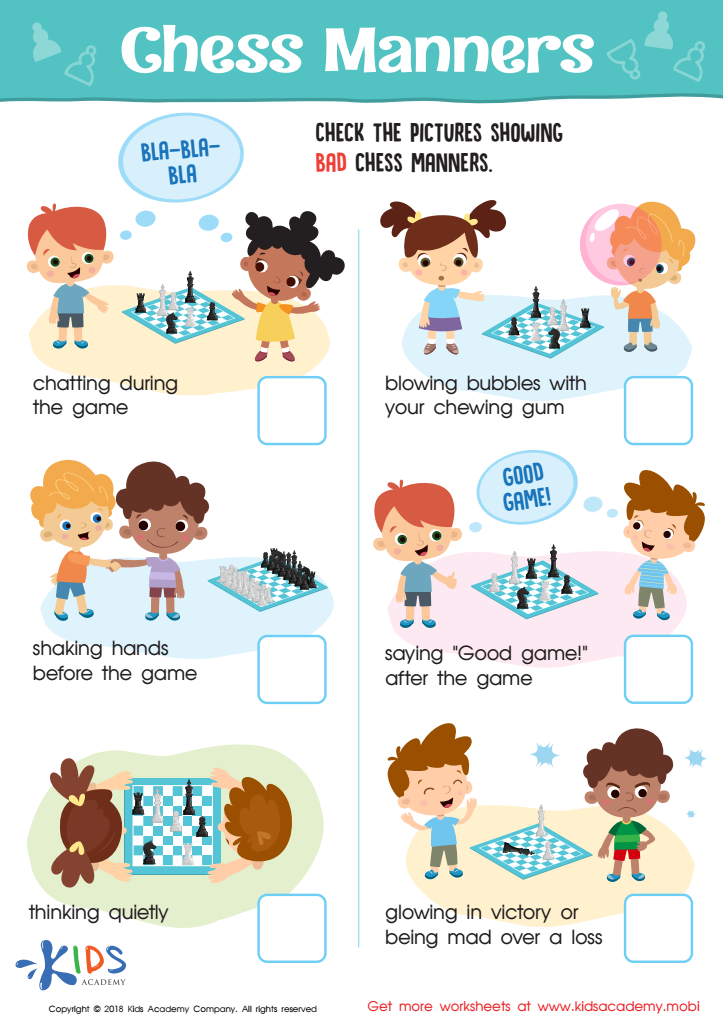
Chess Manners Worksheet
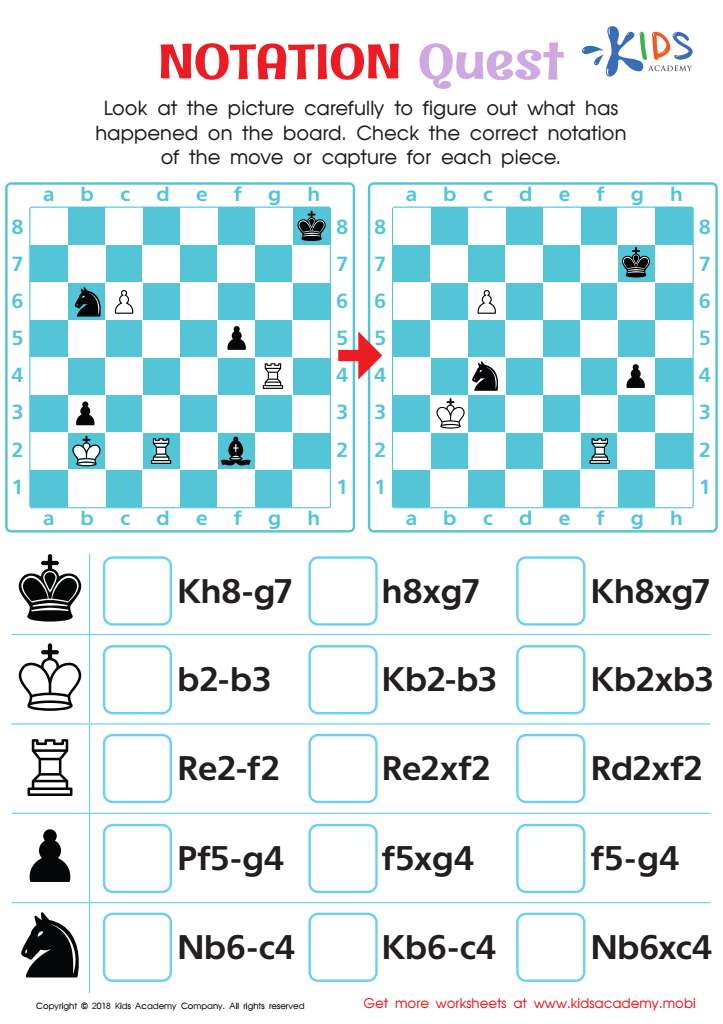
Notation Quest Worksheet
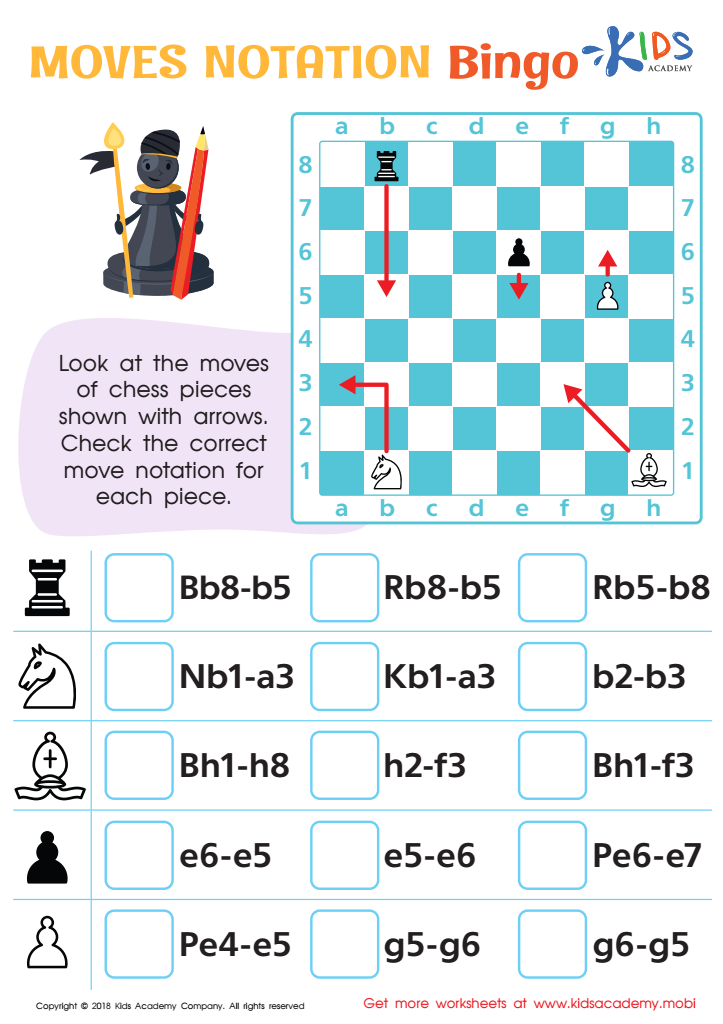
Moves Notation Bingo Worksheet
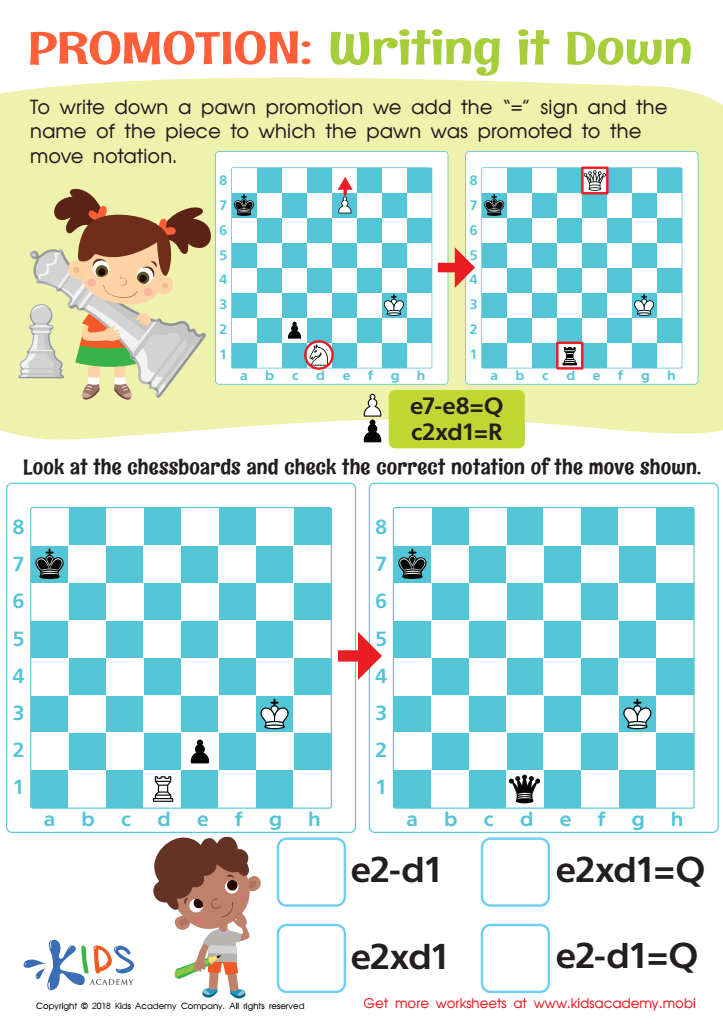
Writing it Down Worksheet
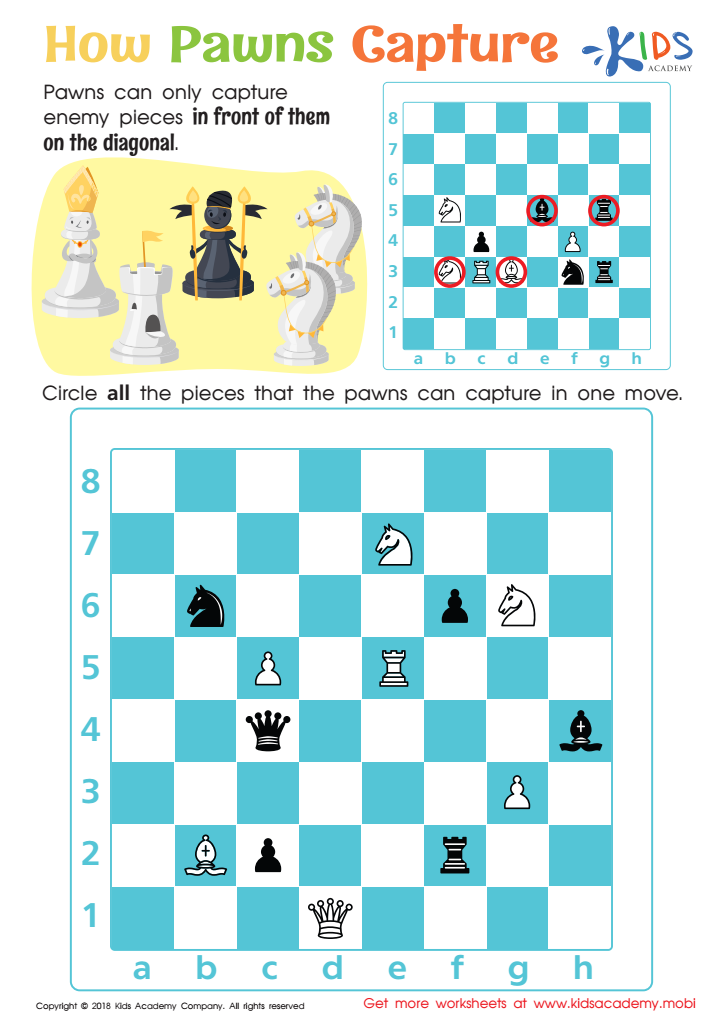
How Pawns Capture Worksheet
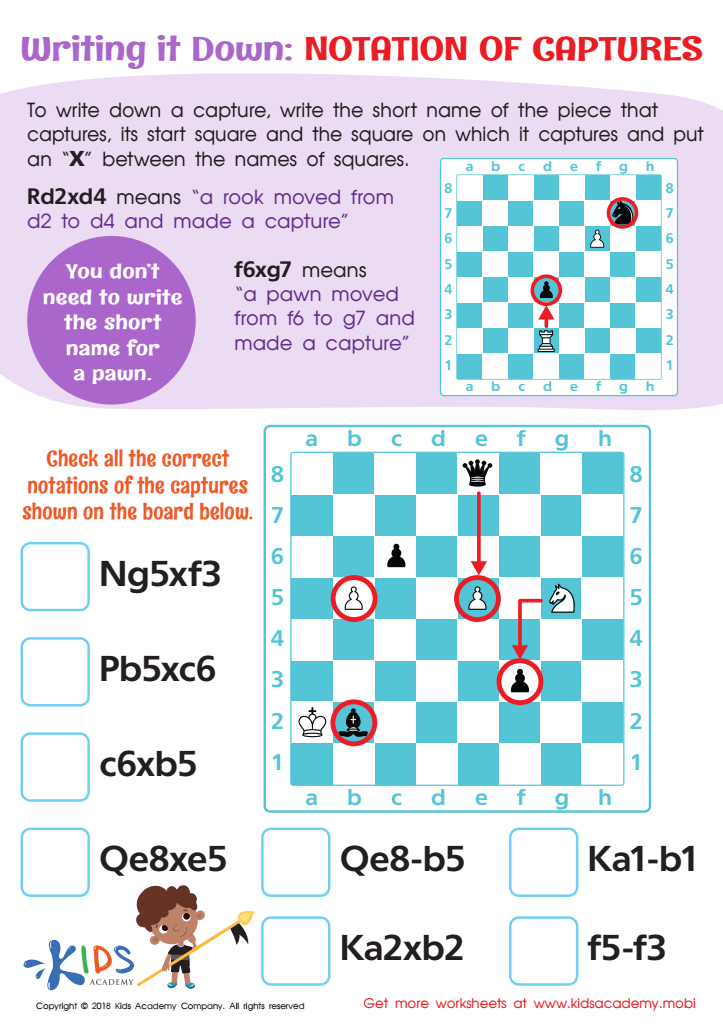
Notation of Captures Writing it Down Worksheet
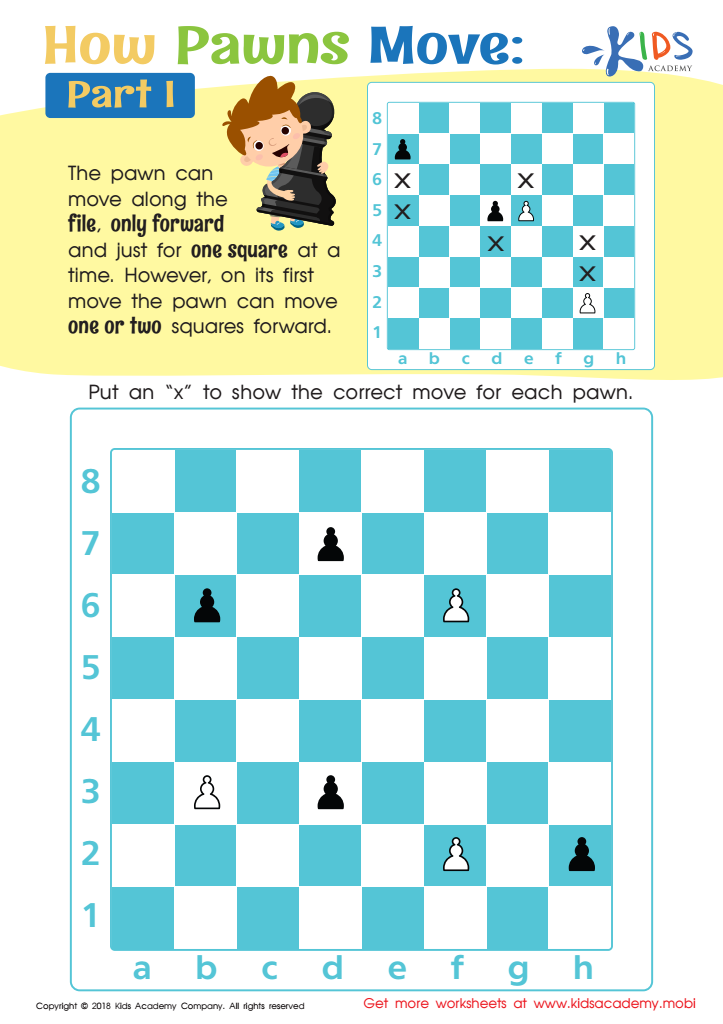
How Pawns Move: Part I Worksheet






Parents and teachers should consider normal chess for children aged 4-7 because it offers numerous developmental benefits that can enrich young minds beyond mere entertainment. At this crucial developmental stage, children's brains are highly receptive to learning complex skills in an effortless and playful manner. Chess encourages cognitive development by boosting critical thinking skills, enhancing problem-solving abilities, and fostering strategic planning.
As kids analyze positions and contemplate moves, their memory, visualization, and concentration capacities are significantly improved. These skills not only contribute to academic success but also promote lifelong learning and adaptability. Moreover, the complexity of chess nurtures patience and perseverance, teaching children the value of long-term goals and how to manage wins and losses gracefully.
Additionally, chess can be a powerful tool for social development. Kids playing chess interact with peers, sharing ideas and strategies, which enhances their communication skills and builds camaraderie. The game fosters an inclusive, engaging platform for children tacitly learning life skills like teamwork, respect for others, and fair play.
By integrating chess into the early educational framework, parents and teachers ensure multi-faceted development, laying a strong foundation for their children's intellectual, emotional, and social growth.